












Article Summary
- Tropical architecture works best when climate is treated as a starting point for layout and space, not something solved later with add-ons.
- Early decisions about layout, massing, circulation, and materials shape comfort, durability, and operational efficiency over time.
- Climate-responsive architecture reduces long-term reliance on building systems while supporting adaptability and clarity of use.
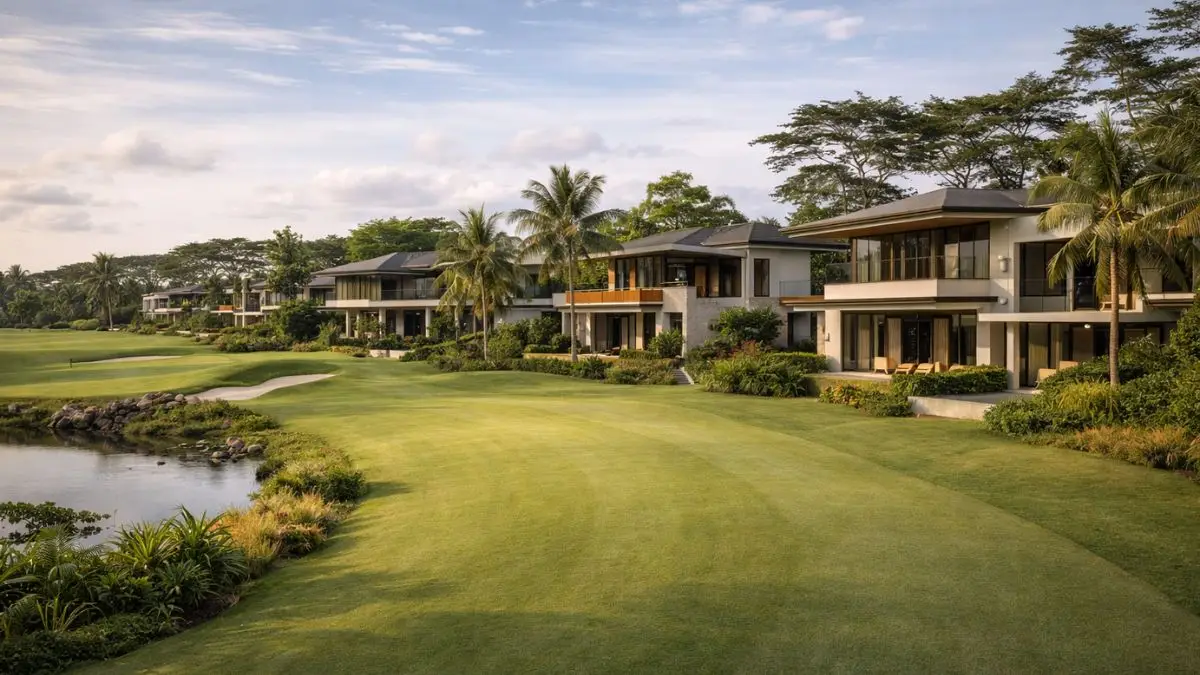
Designing architecture for tropical conditions in practice begins with accepting climate as a permanent design context rather than a constraint to be mitigated later. Heat, humidity, rainfall, and intense sunlight shape how buildings are used every day. When these conditions are addressed early, architecture becomes more comfortable, durable, and operationally efficient over time.
Rather than relying on equipment to correct discomfort, climate-informed architecture uses form, proportion, and spatial sequencing to manage exposure and movement. In tropical settings, performance is inseparable from layout. Buildings that work well do so because their architecture anticipates climate as a daily reality.
Climate as a Spatial Framework
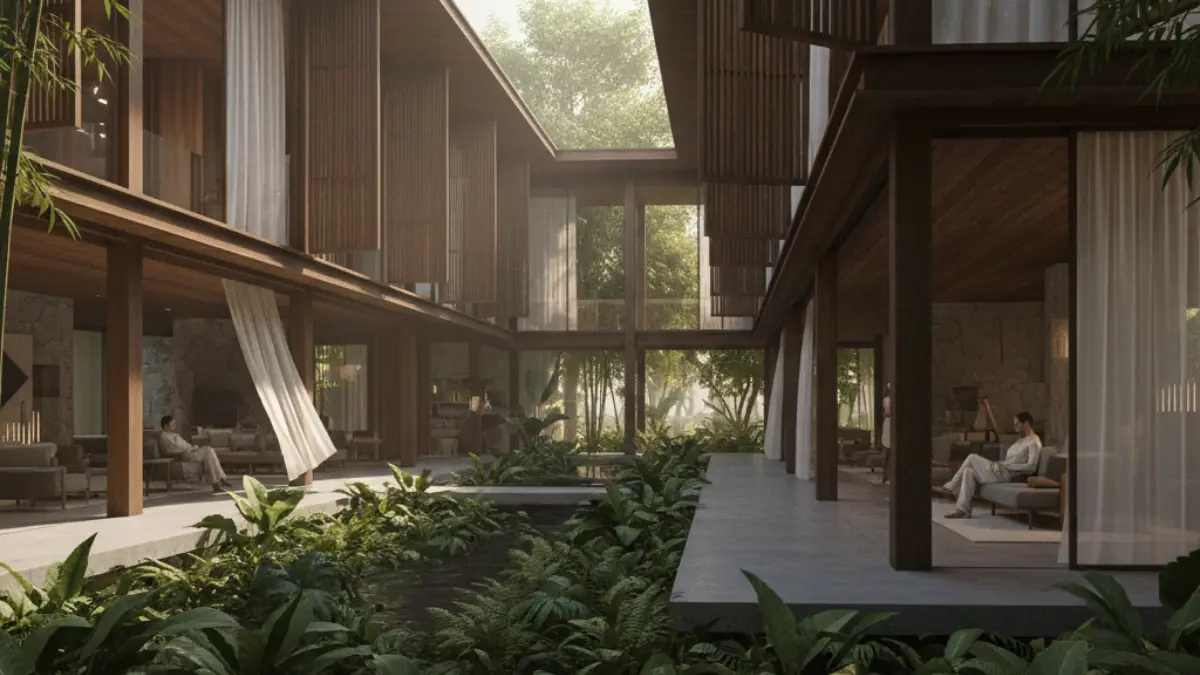
Heat, humidity, and rainfall influence how spaces connect, open, and protect. Architecture responds by organizing transitions rather than sealing interiors off completely. Courtyards, overhangs, breezeways, and layered thresholds moderate environmental extremes while maintaining continuity between inside and outside.
These spatial strategies do more than improve comfort. They reduce reliance on artificial cooling, extend material lifespan, and clarify circulation. Shaded edges and semi-open spaces act as buffers, allowing buildings to breathe without sacrificing usability. When climate shapes the spatial framework, environmental performance becomes embedded rather than added.
Movement and Shelter
In tropical environments, movement often occurs under partial exposure. Architecture must allow people to move comfortably through rain, heat, and glare without isolating them from their surroundings. Continuous shelter becomes a critical design element.
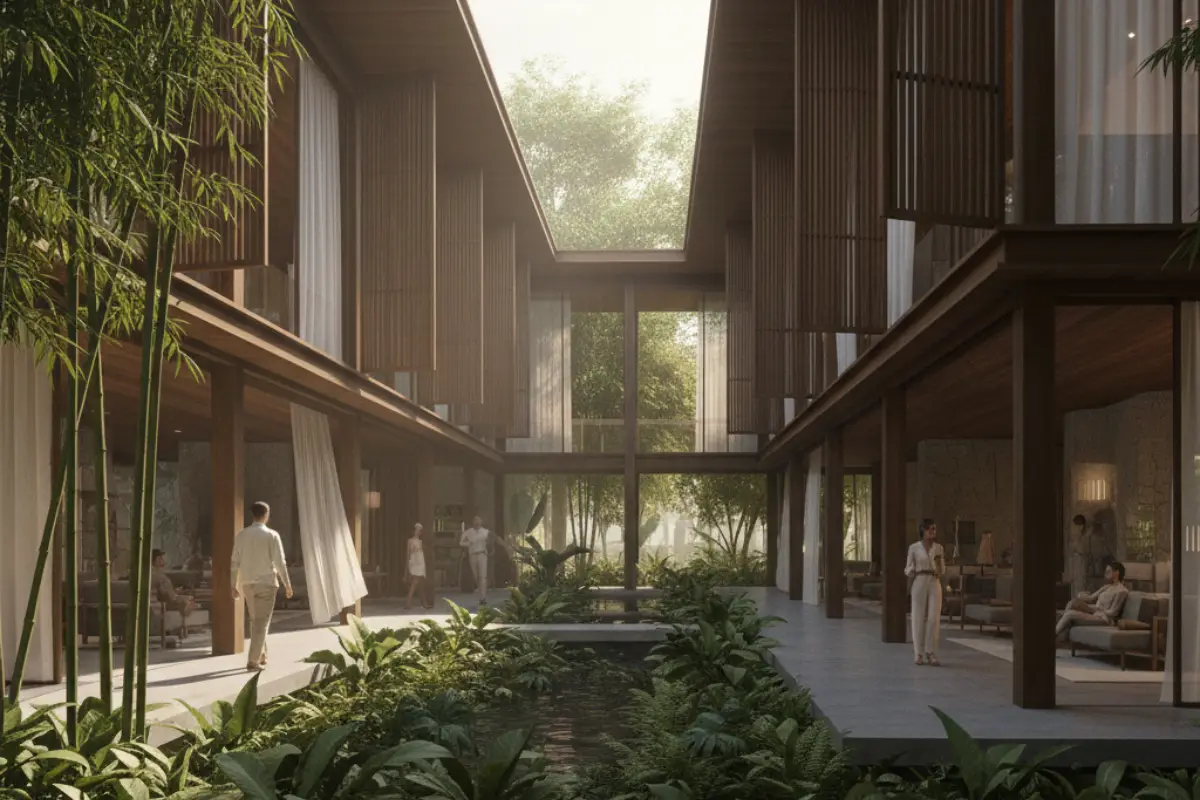
Covered walkways, recessed entrances, and protected paths connect buildings while preserving visual openness. These elements are not secondary features. They define how spaces are experienced throughout the day, particularly in mixed-use, residential, and hospitality projects where movement patterns are constant.
Well-designed shelter supports intuitive circulation. People instinctively follow shaded routes and protected edges, reducing confusion and operational strain. Architecture that resolves movement and shelter together improves daily usability without additional signage or control.
Massing, Orientation, and Environmental Performance
Building mass and orientation strongly influence tropical performance. Compact forms reduce surface exposure, while elongated volumes aligned with prevailing winds encourage cross-ventilation. These decisions affect internal temperatures, airflow, and daylight quality long before systems are introduced.
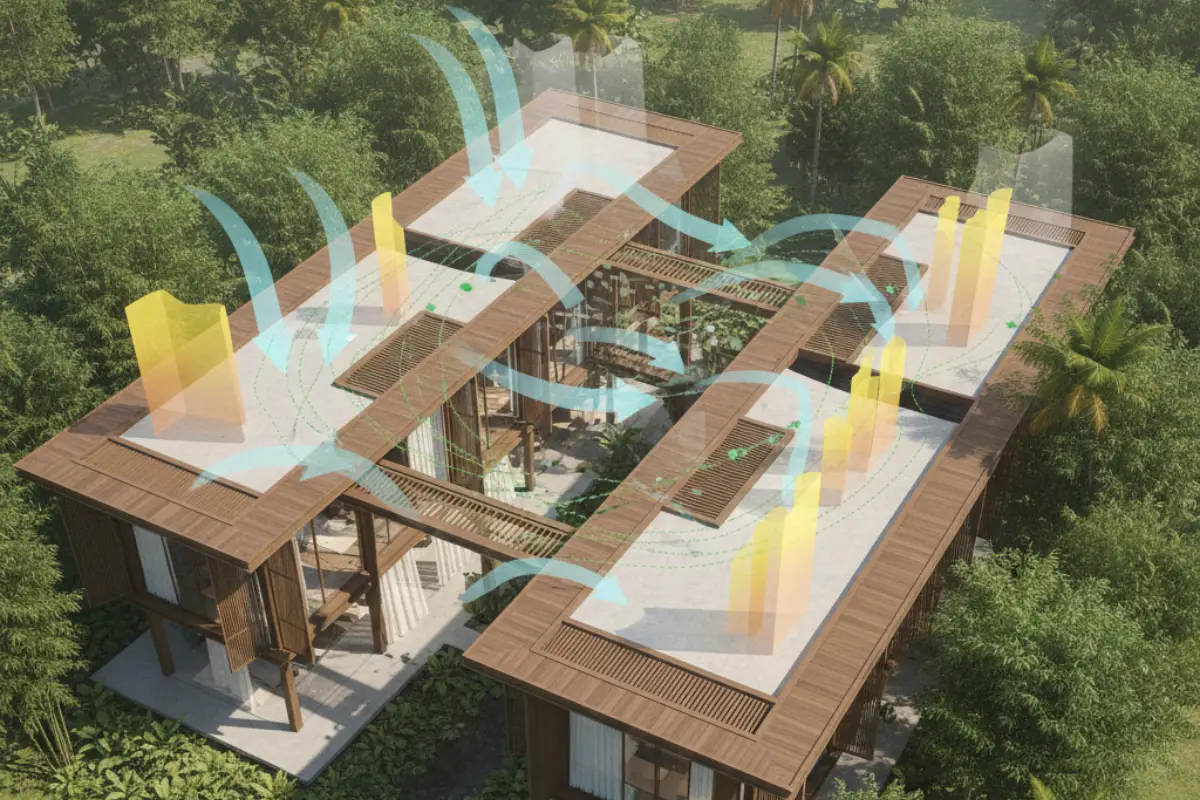
Spacing between buildings also matters. Proper distances allow air movement and reduce heat buildup, while poorly planned adjacencies trap humidity and increase cooling loads. Orientation decisions made during early planning often determine whether a building remains comfortable decades later or requires increasing operational correction.
By adjusting scale, proportion, and alignment, architects create buildings that respond passively to climate, reducing long-term energy use and operational costs.
Material Durability and Maintenance
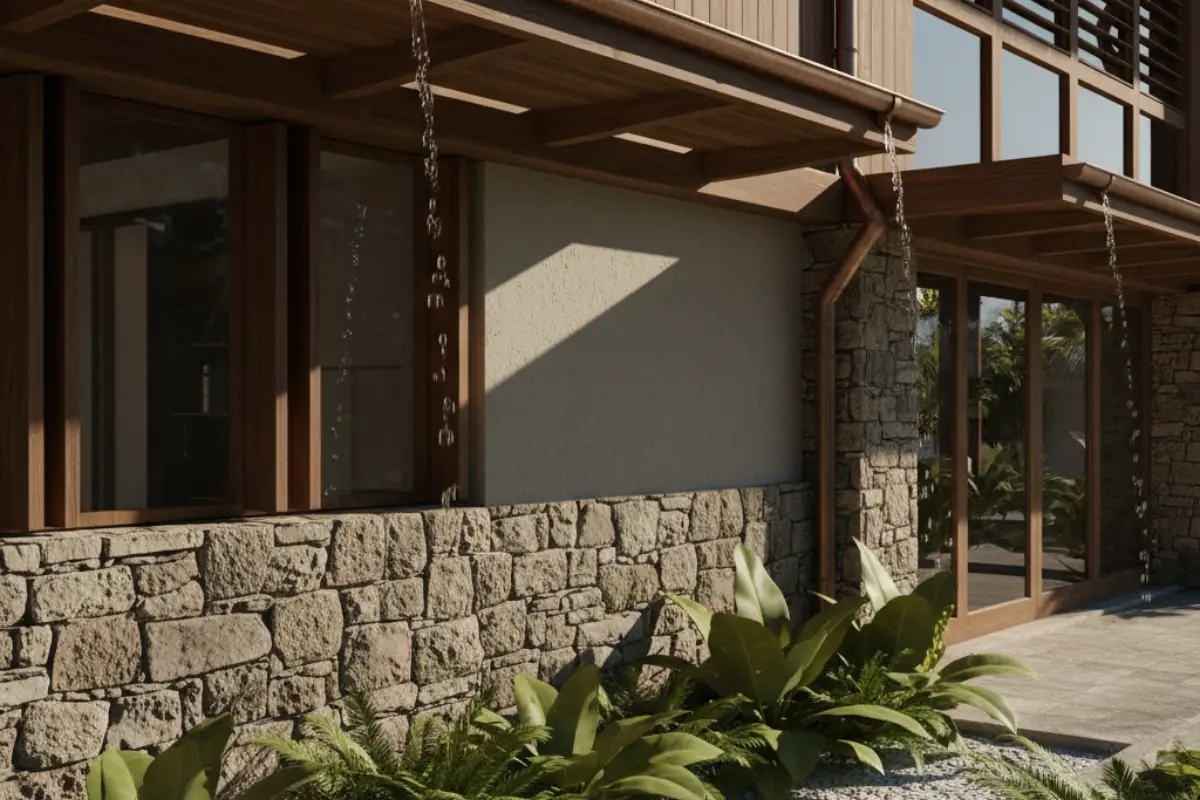
Material selection in tropical environments must account for moisture, heat, and frequent use. Architecture that prioritizes durability considers not only appearance but also drainage, detailing, and access for maintenance.Concrete, stone, treated timber, and properly detailed metal surfaces generally outperform lightweight finishes that degrade quickly under humidity and repeated cleaning. Detailing that sheds water, allows drying, and prevents trapped moisture preserves both appearance and structural integrity.
Maintenance access is equally critical. Clear routes to plant rooms, façades, and service areas allow systems to be repaired or upgraded without disrupting daily operations. Buildings that are easy to maintain tend to age more gracefully and retain value longer.
Architecture Rooted in Climate Logic
Designing architecture for tropical conditions in practice is ultimately about alignment. Climate, space, and use are resolved together rather than addressed in parallel. When architecture responds directly to environmental realities, buildings support comfort, clarity, and adaptability without excessive technical complexity.
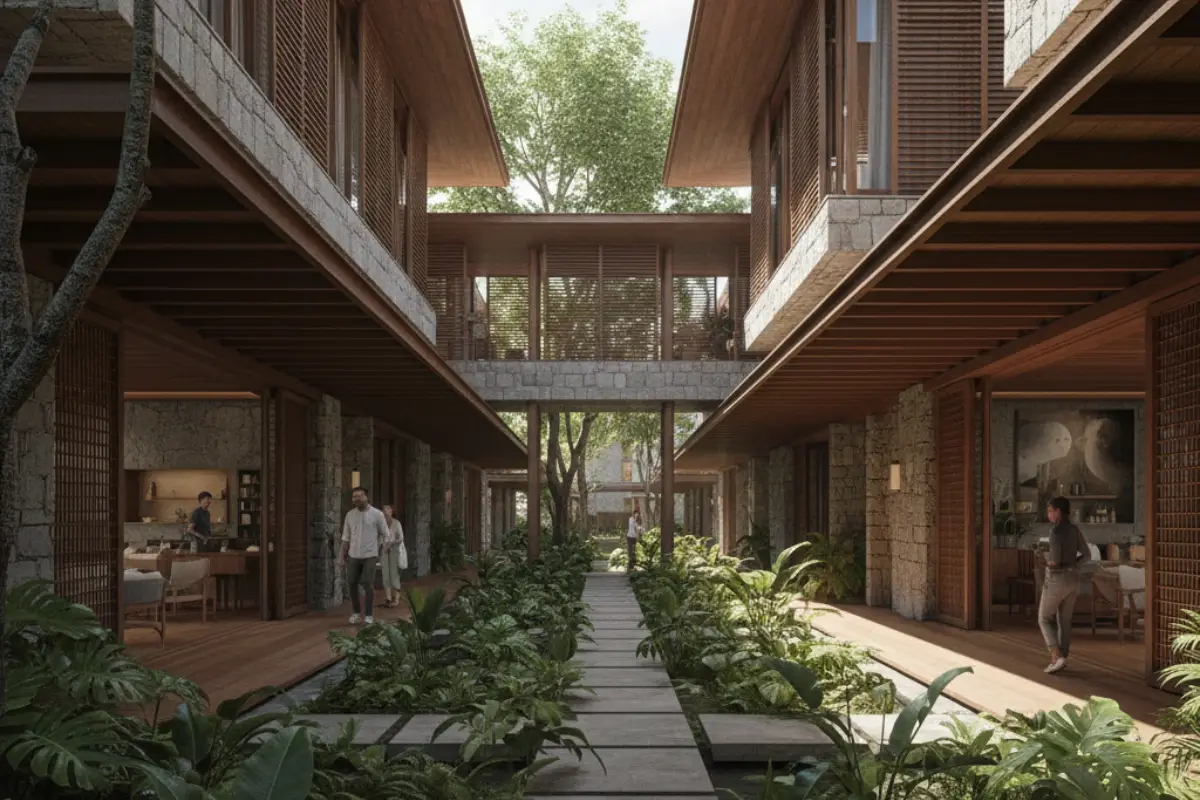
This approach produces architecture that remains effective over time. Rather than chasing stylistic trends, climate-informed design focuses on enduring performance. Buildings grounded in climate logic continue to function well as uses change, systems evolve, and operational demands shift.
Because spatial decisions establish environmental performance long before mechanical systems are introduced.
No. Spatial strategies reduce dependence on systems and improve long-term resilience.
Vertical relationships control airflow, daylight penetration, and heat movement.
No. It defines form through performance rather than style.
Durable materials reduce maintenance demands and preserve spatial clarity.Can tropical architecture remain adaptable over time?
Yes. Climate-informed spatial frameworks support future change without loss of performance.