












When we think about sushi we imagine precision, balance, and harmony. Each ingredient, from the rice to the filling to the nori and the final presentation, must work together to create a delightful experience. Master planning in architecture works in a very similar way. Every element, layer, and proportion matters and when all parts are carefully orchestrated the result is a cohesive, functional, and visually compelling environment.
The foundation of any master plan begins with the site, much like rice forms the base of a sushi roll. Understanding the land and its natural conditions ensures that all decisions are grounded in context. Topography, sun orientation, noise, and visual impact influence how buildings and open spaces are positioned. Mapping slopes and analyzing sightlines allows the design to fit naturally into the landscape while optimizing light, energy efficiency, and overall comfort. A well-studied site provides the essential base upon which all other layers are built.

Layering function into the plan is like adding the filling to sushi. Zoning determines what goes where while balancing function and user experience. Main zones accommodate core activities such as residential, commercial, or institutional use. Existing plantations and trees are preserved to maintain ecological balance. Hospitality areas include lodging and dining. Congregation spaces encourage social interaction. Playgrounds and outdoor activity areas connect people with nature. Each zone must be proportionate and thoughtfully layered to maintain balance and cohesion just like carefully chosen ingredients in a sushi roll.
Circulation is the element that binds everything together, much like nori wraps the roll. Roads, pathways, and visual connections ensure that each zone interacts harmoniously with the others and guides movement naturally across the site while maintaining unity. Thoughtful circulation allows the space to function efficiently while feeling coherent and intentional and connects all layers of the master plan into a single seamless experience.
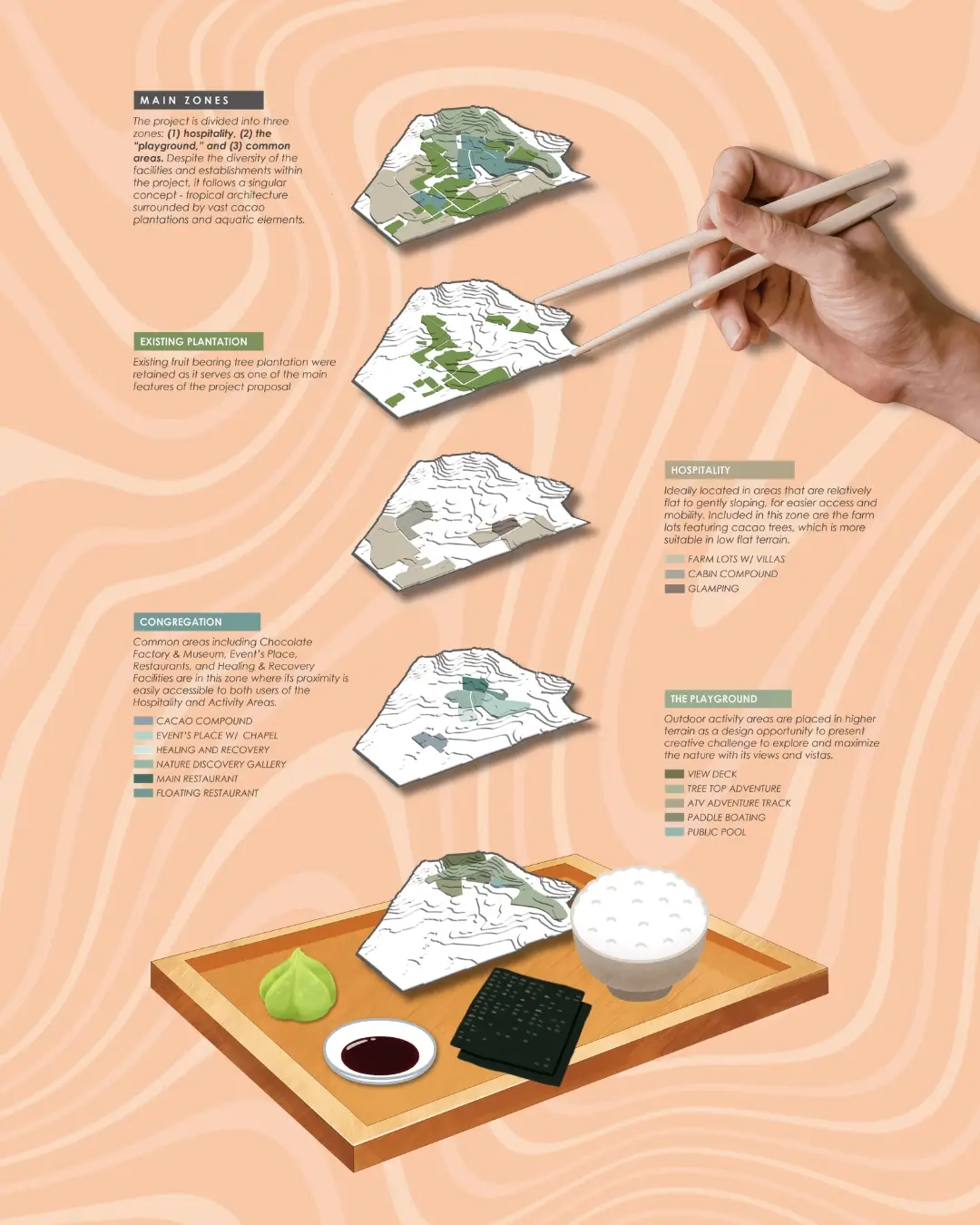
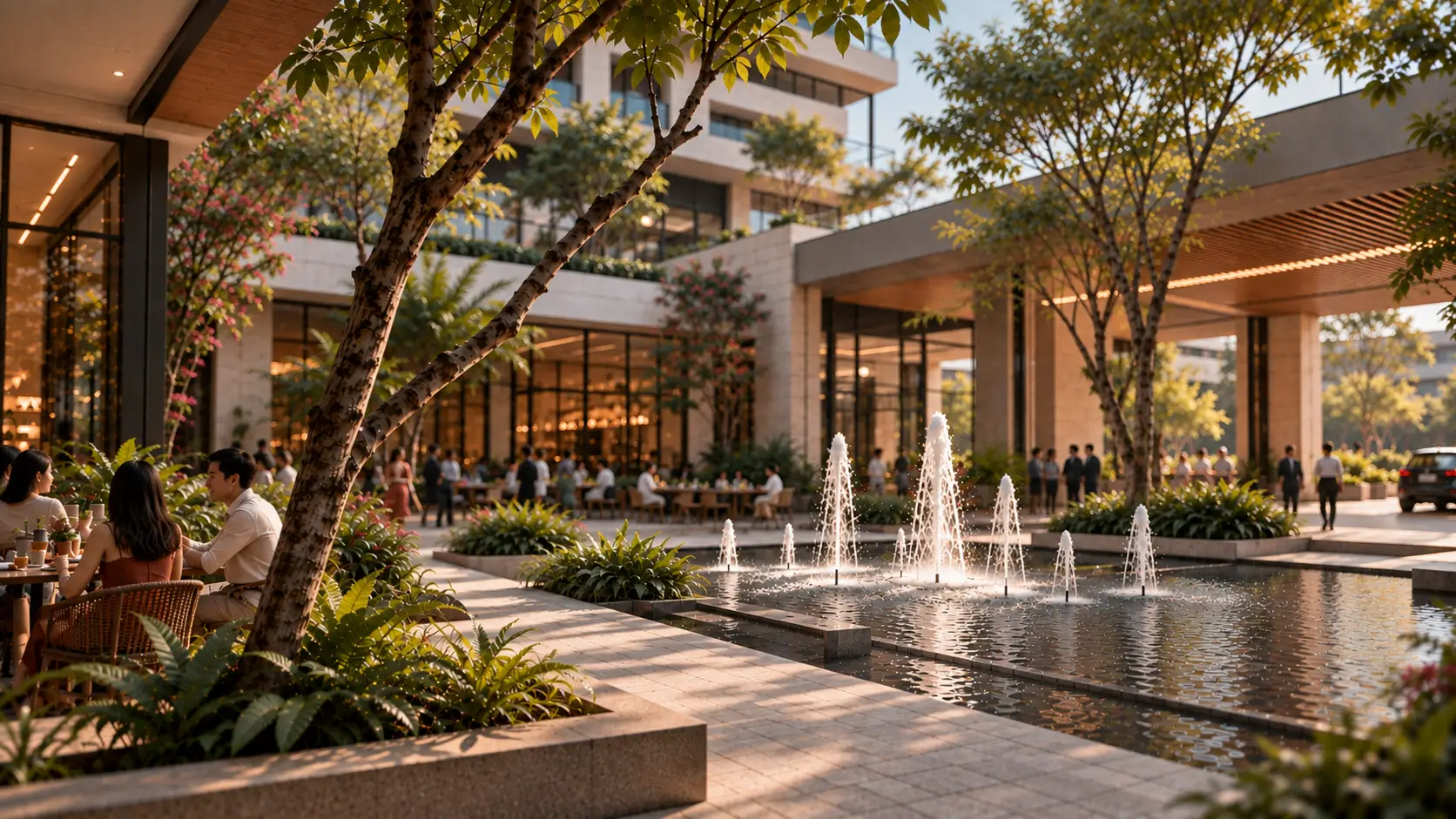
Finally, the finishing touches elevate the design. In sushi presentation, garnishes, and seasoning transform a simple roll into a memorable experience. In master planning landscaping, textures, color palettes, and spatial experiences create harmony and visual appeal. When all elements are combined thoughtfully, with the site as rice, zoning as filling, circulation as nori, and aesthetics as seasoning, the result is a design that is balanced, cohesive, and satisfying. Architecture like sushi is an art of layers, proportions, and harmony where each component supports the others to create a holistic experience that blends functionality with beauty.