












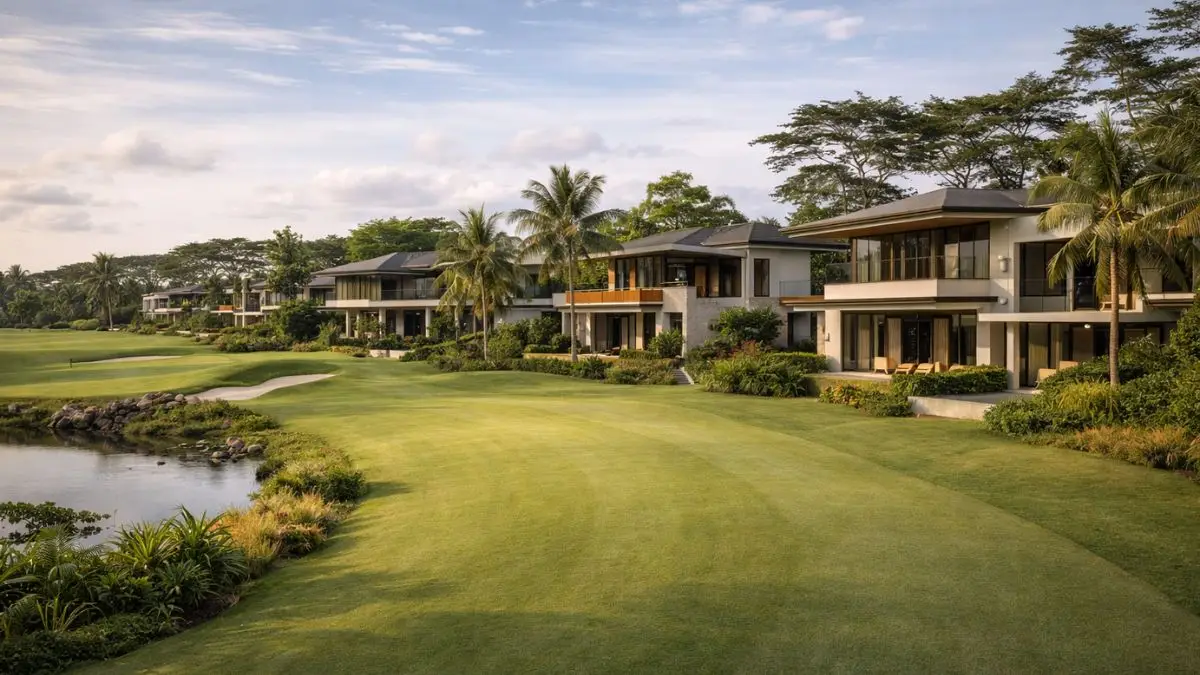
- Golf residences in the philippines attract buyers seeking controlled, low-density environments.
- Privacy is achieved through spacing, access control, and planning discipline.
- Protected views contribute to long-term property value.
- Planning guidelines maintain consistency and development quality.
- Market resilience is driven by scarcity and spatial advantage.
A Market Defined by Spatial Control
Golf residences in the Philippines continue to appeal to a specific segment of buyers not because of novelty, but because they offer a higher level of control. These developments offer predictability in space, density, and environment that is difficult to achieve in conventional residential settings.
For buyers, the value is not only in location but in how the land is organized. Roads are limited, access points are managed, and the relationship between houses and open space is carefully considered. This creates an environment where daily living is shaped by planning decisions rather than reactive development.
As urban areas become denser and less predictable, golf residential communities in the Philippines provide an alternative that prioritizes spatial clarity and long-term livability.
Privacy Through Low-Density Planning
Privacy in golf residences is not simply a feature added at the end of the design process. It is built into the structure of the development through low-density planning and controlled land use.
Lot sizes are typically larger, and the spacing between homes is intentionally increased. This reduces visual overlap and limits the sense of crowding. Roads are fewer and more discreet, limiting unnecessary movement through residential areas.
Controlled access further reinforces this condition. Entry points are restricted, and internal circulation is designed to serve residents rather than through traffic. The result is a quieter, more stable environment where privacy is not dependent on barriers, but on how the development is organized from the beginning.
In golf residences in the Philippines, this approach to planning creates a consistent sense of separation without isolating the community from its surroundings.
Views as Long-Term Value
One defining characteristic of golf residential communities in the Philippines is the presence of open, maintained landscapes. Fairways, greens, and buffer zones create visual corridors that extend beyond individual property lines.
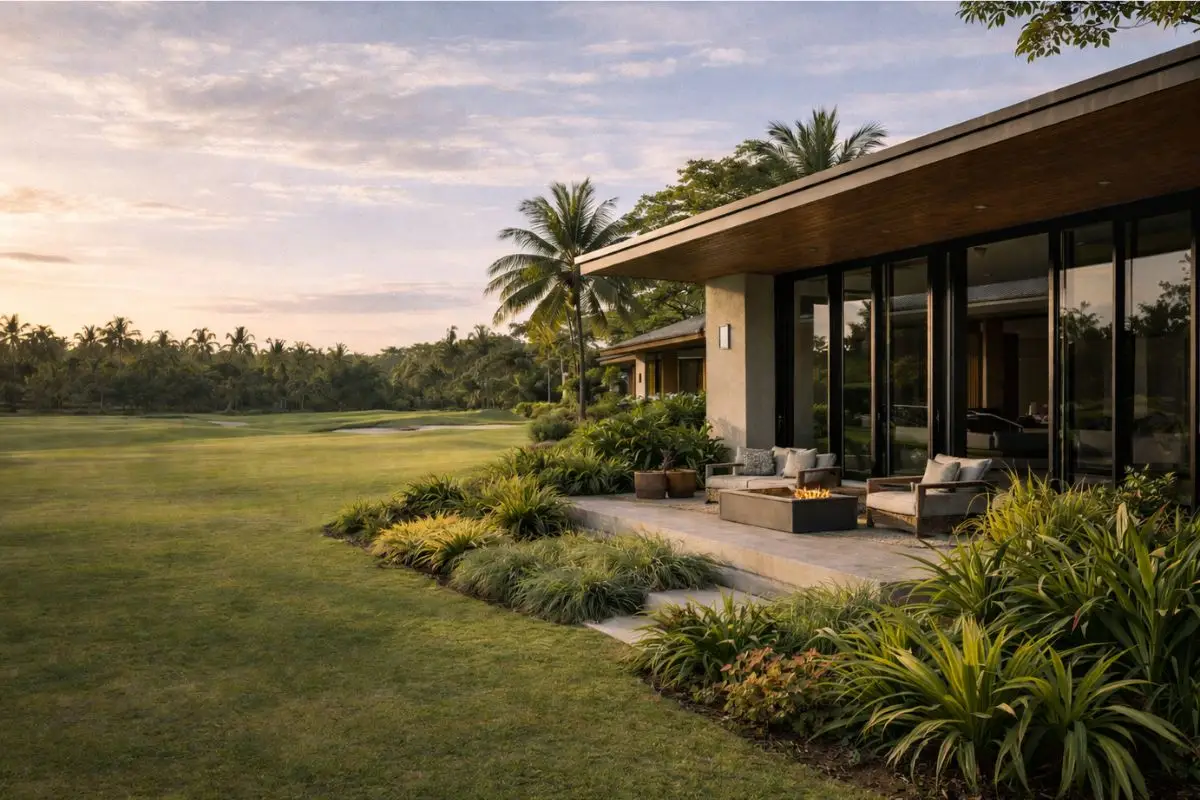
These views are intentional. They are protected through planning controls that limit future obstruction. Unlike typical residential developments where adjacent construction can alter sightlines over time, golf estates maintain a level of visual consistency that supports long-term value.
Properties with fairway frontage or elevated positions benefit from this stability. The ability to retain open views over time contributes directly to desirability and pricing resilience.
In this context, value is tied not only to the house itself but to the continuity of the landscape that surrounds it. This is one of the key reasons golf residences in the Philippines remain attractive to buyers who prioritize long-term investment over short-term gain.
Controlled Development Environment
A key strength of golf estates lies in their controlled development environment. Architectural guidelines and planning regulations are established early and enforced consistently.
These controls govern building height, setbacks, material palettes, and overall massing. While this may limit individual expression to some degree, it helps maintain a consistent overall character.
For buyers, this reduces uncertainty. The quality of neighboring properties, the scale of future construction, and the visual consistency of the environment are all more predictable.
This level of control is particularly important in golf residences in the Philippines, where the value of the development is closely tied to its ability to maintain a unified identity over time.
Lifestyle Integration
While golf is the central organizing element, the appeal of these developments extends beyond the sport. Daily routines are shaped by proximity to open space, walkable routes, and shared amenities.
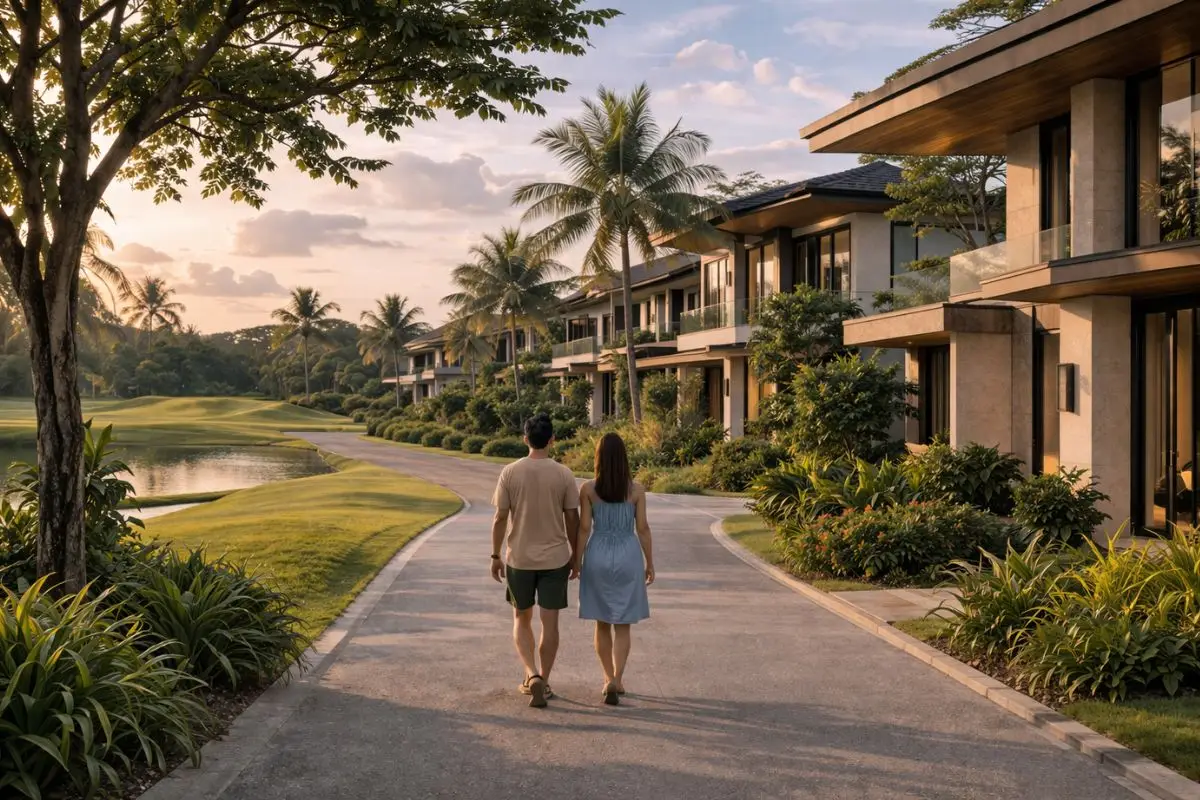
Paths often connect residential areas to clubhouses, practice facilities, and landscaped zones. This encourages movement within the community without relying heavily on vehicles. Outdoor spaces become part of everyday life rather than occasional destinations.
The clubhouse typically acts as a central point for social interaction, dining, and informal gatherings. Its placement and accessibility influence how frequently it is used and how it integrates into daily routines.
In golf residential communities in the Philippines, this integration of lifestyle and space creates an environment where recreation, social activity, and residential living are closely linked.
Market Positioning and Resilience
Golf residences occupy a niche segment within the broader real estate market. They are not designed for mass appeal, and this selective positioning contributes to their stability.
Because supply is limited and development is controlled, these properties tend to retain value even as surrounding markets fluctuate. Buyers are often motivated by long-term considerations such as privacy, environment, and predictability rather than short-term trends.
This results in a more stable ownership profile. Turnover is generally lower, and the development is less exposed to rapid changes in use or character.
In the Philippines, where urban expansion can be uneven and fast-paced, golf residences offer a more measured alternative. Their value is supported by planning discipline rather than speculative growth.
A Value Built on Planning Discipline
The appeal of golf residences in the Philippines ultimately comes down to how well the development is planned and managed. Privacy, views, and lifestyle are not independent features. They are outcomes of deliberate decisions about density, circulation, and land use.
Developments that maintain these principles over time tend to perform better, both in terms of livability and investment value. Those that compromise on planning discipline often lose the qualities that made them attractive in the first place.
In this sense, the long-term success of golf residential communities in the Philippines is not driven by surface-level appeal, but by the consistency and clarity of their underlying spatial logic.
They are planned with lower density, controlled access, and integrated open space, resulting in greater privacy and spatial clarity.
Views are protected through planning controls, allowing properties to retain visual value over time without obstruction.
No. They help maintain consistency across the development, which supports long-term value and reduces uncertainty.
They tend to be more resilient due to limited supply, controlled development, and consistent buyer demand for privacy and environment.
If you are exploring golf residences in the Philippines or planning a residential development within a golf estate, Fulgar Architects can help you align site planning, spatial quality, and long-term value from the earliest stages of the project.