












- Office design is shifting toward flexible and adaptable spatial planning
- Commercial office design in the Philippines is aligning with hybrid work realities
- Environmental response and user comfort are now core planning drivers
- Clear circulation and spatial hierarchy improve usability and leasing value
- Long-term asset performance depends on flexibility and operational clarity
The Shift Toward Meta-Modern Workplace Design
Workplace design in the Philippines is undergoing a quiet but significant transition. As companies adapt to hybrid work, shifting employee expectations, and evolving business models, the traditional office is losing relevance. Within this context, commercial office design in the Philippines is moving toward a more flexible and responsive framework often described as meta-modern.
This approach does not rely on a fixed aesthetic. Instead, it aligns spatial planning with actual patterns of use. Offices are designed to support multiple modes of work while maintaining clarity, efficiency, and long-term usability.
For developers, this signals a shift in how office assets are positioned. The workplace is no longer defined by density alone but by how effectively it supports changing operational needs.
Moving Beyond Fixed Layouts in Commercial Office Design in the Philippines
Conventional office planning emphasized uniformity. Rows of desks, enclosed meeting rooms, and rigid zoning structures defined the workplace. While efficient on paper, these layouts often limit adaptability and reduce long-term usability.
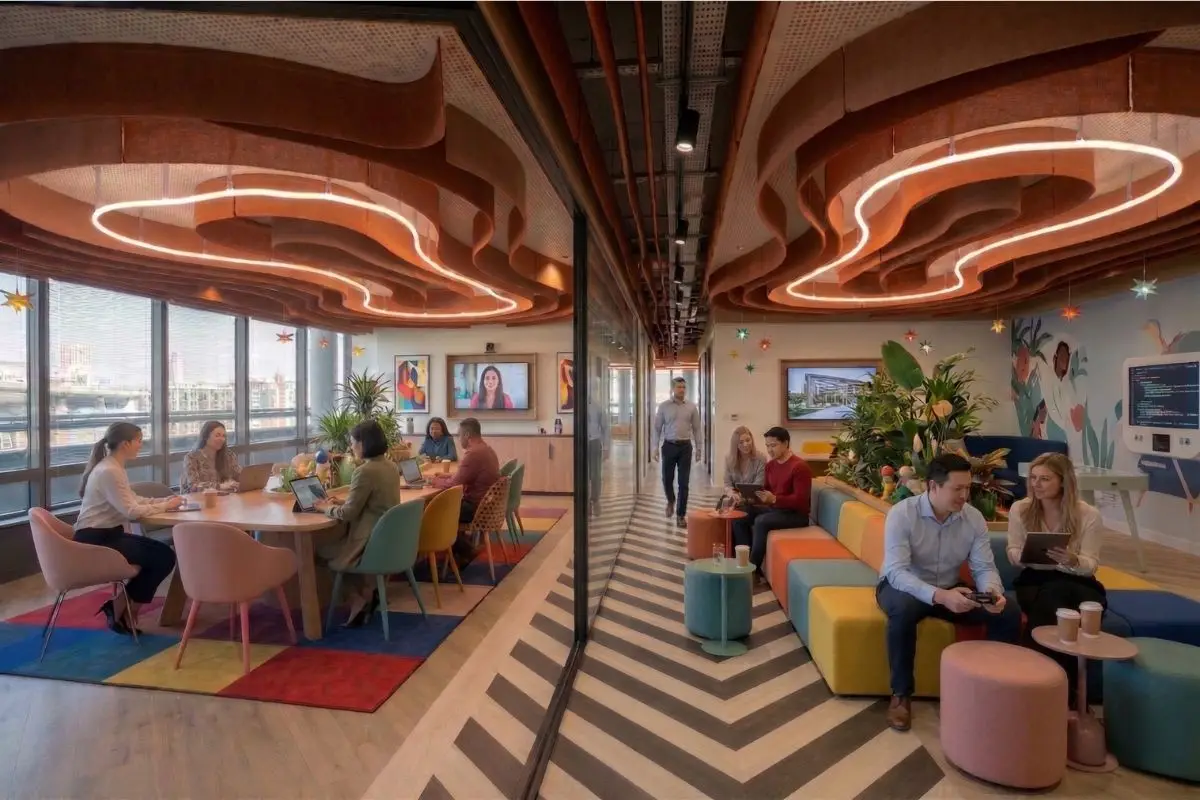
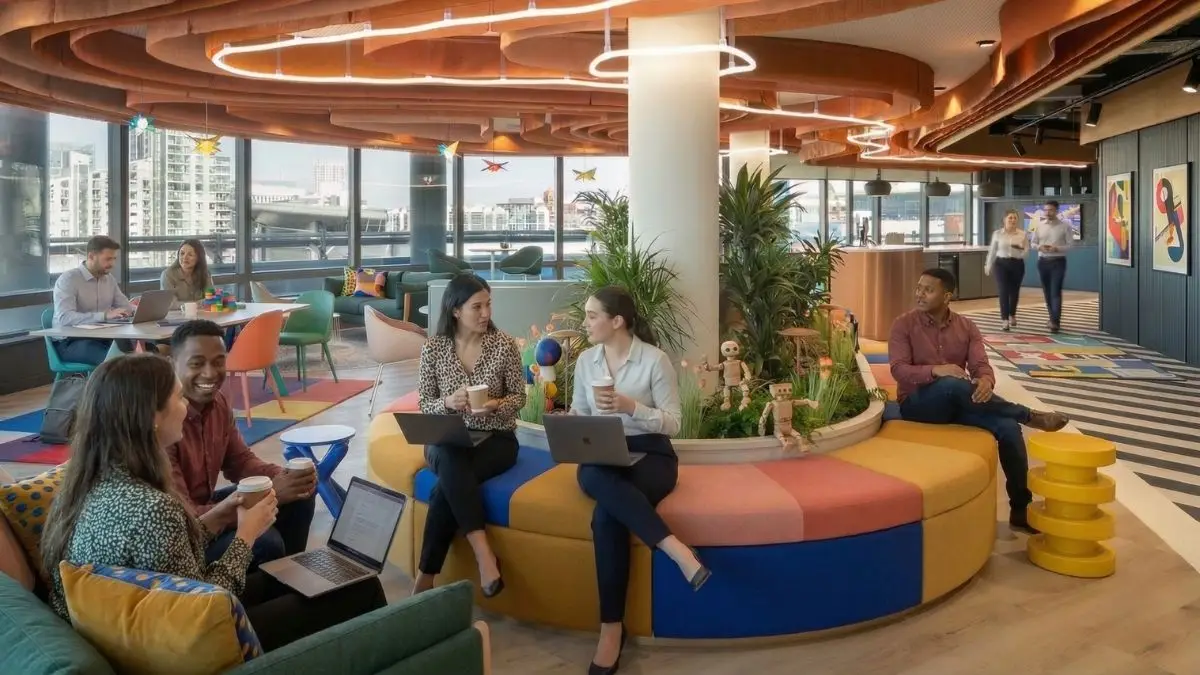
Meta-modern office environments introduce variation. Open collaboration areas, quiet work zones, and transitional spaces allow users to move between different modes of work throughout the day. This creates a more responsive environment without requiring constant physical reconfiguration.
In commercial office design in the Philippines, this shift directly affects leasing appeal. Tenants are increasingly looking for spaces that can evolve with their teams. Flexibility is no longer a premium feature. It is an expectation.
Integrating Work and Well-Being Through Planning
The modern workplace places greater emphasis on environmental quality and user comfort. Access to daylight, airflow, and greenery is no longer treated as an enhancement. It is part of the core planning strategy.
In Metro Manila developments, this often translates into careful floor plate design, strategic glazing, and controlled shading. These decisions improve both energy performance and occupant experience.
Rather than relying on decorative interventions, the design itself becomes the driver of well-being. This aligns with broader trends in commercial office design in the Philippines, where performance and user experience are increasingly interconnected.
Technology Integration Without Spatial Disruption
Technology plays a critical role in contemporary office environments, but its presence must remain unobtrusive. Smart systems for lighting, climate control, and access are integrated into the building without overwhelming the user experience.
The focus is operational efficiency. When systems are embedded seamlessly, users benefit from improved comfort and performance without being constantly aware of the infrastructure.
For developers, this has long-term implications. Buildings designed with adaptable systems are easier to maintain and upgrade. This supports sustained relevance within the evolving landscape of commercial office design in the Philippines.
Spatial Clarity, Circulation, and Daily Usability
As office layouts become more flexible, spatial clarity becomes more important. Circulation paths, transitions between zones, and visual connections must remain intuitive.
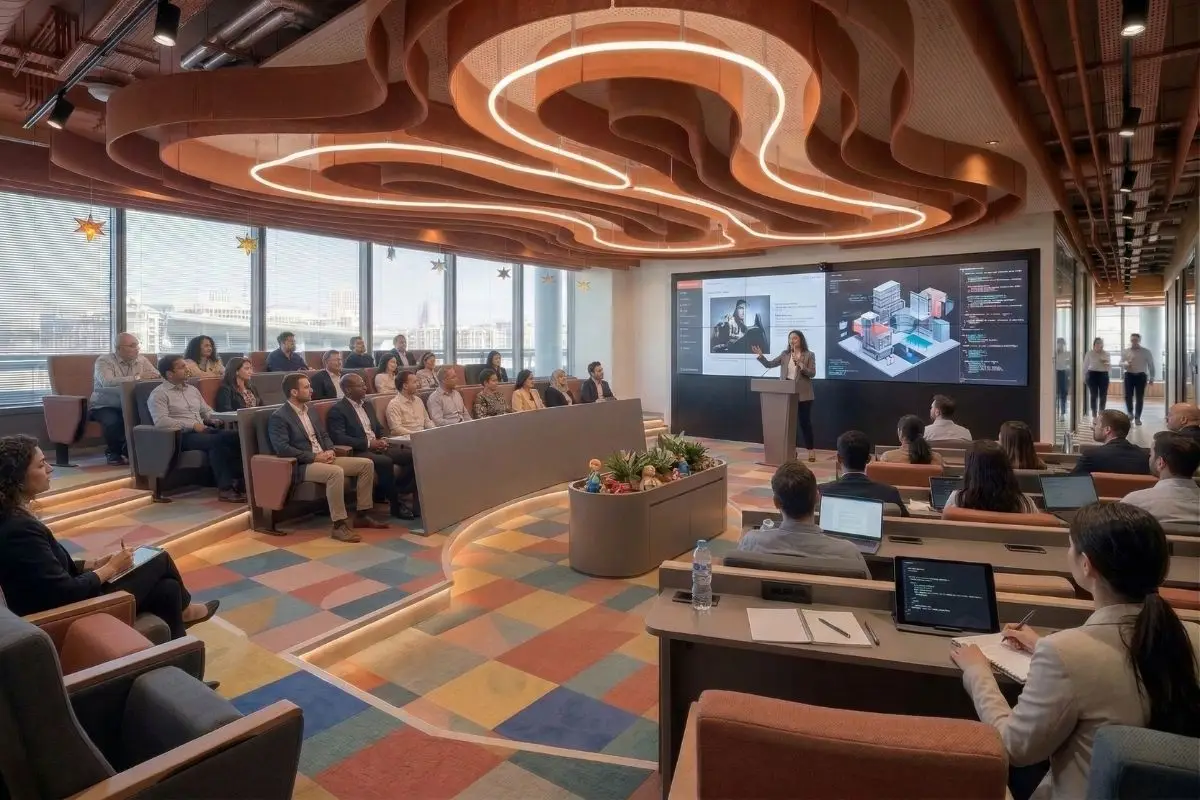
Wayfinding strategies, spatial hierarchy, and clear zoning logic ensure that even complex office environments remain easy to navigate. This is particularly critical in large-scale developments where multiple tenants share common areas.
In commercial office design in the Philippines, clarity is not just a design concern. It is a performance factor. Well-planned circulation reduces friction, improves user experience, and enhances the perceived value of the space.
Office Design as a Long-Term Asset Strategy
The move toward meta-modern office environments reflects a broader understanding of commercial office design in the Philippines. Buildings are no longer short-term products. They are long-term assets that must adapt to shifting demands.
Developments that prioritize flexibility, environmental response, and planning clarity tend to perform better over time. They are easier to lease, more efficient to operate, and more resilient to market changes.
In this context, office design becomes a strategic tool. It shapes not only the immediate user experience but also the long-term viability of the asset within the evolving commercial landscape.
Meta-modern design focuses on flexibility and multiple modes of work, while traditional layouts rely on fixed and uniform spatial arrangements.
Flexibility allows tenants to adapt spaces to changing team sizes, workflows, and business models without major renovations.
Access to light, ventilation, and thermal comfort improves user experience and can enhance productivity while reducing operational costs.
Clear planning, adaptable systems, and efficient circulation contribute to sustained leasing appeal and operational efficiency.
If you are planning a workplace or commercial development, Fulgar Architects can help align spatial planning, tenant strategy, and long-term asset performance within the realities of commercial office design in the Philippines.