












Article Summary
- Density is not just about numbers but about how space, movement, and proximity are experienced every day.
- When planned carefully, dense environments can feel organized, breathable, and comfortable rather than crowded.
- Clear layouts, layered transitions, and thoughtful zoning help dense places support daily life over the long term.
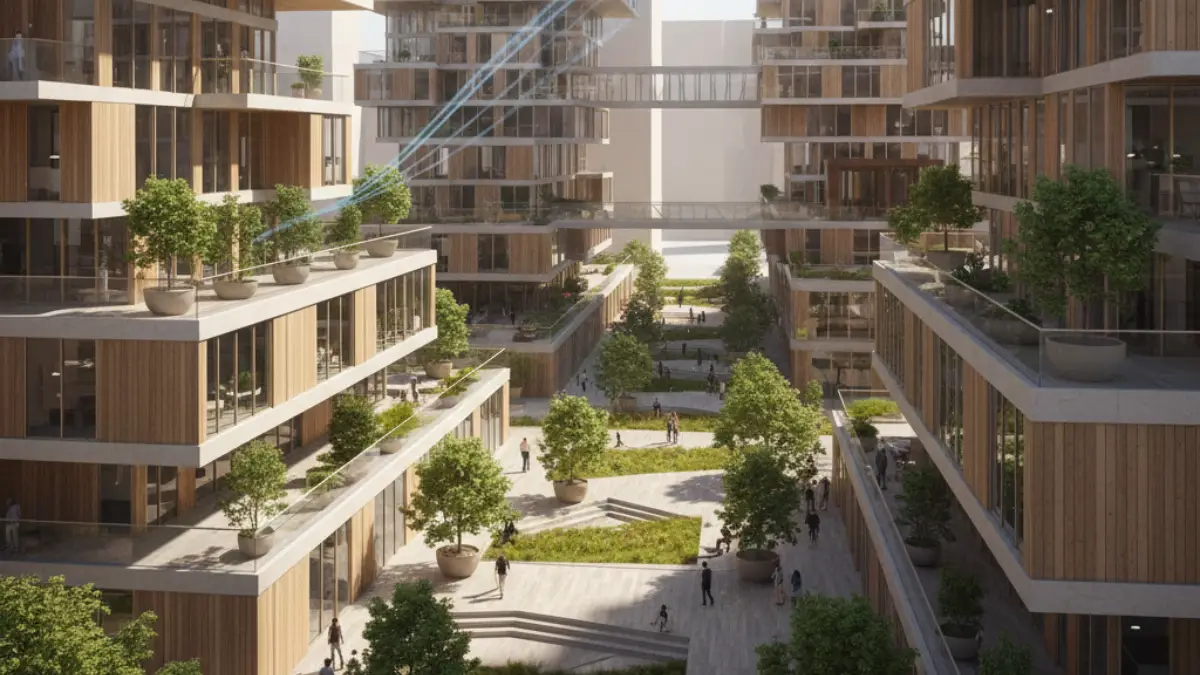
Density is often discussed in numerical terms. Floor area ratios, unit counts, and population targets dominate conversations about growth. In daily life, however, density is felt through movement, noise, light, privacy, and ease of use. How density can feel livable depends less on quantity and more on how space is arranged and experienced.
As cities grow, density becomes unavoidable. The challenge is no longer whether to build densely, but how density is organized, buffered, and experienced over time. Good architectural planning shapes distances, thresholds, and relationships so dense environments function without constant friction.
Density as a Lived Condition
People experience density through proximity rather than statistics. Narrow corridors, crowded lobbies, overlapping circulation, and poorly lit interiors make even moderate density feel overwhelming. By contrast, clear layouts and generous transitions can make higher density feel manageable.
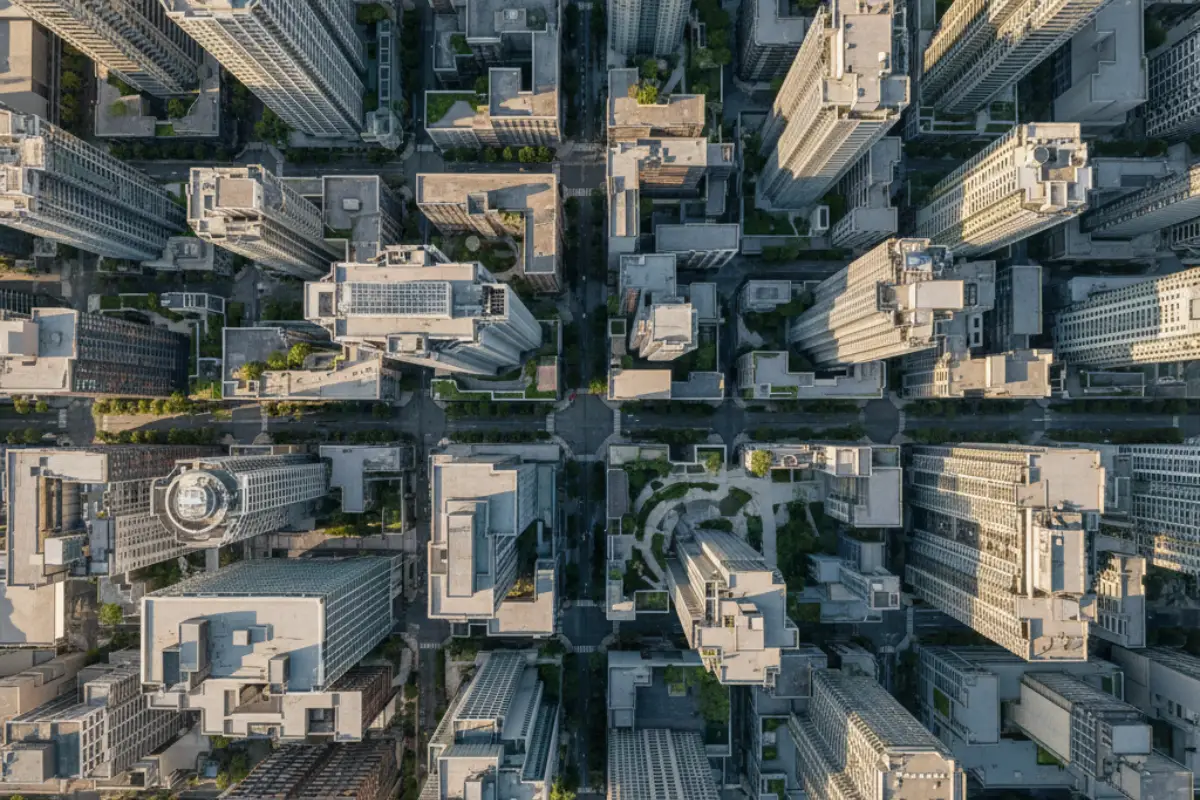
Decisions about massing, section, and orientation shape this experience. Small shifts in building height, spacing, and alignment help distribute pressure. Instead of stacking everything uniformly, planning introduces hierarchy, clarifying where intensity belongs and where relief is needed.
Thresholds, Edges, and Breathing Space
In dense environments, transitions matter as much as rooms themselves. The edge between public and private space often determines comfort. When these thresholds are abrupt, density feels intrusive. When they are layered, density feels controlled.
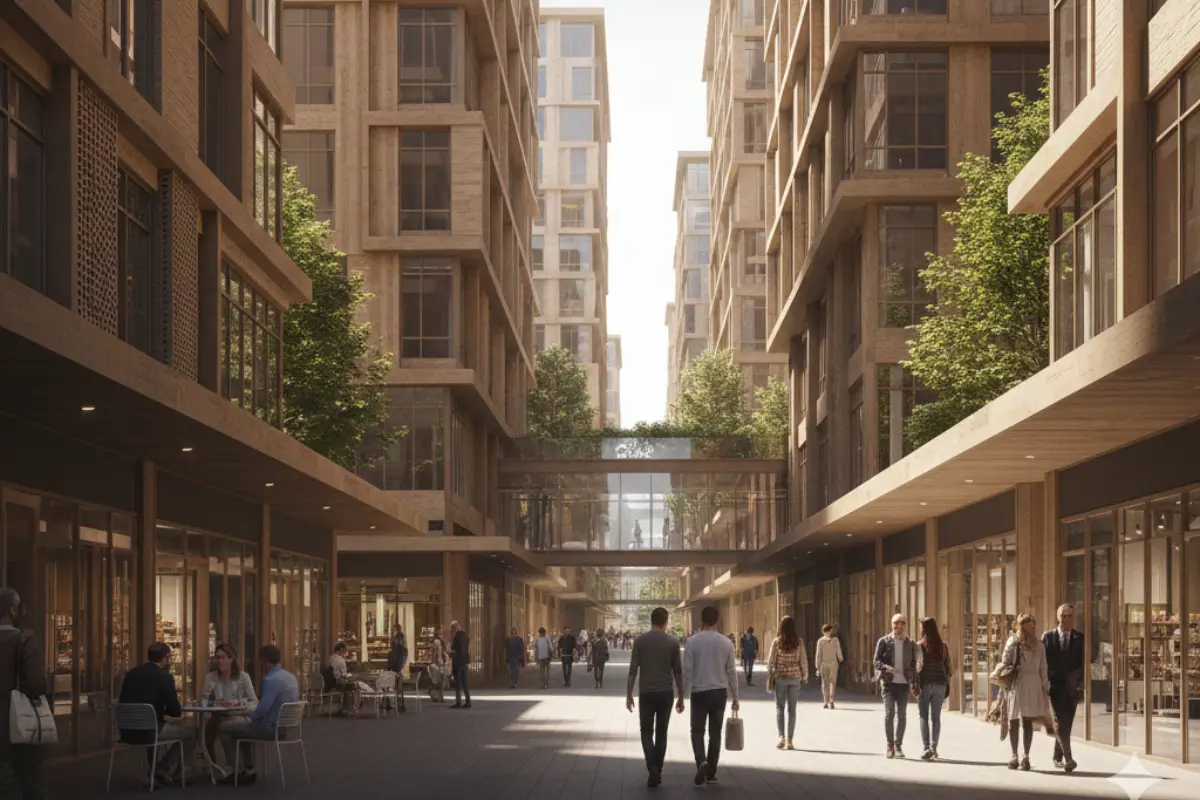
Setbacks, arcades, courtyards, and shaded ground floors act as buffers. They do not reduce density, but redistribute its effects. A courtyard introduces light and air into compact blocks. A recessed entry creates distance between street activity and interior space. These moves significantly improve comfort in dense settings.
Organizing Multiple Uses Clearly
As density increases, overlap between uses becomes inevitable. Residential units sit above retail, offices share sites with parking and services, and public circulation intersects with private life. How density can feel livable depends on making these relationships clear rather than congested.
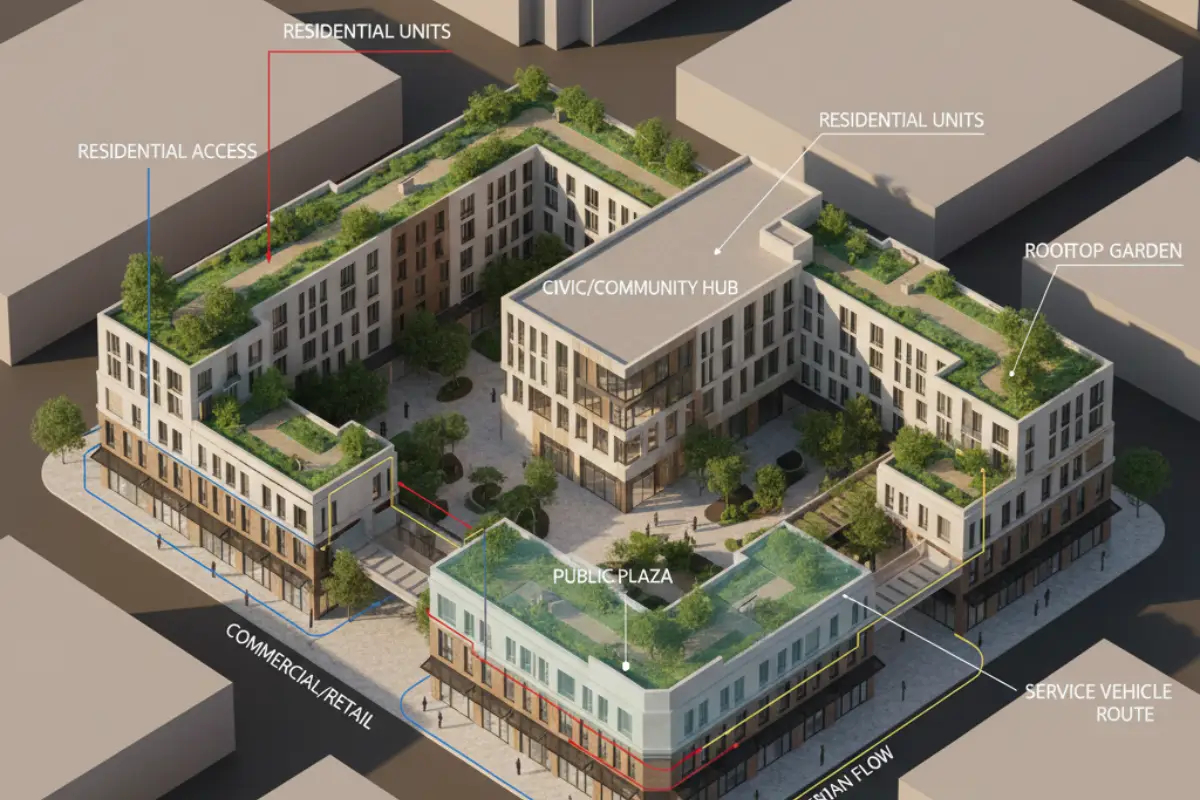
Clear zoning, both vertically and horizontally, prevents conflict. Separate entrances, dedicated service routes, and readable circulation systems allow different activities to coexist without interfering with one another. When these systems are unclear, density feels chaotic regardless of available space.
Density Over Time, Not Just at Completion
Density rarely arrives all at once. Most developments grow in phases, adding pressure gradually. Planning only for the final condition often creates problems during early or middle stages, when circulation, services, and shared spaces are incomplete.
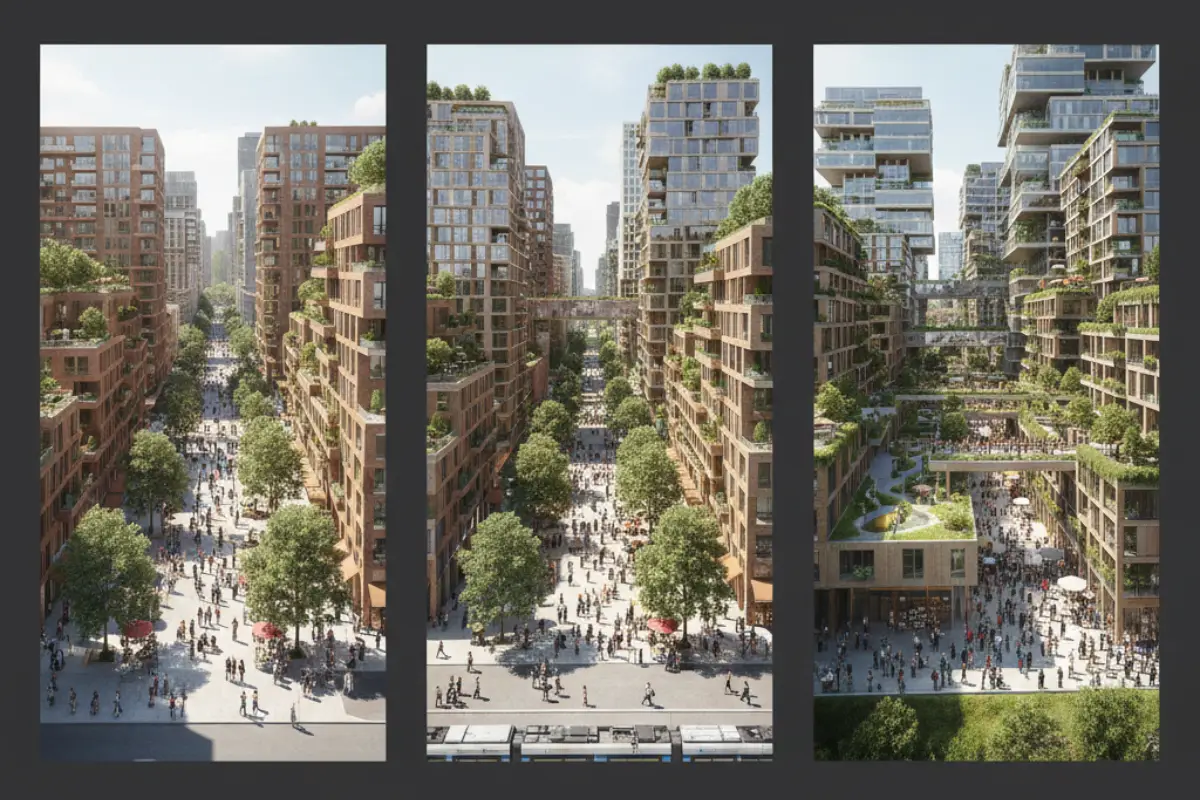
Early decisions about block size, access points, and infrastructure corridors determine whether density can increase without disruption. Reserving space for future movement, utilities, and shared areas allows density to grow without overwhelming daily use.
Making Density Work
Density does not need to feel heavy or exhausting. Through proportion, sequence, and organization, dense places can support comfort, clarity, and daily routines. How density can feel livable is ultimately a question of judgment rather than calculation.
Cities that handle density well do not feel sparse. They feel ordered, legible, and comfortable to move through. When density is planned deliberately, growth supports daily life instead of overwhelming it.
It means space is organized so proximity supports comfort, clarity, and usability rather than congestion.
No. Density becomes difficult only when movement, access, and privacy are poorly planned.
By planning clear circulation, layered thresholds, and adaptable layouts that can absorb change.
Because unmanaged density leads to friction, operational strain, and declining quality of life.