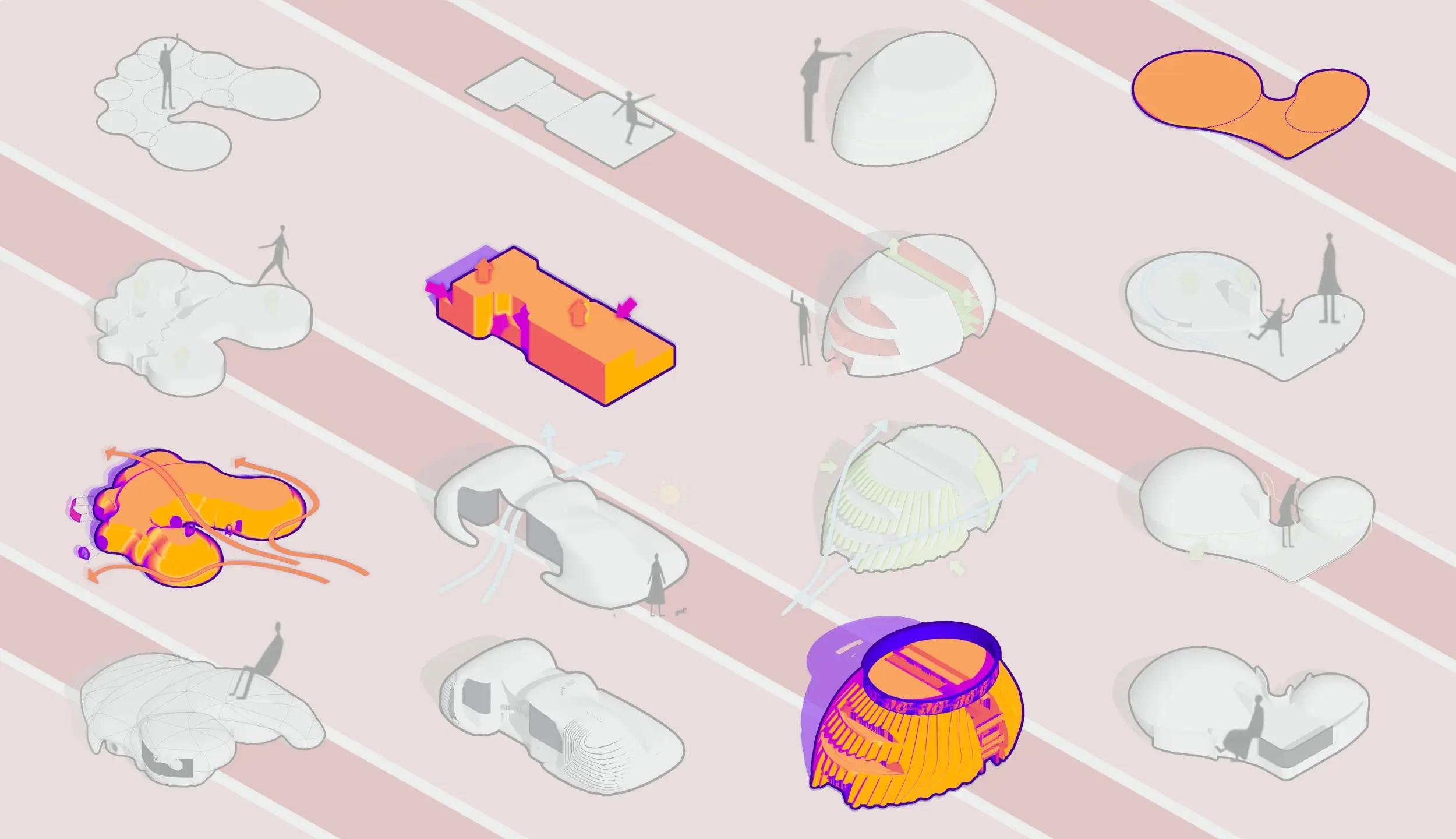













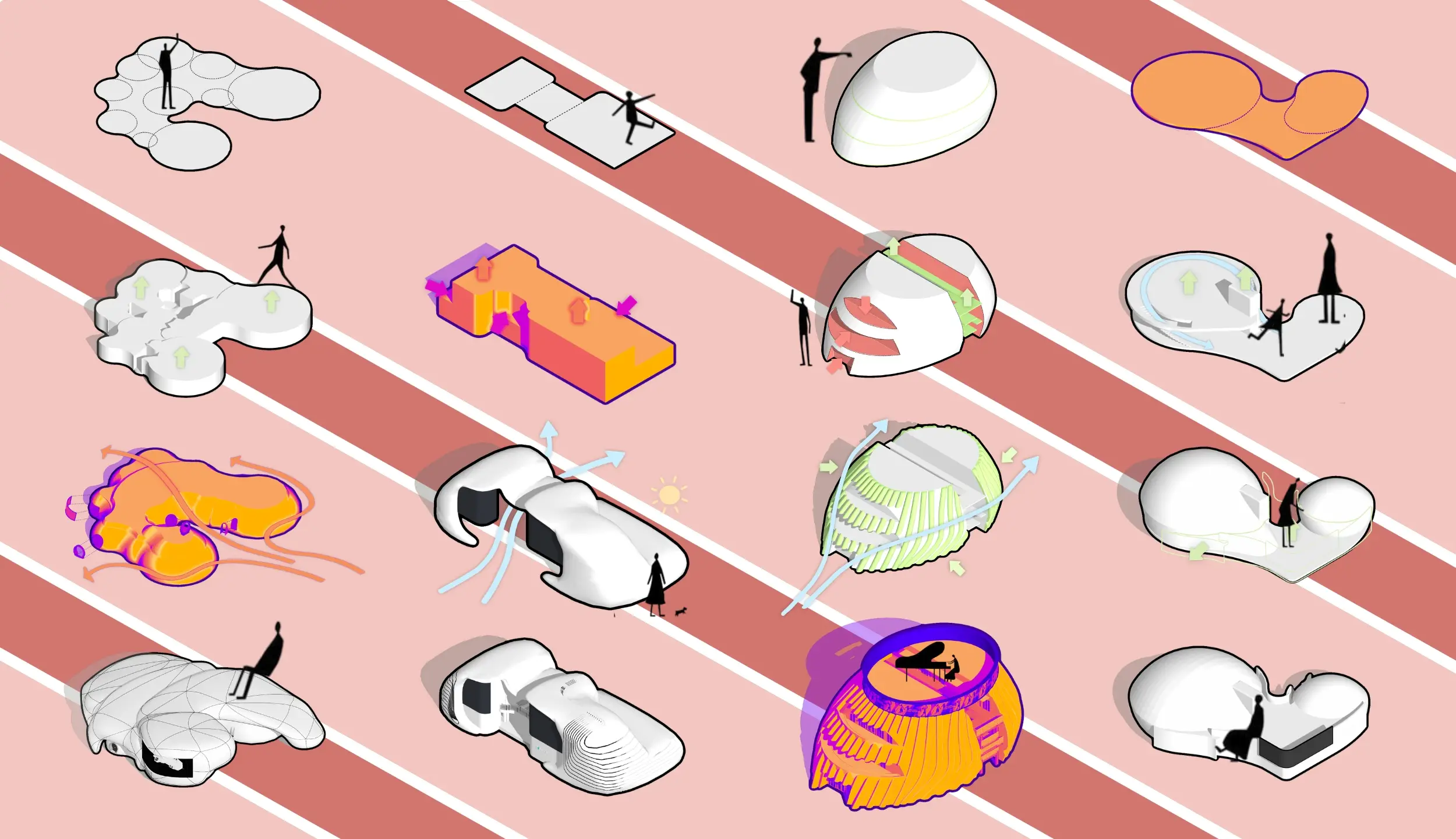
The creation of a dome begins with spatial planning, where architecture defines experience before form. At this stage, the focus is on how people will move, gather, and interact beneath the dome. The plan establishes the central axis, circulation paths, and functional zones, ensuring that the interior volume supports both purpose and atmosphere. Unlike conventional flat-roofed buildings, domes demand careful orchestration of vertical space, as height becomes a defining spatial element rather than just an enclosure.
Massing development transforms these spatial intentions into a three-dimensional presence. Using 3D modeling, architects test proportions, curvature, and scale to understand how the dome interacts with its surroundings. The mass is refined through iterative adjustments, balancing structural feasibility with visual clarity. Each modification strengthens the dome’s silhouette, ensuring it reads as both an architectural landmark and a cohesive part of the urban or natural context.
Concept integration brings meaning to the geometry. The dome is no longer just a shape but a carrier of ideas, whether inspired by celestial forms, cultural symbolism, or environmental performance. Structural logic, daylight penetration, and material strategy are embedded into the massing model. This stage ensures the design is not purely expressive but also purposeful, aligning architectural vision with performance, sustainability, and identity.
Design resolution is where vision becomes buildable architecture. The massing is refined into precise surfaces, structural systems, and architectural details that define the final form. Every curve is resolved to ensure structural integrity, spatial clarity, and visual impact. What begins as a simple volume evolves into a disciplined architectural statement, proving that the power of a dome lies not only in its iconic form but in the deliberate process that shapes it.