












- Branded environments are shaped through spatial experience, not just visual identity
- Wayfinding systems contribute to both navigation and brand perception
- Consistency across scales strengthens clarity in large developments
- Architectural integration improves usability and long-term performance
- Philippine context requires adaptable yet cohesive systems
In large-scale developments across the Philippines, identity is no longer defined by logos or marketing materials alone. It is shaped by space, movement, and perception. Within this context, branded environments in Philippine developments are not applied features but coordinated systems where architecture, signage, and spatial experience work together to express identity.This coordination is critical to maintaining clarity and coherence at scale.
From mixed-use estates in major business districts to township developments in emerging regions, branding is embedded in the physical environment. It influences how users recognize, navigate, and remember a place.
Beyond Graphics: Identity Through Space
A branded environment extends beyond visual graphics. It is built into the layout, material selection, and spatial hierarchy of a development.
Entry points, arrival sequences, and public spaces establish the first layer of identity. Signage and environmental graphic systems reinforce this through consistent language and placement. Together, these elements create a cohesive experience.
In Philippine developments where scale can be overwhelming, this consistency becomes essential. It allows users to understand where they are within the larger system. This is especially true in branded environments in Philippine developments, where multiple layers of information must remain legible.
Wayfinding as Brand Expression
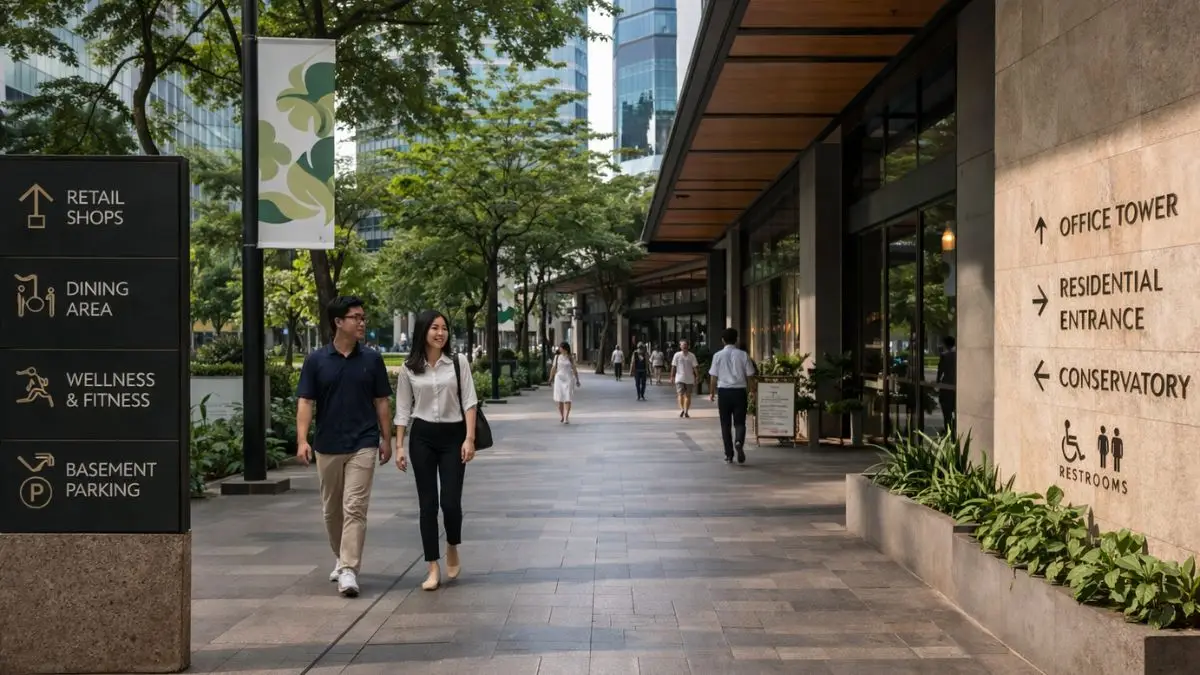
Wayfinding is often treated as a functional layer, but within large developments it operates as part of the overall spatial identity. The way information is presented, where it is placed, and how it aligns with movement patterns all contribute to how a development is perceived and understood.
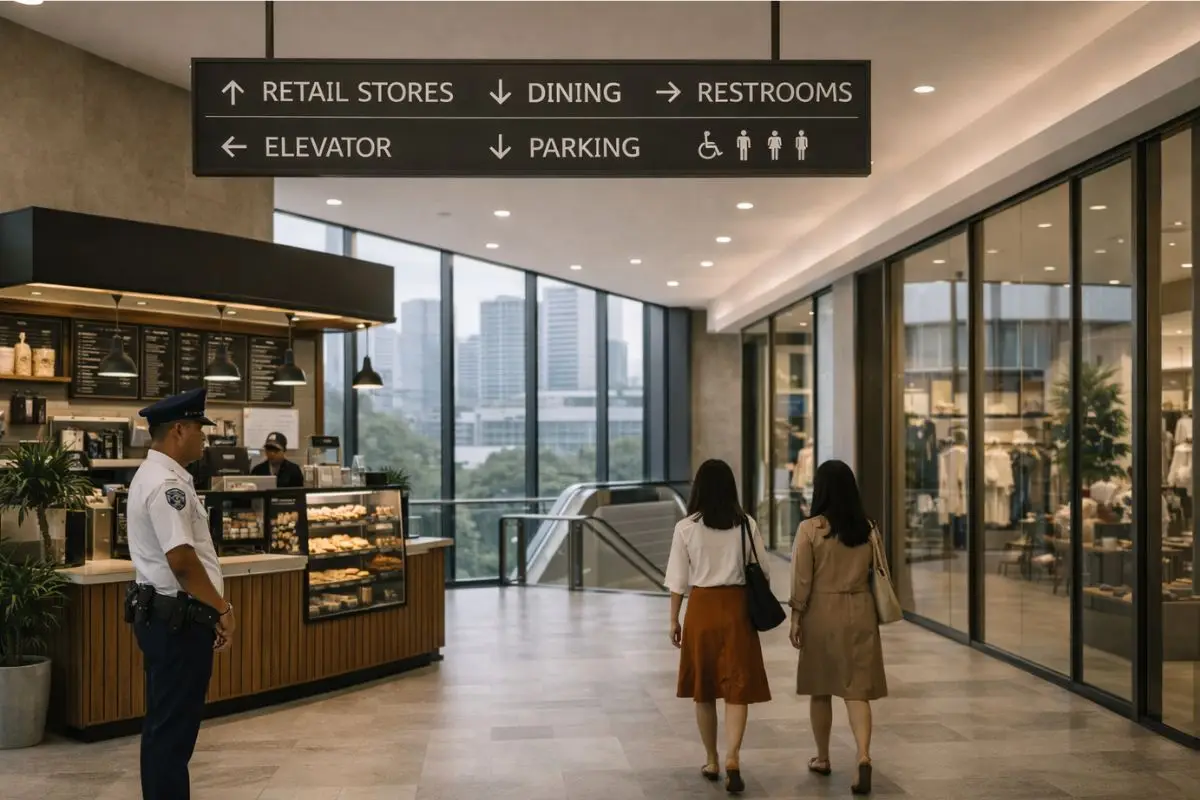
In practice, this means that typography, color systems, and signage placement are not arbitrary decisions. They reflect the character of the development and must be coordinated with architectural elements such as sightlines, material transitions, and decision points. When these elements are aligned, users are able to navigate intuitively without relying on excessive instruction.
In high-end environments, this balance becomes more critical. Overly assertive signage disrupts spatial continuity and weakens the architectural experience, while overly subtle systems create confusion. The goal is to achieve clarity through placement and hierarchy rather than visual dominance.
In the Philippine context, where developments accommodate varied user familiarity and multilingual conditions, wayfinding systems must remain legible across different user types. These systems support both usability and identity while guiding movement. In branded environments in Philippine developments, this balance between clarity and flexibility becomes a defining factor.
Consistency Across Scales
Branded environments operate across multiple scales, from large entry statements to the smallest directional cues. Each element contributes to how the development is read as a whole, and inconsistency at any level can weaken clarity.
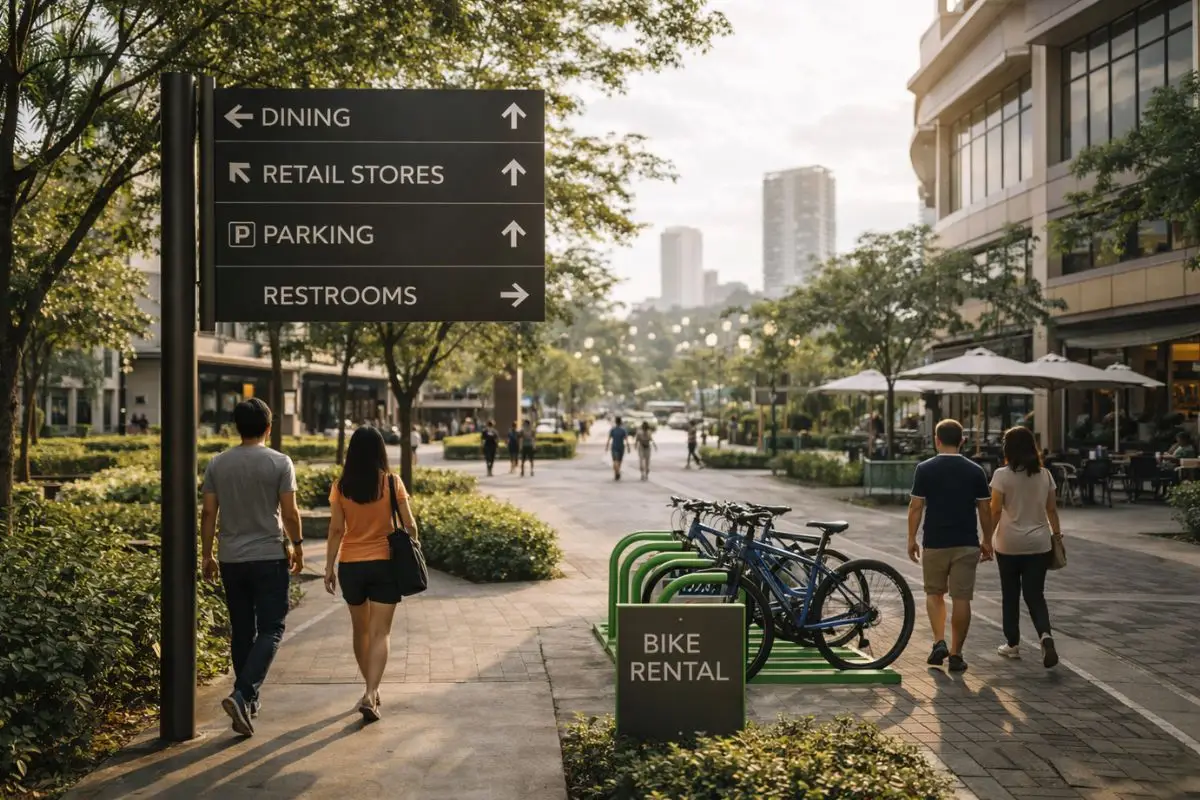
At the larger scale, entry markers, gateways, and district identifiers establish orientation. At smaller scales, directional signage, building identifiers, and environmental graphics support moment-to-moment decisions.
The challenge lies in maintaining coherence between these scales. Large gestures must connect logically to smaller interventions, both visually and spatially. This requires coordination not only in graphic language but also in material selection, proportion, and placement relative to architecture.
In mixed-use developments, where residential, commercial, and public components intersect, this consistency becomes essential. Without it, each zone risks developing its own identity, resulting in fragmentation rather than cohesion.
Supporting Commercial and Development Value
Brand clarity has a direct impact on development performance. In commercial environments, spaces that are easy to understand and navigate tend to attract more consistent foot traffic and tenant interest.
From a development perspective, this clarity reduces friction across leasing, marketing, and daily operations. When users can orient themselves easily, dwell time increases and the overall perception of quality improves.
Rather than being treated as a visual enhancement, branded environments function as part of the development strategy. They support long-term performance by reinforcing identity and usability within commercial architecture in the Philippines.
Integration in the Philippine Context
Philippine developments present challenges beyond scale. High density, varied user behavior, and multilingual environments affect how people interpret and move through space. Systems must therefore be both legible and adaptable.
Clarity must be achieved through calibration rather than repetition. Core elements such as placement logic, spatial hierarchy, and visual language remain consistent, while allowing adjustments based on context and user flow.
Spatial Transitions and System Continuity
In large developments across Metro Manila and emerging regions, transitions between residential, commercial, and public zones must remain coherent. When branding is embedded within architecture rather than applied, these transitions become more intuitive and less dependent on excessive signage.
In this context, branded environments in Philippine developments are integrated systems that shape how space is understood, navigated, and remembered over time. Fulgar Architects approaches branded environments as part of architectural planning, aligning spatial logic, circulation, and identity within a unified development strategy. In branded environments in Philippine developments, this integrated approach ensures long-term clarity and performance.
Traditional branding relies on visual elements like logos and marketing materials. Branded environments integrate identity into spatial planning, movement, and user experience.
Wayfinding reduces confusion and improves usability. It helps users navigate complex environments while reinforcing spatial clarity and identity.
Clear and consistent environments improve user experience, attract tenants, and support long-term commercial performance.
High density, mixed user behavior, and multilingual conditions require systems that are both structured and adaptable.
If you are planning a mixed-use development, township, or large-scale commercial project, Fulgar Architects can help integrate branding, wayfinding, and spatial clarity into the architecture from the earliest stages.