












- Signage systems support navigation, safety, and daily usability in vertical environments
- Clear wayfinding reduces confusion and improves movement across multiple levels
- Emergency signage plays a critical role in compliance and occupant safety
- Integration with architecture improves clarity and avoids visual clutter
- Long-term maintenance and updates affect overall building performance
Signage as a Layer of Navigation
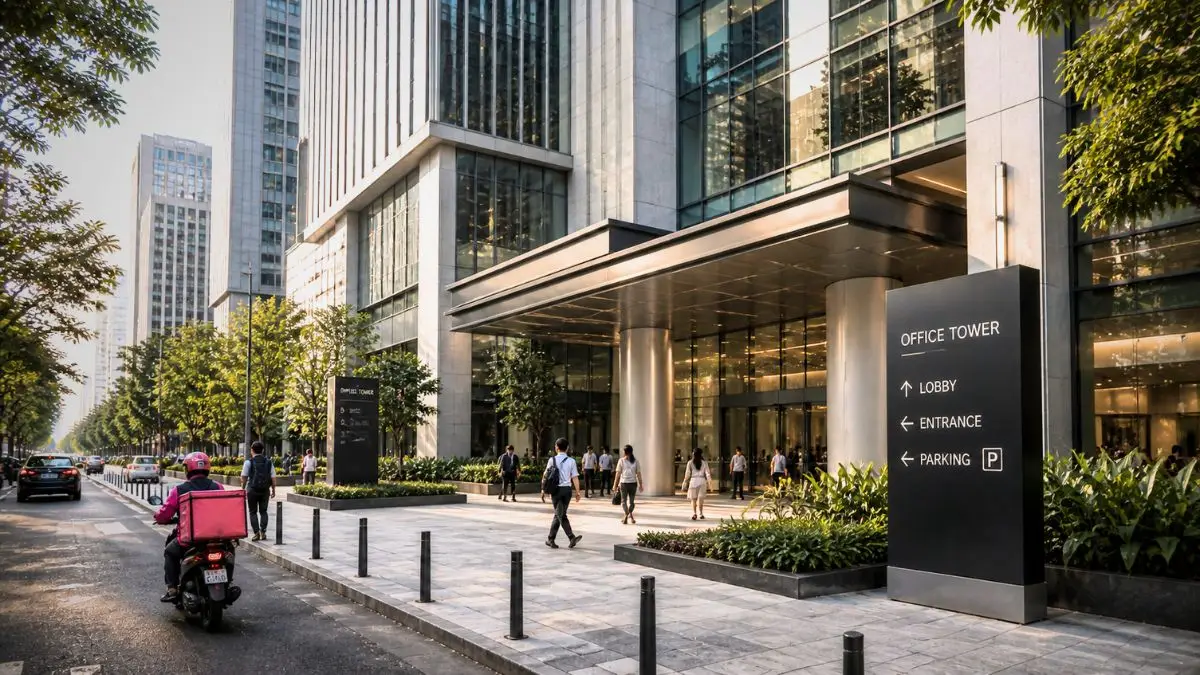
In high-rise buildings, movement is no longer defined by simple horizontal circulation. Elevators, stairwells, service corridors, and shared amenities create layered systems that require clear navigation. Within this context, signage systems for high-rise buildings in the Philippines function as an essential layer of spatial communication.
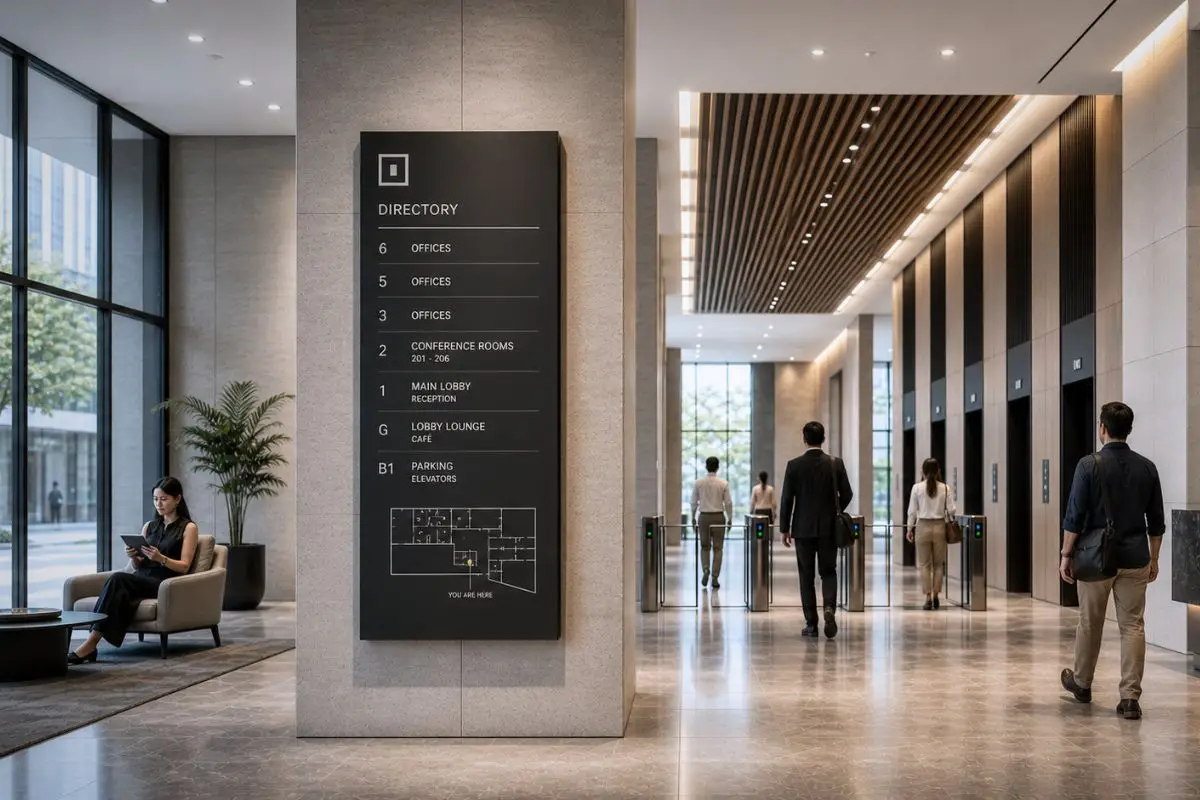
Rather than acting as a supplementary feature, signage supports how occupants understand and move through vertical environments. In dense urban settings where high-rise developments continue to expand, the ability to navigate efficiently becomes directly tied to usability, safety, and overall building performance.
Wayfinding and Movement
Navigation in high-rise buildings depends on more than physical layout. While architectural planning establishes circulation paths, signage provides the information needed to interpret those paths.
In signage systems for high-rise buildings in the Philippines, wayfinding is often structured around key decision points such as elevator lobbies, corridor intersections, and transitions between public and private zones. These moments require clear, immediate information that helps users choose the correct direction without hesitation.
Effective signage reduces reliance on guesswork. It allows first-time visitors to move with the same level of confidence as regular occupants. When aligned with circulation planning, signage reinforces spatial logic rather than compensating for it.
Safety and Emergency Systems
Beyond everyday navigation, signage plays a critical role in emergency response. Exit signs, fire escape indicators, and evacuation maps must remain visible, legible, and consistent across all levels of a building.
In signage systems for high-rise buildings in the Philippines, compliance with fire and safety regulations is non-negotiable. However, compliance alone is not enough. The placement and clarity of emergency signage must consider real-world conditions such as low visibility, high occupant density, and unfamiliar users.
Emergency systems must operate independently of routine navigation. In high-stress situations, signage must be immediately recognizable and easy to interpret without prior knowledge of the building. This requires a distinct visual hierarchy that separates safety information from general wayfinding.
Integration with Architecture
One of the most common issues in high-rise developments is the late introduction of signage. When signage is treated as an afterthought, it often results in visual clutter and inconsistent placement.
A more effective approach is to integrate signage systems into architectural planning from the outset. In signage systems for high-rise buildings in the Philippines, this means identifying sightlines, decision points, and circulation paths early in the design process.
Integration allows signage to align with structural elements, material transitions, and spatial proportions. Instead of competing with architecture, it becomes part of the environment. This reduces the need for excessive signs and improves overall clarity.
User Experience and Readability
The effectiveness of signage depends on how easily it can be read and understood. This involves hierarchy, placement, scale, and contrast.In high-rise environments, users are often moving quickly or navigating unfamiliar spaces. Signage must therefore communicate information efficiently. Overly complex systems or inconsistent formatting can slow movement and create confusion.
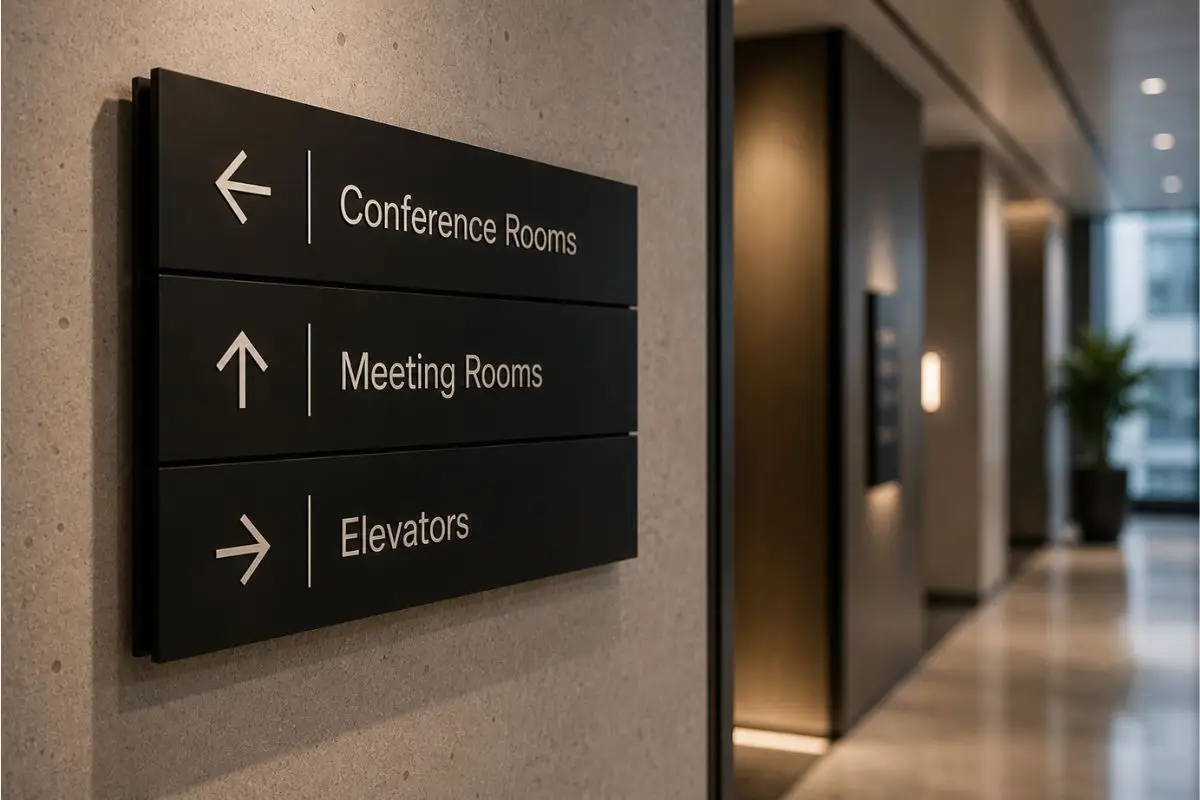
In signage systems for high-rise buildings in the Philippines, readability is influenced by both design and context. Lighting conditions, viewing distance, and surrounding materials all affect how information is perceived. Clear hierarchy ensures that primary directions, secondary information, and supporting details are presented in the correct order.
Consistency across floors and zones reinforces familiarity. When users recognize patterns, navigation becomes more intuitive over time.
Operational Efficiency
Signage systems must also support long-term building operations. As tenants change, layouts evolve, and services are updated, signage must remain adaptable.
In signage systems for high-rise buildings in the Philippines, this often involves modular systems that allow for updates without full replacement. Maintenance considerations such as durability, accessibility, and material performance become important over the building’s lifecycle.
Well-planned signage reduces the need for temporary fixes such as printed notices or ad hoc directional signs. It supports smoother operations by ensuring that information remains accurate and accessible.
Signage and Building Performance Over Time
In high-rise developments, signage is often overlooked because it is expected to function quietly in the background. Yet its impact is significant. It shapes how people move, how they respond in emergencies, and how they experience a building on a daily basis.
Signage systems for high-rise buildings in the Philippines are not simply informational tools. They are part of the broader architectural system that supports clarity, safety, and usability. When integrated properly, they contribute to a more coherent and functional environment, reinforcing the overall performance of the building over time.
Signage helps users navigate complex vertical environments by providing clear direction and reinforcing circulation paths.
Emergency signage guides occupants to exits and safe zones during critical situations, ensuring faster and more organized evacuation.
Signage should be integrated during early design stages to align with circulation, sightlines, and spatial hierarchy.
Clear hierarchy, proper placement, and consistency across levels ensure that signage remains easy to read and use.
If you are planning a high-rise residential or mixed-use development, Fulgar Architects can help integrate signage, circulation, and spatial clarity from the earliest stages of design.