












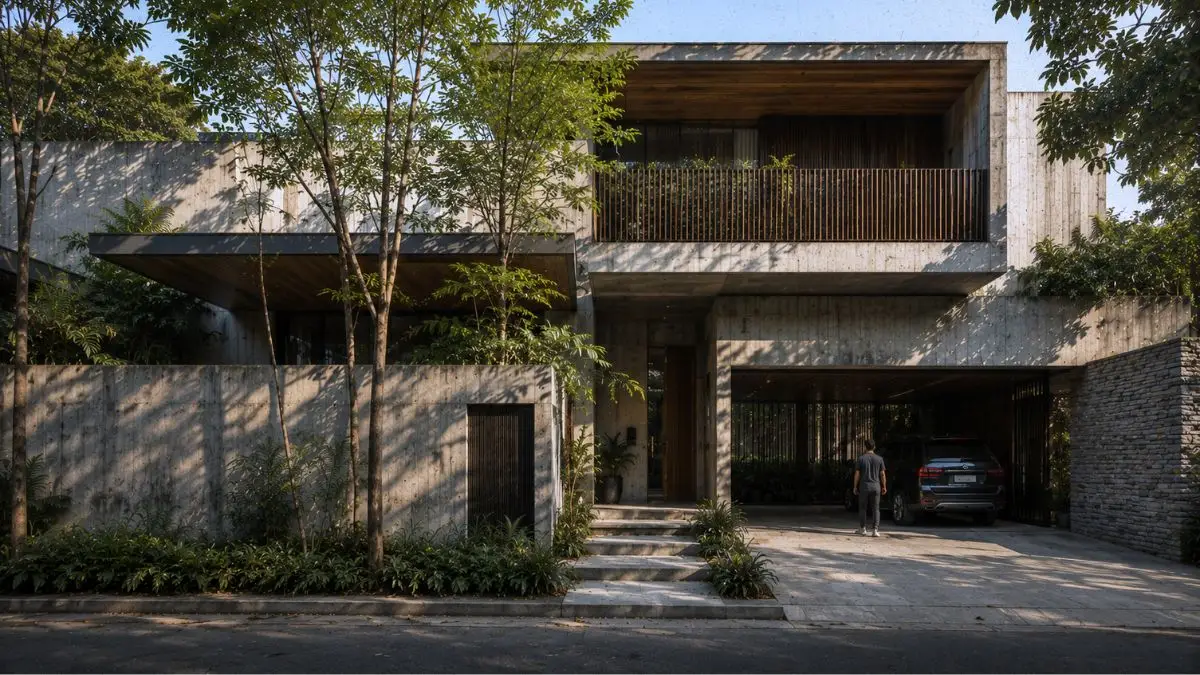
- Modern brutalist residences use texture and shadow to create depth and spatial character
- Material selection influences how buildings respond to light throughout the day
- Concrete, stone, and natural finishes contribute to visual permanence and durability
- Shadow is used intentionally to shape atmosphere and soften large architectural forms
- Contemporary brutalist design continues to evolve within tropical residential architecture
The Return of Material Presence in Residential Architecture
Modern residential architecture has increasingly shifted toward cleaner forms, restrained detailing, and stronger material expression. Within this direction, modern brutalist residences have gained renewed attention for their ability to create spaces that feel grounded, tactile, and architecturally distinct.
While early brutalism was often associated with institutional buildings and large civic structures, contemporary interpretations have become more refined and residential in scale. The emphasis is no longer solely on monumentality. Instead, many architects now focus on how texture, proportion, and shadow create atmosphere within the home.
This evolution has allowed brutalist architecture to adapt more naturally to tropical residential environments.
Texture as a Defining Architectural Element
In modern brutalist residences, texture becomes one of the primary tools for creating visual depth. Surfaces are rarely treated as neutral backgrounds. Instead, materials are allowed to retain their natural imperfections, grain, and weight.
Concrete remains one of the most recognizable materials within brutalist architecture, though contemporary residences often balance it with wood, stone, metal, and textured plaster finishes. These combinations prevent spaces from feeling overly heavy while maintaining the strong architectural identity associated with brutalism.
Rather than relying on decorative ornamentation, these homes achieve richness through material contrast and surface variation. Rough concrete walls placed beside warm timber or natural stone create a more layered and tactile residential experience.
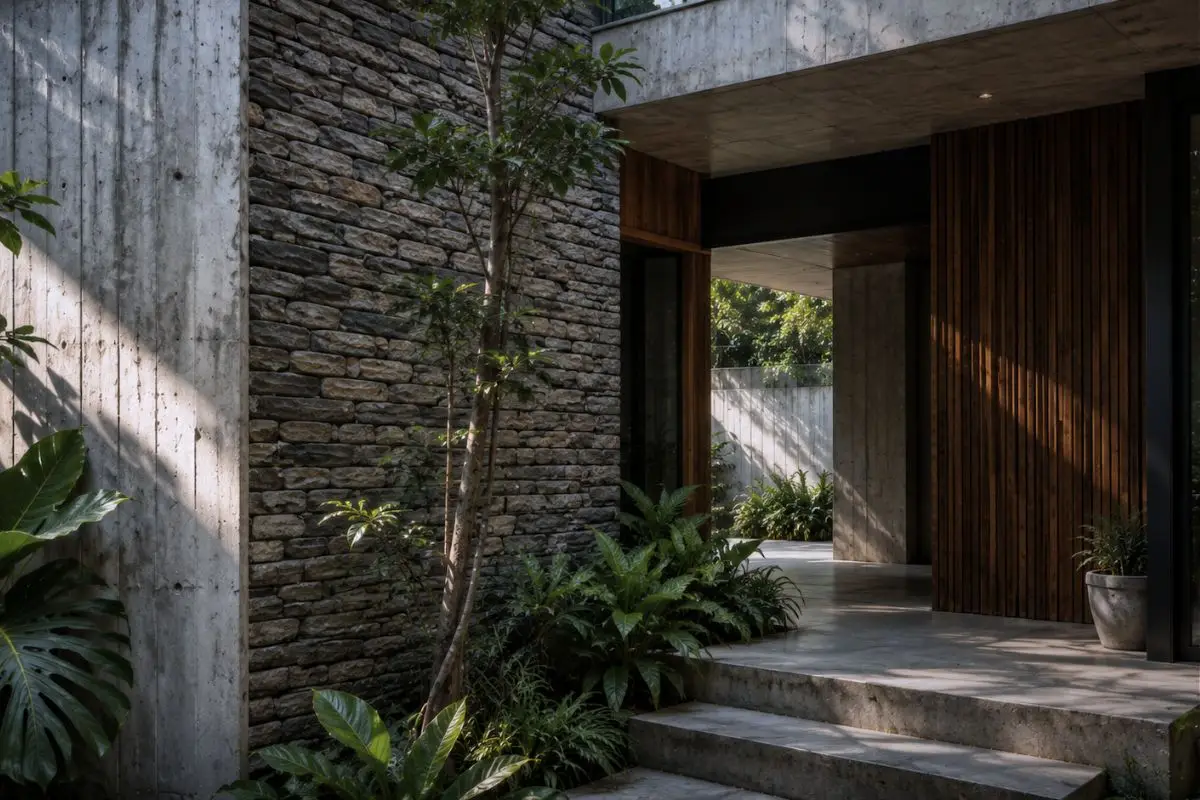
This focus on texture allows the architecture to remain visually engaging even when the overall form is restrained.
The Role of Shadow in Spatial Experience
Shadow plays a critical role in how brutalist architecture is perceived throughout the day. Deep overhangs, recessed openings, thick walls, and layered facades create constantly shifting patterns of light and shadow across surfaces.
In modern brutalist residences, shadow is not treated as a secondary effect. It becomes part of the architectural composition itself. Light reveals texture, defines depth, and softens the visual weight of large materials.
This approach is particularly effective in tropical climates where strong sunlight creates opportunities for dramatic contrast while also helping reduce heat gain within interior spaces.
Carefully positioned openings allow natural light to enter selectively rather than uniformly. This creates interiors that feel calm, controlled, and visually grounded without becoming overly dark or enclosed.
Brutalism in Tropical Residential Design
Contemporary brutalist architecture has gradually adapted to the realities of tropical living. Earlier brutalist structures were often criticized for feeling too dense or unresponsive to climate. Modern interpretations address these concerns through improved ventilation, landscaping integration, and more balanced material palettes.
Modern brutalist residences in the Philippines often incorporate shaded courtyards, operable openings, breezeways, and natural ventilation strategies that soften the heaviness traditionally associated with brutalism.
The integration of greenery also plays an important role. Landscaped edges, planted courtyards, and climbing vegetation introduce softness without diminishing the architectural clarity of the structure.
Rather than opposing nature, many contemporary brutalist homes now frame landscape as part of the overall spatial experience.
Creating Privacy Through Form and Massing
One of the strengths of brutalist residential architecture is its ability to create privacy through massing rather than excessive enclosure. Solid volumes, controlled openings, and layered spatial transitions allow homes to feel protected without relying entirely on perimeter walls or visual barriers.
In dense urban environments, this becomes especially valuable. Modern brutalist residences often use inward-facing layouts, screened facades, and recessed outdoor spaces to maintain privacy while still allowing access to light and ventilation.
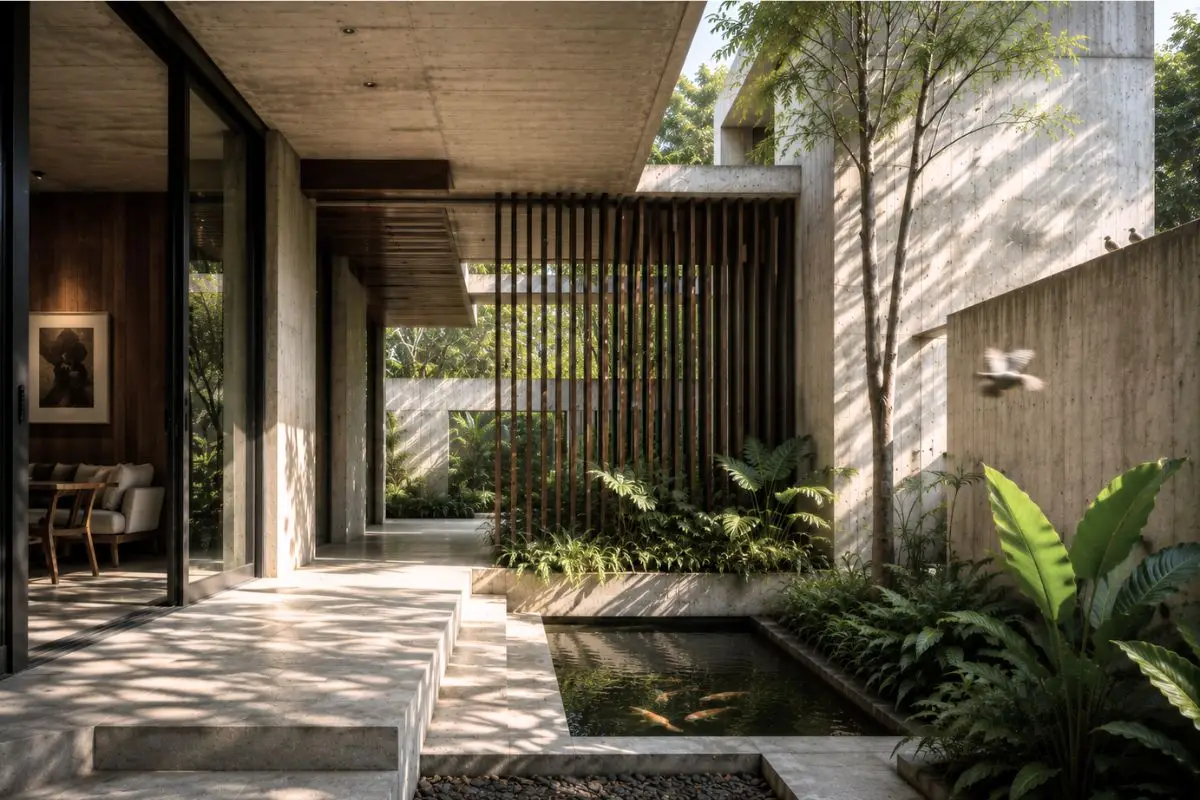
This careful balance between openness and protection contributes to a more controlled and comfortable residential environment.
Durability and Long-Term Architectural Identity
Material durability remains one of the defining characteristics of brutalist architecture. Concrete, stone, and steel age differently from lighter or highly decorative finishes. Over time, surfaces develop variation and weathering that contribute to the building’s identity rather than diminishing it.
In modern brutalist residences, longevity is often part of the architectural intention from the beginning. Materials are selected not only for appearance but for how they perform over decades of use.
This long-term perspective aligns with contemporary residential priorities that increasingly value permanence, adaptability, and architectural clarity over rapidly changing design trends.
Modern brutalist residences emphasize strong forms, exposed materials, texture, and the controlled use of light and shadow within residential architecture.
Texture creates visual depth and allows materials such as concrete, stone, and wood to contribute directly to the architectural experience.
Contemporary brutalist homes incorporate ventilation, shaded spaces, landscaping, and climate-responsive planning strategies suited to tropical environments.
Shadow softens large architectural forms, enhances spatial atmosphere, and helps define depth throughout the building.
If you are planning a contemporary residence, Fulgar Architects can help develop architectural solutions that balance material expression, climate responsiveness, and long-term residential value.