












- Topography is increasingly becoming a residential asset rather than a development constraint.
- Successful hillside communities balance views, access, drainage, and long-term livability.
- Elevation can enhance privacy, environmental quality, and residential value when planned correctly.
- Road networks and infrastructure require specialized approaches on sloping sites.
- Rizal’s premium hillside communities demonstrate how terrain can shape distinctive residential environments.
Residential development has traditionally favored flat land. Level sites simplify construction, infrastructure, and circulation, making them attractive to developers and builders alike. Yet some of the Philippines’ most desirable residential communities have emerged on elevated terrain where topography becomes one of the project’s defining advantages.
Across Rizal, hillside communities continue attracting homeowners seeking views, privacy, cooler environments, and stronger connections to nature. Developments such as Timberland Heights, Havila, Sun Valley Estates, and Eastland Heights demonstrate how elevation can become a valuable component of residential planning rather than an obstacle to overcome.
Designing for elevated living requires a different approach to architecture and master planning. Roads, drainage systems, lot configurations, and open spaces must all respond to the terrain. When handled thoughtfully, these constraints often become the very qualities that distinguish hillside communities from conventional residential developments.
Why Hillside Living Continues to Attract Homeowners
The appeal of hillside communities extends beyond scenic views.
Elevation often creates a stronger sense of separation from urban congestion while remaining connected to major metropolitan areas. Many residents value the combination of accessibility and retreat, particularly in locations such as Antipolo and the broader Rizal corridor, where hillside developments offer proximity to Metro Manila without replicating its density.
Hillside locations can also provide environmental advantages. Increased airflow, opportunities for natural ventilation, and stronger visual connections to surrounding landscapes contribute to a different residential experience than what is typically found in lowland developments.
For many homeowners, these qualities create a sense of exclusivity that cannot be replicated through architecture alone. The site itself becomes part of the value proposition.
Designing With Topography Rather Than Against It
One of the most important principles in hillside development is working with the terrain rather than attempting to erase it.
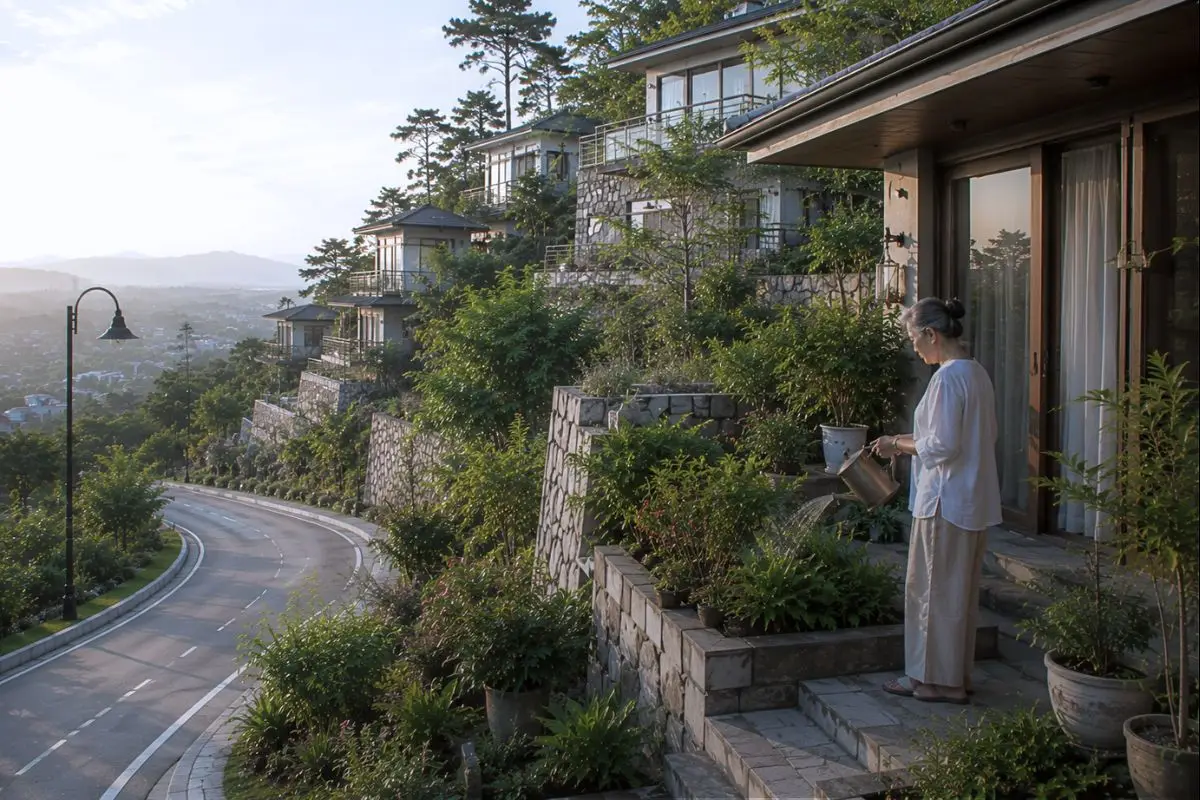
Projects that rely excessively on large-scale earthworks often lose the very characteristics that make elevated sites desirable. Extensive grading can increase construction costs, disrupt natural drainage patterns, and diminish the landscape identity of a development.
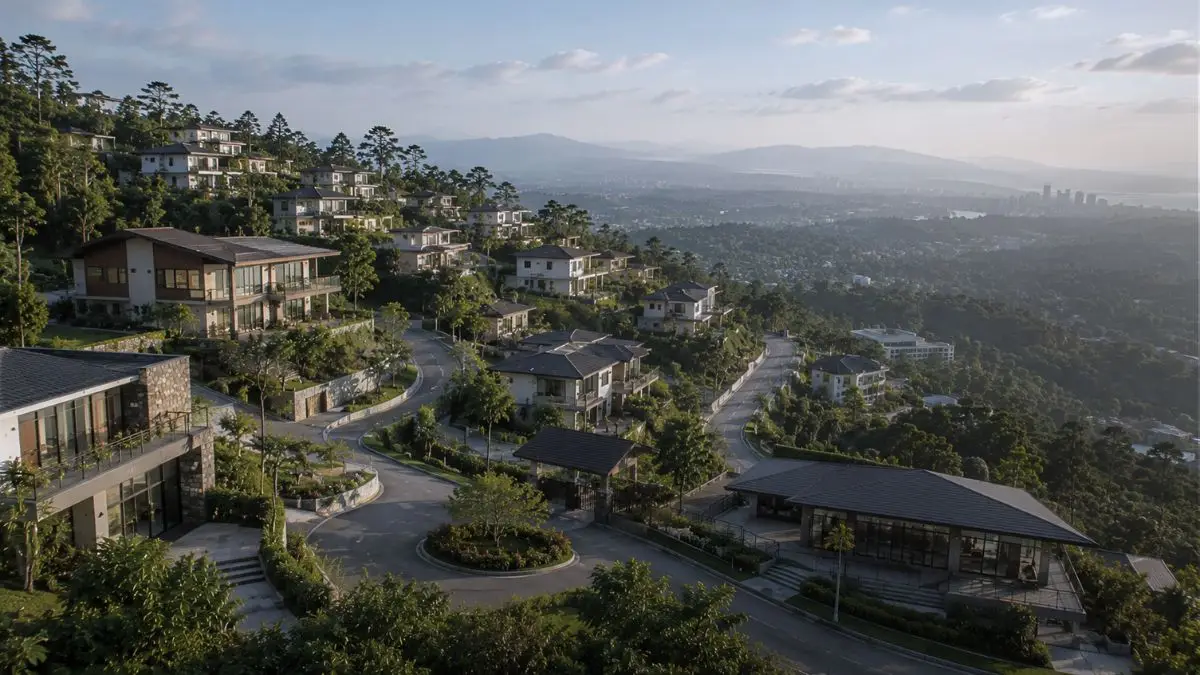
Successful hillside communities typically adapt their planning strategies to the contours of the land. Roads follow natural ridgelines where possible. Residential lots respond to changing elevations. Open spaces are positioned to preserve views and strengthen relationships with the surrounding environment.
Timberland Heights offers a strong example of this approach. Rather than imposing a rigid urban grid, the community adapts to the existing terrain, allowing the landscape itself to influence the development pattern.
This relationship between planning and topography often produces more distinctive residential environments than conventional flat-land developments.
Access, Roads, and Infrastructure on Sloping Sites
Access becomes one of the most critical planning considerations in hillside communities.
Road networks must accommodate changing elevations while maintaining safe gradients and comfortable driving conditions. Intersections, emergency access routes, and utility corridors all require careful coordination with the terrain.
In premium hillside developments, roads often serve multiple purposes. Beyond providing access, they frame views, define residential clusters, and contribute to the overall character of the community. Curving roads that follow natural contours frequently create a more pleasant experience than rigid street grids imposed on challenging terrain.
Infrastructure planning also becomes more complex. Water distribution, utility systems, and service access must operate efficiently across varying elevations. These requirements influence planning decisions long before individual homes are designed.
The quality of this infrastructure often determines whether a hillside community remains functional and desirable over the long term.
Drainage as a Design Priority
Water management is one of the most important technical considerations in hillside development.
Sloping sites naturally accelerate runoff during heavy rainfall, increasing the importance of well-designed drainage systems. Poor drainage planning can contribute to erosion, infrastructure damage, and long-term maintenance challenges.
Successful hillside communities integrate drainage into the broader planning framework rather than treating it as a purely engineering concern. Retention systems, vegetated swales, permeable surfaces, and carefully designed stormwater networks help manage water while preserving the character of the landscape.
In tropical environments such as Rizal, where seasonal rainfall can be intense, these systems play a significant role in both environmental performance and long-term community resilience.
Good drainage may be largely invisible to residents, but it remains one of the defining characteristics of successful hillside development.
Views, Privacy, and Residential Value
Elevation creates opportunities that directly influence residential desirability.
Views remain among the most obvious benefits. Homes positioned along ridgelines or overlooking valleys often command stronger market interest because they offer visual experiences that cannot be easily replicated elsewhere.
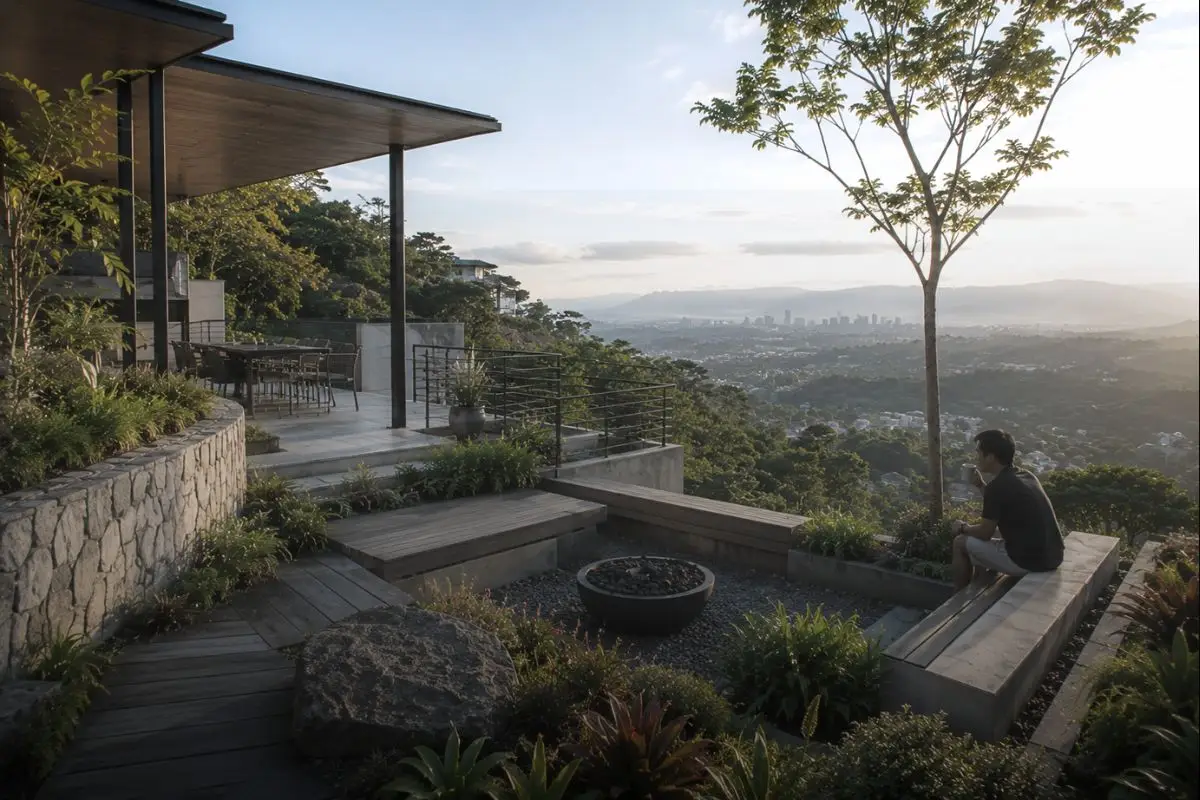
Privacy also tends to improve with elevation. Changes in topography naturally create separation between properties, reducing direct overlooking and helping establish more comfortable residential environments.
These qualities contribute to long-term value. In many hillside communities, lot positioning, view corridors, and landscape relationships become important factors influencing property desirability and pricing.
The value of elevated living is not simply a matter of location. It emerges from the combination of planning, landscape, and architecture working together to maximize the opportunities created by the terrain.
Lessons From Rizal’s Premium Hillside Communities
Many of Rizal’s most established residential communities demonstrate that successful hillside development requires more than engineering solutions.
Projects such as Timberland Heights, Havila, Sun Valley Estates, and Eastland Heights reveal a common pattern. The most successful communities use topography as an organizing principle rather than a problem to solve.
Road networks respond to contours. Open spaces reinforce natural features. Residential clusters take advantage of views and landscape conditions. Infrastructure supports the terrain rather than competing with it.
These decisions contribute to a stronger sense of identity and create communities that feel distinct from conventional suburban developments.
The terrain itself becomes part of the experience of living there.
The Future of Elevated Living in Rizal
As developable land becomes increasingly limited and residential preferences continue evolving, hillside locations are likely to play a larger role in future community planning.
The success of Rizal hillside communities demonstrates that topography can support residential value, environmental quality, and long-term desirability when integrated thoughtfully into the planning process. Rather than viewing slopes and elevation as constraints, developers increasingly recognize them as opportunities to create more distinctive living environments.
The future of elevated living will depend on balancing ambition with responsiveness to the landscape. Communities that respect the terrain, invest in infrastructure, and preserve the qualities that make hillside locations unique will remain among the most compelling residential destinations in the region.
Many homeowners are attracted to elevated locations because of their views, privacy, environmental quality, and proximity to Metro Manila.
Hillside development requires specialized approaches to roads, drainage, infrastructure, and lot planning that respond to changing terrain.
Sloping sites experience faster water runoff, making drainage systems essential for protecting infrastructure, preventing erosion, and maintaining long-term performance.
Views, privacy, environmental quality, and distinctive landscape settings often contribute to higher residential desirability and long-term value.
Thoughtful residential planning begins with understanding the land itself. At Fulgar Architects, we design communities that respond to topography, climate, infrastructure, and long-term development goals. Explore our architectural services or connect with our team to discuss hillside developments, residential estates, and master-planned communities throughout the Philippines.