












- The golf clubhouse now functions as a daily-use environment supporting dining, wellness, and social activity.
- Positioning and visibility organize movement and improve estate legibility.
- Spatial planning must support multiple user groups without congestion.
- Climate-responsive design ensures long-term performance and usability.
- The clubhouse contributes directly to identity and property value.
Reframing the Clubhouse as a Daily Environment
In contemporary developments, the clubhouse is no longer limited to post-game use. It functions as a central environment that supports daily routines, social interaction, and extended stays. In golf clubhouse design in the Philippines, this shift requires the clubhouse to be treated as an active, multi-use structure rather than a secondary amenity.
Within Philippine golf estates, the transition from weekend destinations to primary residential environments has expanded expectations. Residents use the clubhouse for dining, informal meetings, wellness, and family activities. This change calls for a more deliberate approach to planning, circulation, and program integration.
The clubhouse becomes the most consistent point of contact within the estate. Its design must reflect that frequency of use while maintaining clarity and ease of movement.
Positioning and Visibility Within the Estate
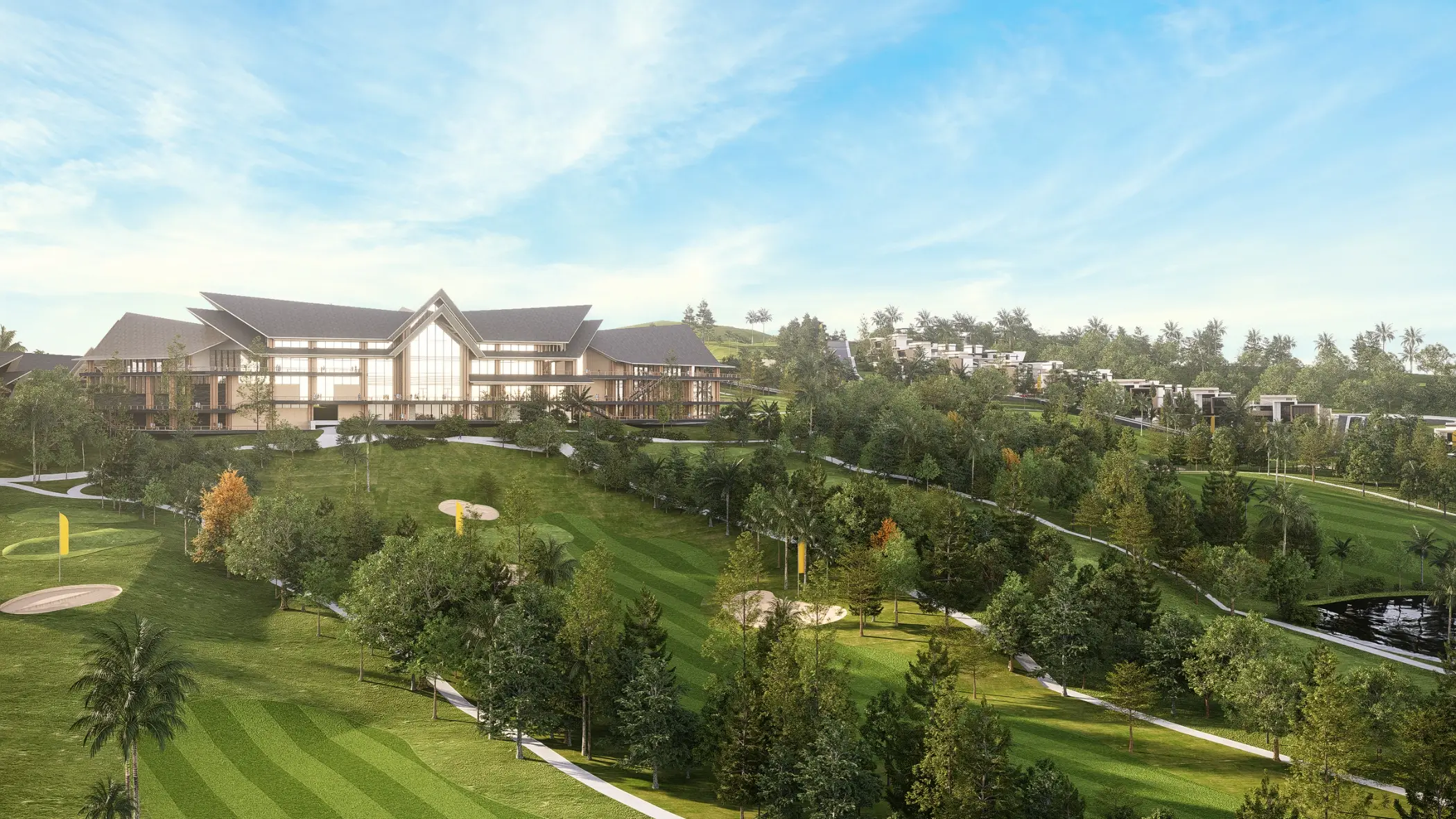
The placement of the golf clubhouse is a defining decision in master planning. It should not be treated as an isolated building, but as a spatial anchor that organizes movement and orientation.
The clubhouse must align with the primary arrival sequence, maintain visibility from major access roads, and establish a direct relationship to the first and final holes. These decisions allow the building to function as both landmark and reference point.
In the Philippine context, where estates often cover large areas with multiple entry points, this clarity reduces reliance on signage and improves overall legibility. A well-positioned golf clubhouse allows users to understand the estate intuitively.
Structuring Social and Dining Spaces
The clubhouse serves as a shared environment for different user groups. Its planning must allow simultaneous use without conflict or congestion.Dining areas should support daily use, larger gatherings, and private functions without requiring major spatial reconfiguration. Indoor dining, covered terraces, and open-air seating should transition gradually to create flexibility while maintaining coherence.
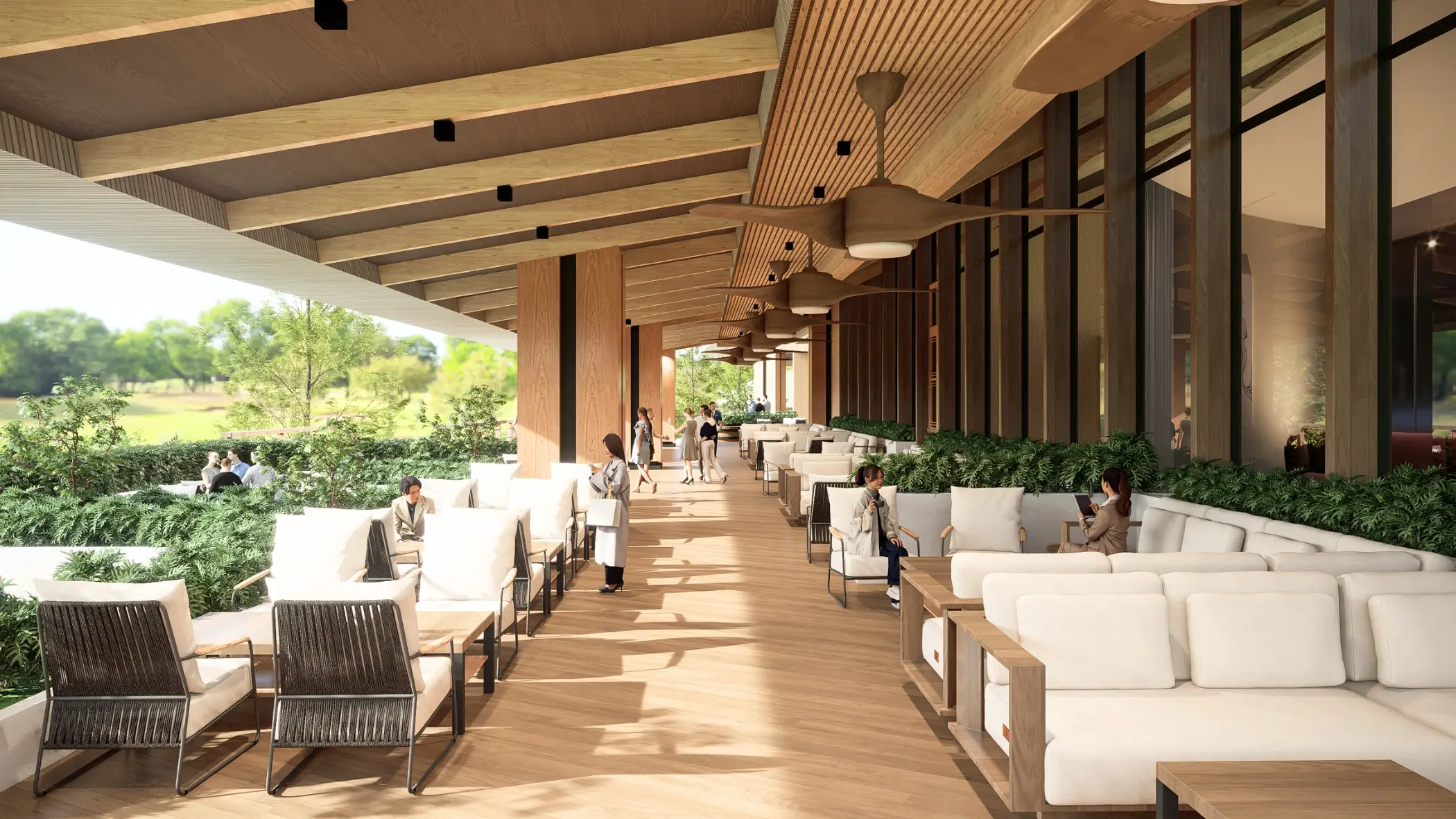
Views toward the golf course remain a primary asset. Dining spaces should be oriented to maximize these views while maintaining comfort throughout the day.
Climate response is equally important. In the Philippines, shaded outdoor areas, cross ventilation, and protection from heavy rainfall must be integrated early in the design. These considerations directly influence how often spaces are used.
Integrating Wellness and Extended Amenities
Modern golf estates are expected to support a broader lifestyle. The clubhouse becomes the point where these functions are organized and accessed.
Fitness facilities, spa and recovery areas, multipurpose rooms, and swimming pools are typically integrated into the clubhouse program. These elements must be connected through a clear circulation system so that they feel intentional rather than added on.
Wellness areas benefit from placement in quieter zones, direct access to landscaped environments, and separation from high-traffic dining spaces. This allows the clubhouse to support a wider range of users, including non-golfers, while maintaining spatial clarity.
Managing Circulation and Operational Efficiency
A golf clubhouse accommodates multiple layers of movement, including guests, golfers, staff, and service operations. Each must be planned to avoid overlap.
Front-of-house and service routes must remain separate, while direct connections from the bag drop to locker rooms ensure efficient golfer movement. Kitchen and service areas must also be positioned to support dining spaces without interrupting the user experience.
Operational clarity is critical. Service functions should remain accessible but not visible. Poorly planned circulation often leads to congestion and diminished user experience.
In the Philippines, where service quality plays a significant role in perception, these decisions directly affect how the development is experienced. The building must support operations without exposing them.
Material Strategy and Climate Response
The long-term performance of the clubhouse depends on how well it responds to local conditions. Heat, humidity, and heavy rainfall influence both material selection and spatial planning.
Deep roof overhangs provide shading and protection, while durable materials that weather naturally help maintain visual quality over time. Ventilation strategies should reduce reliance on mechanical systems where possible.
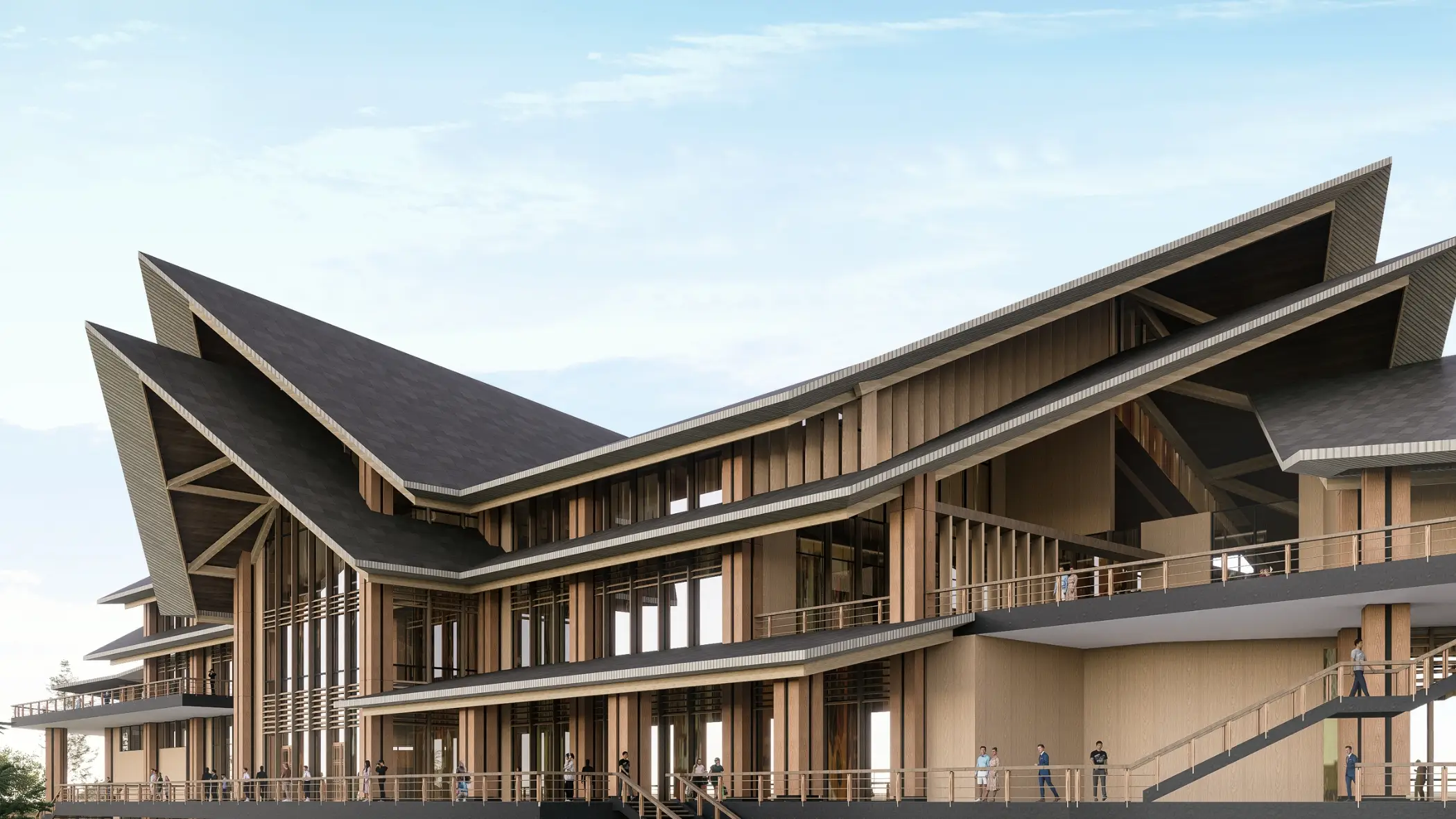
The objective is to manage maintenance while maintaining performance. Buildings that age well contribute to sustained property value.
In golf clubhouse design in the Philippines, climate-responsive planning is a baseline requirement. It ensures that the clubhouse remains usable and relevant throughout its lifecycle.
The Clubhouse as a Value-Defining Element
The clubhouse is often the most visible and most frequently used structure within the estate. It shapes first impressions and supports daily activity.
A well-designed clubhouse establishes a clear identity, supports social interaction, and contributes to long-term property value. For developers and investors, this positions the clubhouse as a strategic asset rather than a secondary feature.
The clubhouse in a golf estate is no longer a secondary structure. It is a central environment that supports daily life, social interaction, and operational efficiency. Aligning movement, program, and climate ensures that golf clubhouse design in the Philippines remains relevant over time while reinforcing the overall value of the estate.
It improves accessibility, reinforces identity, and helps organize movement across the estate.
Through clear circulation planning, separation of service routes, and proper sizing of key spaces.
Yes, particularly in residential developments where users expect a broader range of amenities beyond golf.
It affects material durability, user comfort, and long-term maintenance, and must be addressed early in planning.
If you are exploring a golf estate or high-value development, Fulgar Architects can support you in shaping a clear, coordinated master plan from site strategy to long-term implementation.