












- Golf estates require early alignment of land, movement, privacy, and infrastructure
- Architects play a strategic role before building design begins
- Golf course layout and residential value must be carefully balanced
- Circulation systems must separate users while maintaining clarity
- Long-term performance depends on phasing, infrastructure, and planning discipline
Aligning Land, Movement, and Privacy from the Start
Golf estates are often described through lifestyle, exclusivity, and leisure. From a planning standpoint, their success depends on something more rigorous. They must align golf course layout, residential placement, circulation, service systems, and privacy into a coherent land strategy from the beginning. In golf estate master planning in the Philippines, the architect’s role is not limited to shaping buildings after the site has been subdivided. The architect helps define the logic that allows the estate to function as a complete environment.
This matters in the Philippine context, where large residential and leisure developments are frequently built in phases and across uneven terrain. Land is rarely neutral. Access conditions, slope, drainage, climate exposure, and infrastructure limitations all affect how a golf estate can grow over time. When these issues are addressed too late, the development often ends up with compromised circulation, weak residential positioning, and fragmented identity.
The architect’s role in master planning is to bring these systems into alignment early, before individual components begin competing with one another.
Reading the Site Beyond Surface Opportunity
Before golf course alignments or residential parcels are defined, the architect must read the site as a long-term spatial and operational framework. This involves more than identifying scenic views or high-value lot positions.
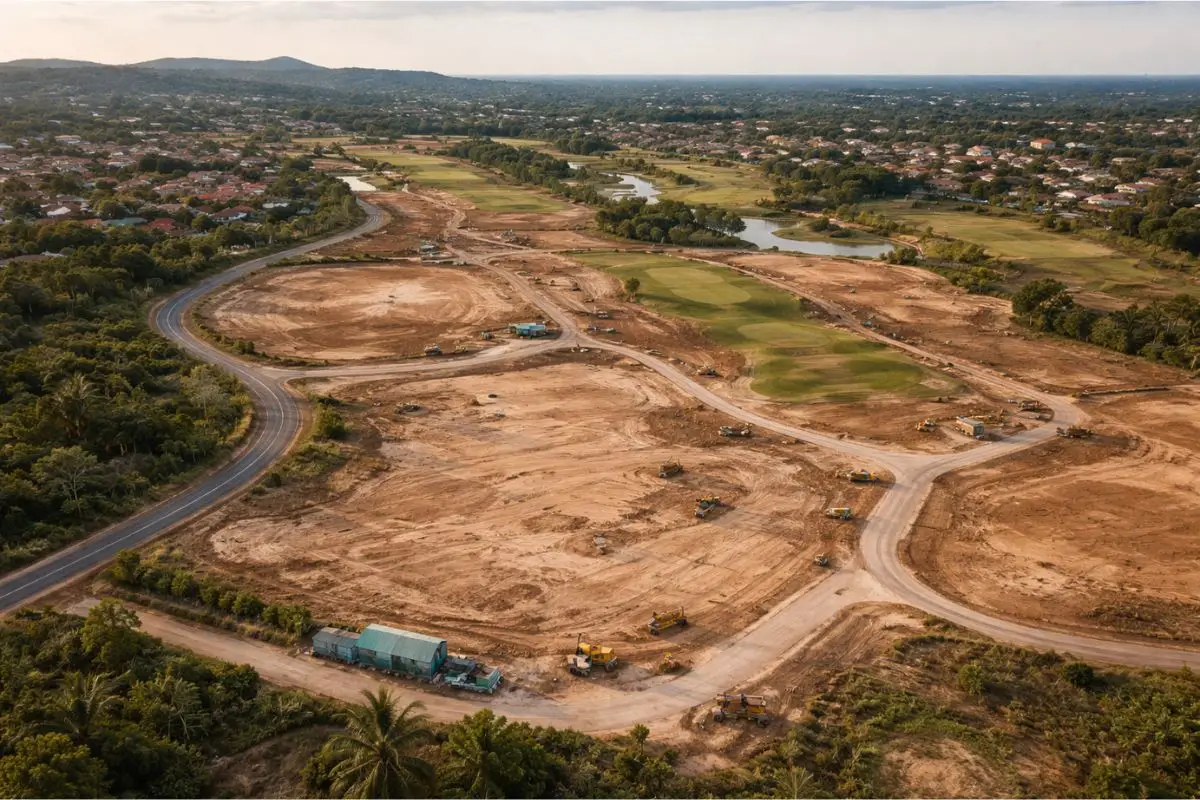
The site must be assessed in terms of topography, hydrology, solar exposure, access points, prevailing wind, construction practicality, and the likely sequence of development. In the Philippines, where strong rainfall events and heat exposure influence how land performs, these considerations shape both project value and long-term maintenance.
A golf estate cannot rely on the course alone to organize the land. If road placement, service access, and residential clusters are simply adjusted around the fairways later on, the result is usually inefficient. The architect helps prevent this by studying how the site can support movement, privacy, and buildable value as one interdependent system.
This is where golf estate master planning in the Philippines becomes a design discipline rather than a diagramming exercise.
Coordinating Golf Course Layout and Residential Value
One of the most sensitive tasks in golf estate planning is balancing the needs of the golf course with the value expectations of residential components. Not every lot can front a fairway, and not every fairway edge should become a lot line.
The architect helps determine where residential clusters should be placed to preserve privacy, support views, and maintain the spatial quality of the golf course. Some parcels benefit from direct golf frontage, while others may gain more value from buffered landscape edges, internal parks, or elevated positions with broader visual reach.
This coordination is especially important in the Philippines, where developers often need to stage inventory release in response to market conditions. The plan must allow residential value to be distributed across phases rather than concentrated only in the earliest or most visible parcels.
Good golf estate master planning also avoids forcing housing too close to active golf movement. Privacy, safety, and visual calm all depend on how residential edges are shaped. The architect helps set these relationships before they become fixed constraints.
Structuring Circulation Without Breaking the Experience
Circulation in a golf estate is layered. Residents, guests, service staff, maintenance teams, and golfers all move differently and at different times. These movements cannot be treated as a single road network.
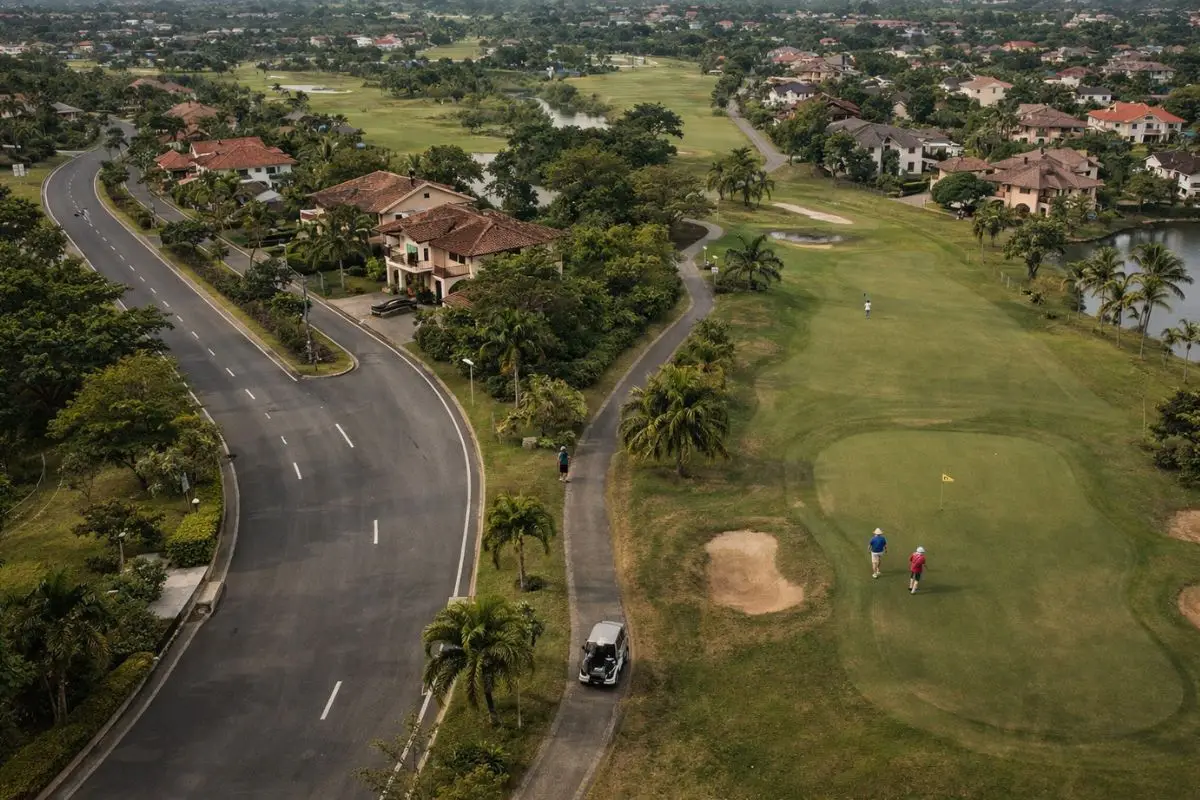
The architect’s role is to establish a circulation hierarchy that supports the experience of the golf estate while preserving operational efficiency. Main arrival routes should be clear and controlled. Residential roads should remain calm and legible. Service access should be direct but discreet. Golf cart movement should connect naturally to the clubhouse, practice areas, and golf course entry points without conflicting with primary vehicular routes.
This kind of separation is not only about convenience. It protects the identity of the golf estate. When service vehicles, guest arrivals, and residential traffic are forced into the same spaces, the development feels unresolved.
In golf estate master Planning in the Philippines, circulation must also account for topographic change, drainage, and future expansion. Roads that appear efficient in early diagrams may become expensive or disruptive once grading, retaining structures, and stormwater movement are considered. The architect helps resolve these relationships before they create downstream costs.
Using Privacy as a Planning Tool
Privacy in golf estates is often marketed, but it must first be planned. It comes from distance, alignment, grading, landscape buffers, and the careful positioning of roads and buildings.
The architect helps define where privacy should be strongest and where controlled openness can add value. Golf clubhouse zones may invite visibility and interaction, while residential enclaves require greater separation from public routes and active golf course edges. Service areas must remain accessible without intruding into quieter zones.
In the Philippine setting, where many estates position themselves as high-value environments, privacy cannot rely on gates alone. It must be embedded in the structure of the plan. This affects lot orientation, building envelopes, setbacks, and the handling of view corridors.
Establishing the Clubhouse Within the Planning System
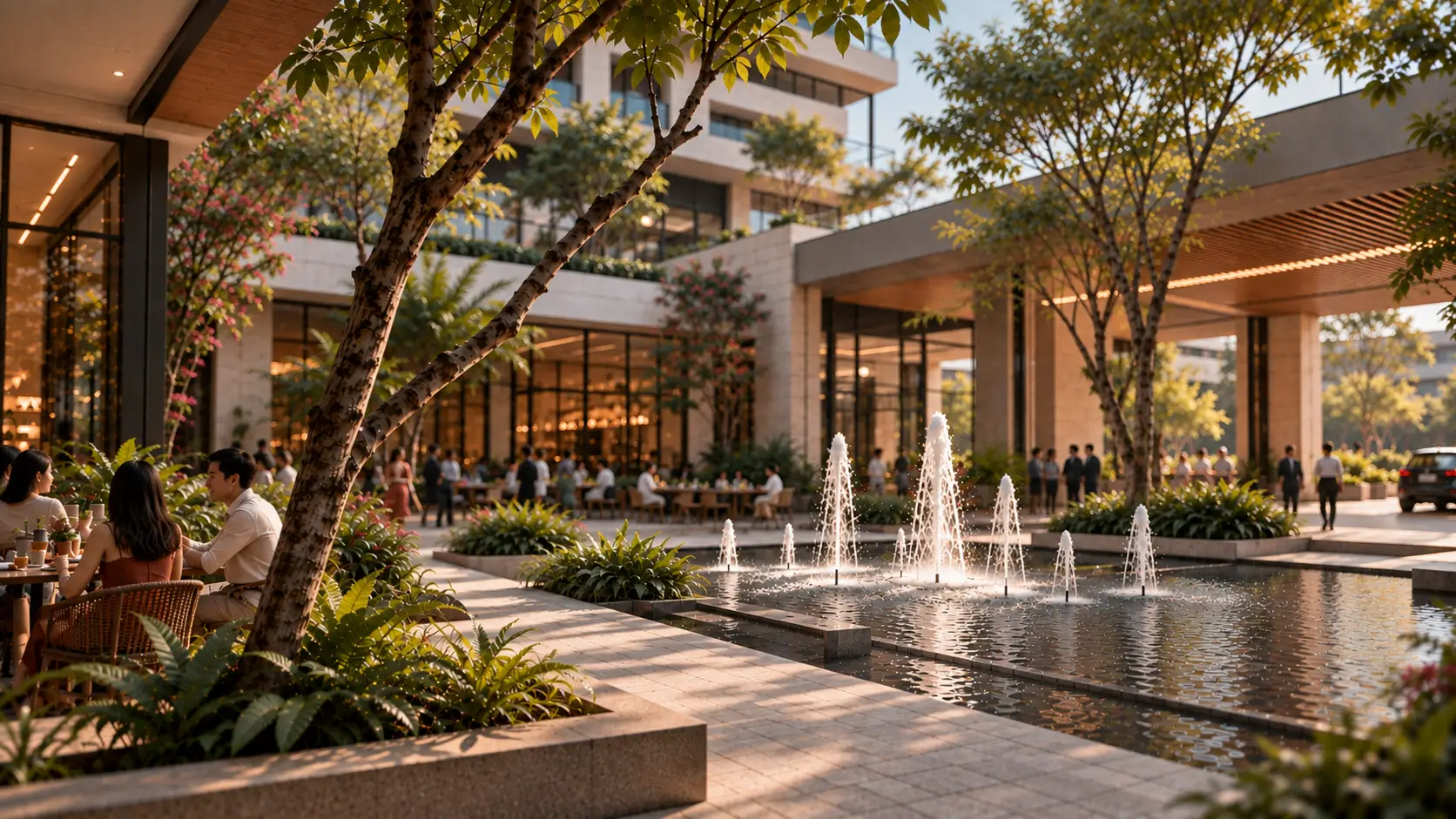
Within the master plan, the golf clubhouse functions as a spatial anchor rather than a standalone destination. Its placement helps organize arrival, clarify movement, and structure how different parts of the golf estate relate to one another over time.
The architect positions the clubhouse where it can reinforce overall planning logic while supporting operations. Practice areas, wellness amenities, dining, and event spaces are coordinated as part of a larger system, not treated as isolated components.
In larger Philippine developments, amenities must serve both current residents and future phases. A poorly positioned golf clubhouse may support early use but weaken later expansion. A well-placed one strengthens continuity across the entire development and preserves long-term spatial coherence.
Planning for Phasing and Long-Term Coherence
Very few golf estates are delivered all at once. They are typically phased over time, which means the original master plan must remain resilient as conditions change.
The architect contributes by establishing a structure that can absorb phase shifts without losing coherence. This includes roads, utilities, drainage systems, open spaces, and amenity anchors. Early phases must feel complete while anticipating future connections.
In the Philippines, this is critical because infrastructure delivery and market demand vary across timelines. Plans that work only under ideal sequencing often weaken once real project pressures emerge.
Golf estate master planning in the Philippines therefore requires more than an attractive land use concept. It requires a durable framework that protects value, movement, and identity as the estate develops over time.
The architect’s role in golf estate master planning in the Philippines ultimately extends beyond form. It is a strategic function that aligns land, systems, and long-term value into a coherent development framework.
Because the most critical decisions in a golf estate happen before buildings are designed. Land relationships, circulation, and phasing require early coordination.
No. The golf course is one component. Residential value, infrastructure, and access must be aligned alongside it.
It influences lot positioning, views, privacy, and long-term coherence, all of which shape market perception.
Projects are often delivered in stages under changing conditions. The plan must remain consistent despite these shifts.
If you are planning a golf estate or large-scale residential development, Fulgar Architects can help align land, planning, and long-term value from the earliest stages of the project.