












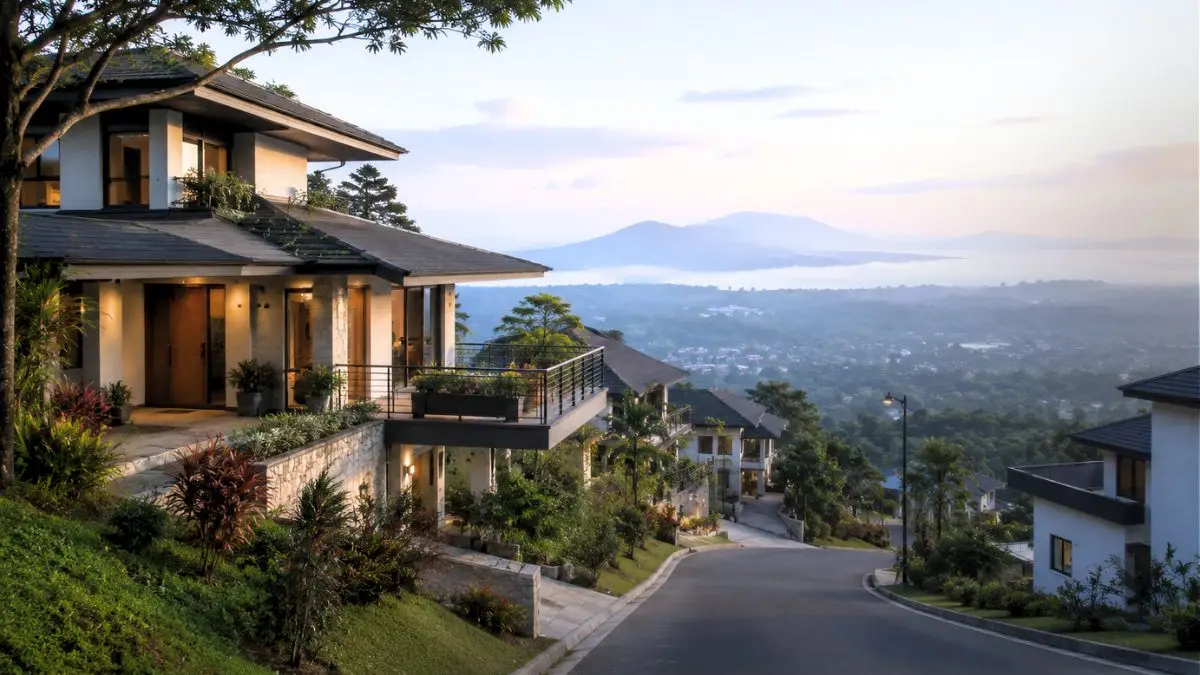
- Modern tropical ridge houses use elevation, terrain, and climate as design opportunities rather than constraints.
- Building along ridgelines requires careful planning to balance views, privacy, ventilation, and environmental performance.
- The most successful ridge houses work with the landscape instead of imposing themselves upon it.
Some residential sites offer more than land. They offer perspective. Ridge properties occupy a unique position within the Philippine landscape, providing elevated views, stronger breezes, and a closer relationship with topography. These advantages have made ridgeline developments increasingly attractive in locations such as Tagaytay, Batangas, Rizal, Bukidnon, and other highland environments across the country.
Modern tropical ridge houses respond differently to these conditions. Rather than treating the site as something to be flattened and controlled, they use elevation, slope, climate, and views as fundamental design drivers. The result is architecture that feels more connected to its surroundings while responding more effectively to the realities of tropical living.
Ridge and hillside residential communities in locations such as Tagaytay Highlands, Midlands West, Crosswinds Tagaytay, Timberland Heights in Rizal, and emerging mountain developments across Batangas and Bukidnon demonstrate how elevation increasingly influences residential planning in the Philippines. As these communities continue to grow, architects face the challenge of balancing views, climate responsiveness, environmental stewardship, and long-term livability within increasingly complex terrain conditions.
Designing With the Ridge Rather Than Against It
Many conventional residential projects begin by reshaping the site to accommodate a predetermined building layout. Ridge properties often demand a different approach.
The terrain already possesses its own logic. Elevation changes influence drainage patterns, access routes, view corridors, and structural requirements. Attempting to impose a flat-site solution onto a ridge property frequently results in unnecessary excavation, retaining walls, and environmental disruption.
Modern tropical ridge houses often begin with a careful reading of the land itself. The architecture follows natural contours where possible, allowing the building to settle into the landscape rather than dominate it. This approach reduces site disturbance while creating a stronger connection between the house and its surroundings.
The objective is not simply to occupy the ridge. It is to understand what the ridge is already doing and allow architecture to respond accordingly.
The Value of Elevation in Tropical Living
One of the greatest advantages of ridge properties is environmental performance.
Elevated residential sites often experience stronger and more consistent air movement compared to lower-lying areas. In the Philippine climate, where heat and humidity remain constant design considerations, access to natural ventilation can significantly improve comfort.
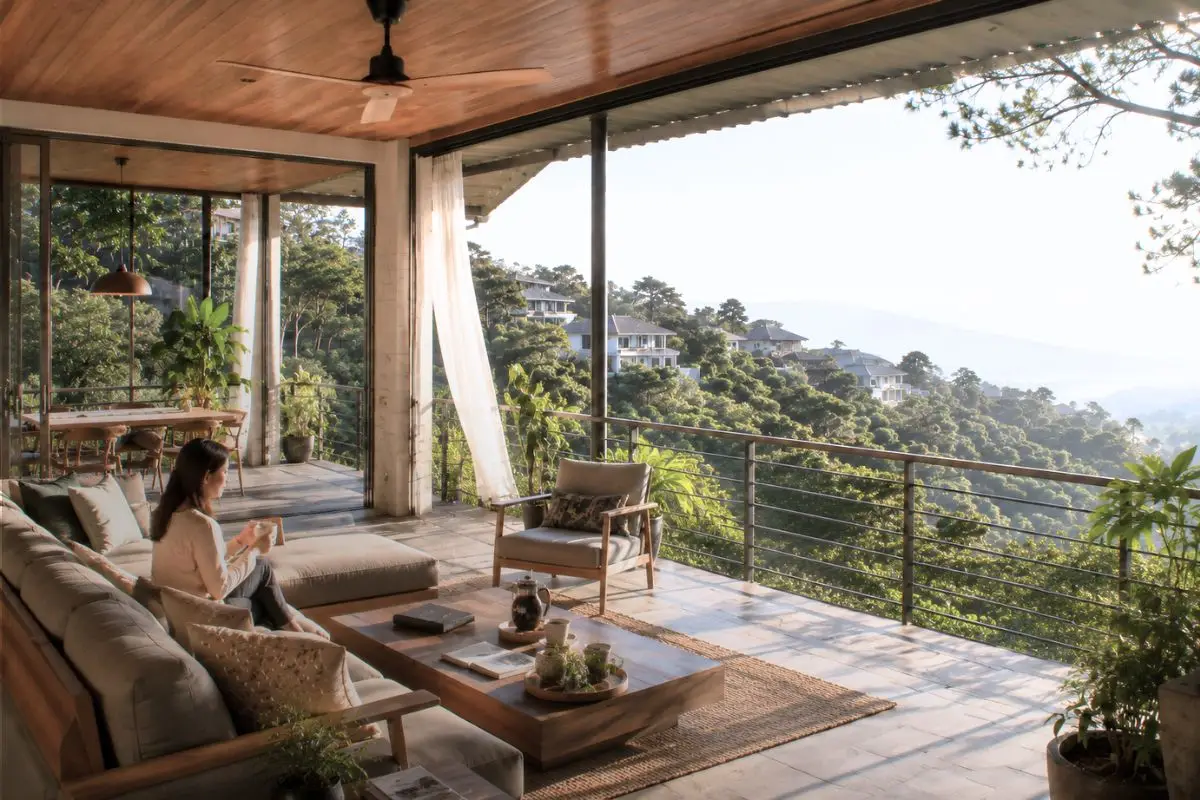
Modern tropical ridge houses frequently use orientation, operable openings, shaded outdoor spaces, and carefully positioned living areas to capture prevailing breezes. The result is a house that works with local climate conditions rather than relying entirely on mechanical cooling systems.
Elevation also influences daylight quality. Higher sites often receive more balanced natural light while benefiting from reduced visual obstructions. These conditions allow architects to create interiors that feel open, bright, and connected to the surrounding environment without excessive solar exposure.
When approached thoughtfully, elevation becomes more than a visual advantage. It becomes an environmental asset.
Views Are Not the Only Priority
Many ridge developments are marketed primarily around views. While views remain important, they should not become the sole driver of architectural decision-making.
A house designed exclusively around panoramic scenery can easily overlook other aspects of daily living. Privacy, solar orientation, circulation, outdoor comfort, and future adaptability remain equally important considerations.
Modern tropical ridge houses balance outlook with livability. Bedrooms may benefit from morning light rather than the most dramatic view. Outdoor spaces may be positioned to capture breezes and shade instead of maximizing exposure. Service areas still require efficient access despite challenging terrain.
Architecture succeeds when views become one part of a larger strategy rather than the entire strategy itself.
The most memorable houses do not simply look at the landscape. They participate in it.
Responding to Slope and Structure
Building on sloping lots requires careful coordination between architecture and engineering.
Structural systems must accommodate changing ground conditions while maintaining stability and minimizing unnecessary intervention. Foundations, retaining structures, drainage systems, and access solutions all become critical components of the design process.
Modern tropical ridge houses often embrace level changes rather than eliminating them. Split-level arrangements, elevated platforms, terraced outdoor spaces, and stepped building forms can reduce site disturbance while creating richer spatial experiences.
This approach often produces homes that feel more dynamic than conventional flat-site residences. Movement through the house becomes tied to the natural terrain, creating a stronger awareness of place.
The landscape is no longer something viewed through a window. It becomes part of how architecture is experienced.
Privacy in Open Landscapes
Ridge properties often offer expansive views, but openness can introduce new challenges.
As hillside communities become more developed, neighboring properties may occupy similar vantage points. Designing for privacy therefore becomes as important as designing for visibility.
Modern tropical ridge houses use landscape, building orientation, courtyards, screened openings, and carefully framed views to balance openness with seclusion. Rather than exposing every space to the horizon, architects create layers of privacy that support different activities throughout the home.
This balance becomes particularly important in high-end residential developments where outdoor living spaces play a significant role in everyday life.
The goal is not simply to maximize exposure. It is to create environments that feel comfortable, protected, and connected to the landscape at the same time.
Architecture That Belongs to the Landscape
The strongest ridge houses rarely compete with their surroundings.
Instead of treating the landscape as a backdrop, they treat it as a collaborator. Building form, material selection, outdoor spaces, circulation patterns, and environmental strategies all emerge from an understanding of site conditions.
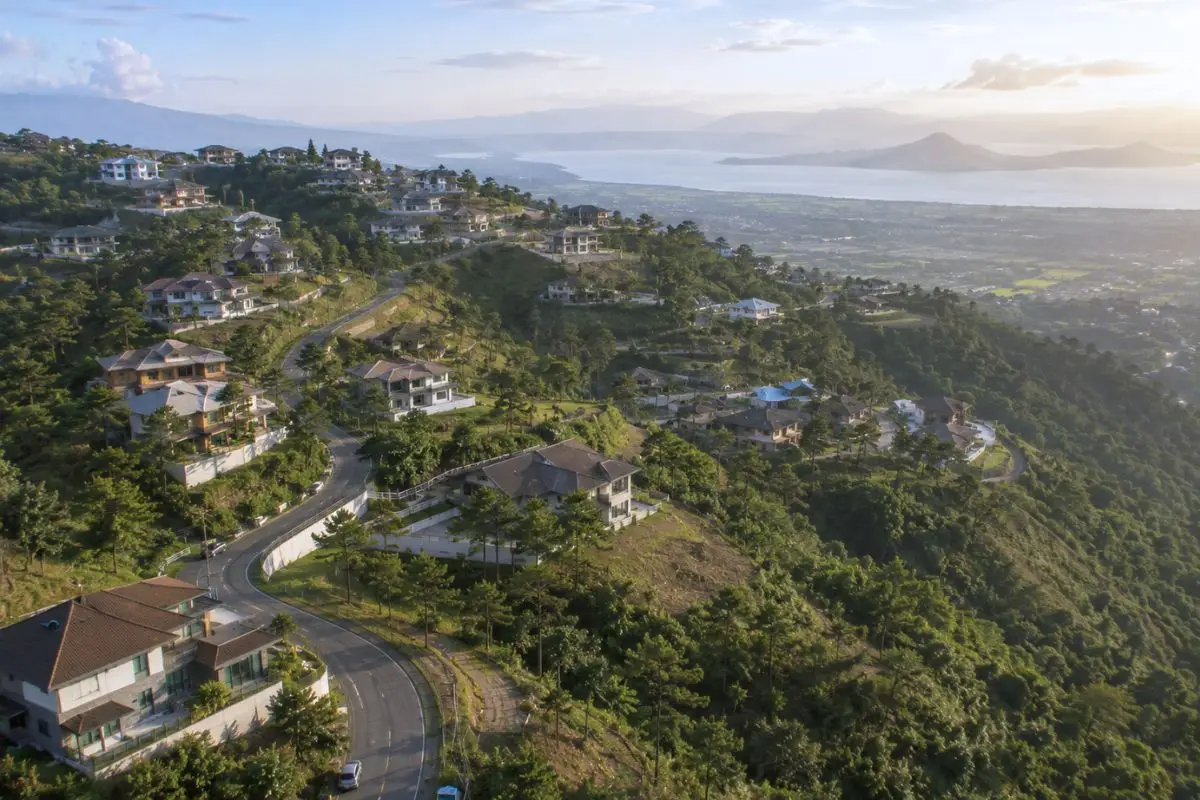
This approach often results in architecture that feels quieter and more enduring. The house gains character from its relationship with terrain, climate, vegetation, and views rather than relying solely on formal gestures.
Modern tropical ridge houses demonstrate that good residential architecture is not simply about occupying a desirable site. It is about creating a meaningful relationship between people, buildings, and the land they inhabit.
In the Philippine highlands, where terrain, climate, and landscape often define the character of a place, the most successful homes are those that learn to live with the ridge rather than simply build upon it.
A ridge house is a residence built on elevated or ridgeline terrain, often taking advantage of views, natural ventilation, and unique topographic conditions.
Ridge sites often provide cooler temperatures, stronger breezes, panoramic views, and a closer relationship with natural landscapes compared to lower-lying properties.
Yes. Ridge properties require careful coordination between architecture, engineering, drainage, access, and environmental considerations due to changing terrain conditions.
Successful ridge houses balance views, climate responsiveness, privacy, environmental performance, and site sensitivity while working with the landscape rather than against it.
Modern tropical ridge houses present unique opportunities for architecture to respond directly to terrain, climate, and place. At Fulgar Architects, we design residences that work with their environment, creating homes that remain comfortable, resilient, and deeply connected to the landscapes they occupy. Explore our architectural services or connect with our team to discuss hillside residences, luxury homes, and residential developments throughout the Philippines.