












Air-conditioning for business operations needs to be handled carefully because some may not be compatible with existing cooling systems. It is, therefore, necessary to know exactly what type of air-conditioning your business needs. This will help you choose the best type of cooling system.
When To Consider Air-Conditioning For Business Establishments
Building types associated with industrial and commercial functions – storage, distribution, manufacturing, and the likes often have big, empty spaces. It could be daunting to consider installing heating, ventilation, and air conditioning (HVAC) systems at that scale. Some companies consider air-conditioning unnecessary and uneconomical especially when their products don’t have any storage temperature requirements.
However, if the inventory consists of perishables, raw materials, medical products, electronic equipment, or other temperature-sensitive goods, it is imperative to have reliable HVAC systems. Maintaining the prescribed storage temperature will preserve the quality of the products. Furthermore, the workers will have better health, increased productivity, and morale if they can do their job in a comfortable environment. Better overall productivity translates to improved warehouse operations and therefore better business. So the question is what type of air-conditioning systems are most applicable?
Types of Air-Conditioning Systems
The 3 best air-conditioning systems for commercial and warehousing applications are Multi-split, Ducted Air-conditioning, and Variable Refrigerant Flow (VRF). These HVAC systems work by drawing in the hot air via the indoor air handling units, brought to the outdoor unit for cooling, and redistributed to the indoor units through pipelines or ductworks. Each type has unique features and different cooling capacities per unit.
Multi-Split System
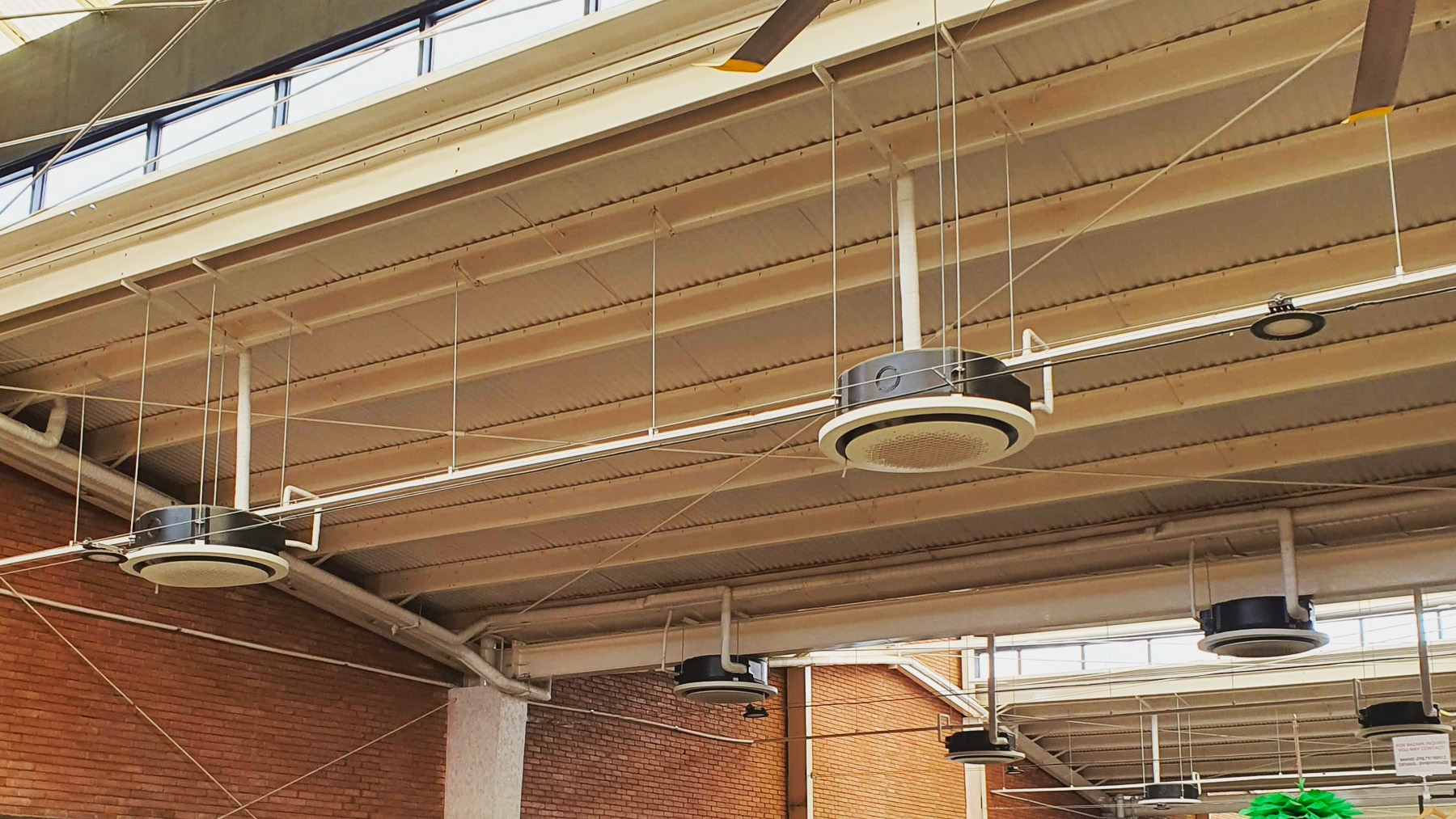
First is the Multi-split Air-conditioning system. Just like the name implies, the multi-split system allows several indoor units to connect to the same outdoor unit. This saves space since you install fewer units on the building’s exterior. For warehouses, the most ideal type is ceiling-mounted models because they are quieter, unobtrusive, and can cool medium to large spaces. The recommended Ceiling-mounted model is Four-way Cassette-type Air-conditioning.
Four-Way Cassette-Type Air-Conditioning Units
Four-way Cassette-type air-conditioning units can cool spaces quickly because the cold air dispersed through the side outlets naturally creates an airflow that pushes hot air upward through the main intake. For a consistent distribution of cool air, the ideal layout of installation for the indoor units is by rows, evenly spaced throughout the warehouse. The outdoor unit must have free space on either side for easier maintenance. For small warehouses ranging from 1,800 – 2,300 m², you will need 8 – 10 indoor units operating at 15kW each. The number of units may vary depending on the manufacturer’s specifications and recommendations.
Ducted Air-conditioning System
Unlike multi-split systems, Ducted Air-conditioning only needs a single centralized indoor component to cool the entire building space. Vents and outlets in the ductwork assist with the cool air distribution throughout the layout fo the floor plan.
Some of the slim, compact indoor equipment design can be concealed within walls or coves that preserves indoor aesthetics. Some ducted air-conditioning models can also be zoned which means you can turn cooling on or off for certain rooms. This is a useful feature if the business floor operation has offices or partitioned storage spaces for temperature-sensitive products.
Variable Refrigerant Flow (VRF)
The VRF system operates the same way as a multi-split air-conditioning system and also uses refrigerant as the cooling medium. What makes this system unique is the integration of an direct current inverter in the outdoor compressor unit which allows for variable motor speeds. Variable motor speed modulates the flow rate of refrigerant in the compressor as opposed to conventional systems that just switch on and off. As a result, the system only cools at the designated temperature which could amount to 55% in energy savings. Additionally, temperatures can be set individually for each room via a thermostat and control panel which is a convenient feature if the warehouse has different storage requirements for certain products
Air-Conditioning Special Features
Aside from energy efficiency, quiet operation, and large-scale capacity, it is worth discussing new, innovative features for heating, ventilation, and air conditioning (HVAC) systems. With global concerns today such as airborne disease and reliance on non-renewable energy sources, there is a critical demand for solutions that will sustain the health of the people and the future of our environment. These would definitely affect future building designs in the Philippines. Here are some possible innovations which may influence future air-conditioning systems.
UV Air Sanitation Technology
Ultraviolet (UV) light has three subcategories – UV-A, UV-B, and UV-C. UV-C is most harmful to micro-organisms and thus effective in air purification. When placed strategically, UV light can be used to disinfect the air by killing microbes, mold, mildew, and viruses. In HVAC systems, UV can be integrated into ventilation devices such as duct cleaners, racks, lamps, sticks, fan coils, and retrofits to utilize its air purifying capabilities. The effectiveness of UV-C light in sanitizing the air depends on the following factors:
- If the air pollutants are in close contact with the UV light
- Whether the light loses effectiveness because of cool airflow
- Material of the UV-bulb
- Duration of exposure of microbes and pollutants under UV light
While UV light can kill microbes and molds, it still cannot filter particles so the HVAC systems will still need the assistance of air filters to get the best indoor quality.
Solar Energy Harvesting For Real-Time Use
A very important factor that should be considered before selecting an air-conditioning unit for your business is the cost of cooling. The other feature that can minimize energy expenditure is Solar Energy Harvesting by using the most common device – Photovoltaic Solar Panels. The most ideal location for solar panels is one with a hot climate and no neighboring high-rise buildings for optimal sun exposure. Since warehouses have large roofs and are located in open, industrial areas, solar power is a viable option as an alternative for energy. Solar panels can be installed on the roof to supply power to the air-conditioning systems while simultaneously lowering the temperature of the warehouse by absorbing solar radiation. HVAC systems can operate on solar power during the day then switch to the grid supply at nighttime operations to split energy consumption. Additionally, you can sell excess power to the grid with a billing mechanism called net metering.
Building Type Applications
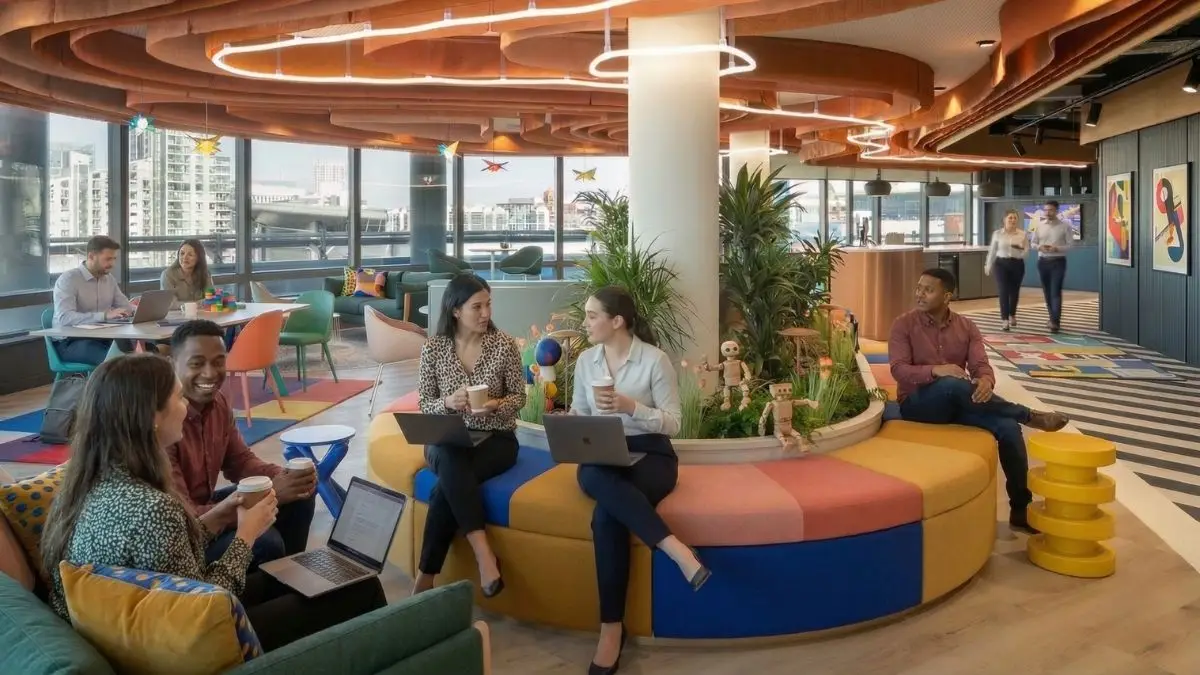
When business operations fail, demands for storage can shift and warehouses tend to shut down or get abandoned. A warehouse owner can still generate income by repurposing the covered structure into other types of functional public space to be rented out such as an event space, co-working office, or art exhibit.
If the warehouse is located near agricultural land, a feasible route is to convert it into a cold-storage trading post or farm-to-community market. In some countries, industrial buildings located on the outskirts of business districts or suburban residential zones are even converted into hotels or dormitory developments. HVAC systems could be the main factor with these reuse options because of the convenience and value it adds to the building, thereby generating revenue beyond standard commercial operations or warehousing.
Air-Conditioning For Your Business Operations
Maintaining the ideal temperature in business operations through proper selection of air-conditioning system helps maintain the quality of stored goods, improves the health of the occupants, and creates a comfortable work environment.
The type of air-conditioning system depends on the size, functions, and layout of the building. To maximize the investment for their choice of air-conditioning, the business must understand the advantages and disadvantages of the different systems as well as investigate their operation and maintenance costs. If the building type ceases to function as a storage facility, the owner may opt to repurpose the industrial and commercial building into other functions.
it is imperative that you get the right company for air-conditioning for business operations. How was your experience with air-conditioning suppliers or installers in the Philippines? Please let us know if you have any recommendations by leaving your comment below!