












- Metro Manila residential developments are increasingly adopting spatial strategies rooted in hospitality and resort architecture.
- Tropical resort design is reshaping how urban towers approach ventilation, amenity planning, material expression, and emotional experience.
- Developers are responding to changing expectations around wellness, flexibility, privacy, and long-term livability.
- Climate-responsive planning and outdoor-oriented programming are becoming major value drivers in vertical living.
- The shift reflects a broader movement toward residences that operate as lifestyle environments rather than purely residential assets.
Urban residential life in Metro Manila is changing in ways that go beyond density, skyline growth, and amenity competition. Residents increasingly expect homes that provide calm, environmental comfort, and a stronger connection to everyday wellbeing. As a result, tropical resort design has started influencing how contemporary residential towers are planned, experienced, and marketed across the city. Hospitality-inspired architecture is reshaping vertical living through climate-responsive planning, outdoor integration, and spaces designed around recovery as much as efficiency.
The Residential Tower Is No Longer Defined by Density Alone
For years, the identity of Metro Manila residential towers revolved around efficiency, land maximization, and proximity to commercial districts. Towers competed through scale, skyline presence, and amenities that often functioned as checklist features rather than meaningful spatial experiences. That model still exists, yet a quieter transformation has started reshaping how vertical living is being designed and marketed across the city.
Developers are beginning to recognize that urban residents increasingly measure quality of life through atmosphere, recovery, and psychological comfort. The residential tower is no longer evaluated solely by location or unit count. Residents now pay closer attention to daylight access, transitions between indoor and outdoor spaces, environmental comfort, and the emotional tone created by architecture.
This shift explains why tropical resort design has become deeply influential in Metro Manila’s urban residential market. Hospitality environments have long understood how spatial sequencing affects human behavior. Resorts are designed to slow movement, frame landscape, encourage rest, and soften the pressures of daily life. Urban residential projects are now borrowing these principles and adapting them to the realities of dense city living.
The movement is not simply aesthetic. It reflects changing expectations around urban life in a tropical and increasingly congested metropolis. Residents want homes that feel restorative without disconnecting them from economic centers. Developers want projects that create stronger identity and long-term market distinction. Architects are responding by rethinking how towers engage climate, amenity spaces, circulation, and communal environments.
In many ways, the growing influence of tropical resort design represents a recalibration of urban priorities. Metro Manila residents still value accessibility and density, but they increasingly expect residential environments that support wellness, adaptability, and emotional clarity.
Tropical Climate Logic Is Returning to Residential Architecture
Many contemporary residential towers in Southeast Asia once leaned heavily toward sealed glass typologies influenced by international commercial architecture. While visually modern, these models often struggled against local climatic realities. Excessive heat gain, dependence on mechanical cooling, and poorly shaded outdoor spaces reduced long-term environmental comfort.
The renewed interest in tropical resort design signals a return to climate-aware architectural thinking. Resorts across the Philippines have historically relied on passive cooling strategies because environmental comfort directly shapes guest experience. Cross ventilation, deep overhangs, shaded walkways, water integration, breezeways, and layered landscaping are not stylistic additions. They are operational responses to tropical conditions.
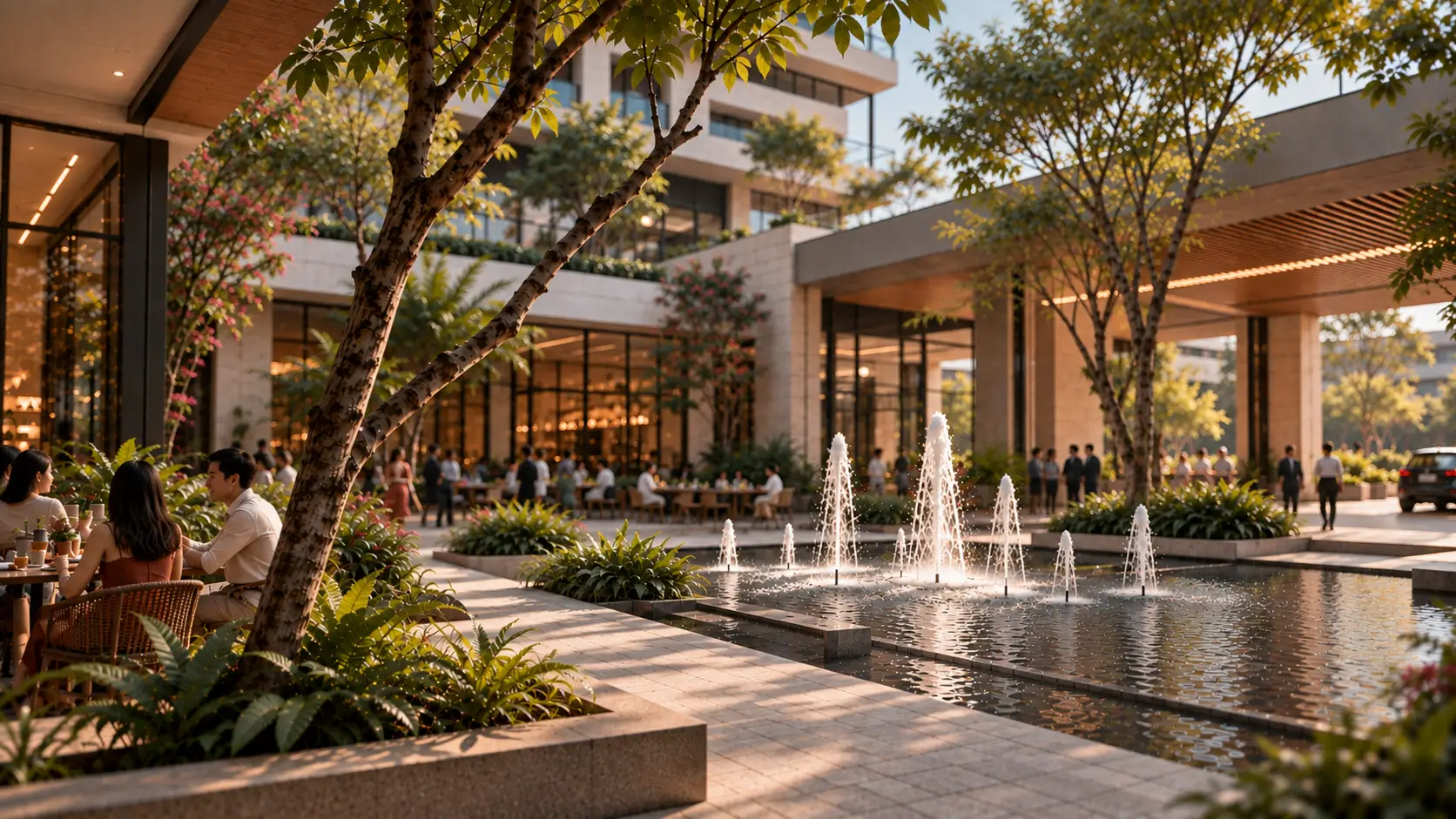
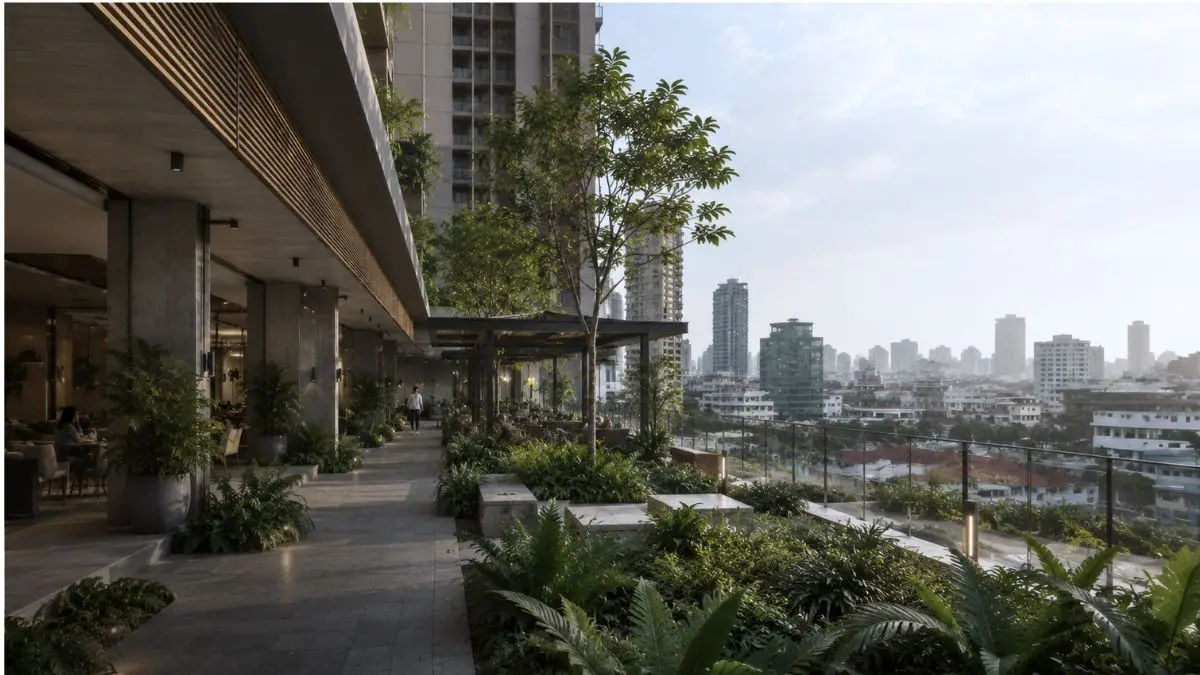
Urban residential developments are now translating these same principles into vertical environments. Towers increasingly incorporate semi-open amenity decks, naturally ventilated corridors, shaded drop-off areas, pocket gardens, and transitional spaces that reduce the abrupt separation between indoors and outdoors.
This is particularly important in Metro Manila, where many residents spend substantial portions of their day moving through traffic, enclosed offices, and dense commercial districts. Residential architecture has started functioning as a form of environmental counterbalance. The home is expected to provide decompression from the intensity of urban movement.
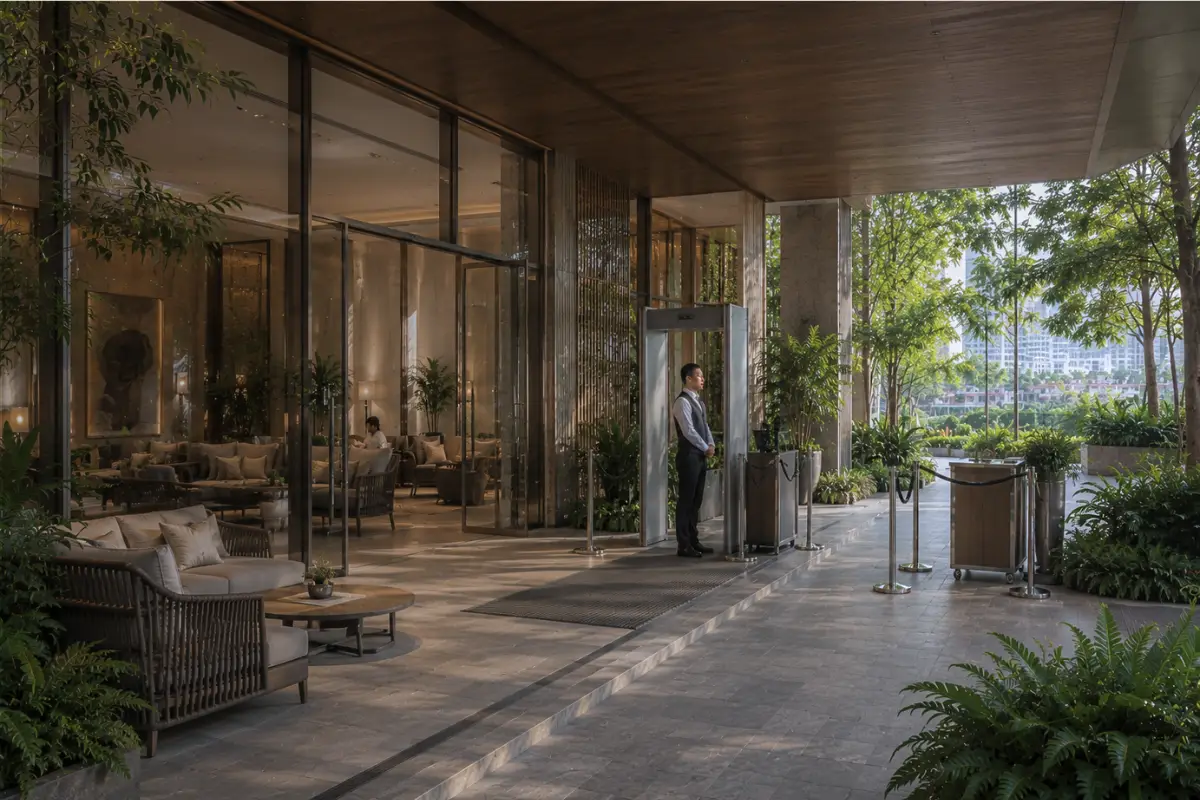
The influence of tropical resort design becomes visible in how newer developments approach arrival experiences. Instead of compressed lobbies focused purely on circulation efficiency, many projects now create layered entries with planting, filtered light, water elements, and softened material palettes. The goal is not spectacle. The goal is transition.
That transition carries real economic value. Buyers increasingly associate calm, climate-responsive environments with premium quality and long-term desirability. In competitive urban districts such as Bonifacio Global City, Makati, Ortigas, and emerging mixed-use areas, atmosphere itself has become part of the residential offering.
Amenities Are Becoming Lifestyle Landscapes
One of the clearest signs of hospitality influence in vertical living is the transformation of amenity planning. Earlier condominium developments often treated amenities as isolated rooms inserted into leftover spaces. A gym, function room, and swimming pool satisfied marketing requirements, yet these spaces rarely created a coherent residential experience.
Contemporary projects are approaching amenities more like integrated lifestyle landscapes. This approach comes directly from resort planning logic, where movement between spaces is carefully choreographed to create rhythm, privacy, and variation.
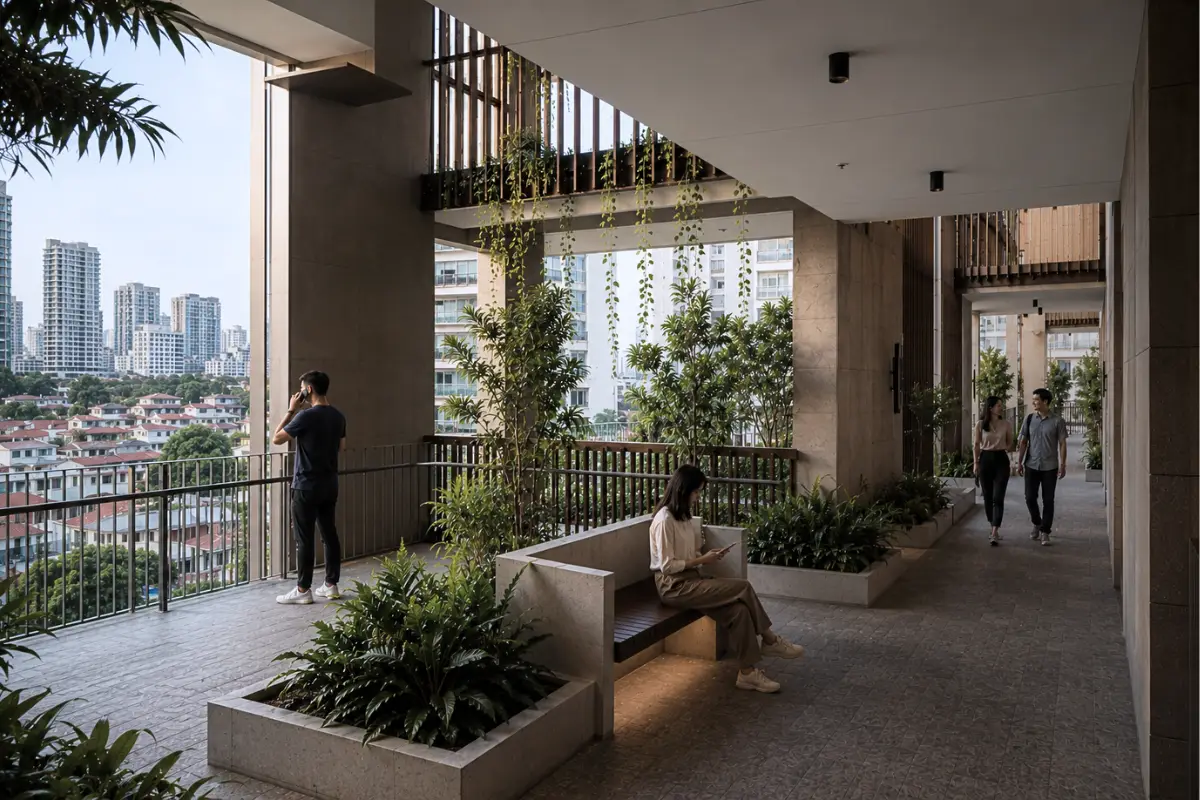
In Metro Manila residential towers, this has resulted in amenity decks that feel increasingly interconnected. Outdoor lounges merge into landscaped pathways. Co-working spaces open toward gardens. Pools align with shaded seating areas rather than existing as isolated visual features. Wellness spaces are integrated into broader circulation systems instead of being treated as detached program components.
The influence of tropical resort design is especially evident in how developers now market communal experiences. The focus is no longer simply on ownership of private square footage. The broader residential environment has become part of the value proposition.
This reflects larger urban realities. As cities become denser, residents rely more heavily on shared spaces to extend daily life beyond the unit itself. A thoughtfully designed amenity environment can support informal work, social interaction, exercise, and mental recovery within a compact urban footprint.
Architecturally, this requires greater attention to spatial hierarchy and environmental performance. Outdoor amenities in tropical climates cannot rely purely on visual appeal. They must remain usable throughout varying weather conditions. Shade, airflow, drainage, planting selection, and material durability become essential design considerations.
Projects that successfully integrate these elements often feel calmer and more spatially coherent even at high density. This is one reason why resort-influenced residential developments continue gaining traction among both developers and buyers.
Material Expression Is Becoming Warmer and More Grounded
The influence of hospitality architecture extends beyond planning strategies into the tactile language of residential design. Many urban towers previously relied on highly polished material palettes associated with corporate interiors and international luxury branding. While visually sleek, these environments sometimes created emotional distance rather than comfort.
Tropical resort design introduced a different architectural sensibility. Resorts often prioritize texture, warmth, natural materials, and layered lighting because these qualities shape emotional experience at a subconscious level. Wood textures, stone surfaces, woven details, textured concrete, and landscape integration help spaces feel grounded rather than purely decorative.
Urban residences in Metro Manila are increasingly adopting similar approaches. Developers are using warmer palettes within lobbies, amenity spaces, and residential interiors to create environments that feel calmer and more enduring.
This shift also reflects changing perceptions of luxury. Excessive visual gloss no longer automatically communicates sophistication. Many buyers now associate quality with restraint, material authenticity, and environmental coherence.
The movement toward softer architectural expression aligns naturally with Philippine climatic and cultural conditions. Tropical environments already possess strong sensory qualities through vegetation, humidity, changing light, and seasonal weather patterns. Architecture that acknowledges these conditions often feels more believable and more connected to place.
Importantly, the best examples avoid superficial imitation. Successful resort-inspired urban residences do not attempt to replicate beachfront architecture within city towers. Instead, they reinterpret the underlying principles of hospitality environments through urban constraints.
This distinction matters. Mature architectural identity emerges from adaptation rather than replication. A residential tower in Metro Manila must still function efficiently within dense infrastructure, complex circulation systems, and demanding operational requirements. The challenge is integrating resort-informed spatial qualities without losing urban clarity.
Wellness Has Become a Spatial Requirement Rather Than a Marketing Theme
The growing emphasis on wellness within residential architecture accelerated after years of extended remote work, changing household patterns, and increased awareness of mental fatigue associated with dense urban environments. Many residents began reevaluating what they actually needed from their homes.
This reevaluation strengthened the relevance of tropical resort design because hospitality environments already understand how architecture shapes emotional and physical wellbeing. Lighting, acoustics, airflow, privacy gradients, landscape exposure, and circulation patterns all contribute to how people recover from stress.
In Metro Manila, wellness-oriented residential planning increasingly influences unit layouts, amenity design, and master planning decisions. Developers are paying closer attention to natural light access, flexible work-from-home arrangements, acoustic separation, and outdoor connectivity.
The most successful projects recognize that wellness is not created through isolated amenities alone. A yoga deck or spa room means little if the broader residential environment remains spatially exhausting. True residential wellness emerges through consistent architectural decisions across the entire development.
This includes seemingly simple considerations such as shaded pedestrian approaches, intuitive circulation, visual openness, and access to planting. These elements reduce cognitive friction within everyday life.
The influence of tropical resort design becomes especially powerful when architecture creates moments of pause within dense urban conditions. A framed courtyard, breezy corridor, elevated garden, or filtered arrival sequence can subtly change how residents experience daily routines.
For developers, this shift carries strategic importance. Residential projects increasingly compete through long-term lifestyle credibility rather than pure visual differentiation. Buyers are becoming more sensitive to how spaces actually feel over time.
This is particularly relevant in Metro Manila, where urban intensity continues increasing across major business districts. Residential environments that provide psychological relief while maintaining connectivity will likely remain highly competitive over the coming years.
Metro Manila’s Future Residential Identity May Become More Tropical, Not Less
Many Asian cities spent decades pursuing highly internationalized architectural imagery as symbols of modernization. Glass towers and globally recognizable urban aesthetics became shorthand for economic progress. Yet cities eventually mature beyond visual imitation. They begin rediscovering environmental and cultural intelligence embedded within local conditions.
Metro Manila appears to be entering that phase. The growing influence of tropical resort design suggests that future residential architecture may become more climate-aware, landscape-oriented, and emotionally responsive rather than increasingly sealed and detached.
This does not mean abandoning urban density or contemporary construction systems. Metro Manila will continue building vertically because land realities demand it. The deeper shift involves how density is experienced.
Architects now have an opportunity to rethink vertical living through the lens of tropical urbanism. This includes designing towers that engage outdoor environments more intelligently, create healthier communal spaces, and respond more naturally to Philippine climate conditions.
The projects that endure will likely be those that balance operational efficiency with environmental sensitivity. They will understand that architecture influences behavior, stress levels, social interaction, and long-term quality of life.
Tropical resort design ultimately matters because it reframes residential architecture as an experience rather than a container. In Metro Manila’s increasingly dense urban future, that distinction may become one of the most important measures of architectural value.
Residents increasingly want urban homes that support wellness, relaxation, and climate-responsive living while remaining connected to business districts.
It creates better transitions between indoor and outdoor environments, improves amenity usability, and strengthens overall residential atmosphere.
No. Many climate-responsive and wellness-oriented principles can improve residential quality across different market segments.
Successful projects adapt hospitality principles to urban realities instead of directly copying beachfront or leisure typologies.
Fulgar Architects approaches vertical living through long-term spatial clarity, climate responsiveness, and development strategy. Thoughtful residential architecture should support how people live, recover, and adapt within rapidly evolving urban environments.