












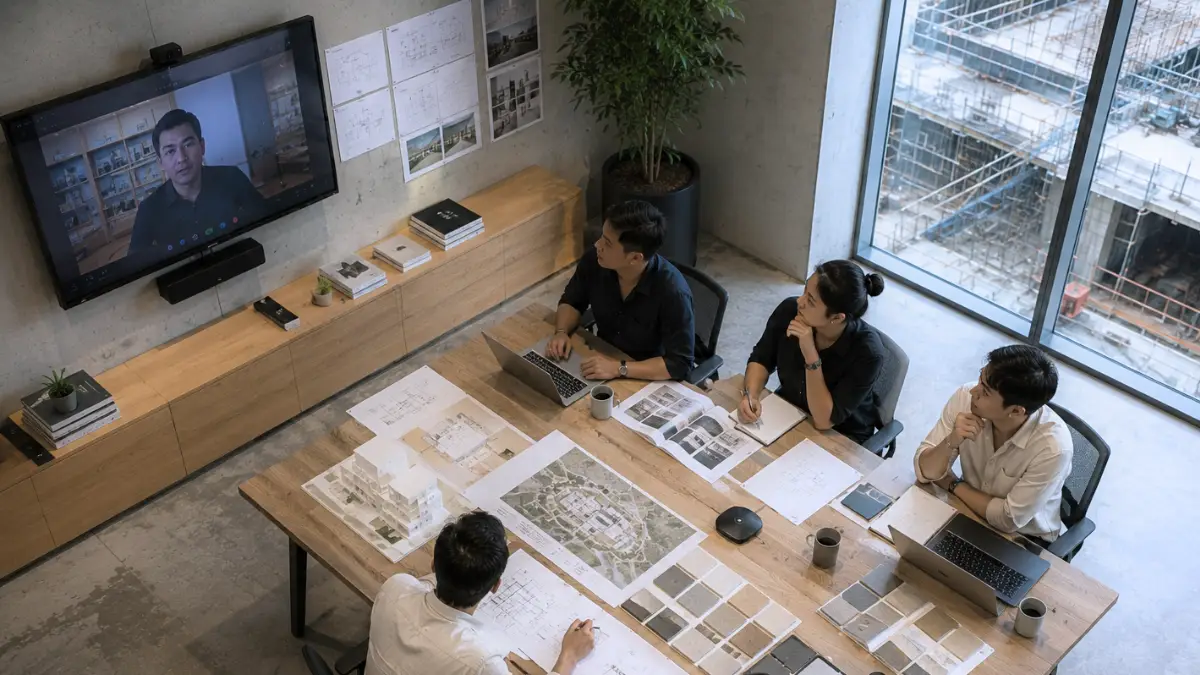
- International projects succeed when foreign consultants and Philippine-based professionals establish clear roles, communication channels, and coordinated documentation from the outset.
- The Architect of Record bridges global design intent with Philippine building regulations, permitting requirements, and construction practices.
- Early coordination between architects, engineers, contractors, and specialist consultants minimizes delays, redesigns, and costly site conflicts.
- Understanding local construction realities allows international concepts to be adapted without compromising architectural quality.
- Strong collaboration produces buildings that satisfy international design standards while responding effectively to Philippine conditions.
As the Philippines continues to attract multinational developers, international hotel operators, educational institutions, healthcare providers, and global corporations, architectural projects increasingly involve design teams working across countries, cultures, and professional disciplines. A concept may originate in Singapore, London, Dubai, Tokyo, or New York before being developed, documented, permitted, and constructed in Metro Manila, Cebu, Clark, Davao, or emerging regional growth centers.
Successfully working with international design teams in the Philippines requires far more than exchanging drawings through cloud-based collaboration platforms. Every successful project depends on careful coordination between foreign design consultants, local architects, engineers, contractors, project managers, government agencies, and owners who each contribute different forms of expertise throughout the design and construction process.
International collaboration creates opportunities to introduce innovative planning strategies, advanced building technologies, and globally recognized design standards into the Philippine built environment. At the same time, these projects must satisfy local regulations, respond to tropical climatic conditions, acknowledge material availability, and reflect the realities of Philippine construction. The most successful developments are those where international ambition and local knowledge reinforce rather than compete with one another.
Architecture Is Never Designed in Isolation
Architectural projects rarely succeed because of a single designer. They succeed because multiple specialists coordinate their expertise toward one coherent vision. This becomes even more important when project teams are distributed across different countries and time zones.
International architects often establish the overall design language, planning strategy, façade composition, sustainability objectives, and spatial experience. Structural engineers, façade consultants, lighting designers, landscape architects, interior designers, and building systems specialists may each contribute from different regions of the world, bringing valuable technical knowledge developed through diverse project experience.
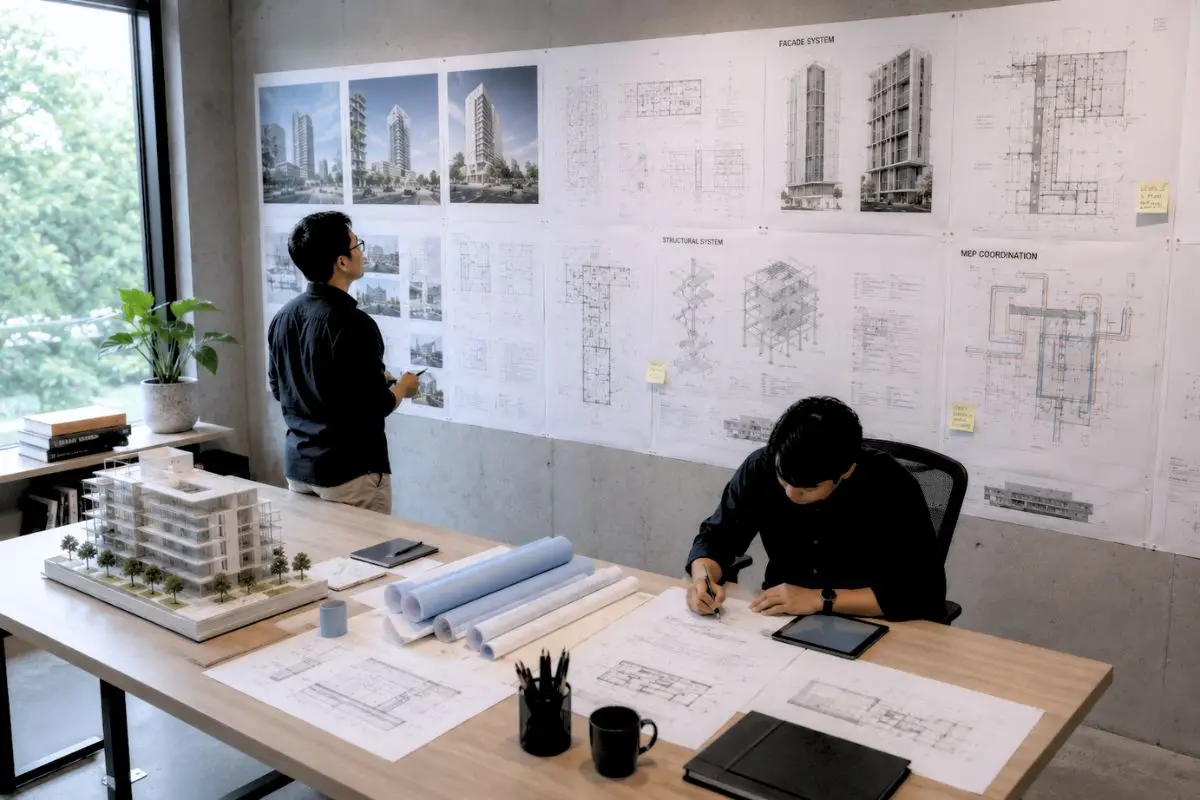
However, every decision ultimately interacts with local site conditions. Philippine climate patterns, seismic requirements, wind loads, utility infrastructure, accessibility standards, fire safety regulations, and local construction practices all influence how an international concept is translated into a buildable project. Rather than treating these factors as constraints, successful teams recognize them as part of the design process itself.
When collaboration begins early, the architectural vision evolves alongside regulatory requirements and technical realities instead of being revised after significant design work has already been completed. This integrated approach preserves design quality while reducing unnecessary redesign later in the project.
The Architect of Record Serves as the Project’s Local Bridge
One of the defining characteristics of international projects in the Philippines is the role of the local Architect of Record. While international consultants may establish the project’s creative direction, Philippine professional practice requires a licensed local architect to assume responsibilities associated with documentation, code compliance, permitting, and professional coordination.
The Architect of Record functions as far more than a regulatory requirement. The role involves interpreting international design intent within the context of Philippine laws, coordinating consultant information, reviewing documentation for constructability, communicating with regulatory agencies, and ensuring that the completed documents remain consistent throughout every phase of project delivery.
This position also becomes the primary point of communication between foreign consultants and local project stakeholders. Questions raised during documentation, permitting, procurement, or construction often require an understanding of both the original design objectives and the realities of Philippine implementation. By maintaining continuous coordination across these different groups, the Architect of Record helps protect the integrity of the design while keeping the project moving efficiently toward construction.
International consultants therefore remain responsible for design leadership within their areas of expertise, while the local architect ensures that the project can be executed responsibly within the Philippine professional and regulatory framework. The relationship is collaborative rather than hierarchical, with each participant contributing knowledge that the other cannot fully replace.
Coordinated Documentation Prevents Costly Construction Conflicts
As projects become larger and technically more sophisticated, documentation also becomes increasingly complex. Architectural drawings must align with structural calculations, mechanical systems, electrical layouts, plumbing networks, fire protection requirements, vertical transportation systems, landscape plans, interior fit-out documentation, and specialist consultant packages.
Without disciplined coordination, relatively small inconsistencies between consultant drawings can create significant delays once construction begins. Differences in dimensions, ceiling heights, structural penetrations, equipment clearances, service routing, or façade interfaces often remain unnoticed until work has already reached the site, where revisions become considerably more expensive.
The strongest international project teams establish document control procedures from the beginning. Clear revision protocols, coordinated drawing standards, scheduled interdisciplinary reviews, and centralized digital collaboration platforms allow consultants to identify conflicts while changes remain relatively easy to implement. Rather than treating coordination meetings as administrative obligations, successful teams use them as opportunities to improve the project collectively.
Local Construction Knowledge Protects Design Intent
Even the most refined international design can encounter difficulties if construction assumptions do not align with local industry practices. Material availability, procurement timelines, contractor experience, labor methods, and supply chain conditions all influence how efficiently a project can be delivered.
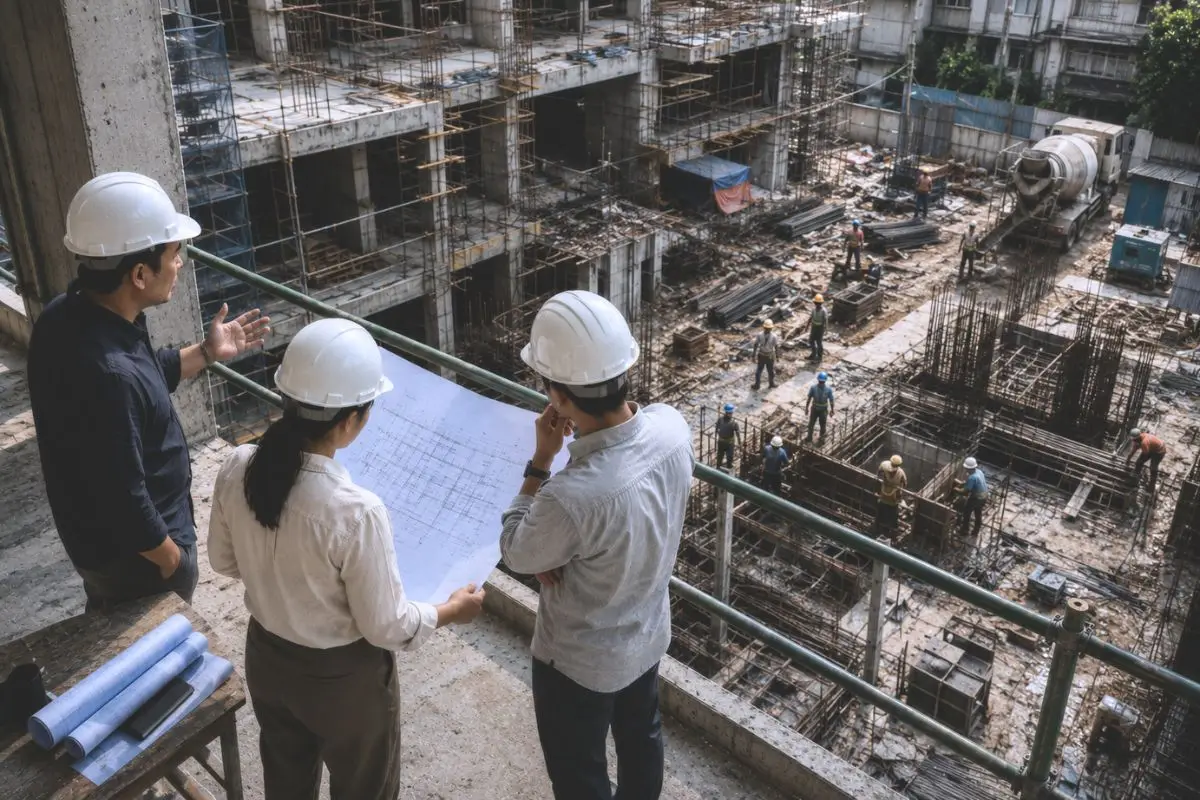
Rather than waiting for construction to expose these issues, experienced project teams evaluate them during design development. Certain imported materials may require local alternatives, specialized building systems may need qualified installers, and construction sequencing may differ from what foreign consultants are accustomed to in other markets. These adjustments do not necessarily diminish the architectural vision. Instead, they allow the design to remain achievable while respecting Philippine construction realities.
Contractors also contribute valuable practical insight during coordination. Early discussions regarding sequencing, temporary works, equipment access, and site logistics often identify opportunities to simplify construction without sacrificing quality. When contractors, architects, engineers, and consultants collaborate openly, the transition from drawings to built work becomes significantly smoother.
Communication and Cultural Understanding Strengthen Collaboration
International collaboration extends beyond technical coordination. Projects also involve professionals with different communication styles, decision-making processes, and workplace expectations. Recognizing these differences contributes to stronger working relationships throughout the life of a project.
Clear meeting agendas, documented decisions, coordinated revision logs, and defined consultant responsibilities reduce uncertainty regardless of where team members are located. Equally important is developing an environment where questions can be raised early rather than allowing misunderstandings to grow into construction issues.
Time zone differences, language nuances, and varying professional conventions require thoughtful coordination, but they also create opportunities to combine diverse perspectives. International consultants may introduce innovative planning strategies, advanced sustainability approaches, or specialized technical expertise, while Philippine professionals contribute practical knowledge of local regulations, construction capabilities, and user expectations. Together, these complementary strengths often produce more resilient and contextually appropriate architectural solutions.
Successful International Projects Are Built on Shared Responsibility
The success of internationally coordinated developments is rarely determined by individual expertise alone. Instead, it reflects the ability of multiple professionals to work toward a common objective while respecting each participant’s responsibilities.
Foreign consultants establish a broader design direction and contribute global experience. Local architects translate design intent into compliant documentation and coordinate regulatory requirements. Engineers integrate technical systems that support long-term building performance. Contractors transform coordinated documents into physical construction, while owners and project managers guide strategic decisions throughout delivery.
When these responsibilities remain clearly defined and communication remains consistent, projects move more efficiently from concept to completion. The result is architecture that maintains its original vision while responding intelligently to Philippine conditions, regulations, and methods of construction.
A licensed local architect coordinates Philippine code compliance, permitting, professional documentation, and consultant integration while helping translate international design intent into a buildable project.
Early coordination with local architects, engineers, and contractors allows constructability concerns, material availability, and regulatory requirements to be addressed before construction begins.
Incomplete communication, inconsistent documentation, unclear consultant responsibilities, and insufficient interdisciplinary review are among the most common sources of delays and construction conflicts.
By integrating local knowledge during design development rather than after documentation is complete, project teams can satisfy Philippine requirements while maintaining the project’s architectural vision.
As increasingly complex developments bring together expertise from around the world, successful project delivery depends on collaboration that extends beyond design excellence alone. Through integrated planning, multidisciplinary coordination, and a thorough understanding of Philippine regulatory and construction environments, Fulgar Architects works alongside international consultants and project stakeholders to help transform global design concepts into well-executed, locally responsive architecture.