












- Architectural themes can give large residential developments a distinct identity beyond individual house designs.
- Philippine developments such as Crosswinds in Tagaytay, Portofino in Alabang, and Georgia Club in Santa Rosa show how developers have used Swiss, Italian, and American-inspired themes to differentiate communities.
- A successful theme can influence architecture, landscaping, streetscapes, amenities, entrances, and shared spaces.
- Strong residential identities allow individual homes to vary while maintaining a recognizable community character.
- Contemporary themes can respond more directly to Philippine climate, landscape, and lifestyles rather than relying solely on imported architectural references.
Residential developments are often remembered for more than their individual houses. Some establish such a recognizable character that the identity of the community becomes part of the address itself.
The Philippines offers several clear examples. Crosswinds in Tagaytay was developed around a Swiss-inspired identity, pairing chalet-style architecture with Tagaytay’s sloping terrain and extensive pine landscape. Portofino in Alabang draws from Italian architecture through elements such as gabled roofs, courtyards, cobblestone pathways, and pocket gardens. Georgia Club in Santa Rosa, Laguna takes a different direction, referencing the American South through porches, shutters, fences, and homes set within a mature landscape.
These developments illustrate why architectural themes have long been used in Philippine residential communities. At the scale of a subdivision or estate, a theme can establish a common language connecting homes, landscapes, amenities, streets, and shared spaces.
The more interesting question, then, is not simply which style a developer chooses, but how that architectural identity can help turn a collection of properties into a coherent community.
Why Developers Give Residential Communities an Architectural Identity
A subdivision is experienced differently from a single building. Residents encounter it gradually, beginning with the entrance and continuing through its main roads, landscaping, parks, amenities, neighborhood streets, and individual homes.
An architectural theme provides a framework that can connect these elements. Building forms, materials, landscaping, colors, roof profiles, and streetscape details can vary while still contributing to the same larger identity.
Philippine developers have used this strategy quite visibly. Brittany Corporation, for example, has developed Italian, Swiss, and American-inspired residential communities. Crosswinds uses Swiss-inspired architecture across several residential enclaves, while Portofino Heights establishes an Italian identity through both its houses and surrounding landscape elements.
Consistency does not require every house to be identical. Instead, a theme can establish enough shared characteristics for different homes and spaces to feel related, giving the development a recognizable identity without eliminating architectural variety.
When the Theme Responds to the Place
The relationship between a theme and its setting can determine whether the concept feels convincing or merely decorative.
Crosswinds demonstrates this particularly clearly. Its Swiss-inspired identity is reinforced by Tagaytay’s sloping terrain, cooler climate, views, and landscape. The development incorporates Swiss-inspired homes and residential buildings along the site’s natural slopes, surrounded by more than 35,000 pine trees.
Georgia Club, meanwhile, uses a different landscape condition. The 15-hectare Santa Rosa community references the American South through patios, shutters, fences, and other residential details while incorporating a site containing more than 1,200 mature trees.
At Portofino Heights, the Italian identity extends beyond individual houses into gardens, pathways, courtyards, and other landscape elements.
These examples reveal an important distinction. A residential theme becomes more convincing when architecture, landscape, and planning support the same idea. When the theme exists primarily as applied decoration, its identity can become harder to sustain as the development changes.
From Imported Styles to More Climate-Responsive Communities
Many recognizable residential themes in the Philippines have historically drawn from architecture associated with other places. Portofino Heights in Alabang references Italy, Crosswinds in Tagaytay takes inspiration from Switzerland, and Georgia Club in Santa Rosa, Laguna evokes the American South.
These references do not necessarily need to disappear. However, newer developments also have an opportunity to build architectural identities around Philippine climate, landscape, and contemporary ways of living.
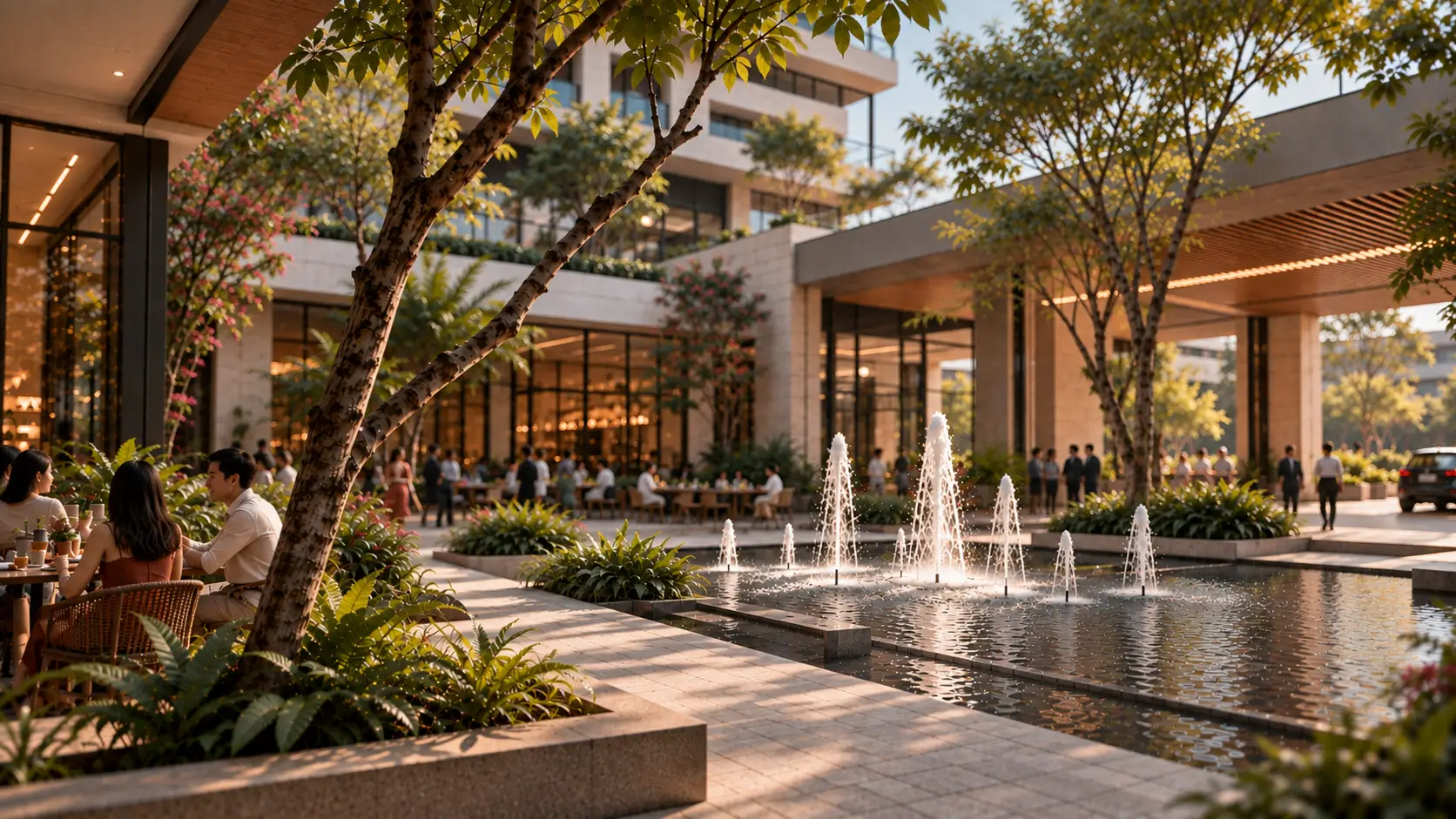
Tropical modern architecture offers one direction. A community can establish a shared design language through:
- Deep roof overhangs and shaded openings that help manage tropical sunlight
- Covered outdoor spaces that remain useful through changing weather conditions
- Natural ventilation and daylight integrated into residential design
- Generous planting and landscape design that contribute to shade and neighborhood character
- Indoor-outdoor connections suited to contemporary Philippine residential lifestyles
These principles allow architectural identity to emerge from how homes respond to Philippine tropical conditions, rather than relying entirely on ornament or historical references.
Architectural Identity Beyond the House
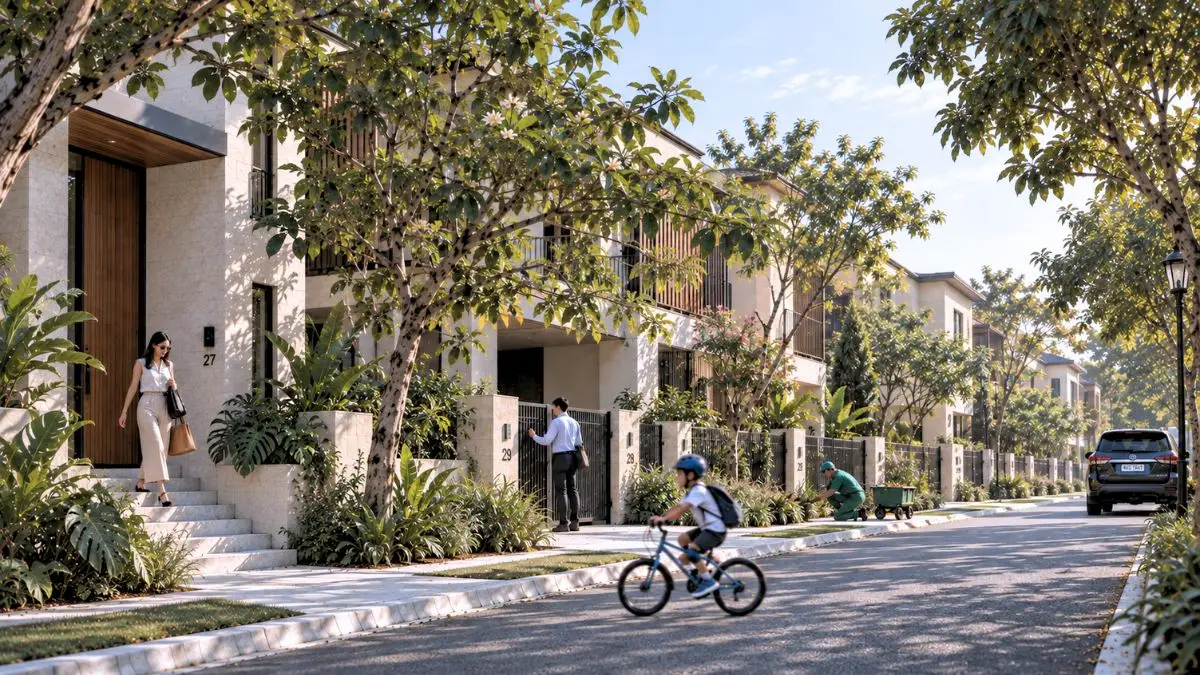
A residential theme can weaken if it ends at the boundaries of individual properties. Residents repeatedly experience the shared environment, making these spaces equally important to the identity of the community.
Architectural character can extend through:
- Entry structures and arrival areas
- Clubhouses and community facilities
- Parks and landscaped open spaces
- Sidewalks and neighborhood streets
- Lighting and street furniture
- Planting and boundary treatments
- Recreational and shared amenities
In Crosswinds in Tagaytay, the pine-covered slopes establish character in the spaces between buildings. In Portofino in Alabang, gardens, pathways, and courtyards reinforce the development’s Italian-inspired identity.
For Philippine developers, this broader approach turns architectural theming into part of the planning strategy rather than simply a collection of stylistic rules for houses.
Allowing Communities to Change Over Time
Residential communities rarely remain exactly as they appeared when they were launched. Homes are renovated, families expand their properties, landscapes mature, and architectural preferences change.
Too little design control can gradually weaken the original identity of a development. Too much can create neighborhoods where individual homes feel interchangeable.
This balance is particularly relevant in Philippine subdivisions, where homeowners may modify properties according to changing family needs. Architectural guidelines can protect the elements most important to the community while still allowing individual expression.
Rather than prescribing every detail, guidelines can establish principles for building heights, setbacks, roof profiles, material palettes, landscaping, fences, or street-facing conditions.
A strong theme therefore does not require a community to remain frozen in time. Its design framework should be clear enough that individual properties can evolve without becoming disconnected from their surroundings.
What Developers Should Consider When Choosing an Architectural Theme
Choosing an architectural theme can have consequences that extend well beyond the initial marketing of a residential development. Four considerations can help determine whether that identity remains useful as the community grows:
1. Scale
The architectural language should work across individual houses, amenities, landscaping, streetscapes, and different areas of the development.
2. Flexibility
The theme should accommodate different lot sizes, housing types, future phases, and eventual homeowner modifications without losing its overall character.
3. Climate
For residential developments in the Philippines, architectural character should respond appropriately to heat, humidity, intense sunlight, and seasonal rainfall. Styles originating from different environments may require thoughtful reinterpretation.
4. Location
Terrain, vegetation, views, climate, and the lifestyle associated with a place can reinforce its architectural identity. Crosswinds and the landscape of Tagaytay demonstrate how setting can strengthen the concept of a development.
Rather than asking only what a residential community should look like, developers can consider what kind of place it is intended to become.
Beyond the Theme
Architectural themes have played a visible role in shaping residential communities across the Philippines. From Crosswinds in Tagaytay and Portofino in Alabang to Georgia Club in Santa Rosa, developers have used architecture to give large communities identities that residents and visitors can recognize.
But a lasting residential identity depends on more than stylistic references.
Architecture, landscape, streets, amenities, and shared spaces all contribute to how a community is experienced. As Philippine residential development evolves, architectural themes can likewise move beyond reproducing familiar styles toward design languages shaped by local climate, contemporary lifestyles, and the characteristics of each site.
A community does not need every house to look the same to have a strong identity. It needs a clear enough architectural framework for individual places to feel part of something larger.
Architectural themes can establish a recognizable identity across a large development while providing a common design language for homes, amenities, landscapes, and shared spaces.
No. Architectural guidelines can establish common principles for materials, building forms, landscaping, setbacks, and other elements while allowing individual houses to vary.
Crosswinds in Tagaytay uses Swiss-inspired architecture, Portofino in Alabang draws from Italian design, and Georgia Club in Santa Rosa, Laguna references the architecture of the American South.
Yes. In the Philippine context, shared responses such as shaded spaces, deep overhangs, natural ventilation, generous landscaping, and indoor-outdoor connections can establish a recognizable design language without requiring identical façades.
For developers planning new residential communities in the Philippines, architectural identity is ultimately about more than selecting a recognizable style. It involves creating a framework that connects architecture, landscape, amenities, and everyday residential life while remaining adaptable as the community matures.
Fulgar Architects works with developers and property owners to explore architectural and planning strategies suited to the character, requirements, and long-term vision of residential developments.
Planning a residential development in the Philippines? Contact Fulgar Architects to discuss how architecture and master planning can help shape a distinctive and enduring community.