












- BPO workplaces operate continuously, requiring zoning that supports 24/7 use
- Spatial planning must separate high-energy and quiet work areas
- Employee comfort directly affects retention and performance
- Support spaces are critical for long shifts and varied schedules
- Flexibility allows offices to adapt to changing workforce demands
In Philippine BPO office design, the sector presents a distinct set of requirements. Unlike conventional workplaces, these environments operate around the clock, with shifting teams, varied peak hours, and continuous activity. Designing for this condition requires more than efficient layouts. It requires a clear understanding of how people use space over extended periods.
BPO offices are not static environments. They are systems that must support different rhythms of work, rest, and transition throughout the day and night. When these patterns are considered early in the design process, the result is a workplace that remains functional and comfortable under continuous use.
Zoning for 24/7 Operations
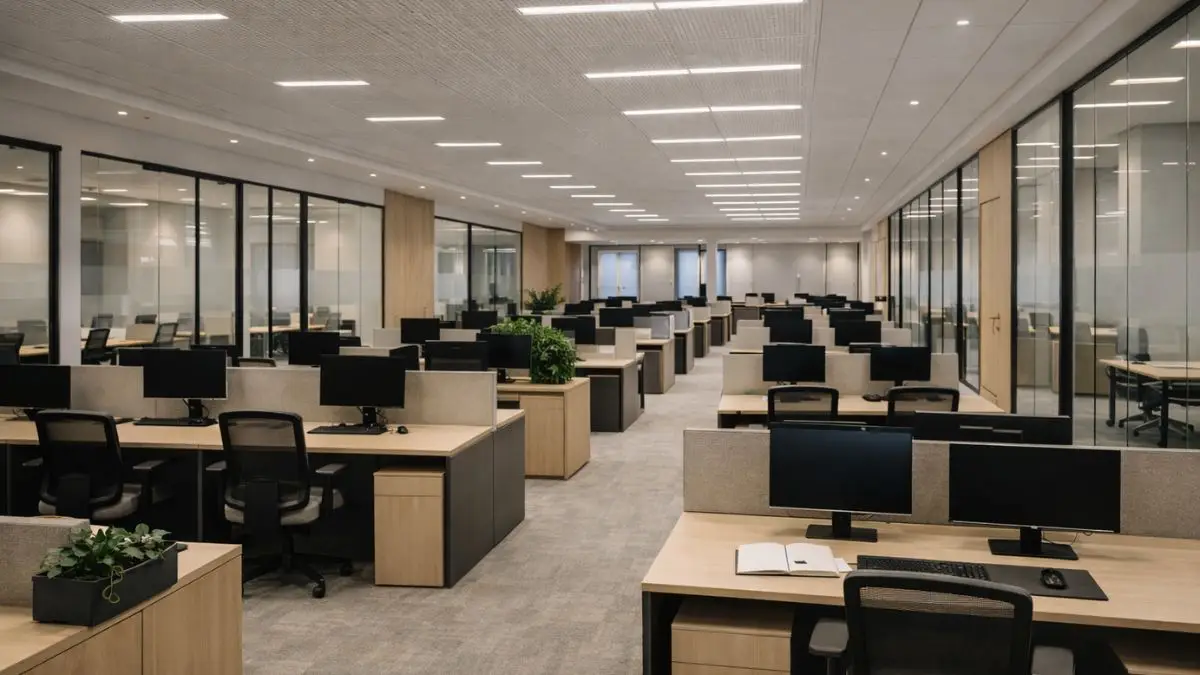
Continuous operations require careful spatial zoning. Work areas, support spaces, and circulation must be arranged to prevent overlap between high-activity and low-activity zones.
This often means separating call floors from rest areas, meeting rooms, and support facilities. Clear zoning reduces noise, improves focus, and allows different functions to operate without disruption.
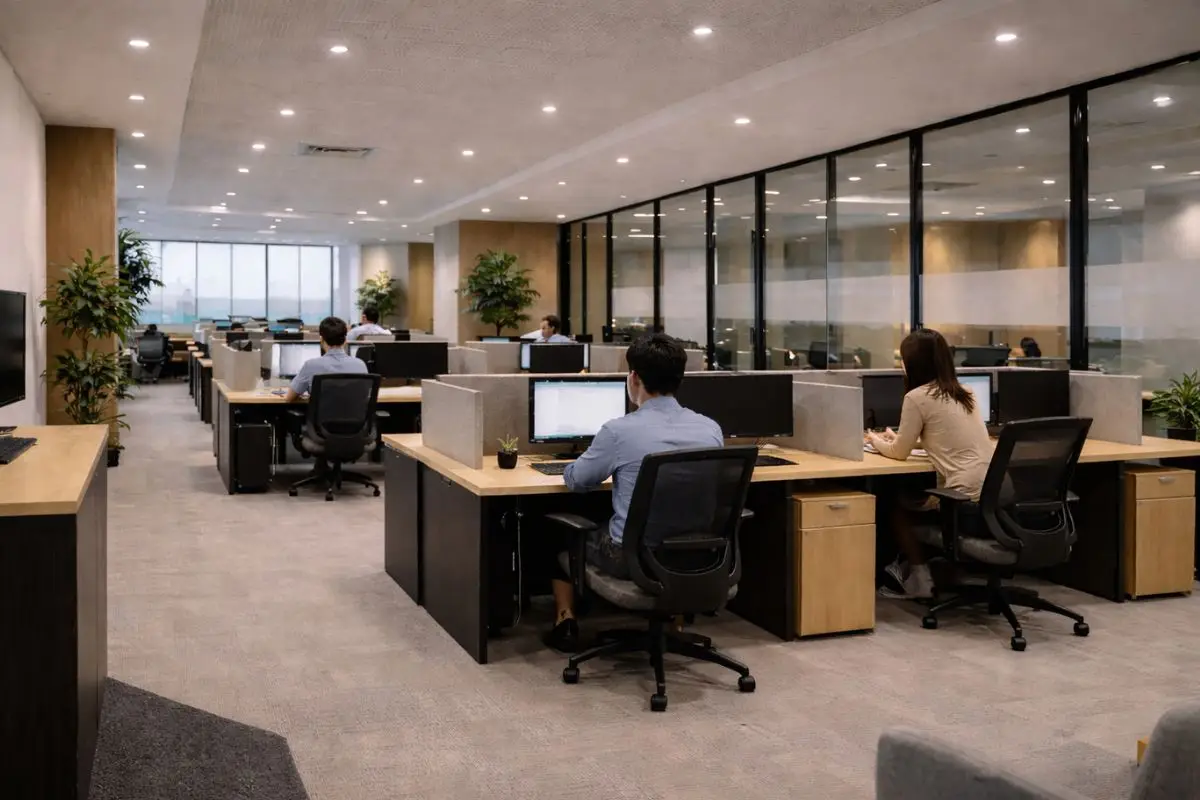
Transitions between zones are equally important. Buffer spaces, controlled access points, and acoustic treatments help maintain clarity across the environment.
Workforce Patterns and Spatial Use
BPO environments are defined by shifting schedules. Day, evening, and night teams use the same spaces differently. This affects how areas are occupied, how lighting is managed, and how support spaces are distributed.
Designing with these patterns in mind ensures that no single group dominates the environment. Instead, the office supports a continuous cycle of use that remains balanced over time.
This approach allows workplaces to remain efficient without becoming rigid.
Comfort and Retention
Employee comfort is directly tied to retention in BPO environments. Long shifts and repetitive tasks require spaces that reduce fatigue and support well-being.
Ergonomic workstations, controlled lighting, and access to rest areas improve daily experience. Break rooms, quiet zones, and informal spaces provide opportunities for recovery during long shifts.
These elements are not secondary. They are part of the core structure of the workplace.
Support Spaces as Core Infrastructure
Support spaces carry more weight in BPO offices than in traditional workplaces. Pantries, lounges, sleeping pods, and wellness rooms must be integrated into the layout rather than treated as add-ons.
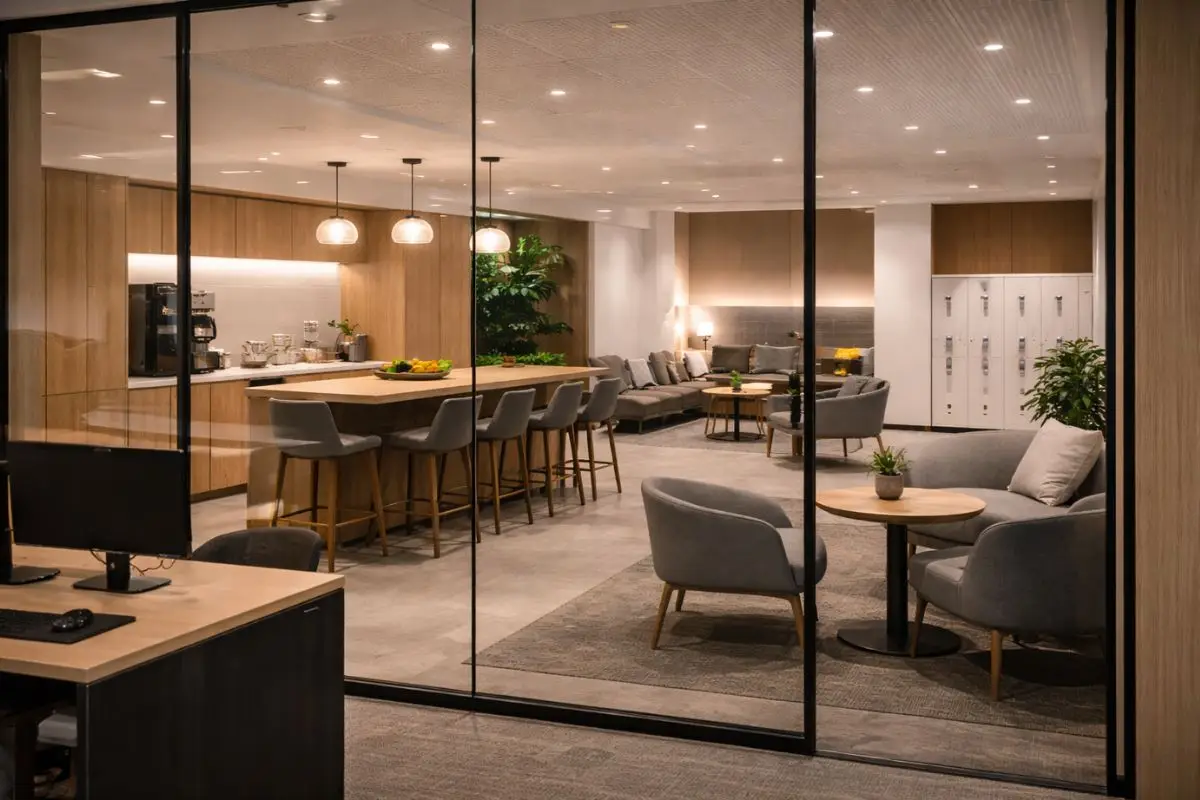
Their placement affects how easily employees can transition between work and rest. When located properly, they reduce congestion and improve overall flow.
These spaces contribute to both efficiency and employee satisfaction.
Lighting and Environmental Control
Lighting plays a critical role in environments that operate 24/7. Artificial lighting must be balanced to support alertness without causing fatigue. Access to natural light, where possible, helps regulate circadian rhythms.
Environmental controls such as temperature and air quality must remain consistent across different zones and times of day. These systems support both comfort and performance.
Design decisions in this area directly affect how sustainable and usable the office remains over time.
Flexibility and Long-Term Use
BPO operations evolve quickly. Teams expand, contract, or shift functions based on demand. Office layouts must accommodate these changes without major disruption.
Modular workstations, adaptable meeting spaces, and flexible partitions allow the office to respond to new requirements. This reduces the need for frequent renovations and supports long-term efficiency.
Flexibility ensures that workplaces remain relevant as business needs change.
It separates different activity levels, reducing noise and improving focus across the workplace.
Spaces must support continuous use, with balanced lighting, environmental control, and support areas.
Comfortable workstations, access to rest areas, and well-planned support spaces improve long-term satisfaction.
BPO operations change quickly, so offices must adapt without major disruption.
Fulgar Architects works with developers and operators to design BPO environments that support continuous operations without compromising comfort or clarity. From spatial zoning to long-term workplace performance, each decision is considered to ensure that these environments remain efficient, resilient, and adaptable over time.