












- Foot traffic is shaped by visibility, access, and spatial planning
- Designing commercial spaces requires careful coordination between layout and circulation
- Environmental experience influences how long users remain within a space
- Tenant placement and circulation directly affect commercial performance
- Well-designed commercial spaces support both movement and dwell time
Visibility and Access Shape First Impressions
In commercial developments, foot traffic does not occur by chance. It is shaped by how visible and accessible a space is from its surroundings. Buildings that engage the street, provide clear entry points, and establish visual continuity tend to attract more users from the outset.
When designing commercial spaces, visibility often becomes one of the first considerations. Developments in areas such as Makati and BGC rely on strong frontage, clear signage zones, and unobstructed access points to encourage pedestrian activity. When entrances are easy to identify and directly connected to circulation paths, the likelihood of attracting foot traffic increases.
This initial interaction sets the tone for how users engage with the space.
Layout and Circulation Planning
Once users enter a commercial space, layout becomes the primary factor influencing movement. Circulation paths must be intuitive, allowing users to move through the development without confusion or unnecessary detours.
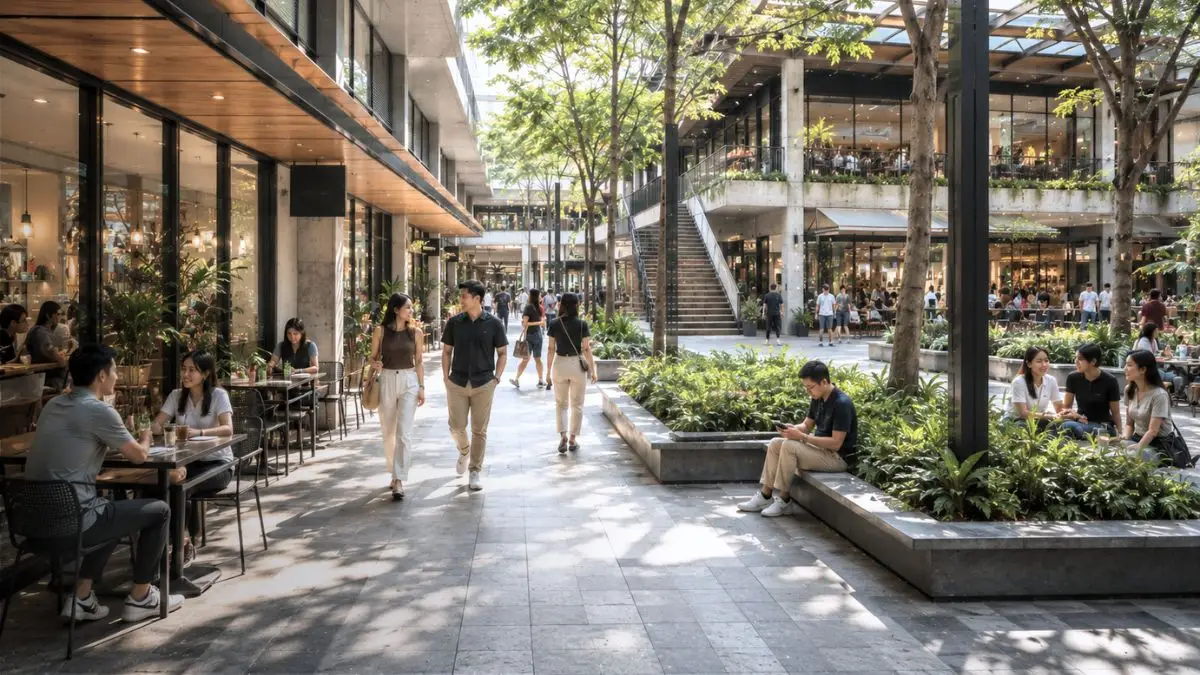
Clear primary paths, supported by secondary routes, help organize movement. This hierarchy reduces congestion and improves overall usability. When designing commercial spaces, circulation planning must also account for varying user groups, including shoppers, employees, tenants, and service personnel.
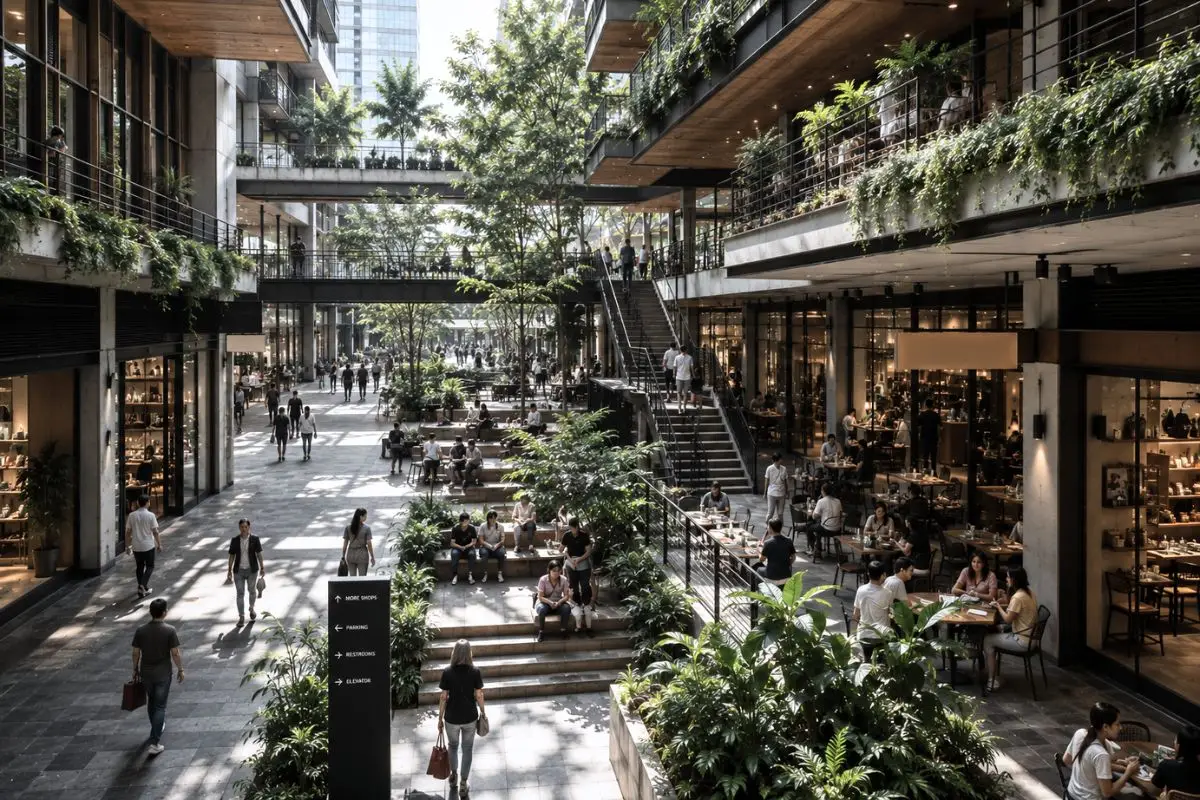
Efficient layouts not only support movement but also create opportunities for tenant visibility. When circulation routes are aligned with retail frontage, businesses benefit from consistent exposure to passing users.
Environmental Experience and Dwell Time
Attracting foot traffic is only part of the equation. Retaining users within a space is equally important, and this is where environmental experience plays a critical role.
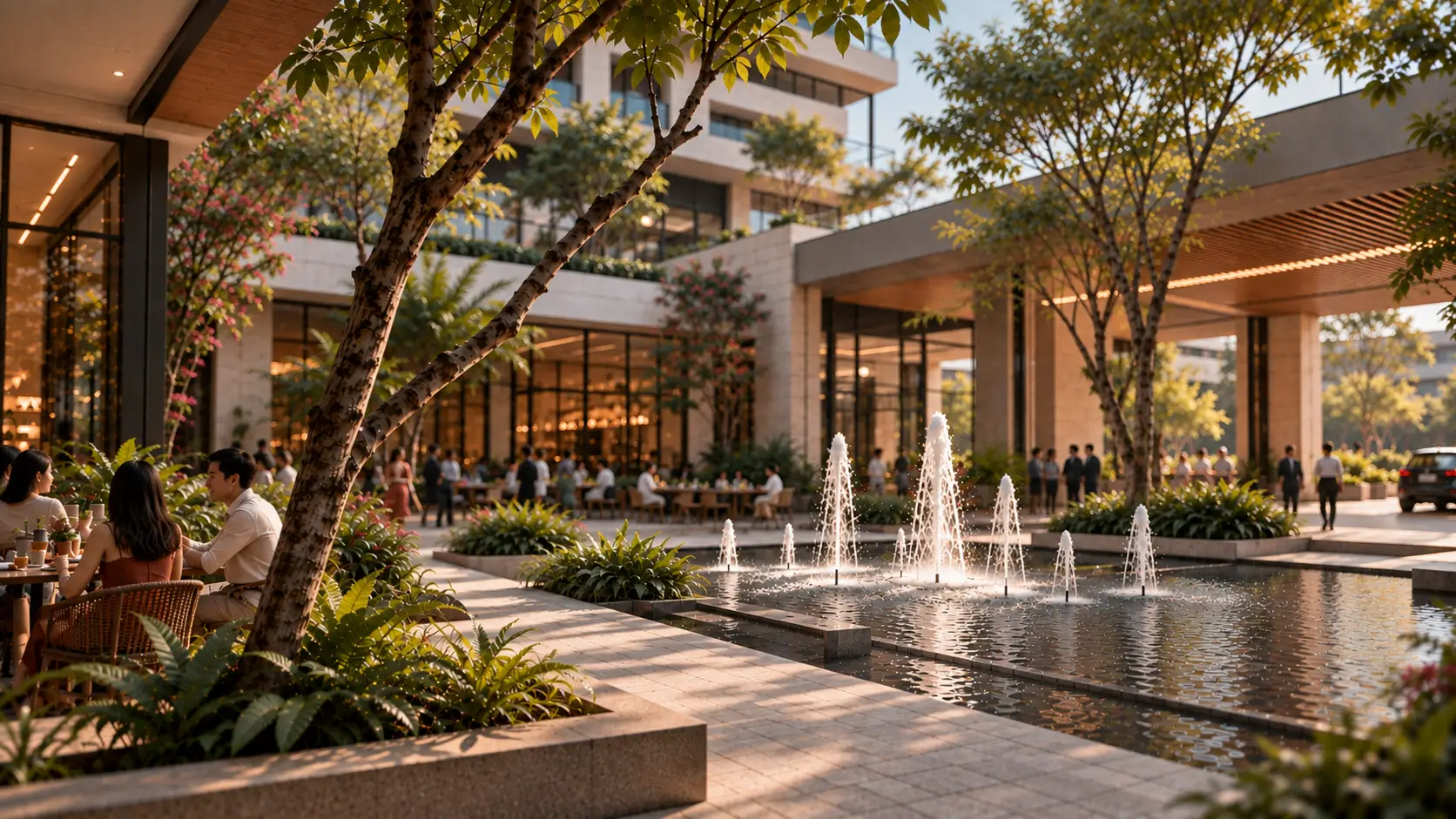
Factors such as natural light, ventilation, and thermal comfort influence how long users choose to stay. In the Philippine climate, shaded walkways, open-air corridors, and controlled airflow contribute to a more comfortable environment.
Rather than relying solely on enclosed, air-conditioned spaces, many developments are incorporating semi-open areas that balance comfort with energy efficiency. When designing commercial spaces, these strategies improve user experience while supporting long-term operational performance.
Tenant Placement and Commercial Strategy
The arrangement of tenants within a development directly affects how foot traffic is distributed. Anchor tenants are often positioned to draw users deeper into the space, while smaller retail units benefit from placement along primary circulation routes.
Strategic zoning ensures that high-interest areas are evenly distributed. This prevents congestion in certain zones while leaving others underutilized.
When designing commercial spaces, tenant mix and placement must align with movement patterns. When layout and leasing strategies are coordinated, the development functions more effectively as a whole.
Designing for Movement and Pause
Successful commercial spaces balance movement with moments of pause. While circulation encourages users to explore, designated areas for rest and interaction extend their stay.
Seating areas, landscaped zones, and transitional spaces create opportunities for users to slow down. These elements contribute to a more engaging environment without disrupting overall flow.
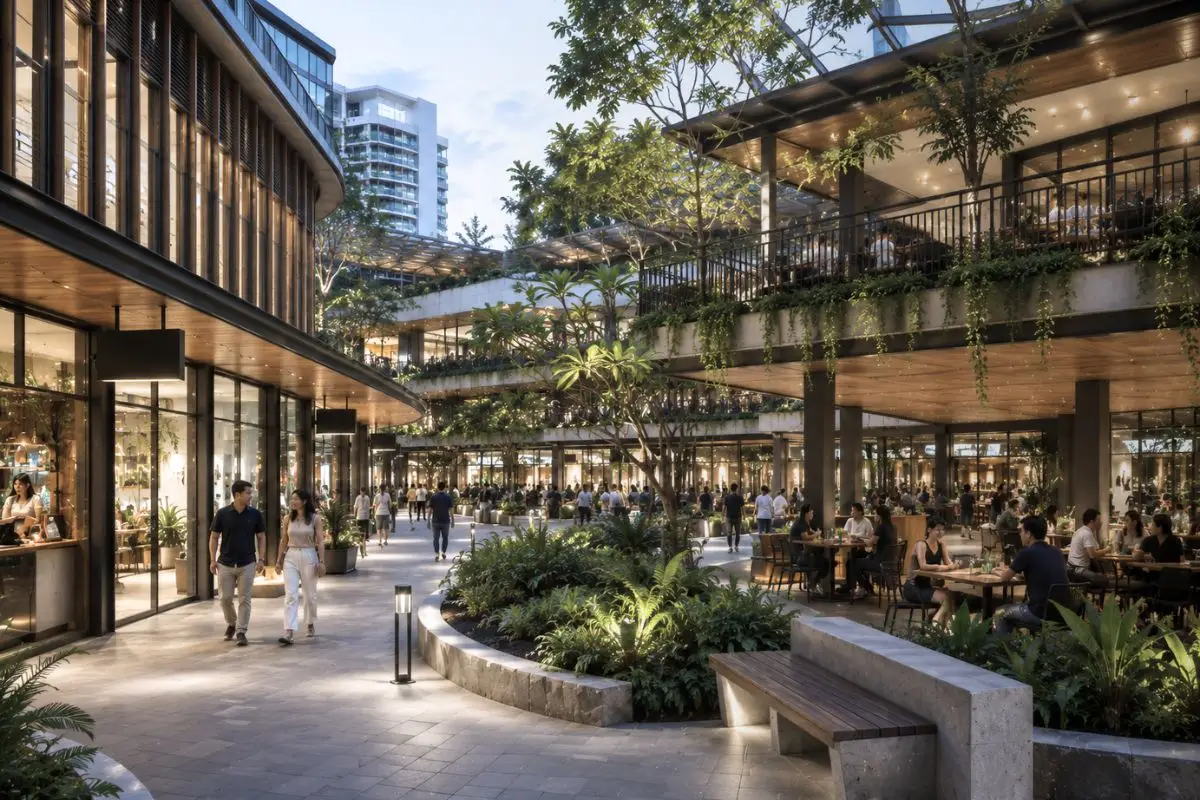
This balance between movement and pause enhances the overall experience. It allows users to navigate efficiently while still engaging with the space at their own pace.
Long-Term Performance and Adaptability
Commercial spaces must remain relevant over time. Changes in tenant mix, user behavior, and market conditions require buildings to adapt without major disruption.
Flexible layouts, clear circulation systems, and well-defined zones support this adaptability. Developments that can accommodate change are more likely to retain value and maintain consistent foot traffic.
When designing commercial spaces, long-term performance is closely tied to how well a development responds to evolving needs. Design decisions made early in the process have lasting effects on usability and commercial success.
Visibility, accessibility, and clear entry points are among the primary factors influencing foot traffic within commercial environments.
Intuitive circulation paths reduce confusion and guide users through the space more efficiently.
Comfort influences how long users stay within a space, which directly affects overall commercial activity and engagement.
Strategic tenant placement supports balanced foot traffic distribution and improves visibility throughout the development.
As commercial developments continue evolving alongside changing patterns of movement, retail behavior, and urban activity, thoughtful circulation and environmental planning are becoming increasingly important to long-term performance. Through an integrated approach to planning, architecture, and user experience, Fulgar Architects helps shape commercial environments designed for both usability and adaptability over time.