












- Township developments increasingly shape how people live, work, and move through integrated urban environments.
- Architecture influences district identity through circulation, public spaces, landscape systems, and spatial continuity.
- Walkability and mixed-use planning are becoming central to contemporary township developments in the Philippines.
- Hospitality-inspired planning strategies are influencing how large-scale communities create atmosphere and usability.
- Successful township environments often create long-term value through coherent urban experience rather than scale alone.
Township developments in the Philippines continue evolving beyond the traditional model of large mixed-use expansion. Many integrated communities today function as complete urban environments where residential, commercial, hospitality, institutional, and recreational spaces operate within connected urban systems.
As Philippine cities continue growing outward, architecture increasingly influences how these districts feel and function over time. Roads, pedestrian circulation, landscape systems, public plazas, retail corridors, and gathering spaces all contribute to how people experience movement and identity within a township environment.
The strongest developments often create continuity gradually through atmosphere, movement, and everyday usability rather than relying purely on landmark structures or density.
Architecture Beyond Individual Buildings
Architecture within township developments operates at a much larger scale than conventional standalone projects. The challenge extends beyond designing individual structures and begins shaping how entire districts function socially, visually, and economically.
Residents, office workers, hotel guests, students, shoppers, and visitors all occupy these environments differently throughout the day. Architecture helps organize these overlapping forms of activity into spaces that feel intuitive and connected despite increasing complexity.
Street proportions, shaded walkways, building orientation, landscape systems, and material consistency all contribute to whether communities feel fragmented or cohesive once daily activity begins.
Many township developments Philippines create identity through continuity rather than spectacle. Districts such as Bonifacio Global City and Eastwood City helped demonstrate how walkability, mixed-use planning, and integrated public spaces can shape recognizable urban environments over time. People often remember these places not only because of architecture itself, but because movement through the district feels intuitive and memorable.
Designing Movement Within Township Developments in the Philippines
Movement remains one of the most important aspects of township planning, even when it is not immediately visible to most people experiencing the district.
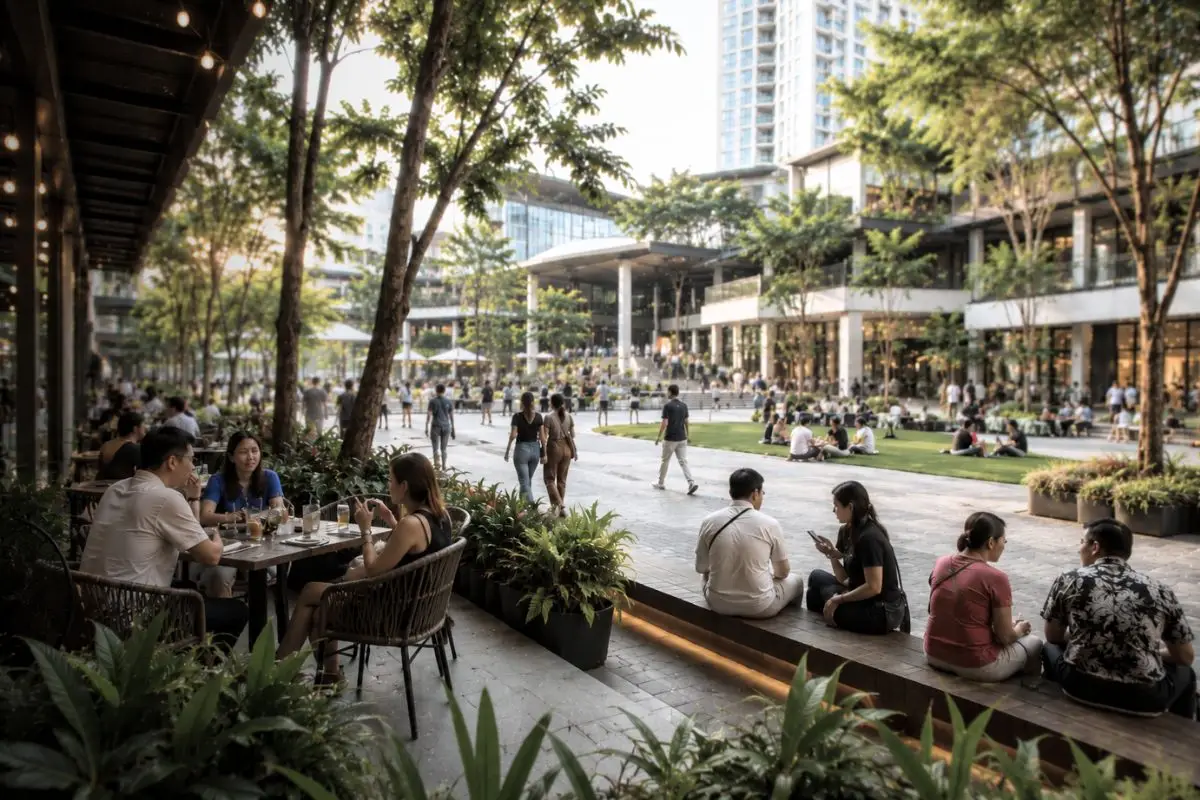
Many older developments prioritized vehicular circulation almost exclusively. Contemporary township developments in the Philippines increasingly consider how people move through environments at multiple scales, particularly through pedestrian-oriented planning systems.
Architecture shapes movement through visual sightlines, movement systems, landscape transitions, transportation integration, active ground-floor spaces, and walkable connections between destinations. When these systems work together properly, large developments begin feeling calmer and easier to navigate despite increasing density.
This shift also changes how districts function throughout the day. Walkable environments allow residential, retail, hospitality, and lifestyle spaces to support one another more organically rather than functioning as isolated zones. Districts such as Bonifacio Global City demonstrate how integrated pedestrian systems and mixed-use planning can create more continuous urban activity throughout the day.
Hospitality architecture has also influenced how movement is approached within integrated developments. Hotels and resorts often guide guests through carefully sequenced spatial experiences using framed views, gradual transitions, and layered landscaping. Township planning increasingly borrows similar principles to shape districts that feel more welcoming and cohesive.
Public Spaces and Community Identity
Some of the most memorable township environments are defined less by individual towers and more by the spaces between them.
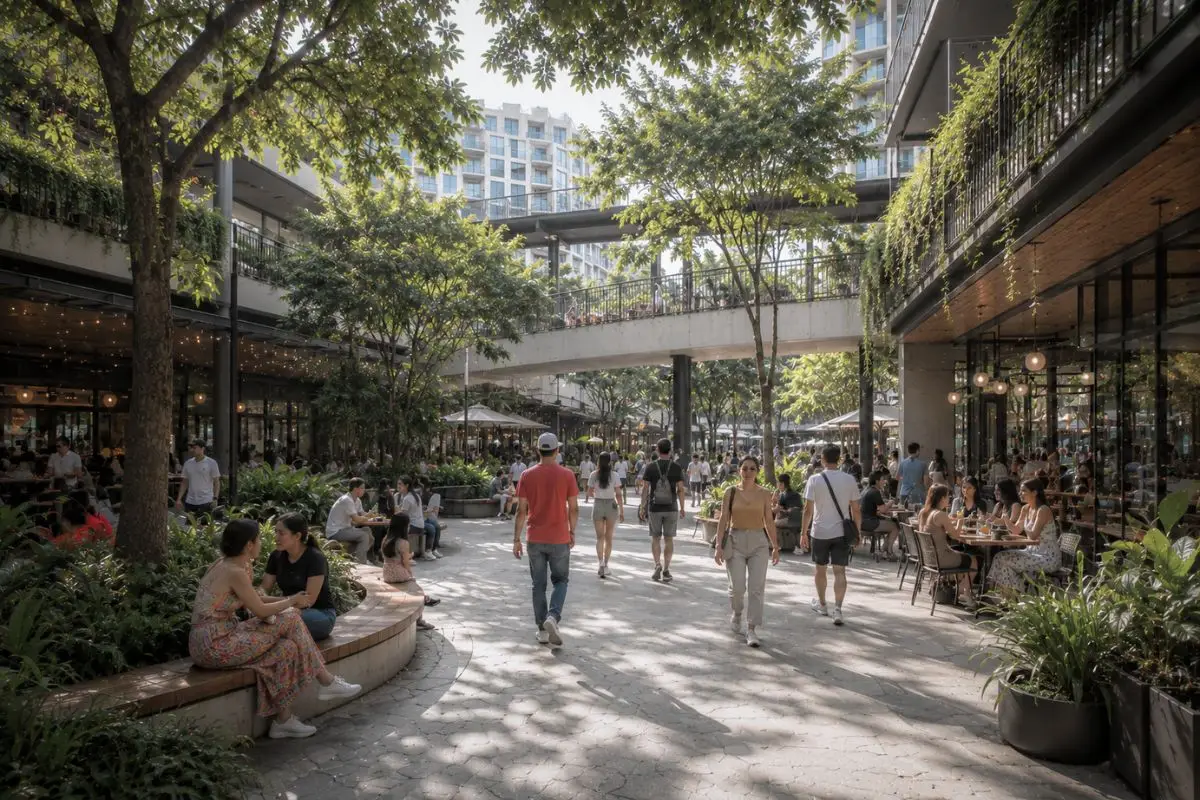
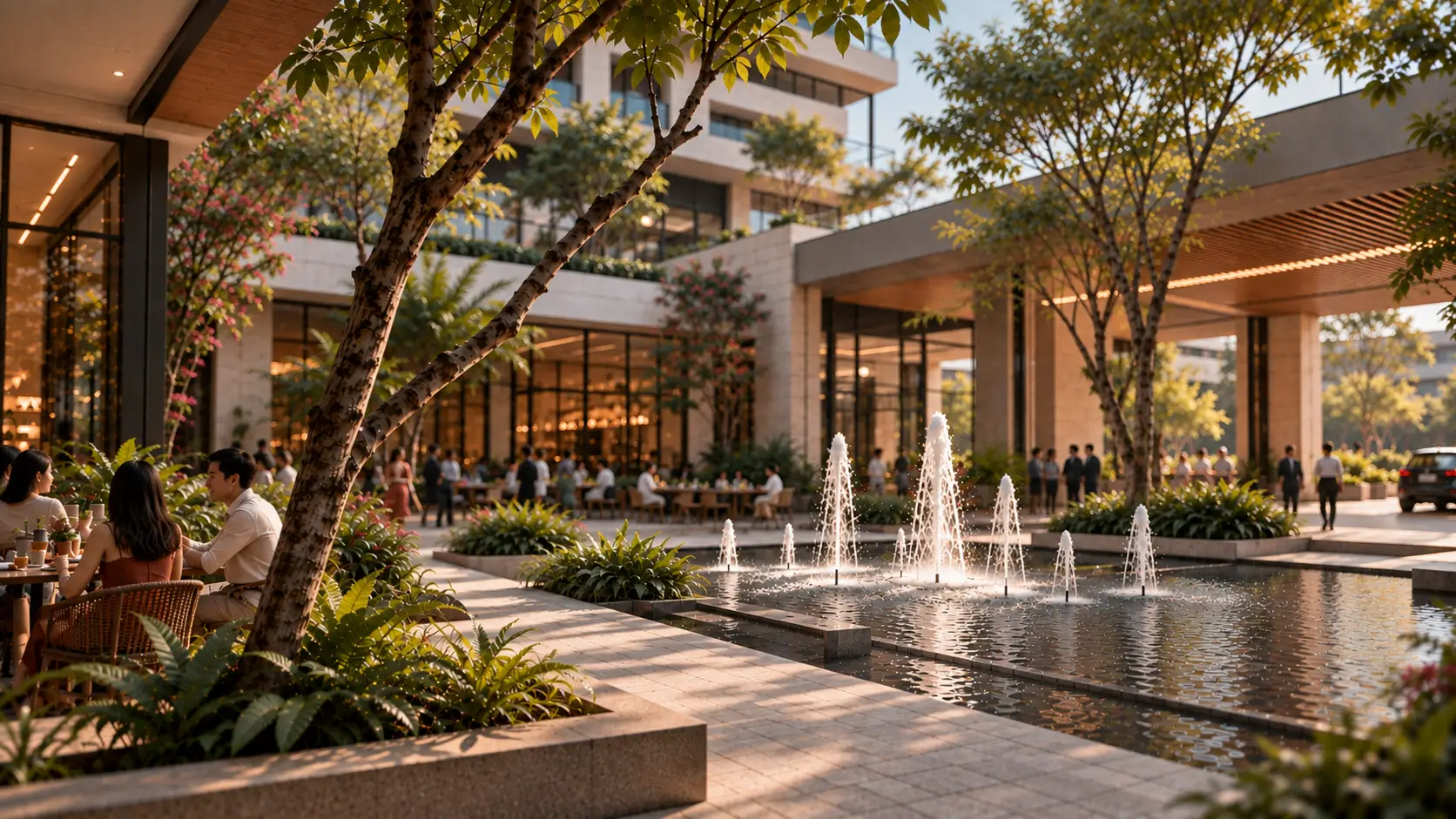
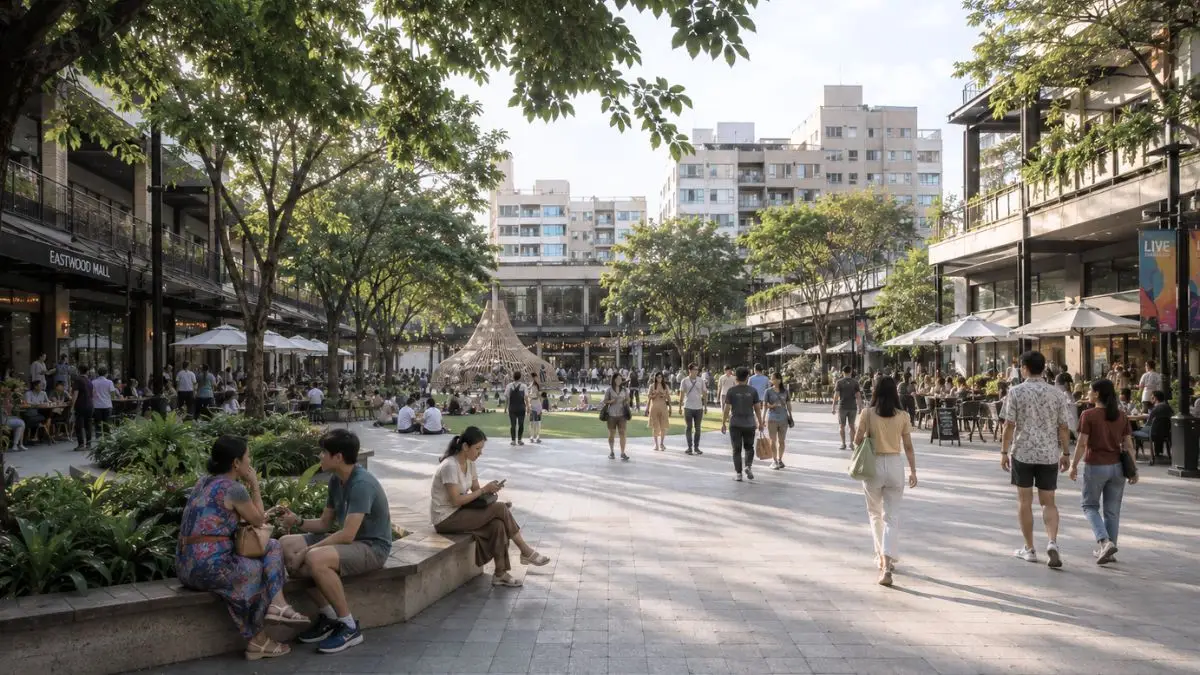
Public plazas, landscaped promenades, outdoor dining areas, shaded gathering spaces, and community-oriented open spaces all contribute to how districts develop social identity over time. These environments encourage interaction beyond private homes or workplaces and help communities feel more active and lived in.
Climate responsiveness also plays a significant role in how public spaces are designed within Philippine developments. Shade, cross ventilation, tropical landscaping, covered walkways, and environmental comfort strongly influence whether outdoor areas remain usable throughout the year.
This often explains why some integrated communities feel more vibrant and connected despite having similar development programs on paper. Developments such as Eastwood City helped establish how public spaces, outdoor dining environments, and pedestrian-oriented circulation can strengthen district identity beyond individual buildings alone. The quality of shared environments affects how people experience daily life within the district itself.
Township developments increasingly reflect the understanding that long-term urban value depends on creating places where people genuinely want to spend time rather than simply move through efficiently.
Mixed-Use Planning and Urban Rhythm
One of the defining strengths of township developments is their ability to support multiple forms of activity within a connected environment. Residential towers, offices, retail centers, hotels, educational institutions, and recreational facilities all contribute to the rhythm of the district throughout the day.
Architecture helps balance these functions without allowing developments to feel visually chaotic or operationally disconnected.
Pedestrian comfort, transitions between public and private zones, service circulation, traffic management, amenity integration, and landscape continuity all influence how smoothly integrated communities function over time. These planning decisions shape whether districts feel cohesive and welcoming once fully occupied.
As Philippine cities continue evolving, many township developments now function almost as secondary urban centers with their own economic and social ecosystems. Bonifacio Global City and Eastwood City both illustrate how integrated communities can gradually evolve into recognizable urban districts with their own rhythms of work, commerce, leisure, and residential life. In these environments, architecture influences not only aesthetics but also how communities grow and interact over decades of occupation.
Long-Term Urban Experience and Township Identity
As township developments in the Philippines continue expanding, architecture increasingly shapes how districts are remembered beyond initial real estate value alone.
People increasingly respond to environments that feel walkable, socially active, environmentally comfortable, and emotionally recognizable. The strongest integrated communities often create identity gradually through movement, atmosphere, public space, and everyday interaction rather than relying purely on scale or iconic structures.
Over time, these qualities influence how communities are inhabited, valued, and experienced long after construction phases are completed.
Township developments are large-scale integrated communities that combine residential, commercial, hospitality, institutional, and recreational spaces within a unified master plan.
Walkability improves movement, accessibility, community interaction, and overall urban experience while reducing dependence on vehicles within integrated districts.
Architecture shapes township identity through public spaces, circulation systems, landscape planning, spatial continuity, and the overall atmosphere of the district.
Mixed-use developments support convenience, economic activity, walkability, and long-term urban growth by integrating multiple functions within connected environments.
Fulgar Architects approaches township and integrated developments through long-term spatial thinking that balances movement, placemaking, environmental comfort, and urban identity across evolving communities.