












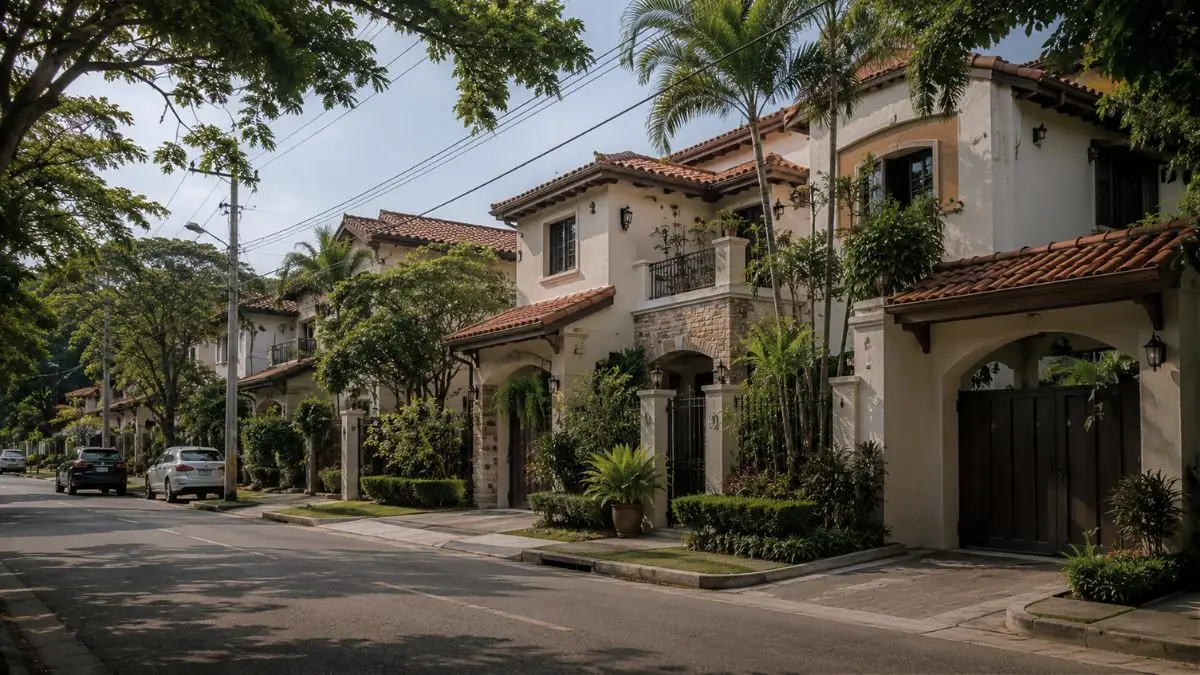
- Mediterranean Spanish residences helped shape the identity of many high-end suburban communities in southern Metro Manila.
- Ayala Alabang became one of the clearest examples of how Spanish-inspired residential language evolved within Philippine tropical conditions.
- The architectural style adapted Mediterranean and Spanish references into climate-responsive suburban living environments.
- Contemporary southern communities continue adapting Mediterranean Spanish design through modern materials, climate-responsive planning, and changing lifestyle needs.
- The endurance of the style reflects deeper aspirations around permanence, family life, and spatial comfort in Philippine residential development.
Southern suburban communities in Metro Manila developed a distinct residential identity over several decades of urban expansion. Among the architectural styles that became strongly associated with this shift, Mediterranean Spanish residences emerged as one of the most recognizable influences in high-end residential development. Communities such as Ayala Alabang helped popularize warm material palettes, landscaped streetscapes, and climate-responsive suburban homes that balanced aspiration with livability. Today, the influence of these residential environments continues to shape how contemporary southern communities approach architecture and domestic life.
The Rise of Southern Suburban Identity in Philippine Residential Development
For decades, residential growth in Metro Manila moved progressively southward as families searched for larger properties, quieter environments, and more controlled residential settings. Communities in southern districts gradually developed their own architectural identity distinct from the denser and more commercial character of central business areas.
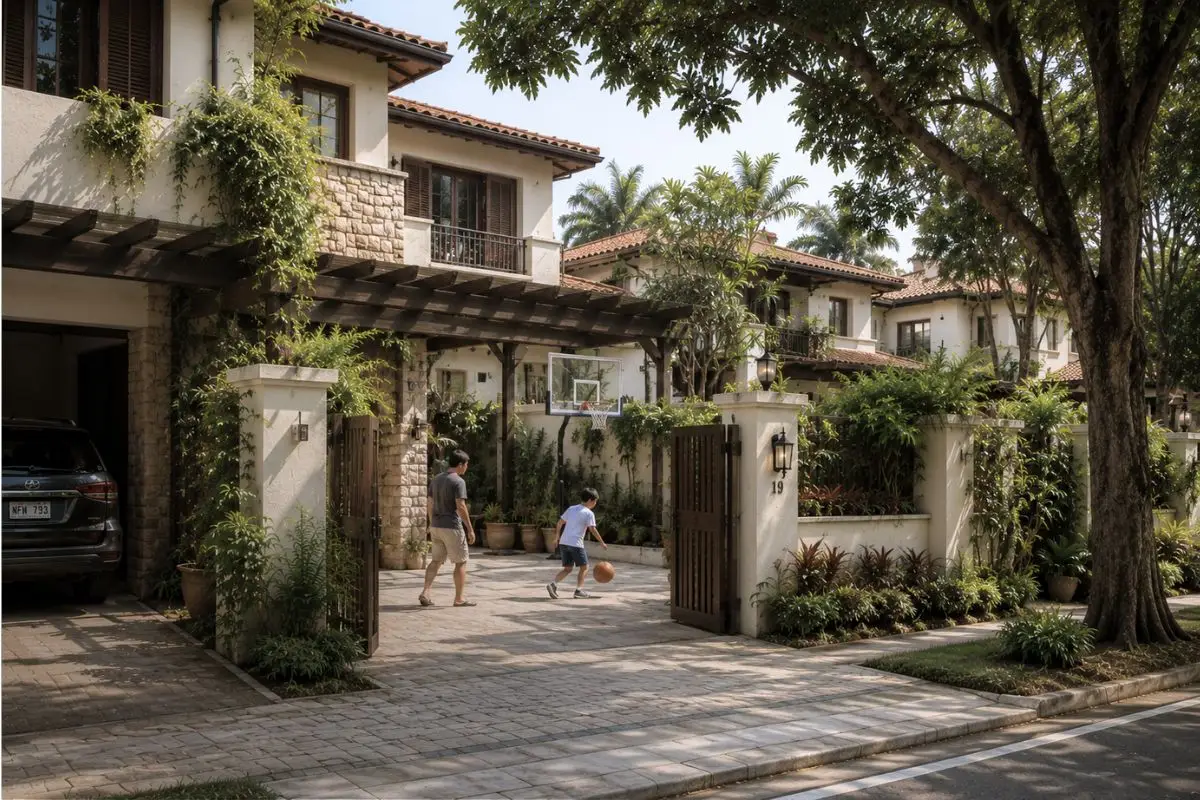
Among the architectural languages that became deeply associated with this suburban expansion, Mediterranean Spanish residences became one of the most recognizable and enduring residential styles.The style appeared across gated villages, estate developments, and high-end residential enclaves where developers and homeowners sought environments that felt established, warm, and spatially generous.
Few communities became more closely associated with this architectural direction than Ayala Alabang. Over time, the district evolved into a reference point for suburban residential living in the Philippines. Its streetscapes reflected a blend of Mediterranean and Spanish-inspired residential forms adapted to tropical conditions, large family households, and evolving upper-income lifestyles.
The influence of these residential environments eventually extended beyond Ayala Alabang itself. Other southern communities adopted similar planning logic, architectural detailing, and lifestyle positioning. While contemporary residential architecture has diversified considerably in recent years, the broader influence of Mediterranean Spanish residences remains visible across many suburban developments south of Metro Manila.
The lasting appeal of the style is not simply about aesthetics. Its continued relevance reflects how architecture communicates permanence, comfort, climate awareness, and domestic aspiration within the Philippine setting.
Mediterranean and Spanish Influences Adapted Naturally to Tropical Living
The popularity of Mediterranean Spanish residences in the Philippines was partly driven by how naturally many Mediterranean architectural principles adapted to tropical climates. Although these stylistic references originated from Southern Europe, several underlying spatial ideas aligned well with environmental conditions found across the Philippines.
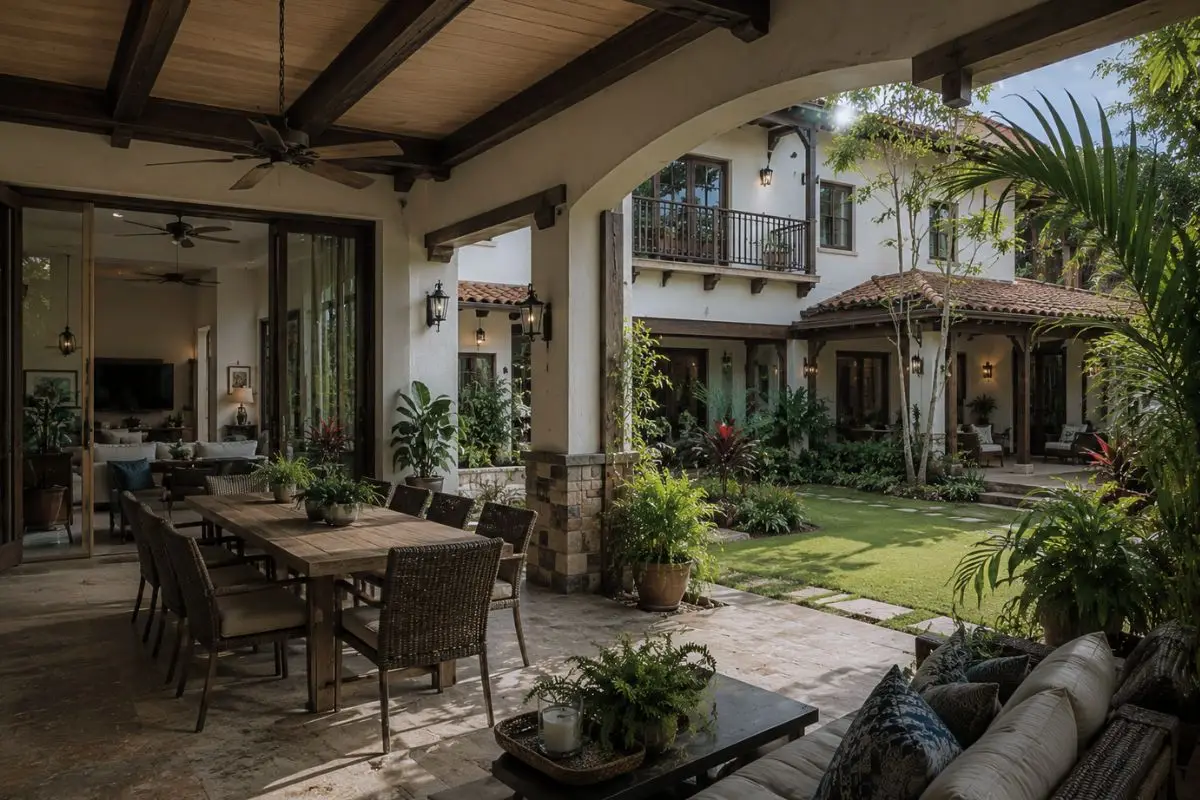
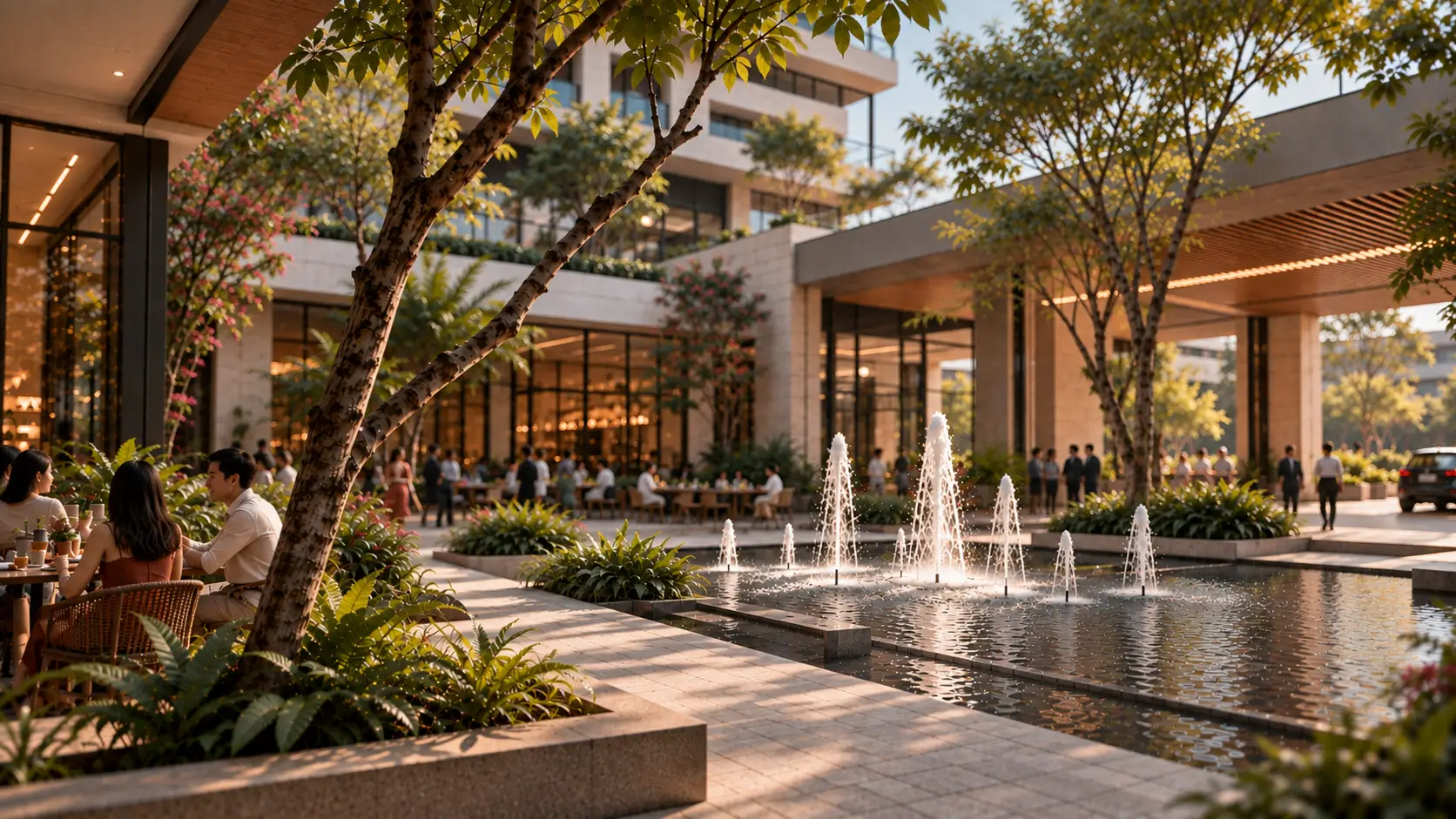
Deep roof overhangs, shaded terraces, thick wall expressions, courtyards, and strong indoor-outdoor relationships all contributed to environmental comfort. These architectural features created transitional spaces that softened exposure to heat and heavy rainfall while encouraging ventilation and outdoor activity.
In southern suburban communities, these principles became especially attractive because residential lots were larger and allowed for more expansive planning approaches. Homes could accommodate gardens, pool areas, courtyards, and covered outdoor spaces that reinforced resort-like domestic environments.
The adaptation process was never purely historical or stylistically strict. Philippine interpretations often combined Mediterranean and Spanish references with local construction methods, tropical landscaping, and contemporary residential requirements. The result was a distinctly localized version of the architectural style.
This hybridization explains why Mediterranean Spanish residences became so widespread across upper-middle and luxury residential markets during multiple decades of suburban expansion. The style projected familiarity and prestige while remaining climatically believable within the Philippine environment.
Developers also understood the commercial value of these architectural associations. Mediterranean-inspired communities often communicated exclusivity, family-oriented living, and long-term residential stability. Streets lined with warm-toned houses, tiled roofs, landscaped setbacks, and pedestrian-friendly environments created a strong emotional identity for buyers.
That identity remains influential even as architectural preferences continue evolving.
Ayala Alabang Helped Establish the Visual Language of Southern Luxury Living
The growth of Ayala Alabang coincided with a period when masterplanned suburban communities were becoming increasingly aspirational for Metro Manila families. Beyond lot sizes and security, residents were drawn toward environments that felt spatially calmer and more residentially coherent.
Mediterranean Spanish residences contributed heavily to that sense of identity. Their architectural language introduced warmth and texture into suburban streetscapes. Clay roof tiles, stucco walls, arched openings, balconies, and landscaped frontages collectively produced neighborhoods that felt more established and human-scaled than purely contemporary subdivisions of the same era.
Importantly, these homes were rarely direct reproductions of Spanish colonial architecture. Most were contemporary suburban residences borrowing selected Mediterranean and Spanish elements while responding to Philippine domestic lifestyles.
Large kitchens, service areas, family rooms, entertainment spaces, and multi-generational arrangements shaped planning decisions more strongly than stylistic purity. Architecture operated as a framework for family life rather than as historical imitation.
The success of Ayala Alabang reinforced the market viability of this suburban architectural direction. Other communities in southern Metro Manila and nearby growth corridors began adopting similar visual and planning strategies. Mediterranean-inspired residential imagery became associated with aspirational suburban living across multiple generations of residential development.
This influence extended beyond individual houses. It shaped streetscapes, clubhouse environments, landscaping approaches, and broader expectations around suburban atmosphere.
The architecture communicated a slower residential rhythm compared to the intensity of central urban districts. That distinction became part of the broader appeal of southern living.
How Southern Homes Are Adapting Mediterranean Spanish Design
Residential architecture in southern Metro Manila has become more diverse over the years. Contemporary tropical homes, minimalist residences, and hybrid architectural styles now exist alongside more traditional Mediterranean-inspired houses.
Even so, many newer homes still carry design ideas rooted in Mediterranean Spanish residences.
Covered outdoor spaces, landscaped courtyards, shaded walkways, and strong indoor-outdoor connections remain common features in upscale suburban communities. These elements continue to work well for Philippine living conditions because they help homes feel cooler, more open, and more connected to nature.
What has changed is how these ideas are expressed architecturally.
Older homes often used more visible Mediterranean details such as arches, heavy ornamentation, and traditional roof forms. Newer residences tend to simplify these features through cleaner lines, warmer contemporary materials, and more restrained detailing.
Many homeowners today still want houses that feel warm and comfortable rather than overly minimal or overly formal. As a result, architects are focusing less on copying historical styles directly and more on creating homes that balance climate responsiveness, livability, and contemporary aesthetics.
This approach has become especially relevant in southern communities where residents continue looking for quieter suburban environments that still feel connected to modern urban life.
Rather than disappearing entirely, Mediterranean Spanish influences have gradually evolved into a broader suburban residential language that continues shaping how many contemporary homes are designed in the Philippines.
Architecture, Aspiration, and the Psychology of Permanence
Part of the lasting appeal of Mediterranean-inspired suburban architecture comes from the emotional associations embedded within the style itself. Residential environments communicate cultural ideas about stability, family life, comfort, and aspiration.
For many homeowners in the Philippines, Mediterranean Spanish residences became associated with permanence and maturity. Their architectural language suggested homes designed for long-term occupancy rather than temporary urban convenience.
This perception aligned strongly with the suburban ambitions of many Metro Manila families during periods of rapid economic growth and urban expansion. Southern communities offered an alternative to increasingly congested urban districts. Larger homes, quieter streets, landscaped environments, and controlled residential settings represented a different model of domestic life.
Architecture played a central role in reinforcing that model.
Warm materials and human-scaled detailing made neighborhoods feel approachable rather than overly formal. Outdoor spaces encouraged gatherings and multi-generational interaction. Residential streets developed visual consistency without appearing excessively rigid.
These qualities remain relevant today because contemporary buyers still value emotional comfort alongside modern aesthetics. While design preferences evolve, people continue responding to environments that feel grounded, climate-aware, and residentially coherent.
This helps explain why Mediterranean and Spanish influences continue resurfacing even within newer architectural directions. The typology established a broader suburban design vocabulary that remains deeply embedded in southern Philippine residential culture.
Southern Residential Architecture Continues to Evolve Beyond Stylistic Labels
Architectural styles rarely remain fixed over time. They evolve through climate, economics, technology, cultural preference, and changing patterns of domestic life. Southern Metro Manila communities demonstrate this clearly.
The earliest waves of Mediterranean Spanish residences established a recognizable suburban identity rooted in warmth, openness, and tropical livability. Over time, newer interpretations introduced contemporary materials, simplified forms, and more flexible planning approaches.
Yet the underlying architectural priorities have remained surprisingly consistent. Residents continue valuing natural light, landscaped environments, indoor-outdoor continuity, and homes that provide relief from urban intensity.
This continuity suggests that the influence of Mediterranean and Spanish-inspired residential architecture extends beyond aesthetics alone. It helped shape broader expectations around what suburban living in the Philippines should feel like.
As southern growth corridors continue expanding, future residential architecture will likely become even more hybridized. Contemporary tropical design, sustainability strategies, wellness-oriented planning, and evolving family structures will continue influencing residential form.
Still, many of the spatial ideas that made Mediterranean Spanish residences successful remain highly relevant within Philippine conditions. Their endurance reflects a deeper architectural truth. Residential environments gain lasting value when they respond convincingly to climate, lifestyle, and emotional experience rather than short-term stylistic trends.
The style aligned well with tropical climates, larger suburban lots, and the growing demand for warm and family-oriented residential environments.
No. The community includes multiple architectural styles, though Mediterranean and Spanish-inspired residences became highly influential within its residential identity.
Many underlying principles such as outdoor integration, shaded spaces, and climate responsiveness remain effective for Philippine living conditions.
Yes. While stylistic expressions continue evolving, many spatial and environmental strategies associated with the typology remain valuable in contemporary residential design.
If you need residential architecture that balances climate responsiveness, long-term livability, and contemporary spatial clarity, Fulgar Architects develops homes shaped by context, lifestyle, and enduring architectural character.