












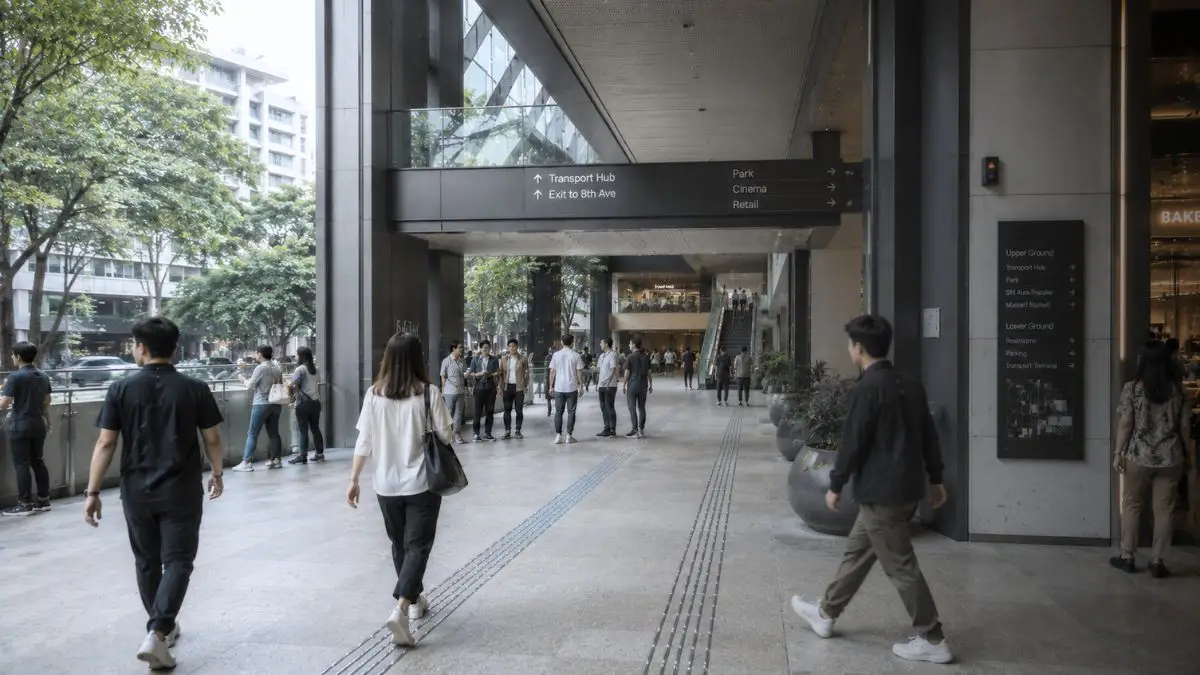
- Environmental Graphic Design shapes how people navigate, understand, and emotionally experience contemporary developments.
- EGD architects in the Philippines help integrate signage, branding, wayfinding, and spatial communication into architecture from the earliest planning stages.
- Successful environmental graphics systems improve usability, circulation clarity, identity, and user comfort within complex environments.
- Hospitality, mixed-use, healthcare, commercial, and institutional projects increasingly rely on integrated environmental graphics strategies.
- Contemporary developments increasingly treat Environmental Graphic Design as part of the architectural experience rather than a secondary visual layer.
Most people rarely notice Environmental Graphic Design when it works properly. Visitors move naturally through buildings, understand circulation intuitively, recognize destinations quickly, and experience spaces without confusion or hesitation.
The opposite becomes immediately noticeable. Hospitals that feel stressful to navigate, malls with inconsistent signage, parking systems that create disorientation, and mixed-use developments with unclear circulation often generate frustration long before people consciously recognize what feels wrong.
This invisible layer of coordination has made environmental graphics an essential component of contemporary architecture. As developments become more complex, the role of EGD architects in the Philippines now extends across hospitality, commercial, healthcare, institutional, and integrated mixed-use environments where movement and usability directly shape user experience.
Environmental Graphic Design Beyond Signage
Many people associate Environmental Graphic Design primarily with signage. In reality, EGD operates at a much broader architectural scale.
Environmental Graphic Design shapes how people understand movement, orientation, information, identity, and spatial transitions throughout the built environment. Signage becomes only one component within a larger system of communication integrated into architecture itself.
EGD architects in the Philippines often work alongside architects, interior designers, planners, branding consultants, and developers to coordinate how visual information interacts with circulation, public spaces, material systems, lighting, and environmental experience.
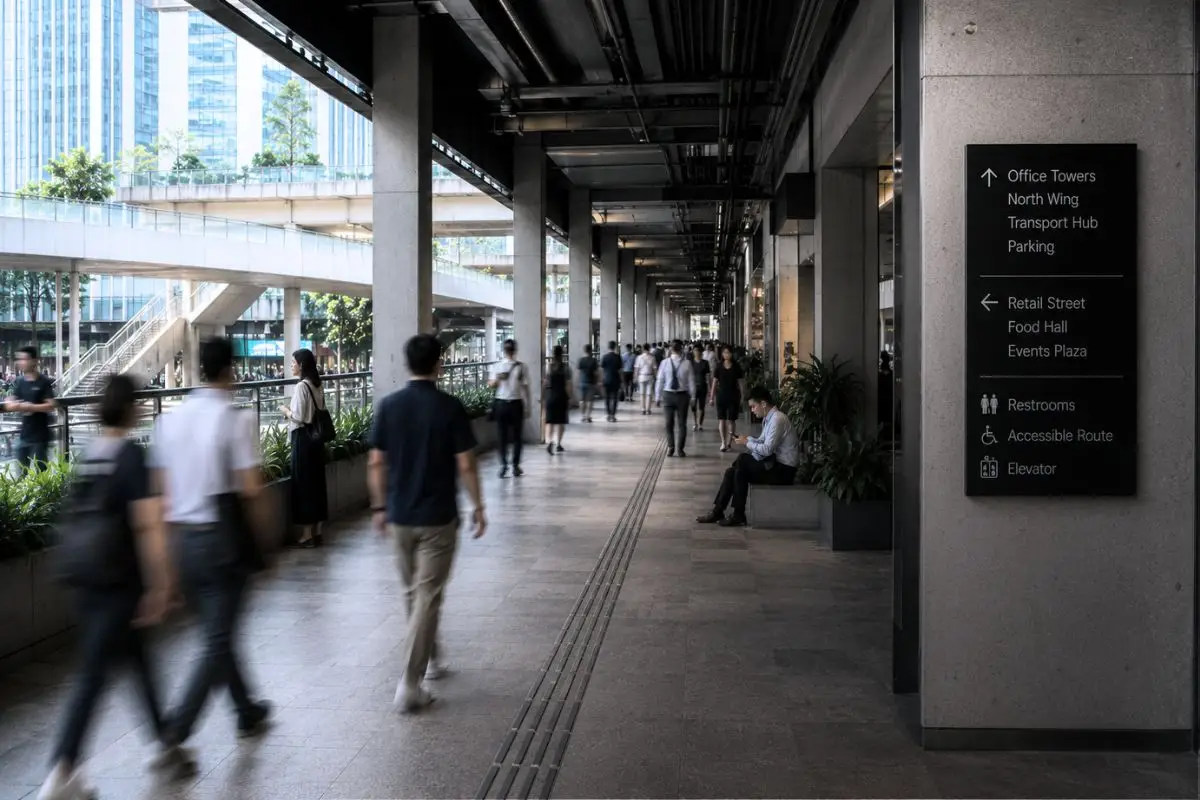
This integration becomes increasingly important in large developments where people interact with multiple zones, destinations, and overlapping functions throughout the day.
Hotels, airports, hospitals, educational campuses, lifestyle centers, office developments, and integrated communities all depend heavily on environmental graphics systems that quietly support movement and usability behind the scenes.
Why Navigation Shapes Architectural Experience
People experience architecture through movement before they fully process buildings visually.
A space that feels confusing, stressful, or difficult to navigate often creates negative emotional responses regardless of how visually impressive the architecture may be. Poor circulation clarity can affect comfort, confidence, efficiency, and even how safe environments feel.
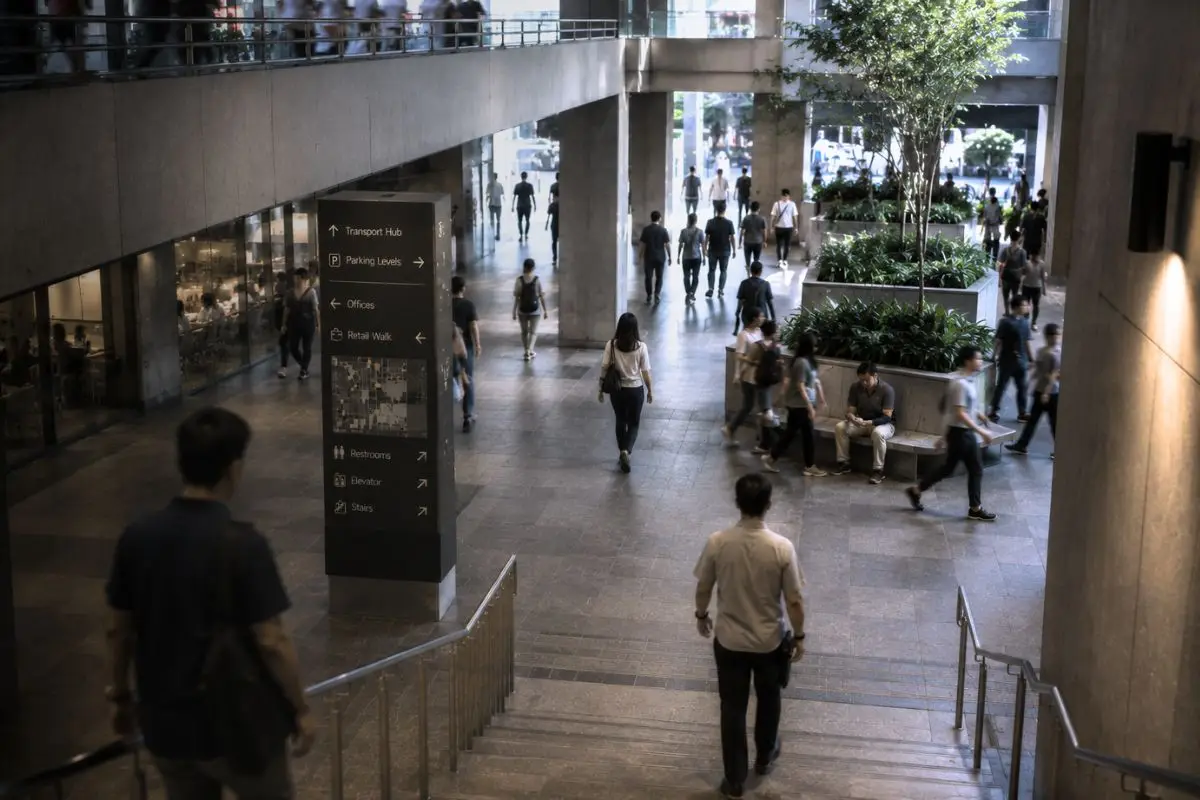
Philippine EGD architects help organize these experiences through signage hierarchy, environmental cues, spatial sequencing, visual landmarks, circulation logic, and information placement.
When coordinated properly, environmental graphics systems reduce cognitive friction. Visitors move naturally through environments without constantly stopping to search for directions or interpret conflicting information.
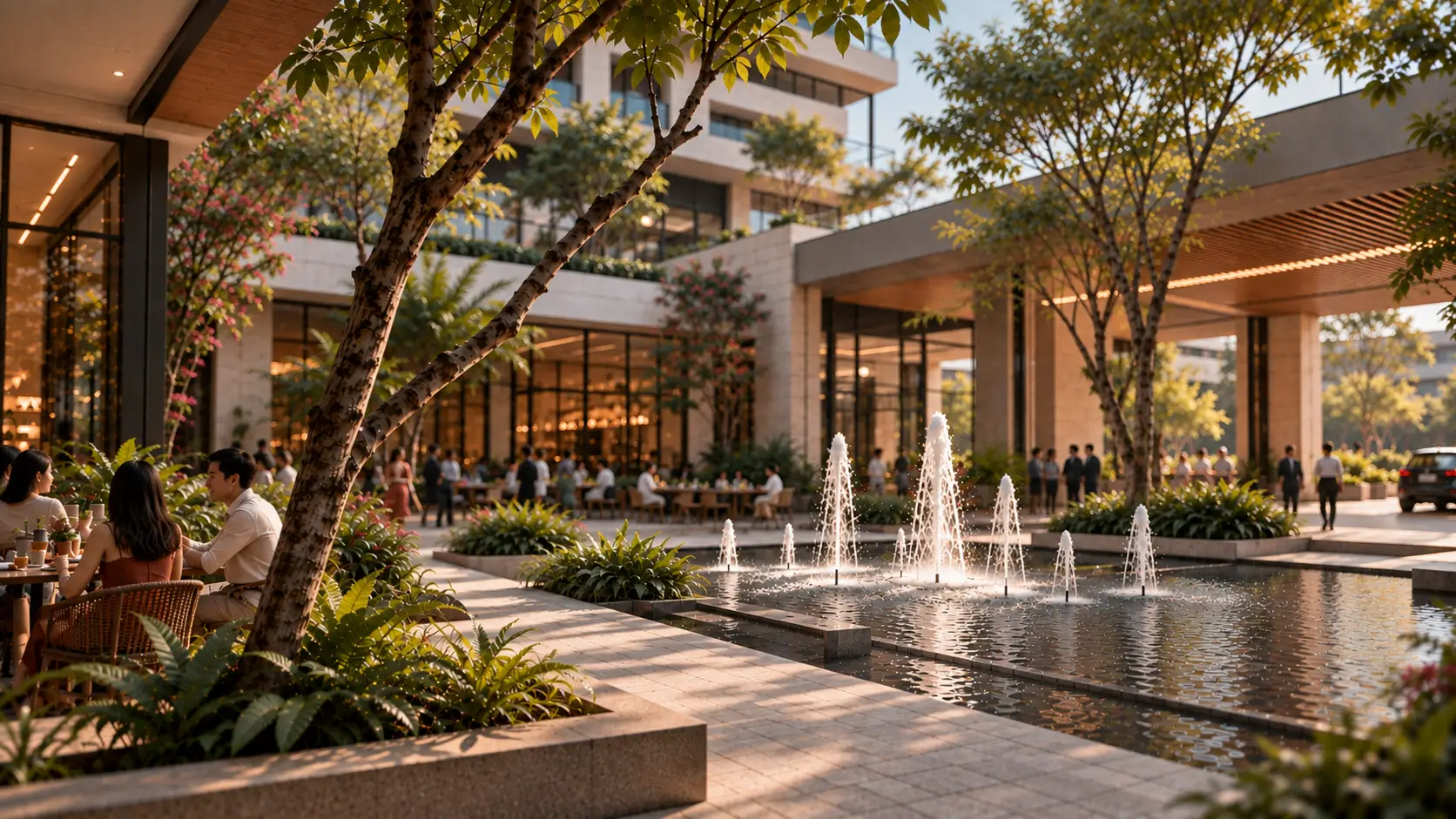
Hospitality environments demonstrate this particularly well. Hotels and resorts often guide guests through carefully layered arrival experiences where architecture, lighting, signage, landscape, and interior transitions work together seamlessly.
The same approach now shapes healthcare, commercial, educational, and mixed-use developments where user experience directly affects how environments are remembered and perceived.
Branding, Identity, and Environmental Consistency
Environmental Graphic Design also plays an important role in shaping identity throughout contemporary developments.
Branding within architecture extends beyond logos or decorative visual elements. Environmental graphics influence how spaces establish consistency, atmosphere, recognition, and emotional coherence across the user journey.
EGD architects in the Philippines help integrate branding into architecture through typography systems, material coordination, signage language, environmental graphics, spatial storytelling, and visual continuity.
When these systems are planned carefully, they strengthen the relationship between architecture and experience rather than competing visually with the environment itself.
This becomes increasingly valuable within mixed-use developments and hospitality-oriented projects where users move across multiple buildings, public areas, and circulation systems within a unified district.
Strong environmental graphics systems help developments feel cohesive even across large and complex environments.
Integrating EGD Early in the Design Process
One of the most common problems in Environmental Graphic Design occurs when signage and wayfinding systems are introduced only after architecture is already complete.
This often creates environments where graphics feel visually disconnected from the building itself. Signage becomes cluttered, circulation remains unclear, and wayfinding systems compete unnecessarily with architecture.
EGD architects in the Philippines are increasingly involved during earlier stages of project development so movement systems, visibility, accessibility, signage placement, circulation logic, and environmental communication can be coordinated directly with architectural planning.
Early integration improves both usability and visual clarity. Signage systems become more efficient, movement feels more intuitive, and architectural environments maintain stronger coherence over time.
This becomes especially important within large integrated developments where circulation complexity increases across multiple buildings, parking systems, public spaces, transportation connections, and tenant environments.
Contemporary Environmental Graphic Design increasingly functions as part of architecture itself rather than as a secondary visual layer added later.
The Future of Environmental Graphic Design in Architecture
As cities and developments continue becoming more complex, Environmental Graphic Design will likely play an even larger role within contemporary architecture.
People increasingly move through transportation hubs, healthcare facilities, integrated communities, commercial districts, hospitality developments, and mixed-use environments where clarity, orientation, and usability strongly influence everyday experience.
Environmental graphics help reduce confusion while reinforcing movement, identity, accessibility, and environmental comfort across these spaces.
The role of EGD architects in the Philippines continues expanding because architecture today increasingly depends on systems that support communication alongside aesthetics and spatial planning.
Over time, the most successful developments will likely be the ones where architecture, branding, movement, and environmental graphics operate together seamlessly rather than functioning as disconnected layers.
An EGD architect helps integrate signage, wayfinding, branding, and spatial communication systems into architectural environments to improve usability and user experience.
Environmental Graphic Design improves circulation clarity, orientation, accessibility, and spatial identity within complex buildings and developments.
Hotels, hospitals, mixed-use developments, airports, educational campuses, office environments, and integrated communities all benefit from Environmental Graphic Design.
Early integration allows signage, movement systems, accessibility planning, and environmental communication to work cohesively with architecture from the beginning of the project.
Fulgar Architects approaches Environmental Graphic Design through integrated architectural thinking that balances movement, usability, branding, and spatial clarity across contemporary built environments.