












- Commercial buildings now prioritize openness, walkability, and environmental comfort alongside operational efficiency.
- Walkable commercial buildings are shaping how people experience retail, mixed-use, and business environments in tropical cities.
- Architecture influences movement, usability, and customer experience through circulation, ventilation, and public space integration.
- Walkable commercial planning supports stronger interaction between businesses, streets, and surrounding communities.
- Contemporary commercial architecture balances visibility, flexibility, and long-term environmental performance.
Commercial architecture is changing alongside the way people experience cities. In many urban environments today, businesses are no longer competing through visibility alone. People increasingly respond to environments that feel comfortable, accessible, breathable, and easy to move through.
This shift is especially relevant in tropical cities where climate conditions strongly influence how commercial spaces perform throughout the day. Heat, humidity, rainfall, pedestrian comfort, and circulation all affect whether people choose to stay within an environment or leave quickly.
As walkable commercial architecture continues evolving, architecture increasingly shapes not only aesthetics but also the quality of everyday urban experience.
Commercial Architecture Beyond Enclosed Spaces
Many older commercial developments were designed primarily around enclosed interiors and vehicle-oriented access. Large blank facades, isolated entrances, and disconnected circulation systems often created environments that felt detached from the surrounding city.
Contemporary commercial architecture now moves in a different direction. Many developments prioritize openness, visual permeability, natural ventilation, and stronger pedestrian integration.
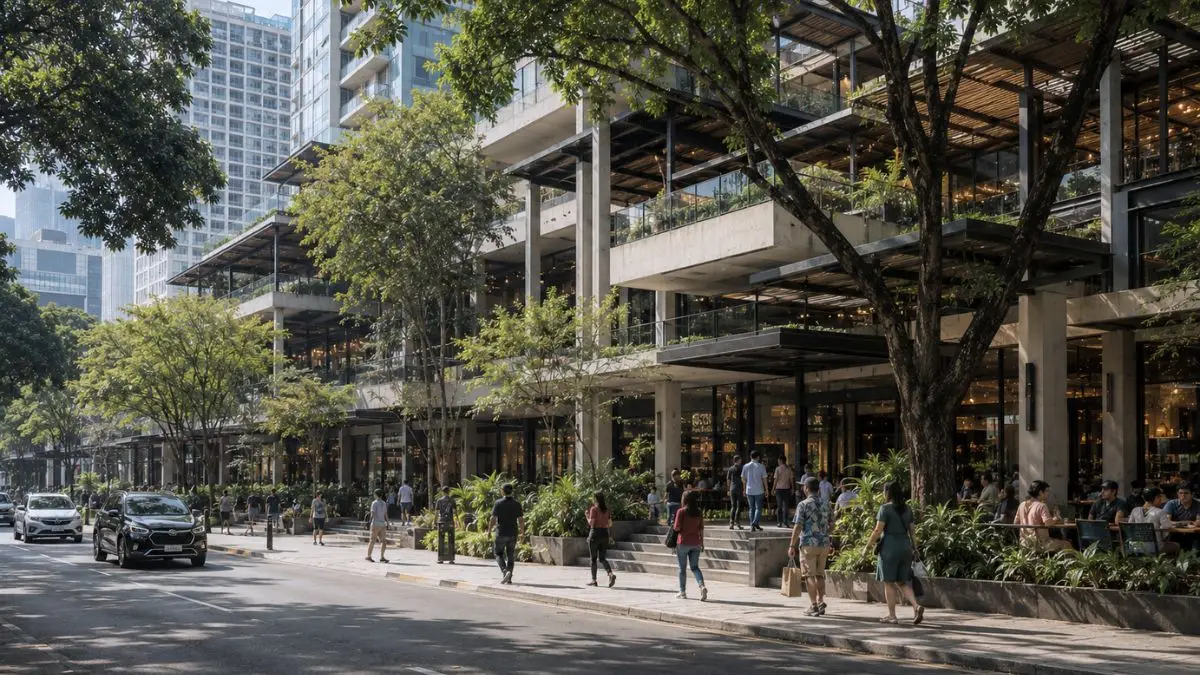
Architecture influences whether commercial spaces feel welcoming long before people enter individual establishments. Public walkways, shaded transitions, open-air corridors, landscaped setbacks, and active ground-floor edges all contribute to how environments are experienced at street level. Commercial environments such as Greenbelt and Rockwell Center demonstrate how semi-open circulation and landscape integration can create more comfortable pedestrian experiences within dense urban settings.
This becomes particularly important in mixed-use developments where retail, dining, office, hospitality, and public functions overlap throughout the day. The spaces between commercial establishments often shape the overall experience as much as the businesses themselves.
Designing Walkable Commercial Buildings
Walkability has become increasingly important in commercial architecture because it influences how people interact with businesses and public spaces over time.
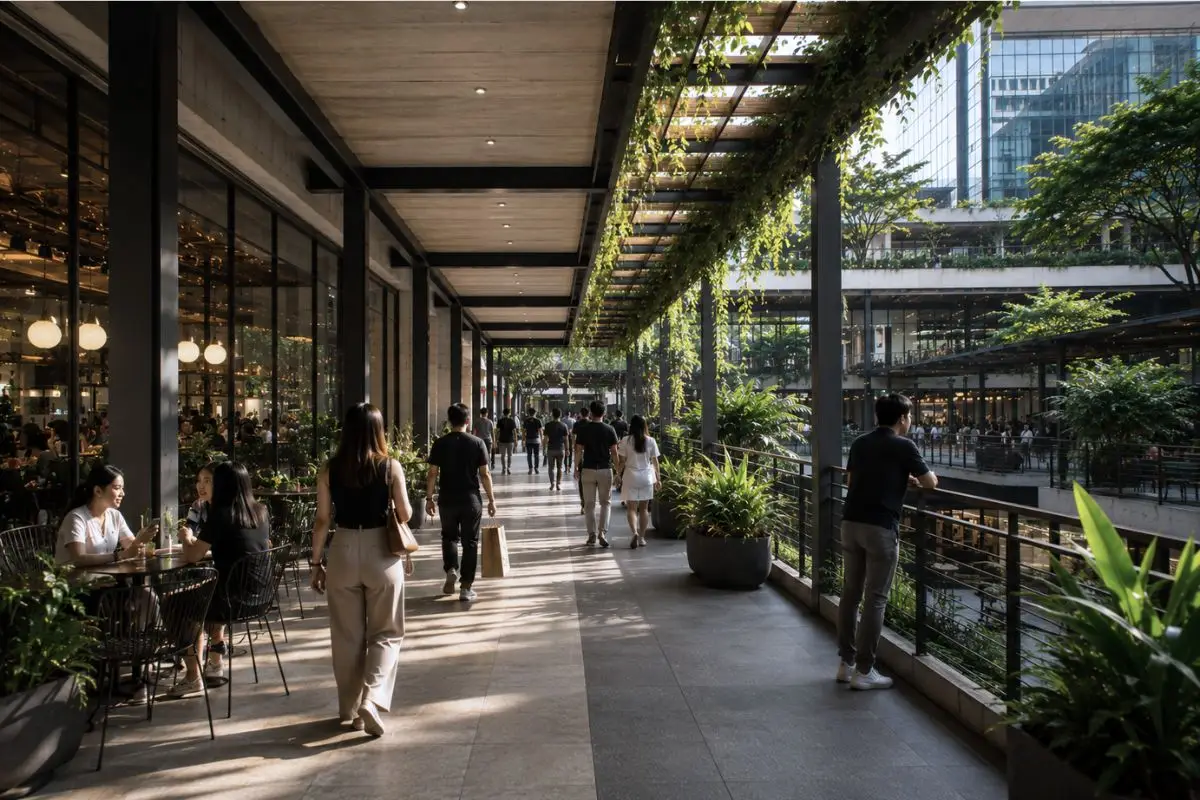
Commercial districts that feel difficult to navigate often reduce the amount of time people spend within them. In contrast, environments designed around pedestrian comfort tend to support longer engagement and more natural movement between destinations.
Walkable commercial buildings increasingly integrate shaded walkways, covered outdoor circulation, landscaped pedestrian zones, active street edges, connected retail frontages, and transitional gathering spaces.
These planning strategies help create environments that feel more intuitive and accessible while reducing dependence on purely indoor circulation.
Walkable commercial planning also affects the commercial activity of developments themselves. Retail spaces benefit when pedestrian movement feels continuous and visually connected rather than fragmented into isolated zones.
Many hospitality-inspired commercial environments already apply these principles successfully. Hotels, lifestyle centers, and integrated mixed-use districts often guide movement through layered transitions, landscape integration, and gradual arrival sequences that make circulation feel calmer and more intuitive. Developments such as Greenbelt and Rockwell Center helped establish how commercial districts can balance openness, walkability, and environmental comfort within highly active urban environments.
Climate Responsiveness in Tropical Commercial Design
Climate responsiveness is becoming increasingly important within commercial architecture throughout the Philippines and other tropical regions.
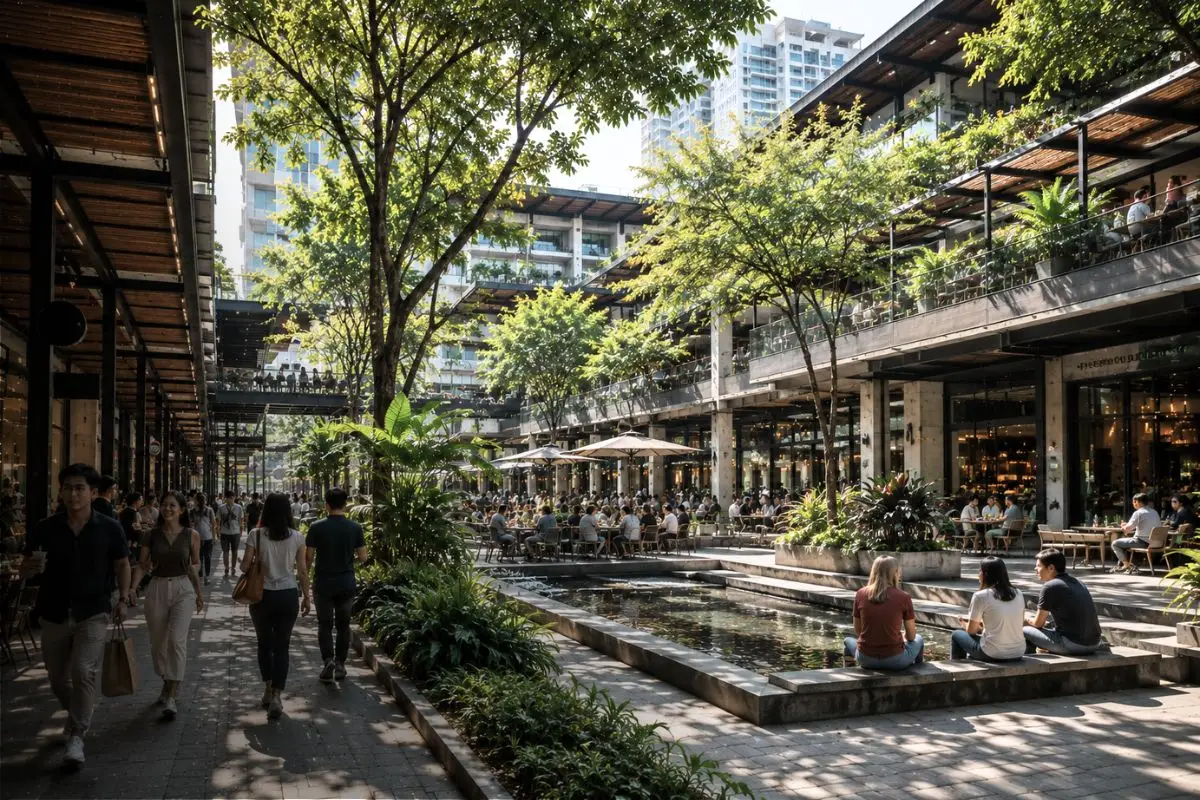
Buildings that rely heavily on fully enclosed environments and constant mechanical cooling often struggle with long-term operational efficiency and environmental comfort. Contemporary commercial developments increasingly balance enclosed and open-air environments more carefully.
Architecture shapes climate responsiveness through building orientation, facade treatment, shading systems, ventilation strategies, landscaping, material selection, and spatial configuration. These decisions influence how heat, sunlight, airflow, and rainfall affect the usability of commercial spaces throughout the year.
Many walkable commercial architecture now incorporate semi-outdoor circulation spaces that improve ventilation while creating more comfortable transitions between interior and exterior environments.
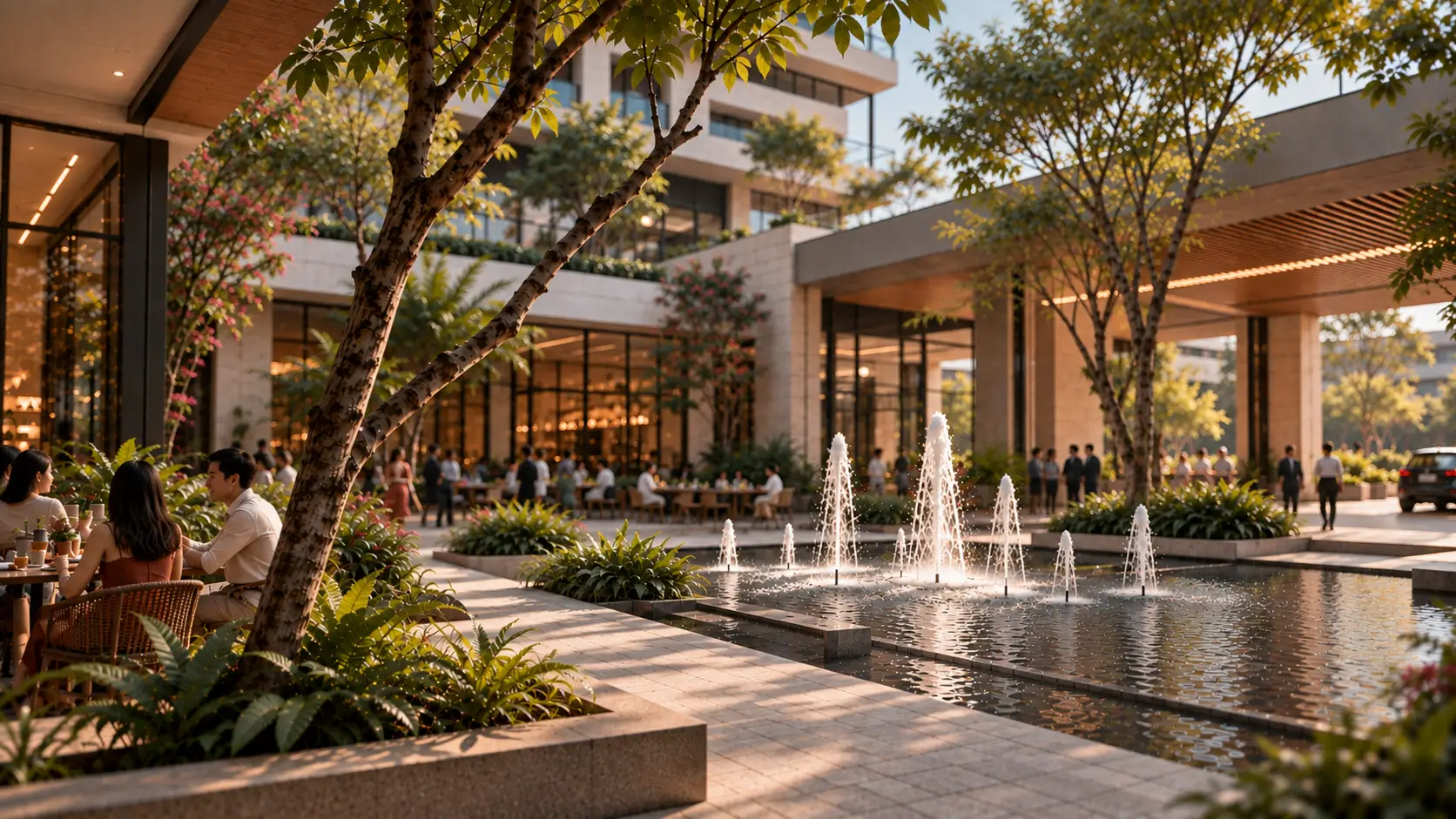
Landscape systems also play a larger role in shaping environmental comfort within commercial developments. Tree canopies, planted buffers, water features, shaded courtyards, and outdoor seating areas help soften dense urban environments while improving pedestrian experience.
Rather than treating climate as a problem to isolate completely, many contemporary commercial developments now integrate climate adaptation directly into the architectural experience itself.
Flexibility and Long-Term Commercial Use
Commercial buildings increasingly require flexibility as business models, tenant requirements, and urban conditions continue evolving over time.
Architecture influences whether developments can adapt smoothly to changing uses without requiring excessive structural or operational disruption. Floor plate flexibility, circulation planning, modular configurations, and adaptable public areas all contribute to long-term commercial resilience.
Walkable commercial buildings also benefit from flexibility because environmental conditions themselves continue affecting how cities grow and operate. Buildings that support multiple forms of occupancy, circulation, and interaction often remain more relevant as urban patterns shift.
This becomes increasingly important in mixed-use environments where commercial functions overlap with hospitality, residential, and civic activity. Architecture helps coordinate these relationships while allowing districts to evolve gradually over time rather than becoming operationally rigid.
The most successful commercial environments often balance efficiency with adaptability, allowing spaces to remain usable and attractive long after initial development phases are completed.
Commercial Architecture and Everyday Urban Experience
Commercial architecture increasingly shapes how people experience cities beyond individual transactions alone.
Retail districts, mixed-use environments, offices, lifestyle centers, and hospitality-oriented developments all contribute to the social rhythm of urban life. The quality of circulation, environmental comfort, public space integration, and walkability strongly affects whether commercial environments feel stressful or welcoming.
Walkable commercial buildings increasingly recognize that usability, atmosphere, and movement are interconnected architectural concerns rather than isolated technical problems.
As cities continue growing denser, architecture will likely play an even greater role in shaping commercial environments that feel open, adaptable, walkable, and environmentally responsive over time.
Walkable commercial architecture is designed around pedestrian comfort, accessibility, circulation, and public interaction rather than relying primarily on vehicular movement.
Walkability improves accessibility, circulation, customer experience, and interaction between businesses while encouraging longer engagement within commercial environments.
Climate-responsive design improves comfort, ventilation, environmental performance, and usability by responding to heat, airflow, rainfall, and sunlight.
Open commercial environments improve ventilation, comfort, walkability, and urban interaction while creating more flexible and engaging public experiences.
Fulgar Architects approaches commercial architecture through long-term spatial thinking that balances usability, environmental performance, movement, and contemporary urban experience within evolving tropical environments.