












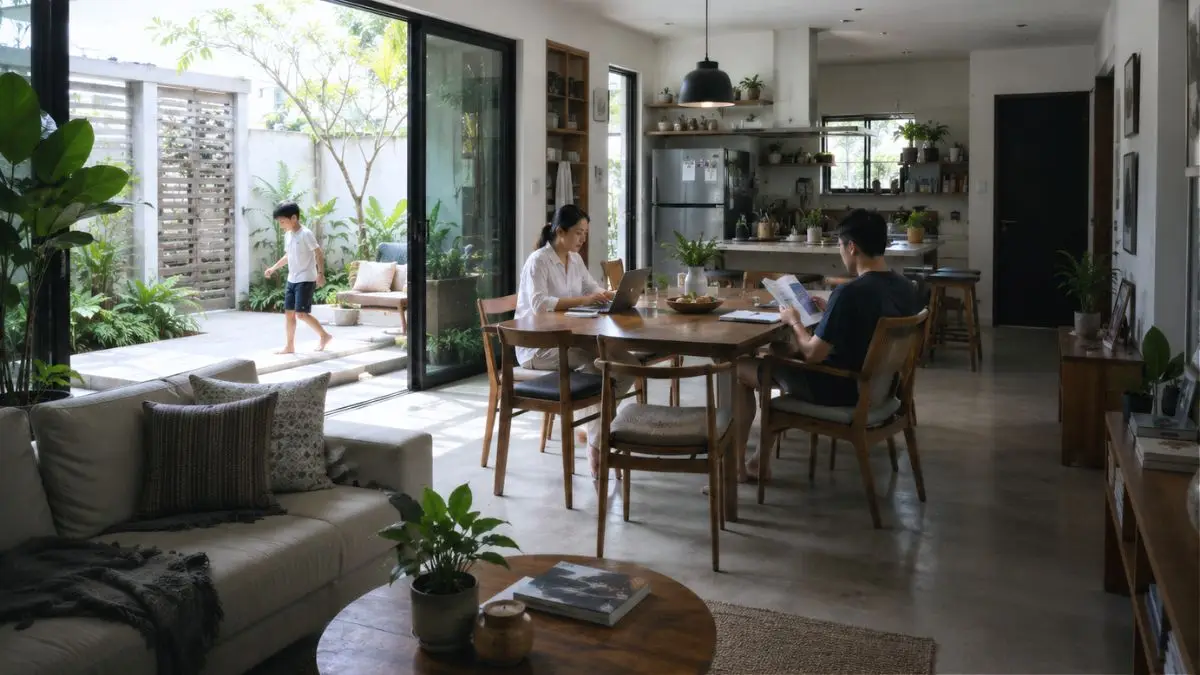
- Flexible living spaces are becoming increasingly important in the modern Filipino home.
- Residential architecture now needs to support hybrid work, changing family routines, and long-term adaptability.
- Multi-functional layouts help maximize both comfort and long-term usability within residential spaces.
- Flexible planning strategies improve everyday living while strengthening long-term residential value.
- Contemporary Filipino homes are increasingly designed around movement, routine, and evolving lifestyles.
For many Filipino families, the meaning of home has changed significantly over the past several years.
Spaces that were once designed around relatively fixed routines are now expected to accommodate far more activities throughout the day. Dining tables temporarily become workstations. Guest rooms transform into home offices. Quiet corners evolve into study areas, creative spaces, or small business environments.
This shift has gradually changed how architects and homeowners think about residential planning. Increasingly, the modern Filipino home is no longer being designed around a single static lifestyle. Instead, homes are expected to adapt alongside the routines, responsibilities, and changing needs of the people living within them.
Flexible living has become one of the defining priorities shaping contemporary residential architecture in the Philippines.
Homes Designed Around Daily Life
Traditional residential layouts often separated activities into clearly defined rooms with highly specific purposes.
Today, however, many homeowners prefer environments that feel more adaptable and fluid throughout the day. Open living spaces, movable partitions, hybrid rooms, and multi-purpose areas allow homes to respond more naturally to changing routines.
This flexibility becomes especially important within urban environments where residential footprints are becoming increasingly compact. Well-planned layouts can help smaller homes feel significantly more functional without sacrificing comfort.
Architectural planning now places greater emphasis on how people actually move through the home during daily life. Circulation, visibility, natural light, and spatial transitions all contribute to whether a home feels restrictive or adaptable over time.
In many contemporary Filipino homes, flexibility is no longer viewed as an optional feature. It is becoming part of long-term residential practicality.
The Influence of Hybrid Work and Modern Routines
The rise of remote work and hybrid work arrangements has accelerated the demand for more flexible residential environments.
Many homeowners now require spaces that can support professional work, online meetings, focused study, and private routines without completely separating these functions from everyday family life.
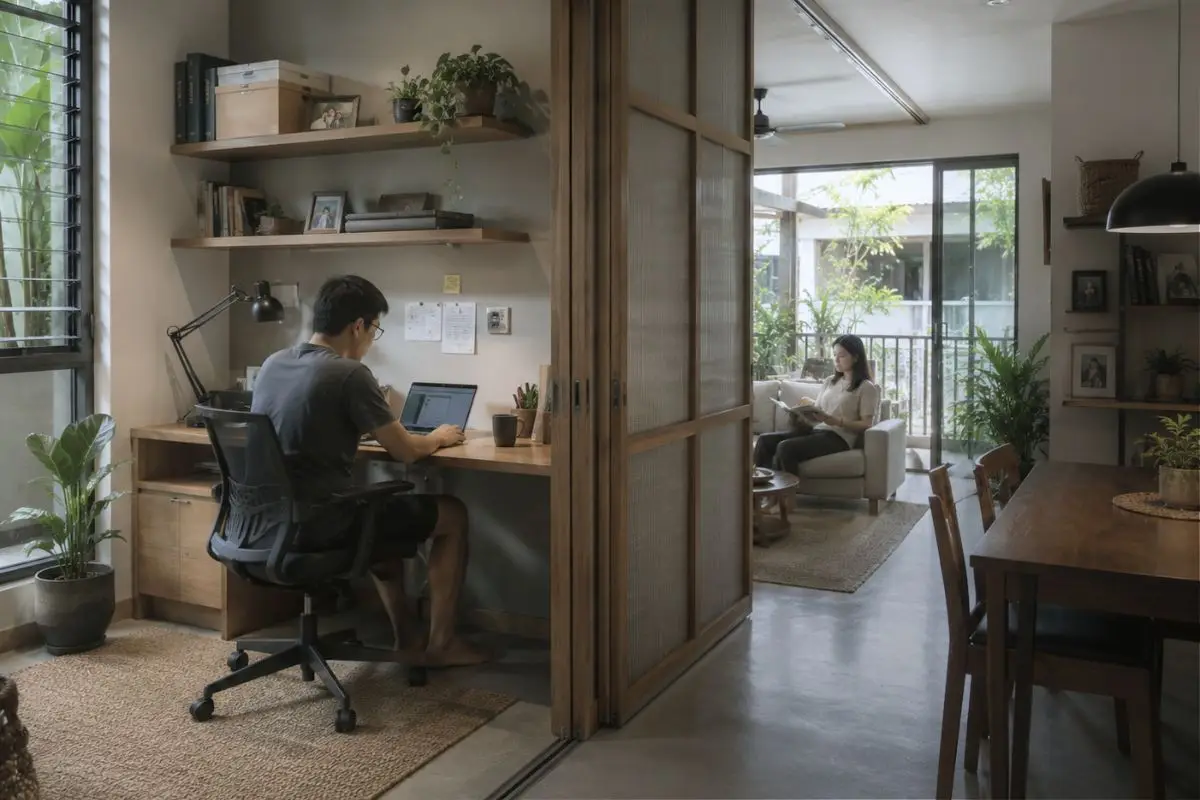
This has encouraged architects to rethink how residential spaces are organized.
Instead of creating isolated rooms with rigid purposes, newer residential layouts often prioritize adaptable zones that can shift throughout the day. Sliding partitions, transitional spaces, built-in storage, flexible furniture layouts, and semi-private work areas allow homes to function more efficiently under changing conditions.
Natural lighting, acoustic comfort, ventilation, and privacy have also become increasingly important within these environments.
The modern Filipino home is now expected to support productivity alongside relaxation, family interaction, and personal well-being.
Flexibility Through Tropical Residential Design
Climate-responsive architecture also plays a major role in flexible living.
Homes that maximize natural ventilation, shaded outdoor spaces, indoor-outdoor transitions, and passive cooling strategies often feel significantly more comfortable throughout the day. These environmental qualities make residential spaces easier to use across different activities and routines.
Covered terraces, pocket gardens, breezeways, and semi-outdoor areas are increasingly valuable because they extend the usable living environment beyond enclosed interior spaces.
In tropical residential architecture, flexibility is not only about movable rooms or adaptable layouts. It is also about creating environments that remain comfortable, breathable, and usable under different weather conditions.
This approach becomes especially important in the Philippines where environmental comfort strongly influences how people occupy and experience residential spaces.
Multi-Generational Living and Adaptable Homes
Many Filipino households continue to support multi-generational living arrangements, which naturally increases the importance of adaptable residential planning.
Homes may need to accommodate aging parents, young children, returning relatives, live-in staff, or evolving family structures over time. Spaces that feel too rigid can quickly become impractical as these dynamics change.
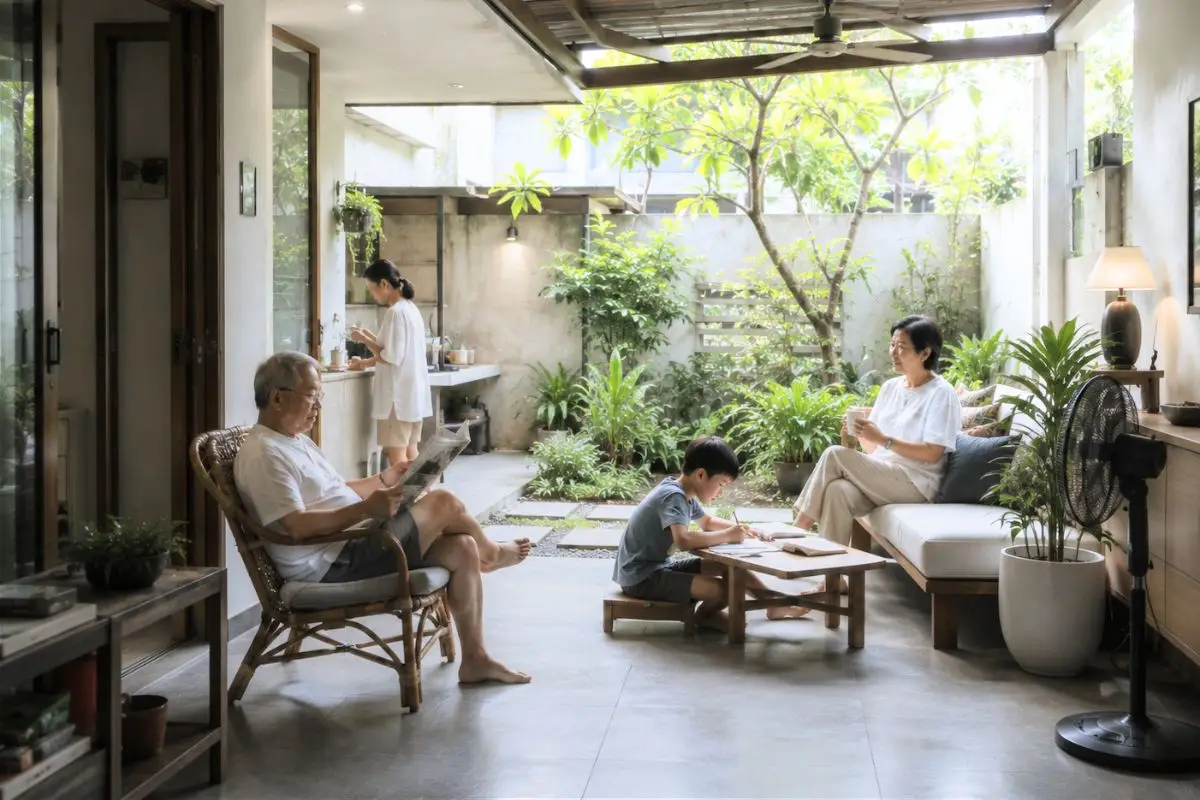
Flexible layouts allow homes to evolve more naturally alongside family life.
A secondary lounge may later become a bedroom. A quiet workspace may eventually function as a nursery or study area. Semi-private spaces can support both social interaction and privacy depending on changing household needs.
These considerations help create homes that remain functional for much longer periods rather than requiring constant renovation or major spatial adjustments.
Why Flexible Living Has Long-Term Value
Flexible living is not simply a design trend. It also carries long-term practical and commercial value.
Homes that adapt more easily to changing lifestyles often remain relevant to homeowners for longer periods of time. This adaptability can improve both livability and long-term market appeal.
As residential expectations continue evolving, buyers increasingly recognize the importance of homes that support changing routines rather than forcing people into rigid spatial arrangements.
For architects and developers, this creates an opportunity to design residential environments that feel more responsive to contemporary living patterns.
The most successful modern Filipino homes moving forward will likely be those that balance comfort, adaptability, climate responsiveness, and long-term usability within a cohesive architectural experience.
Flexible living refers to residential spaces designed to adapt to changing routines, family structures, work arrangements, and lifestyle needs over time.
Homes today often need to support hybrid work, multi-generational living, study areas, and evolving daily routines within limited residential footprints.
Architectural strategies such as open layouts, adaptable rooms, transitional spaces, natural ventilation, and multi-purpose areas help homes remain functional under changing conditions.
Homes designed around adaptability and long-term usability often remain more desirable as residential lifestyles and market expectations continue evolving.
As residential lifestyles continue evolving in the Philippines, conversations around flexibility, long-term livability, and climate-responsive planning are becoming increasingly important in contemporary home design. Homeowners, developers, and project teams exploring these directions may reach out through the contact details below for further discussion.