












- Golf estates in the Philippines are evolving beyond course-centered residential enclaves into more integrated communities.
- Residential neighborhoods, leisure amenities, commercial spaces, and everyday services are expanding the role of golf-centered developments.
- Golf courses can provide both recreational value and a landscape framework around which communities grow.
- Connectivity, mixed uses, and long-term adaptability are becoming increasingly important to golf estate planning.
- The future of Philippine golf estates may depend as much on the communities around the course as the course itself.
For decades, golf estates in the Philippines have represented a particular kind of residential aspiration. Expansive landscapes, private clubs, low-density neighborhoods, and access to golf created communities centered on recreation, exclusivity, and open space.
Today, that model is becoming broader.
Developments such as Southwoods City in Laguna and Cavite show how golf can exist within a larger township containing residential, business, commercial, and leisure components. Meanwhile, established destinations such as Sta. Elena in Santa Rosa, Laguna have grown from golf-centered environments into residential and lifestyle communities.
This evolution suggests a different future for golf estate planning. Rather than treating the course as the development itself, architects and planners can consider it one component of a larger community framework connecting landscape, housing, amenities, mobility, and everyday activity.
From Golf Course to Development Anchor
Traditional golf estates were often organized around a straightforward proposition: the course was the primary amenity, while surrounding homes benefited from proximity, views, prestige, and access.
Some Philippine developments demonstrate how this relationship can evolve over time. Sta. Elena, for example, began developing its golf course in the early 1990s before introducing residential projects in 2002. Today, its villages are located within and around the golf course, while the wider estate includes recreational and lifestyle destinations.
This progression changes the role of golf in the master plan. Fairways, vegetation, terrain, club facilities, roads, and residential edges can become part of a larger spatial structure rather than simply surrounding a recreational facility.
For architects and planners, the question becomes less about how much development can fit around a course and more about how the course can contribute to a coherent community.
Building Everyday Life Around Leisure
A golf course may establish the identity of an estate, but a functioning community requires more than a signature recreational amenity.
As golf estates develop into integrated communities, their planning may need to accommodate a broader mix of everyday uses, including:
- Residential neighborhoods with different housing types
- Dining, retail, and community services
- Parks, walking routes, and recreational spaces
- Connections to schools, healthcare, workplaces, and essential services
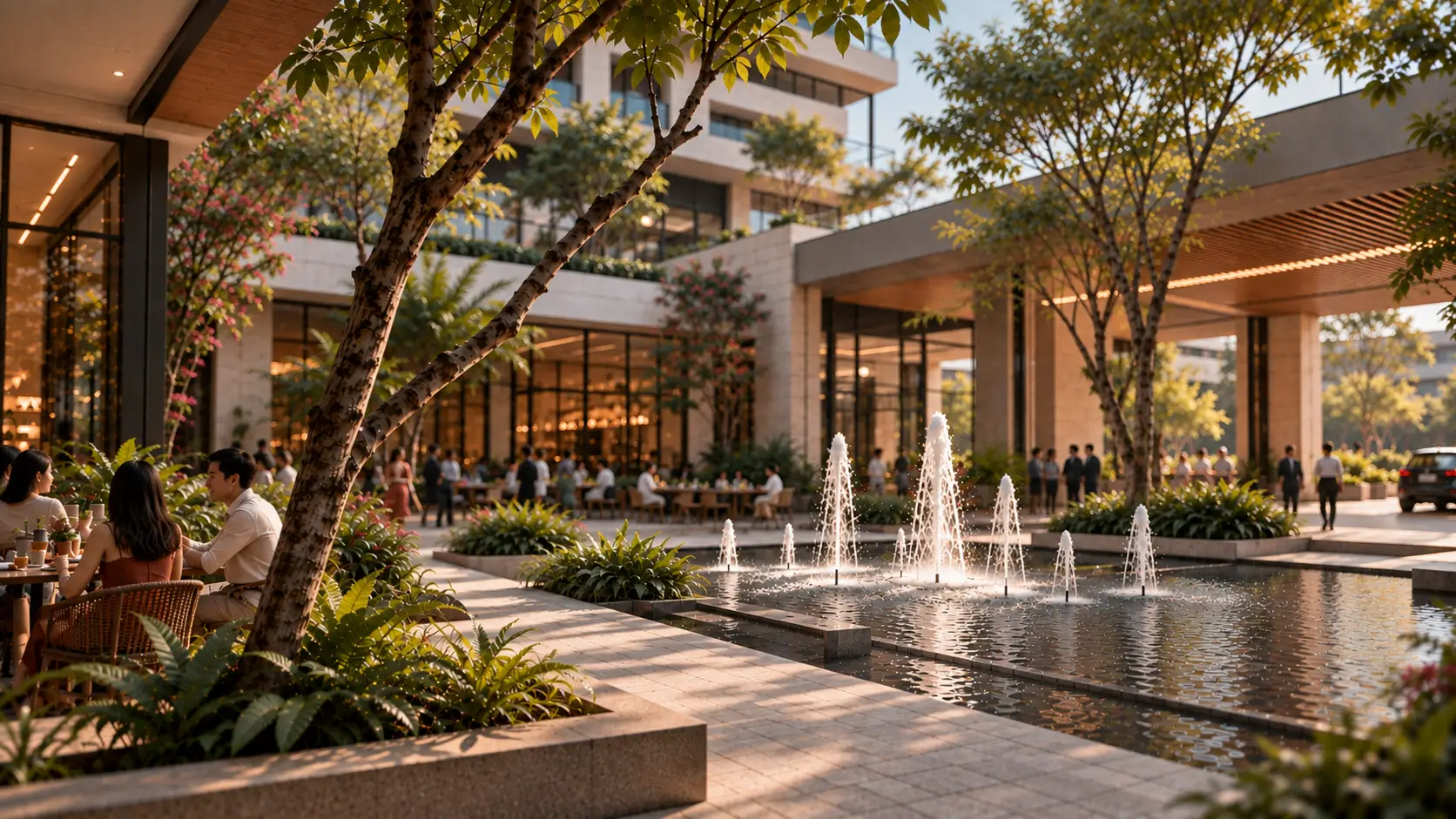
This approach can already be seen at Southwoods City, where the golf course forms part of a mixed-use township with residential, business, commercial, and leisure components. The development is also directly accessible through the South Luzon Expressway, connecting the estate to the wider urban region.
The goal is not simply to accumulate amenities. These uses need to relate to one another through thoughtful mobility, landscape, and spatial planning so the estate functions as a community rather than a collection of isolated destinations.
The Golf Course as a Landscape Framework
Golf estates also offer something increasingly valuable in growing urban regions: substantial open space.
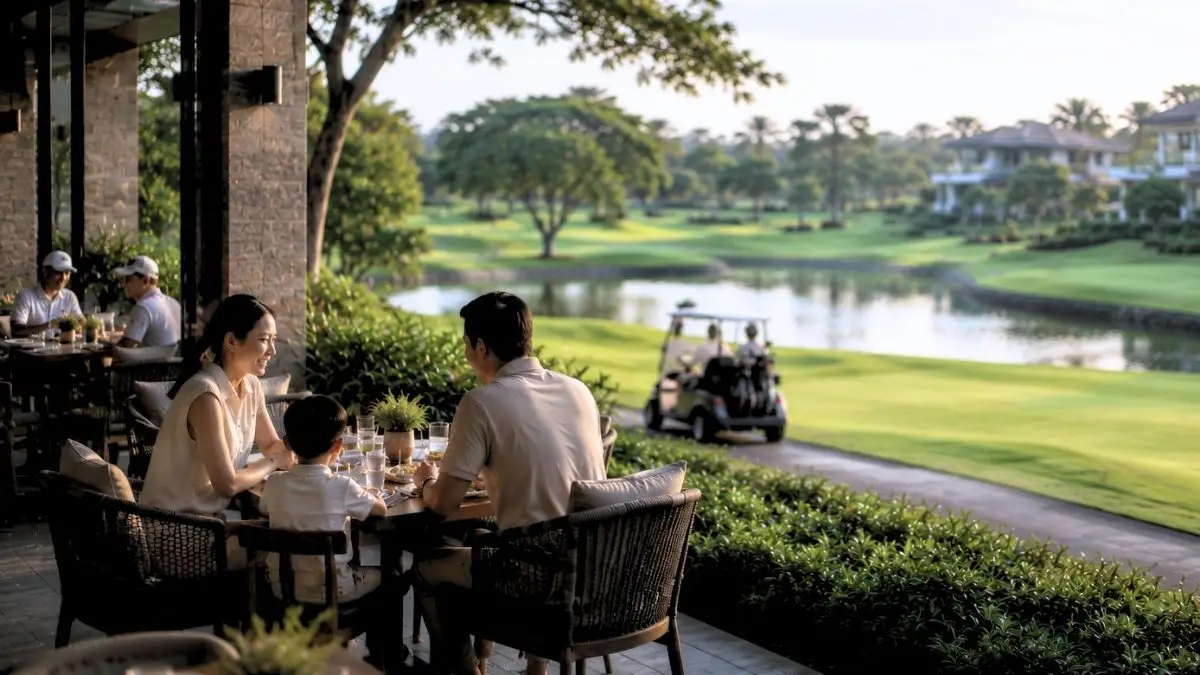
Fairways, mature vegetation, water features, and long views can influence where neighborhoods are placed, how buildings are oriented, and how residents experience the wider estate. In the Philippine context, this relationship can become especially important as designers respond to tropical conditions, outdoor living, shade, vegetation, and rainfall.
At Tagaytay Highlands, golf exists alongside residential communities, recreational amenities, parks, and extensive natural landscapes. The estate states that 40 percent of the total development area within its residential communities is dedicated to open areas.
This suggests a broader way of thinking about golf landscapes. Rather than functioning only as scenery for adjacent properties, they can help establish view corridors, landscape buffers, neighborhood character, and connections between different parts of the estate.
Connecting Golf Estates to Growing Cities
The appeal of a golf estate may come partly from privacy and retreat, but long-term community life also depends on connections beyond its boundaries.
Access to transportation, employment centers, schools, healthcare, and commercial districts influences whether an estate functions primarily as a leisure destination or supports a more permanent community.
This is particularly relevant as development continues across growth areas outside Metro Manila. Southwoods City, positioned along the Laguna-Cavite boundary, combines its suburban golf environment with direct expressway access. Sta. Elena similarly promotes its proximity and road connections to Metro Manila while maintaining a lower-density landscape setting.
Future golf estates therefore need to balance two qualities that can initially seem contradictory: the sense of escape associated with golf communities and the accessibility expected of integrated townships.
Good master planning can allow both to coexist.
Building Beyond the Course
The future of golf estates in the Philippines does not necessarily mean moving away from golf. Instead, it means reconsidering the role the course plays within a larger development.
Golf can remain a defining recreational and landscape anchor while housing, amenities, mobility, and community spaces give the surrounding estate greater depth. Developments such as Southwoods City, Sta. Elena, and Tagaytay Highlands already demonstrate different interpretations of this relationship.
For architects, planners, and developers, the opportunity is to think beyond building around a golf course and toward creating communities capable of growing around it.
Some are evolving beyond primarily golf-centered residential developments by incorporating broader residential, commercial, recreational, and community uses.
Beyond recreation, it can act as a landscape anchor that influences open space, views, residential orientation, and the overall structure of the estate.
Connected amenities, accessibility, landscape integration, and enough flexibility for the community to evolve over time.
Fulgar Architects works with developers to shape golf estates, townships, and mixed-use communities through architecture and master planning that connect landscape, infrastructure, amenities, and long-term development goals.