












Philippine resorts benefit from rich natural resources but also face growing economic challenges. With beaches, forests, reefs, and highland climates as their setting, competition in the hospitality market keeps increasing. In this context, hospitality design and value creation in Philippine resorts depend less on flashy visuals and more on smart architectural choices that shape guest experience, efficiency, and long-term value. Architecture is a key investment that shapes how land is used and valued over the long term.
Architecture as the primary value framework
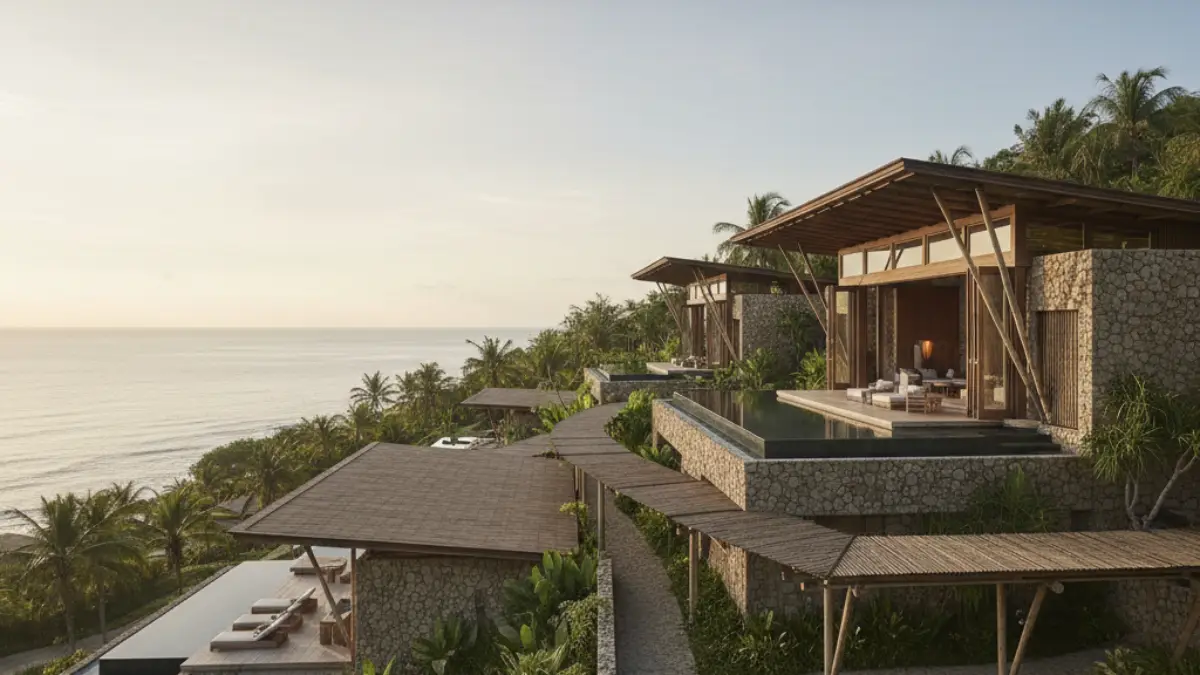
In resort development, value does not begin with branding or marketing narratives. It begins with how architecture organizes land, movement, and encounter. The most successful Philippine resorts treat architecture as a framework that translates natural assets into spatial experiences that guests are willing to return to and pay for. This means understanding view corridors, prevailing winds, solar exposure, and terrain not as constraints but as generators of form and program.
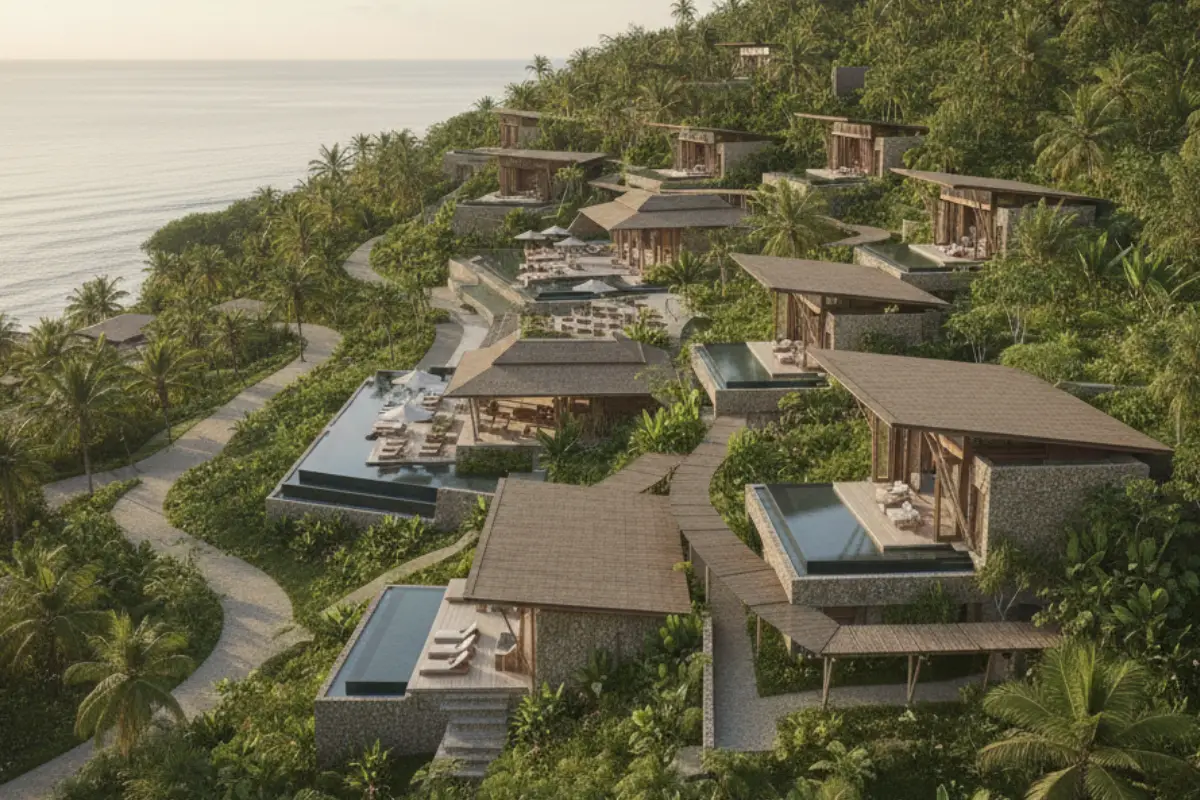
A resort master plan that aligns guest arrival, public amenities, and private accommodations around legible spatial sequences creates clarity and comfort. This clarity reduces operational friction while elevating perceived quality. Guests may not articulate these decisions, yet they feel the ease of circulation, the intuitive placement of amenities, and a sense of orientation within the landscape. These qualities directly influence length of stay, repeat visitation, and brand loyalty, all of which contribute to measurable asset value.
Spatial strategies that support operational performance
Hospitality design and value creation in Philippine resorts are inseparable from operational logic. Architecture that ignores back-of-house requirements, staff circulation, and service zoning undermines financial performance regardless of aesthetic quality.
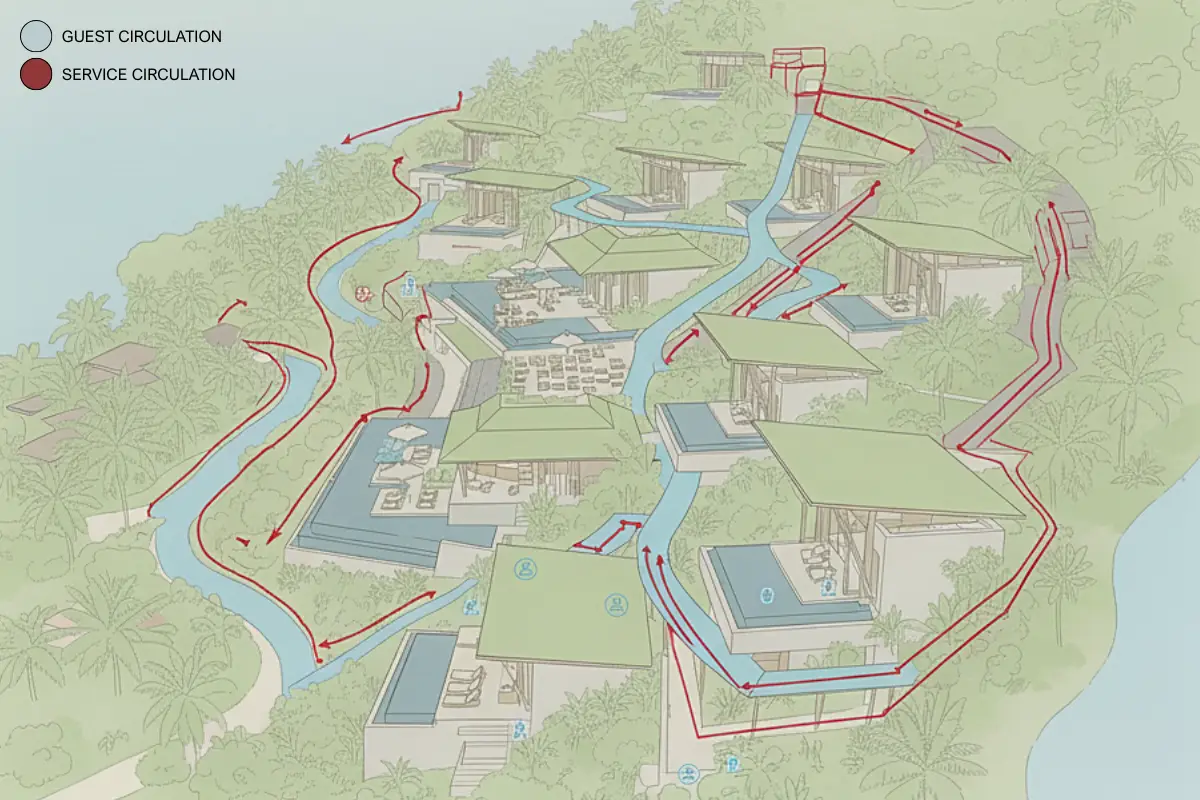
Effective resorts clearly separate guest-facing and service functions while maintaining proximity where efficiency demands it. Kitchens, laundries, staff housing, and logistics routes are planned early within the master plan rather than inserted later. This foresight reduces construction revisions and operational inefficiencies.
Room typologies are also architectural tools for value creation. Flexible layouts that allow rooms to be combined, separated, or repurposed over time protect the resort against shifts in market demand. A well-designed villa module can serve honeymooners today and multi-generational families tomorrow without structural alteration. This adaptability extends asset life and stabilizes revenue.
Environmental response as economic strategy
Environmental responsiveness in Philippine resorts is often framed as sustainability, yet its deeper value lies in performance. Architecture that responds intelligently to climate reduces energy demand, improves guest comfort, and strengthens brand credibility without relying on technological excess.
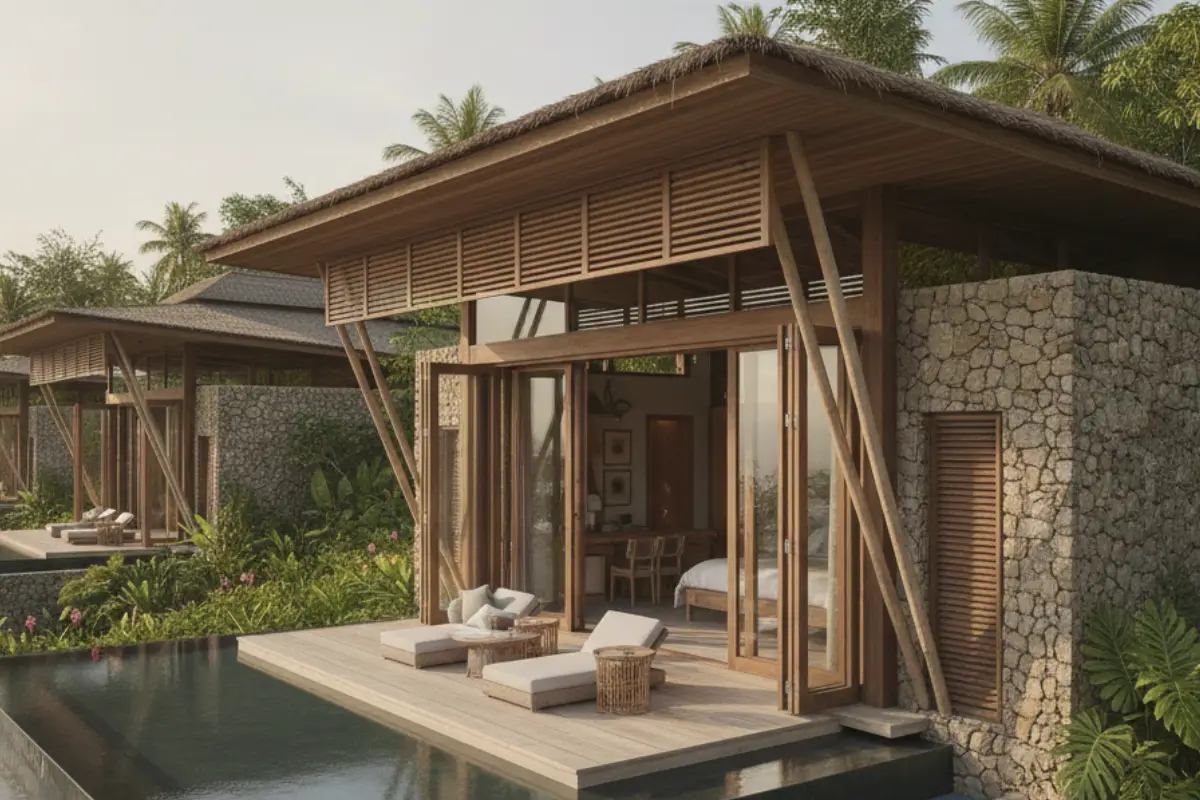
Passive cooling strategies such as deep overhangs, cross ventilation, and shaded courtyards remain among the most effective interventions. Landscape design extends environmental control, using vegetation to manage heat, wind, and privacy. Water management strategies that respect natural drainage patterns reduce infrastructure costs while protecting the site.
These architectural decisions resonate strongly with contemporary travelers who seek authenticity and responsibility. They also align with the long-term interests of developers facing rising energy costs and regulatory scrutiny. Value is generated through reduced risk and enhanced resilience.
Architecture as a storytelling device
Every resort tells a story, whether intentional or accidental. Architecture shapes that narrative through spatial sequence, material language, and relationship to context. In Philippine resorts, successful storytelling avoids pastiche and instead interprets local culture through proportion, craft, and spatial rhythm.
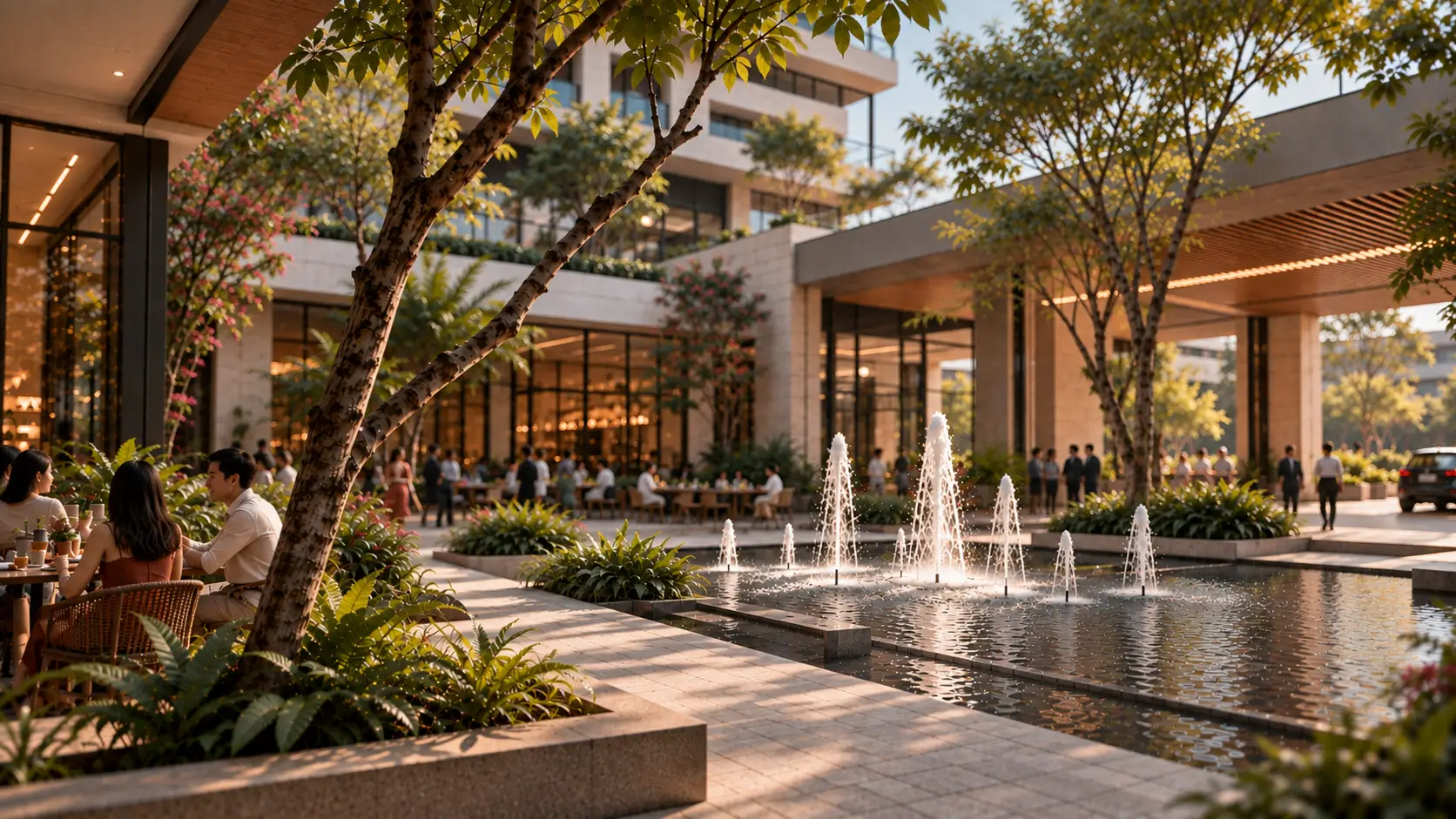
Public spaces such as lobbies, restaurants, and event venues act as social condensers. Their design influences how guests interact with each other and with the destination. A well-conceived arrival sequence can establish a sense of calm and anticipation that defines the entire stay. These moments become part of the resort’s identity and contribute to its market differentiation.
When architecture conveys coherence and authenticity, it strengthens brand equity without resorting to overt theming. This quiet confidence often distinguishes enduring resorts from those that fade once novelty dissipates.
Long-term thinking in resort development
Resort projects in the Philippines often span long planning and construction timelines. Architecture that prioritizes long-term adaptability protects developer investment against economic cycles and tourism fluctuations. Phased master planning allows resorts to open early while retaining flexibility for future expansion.
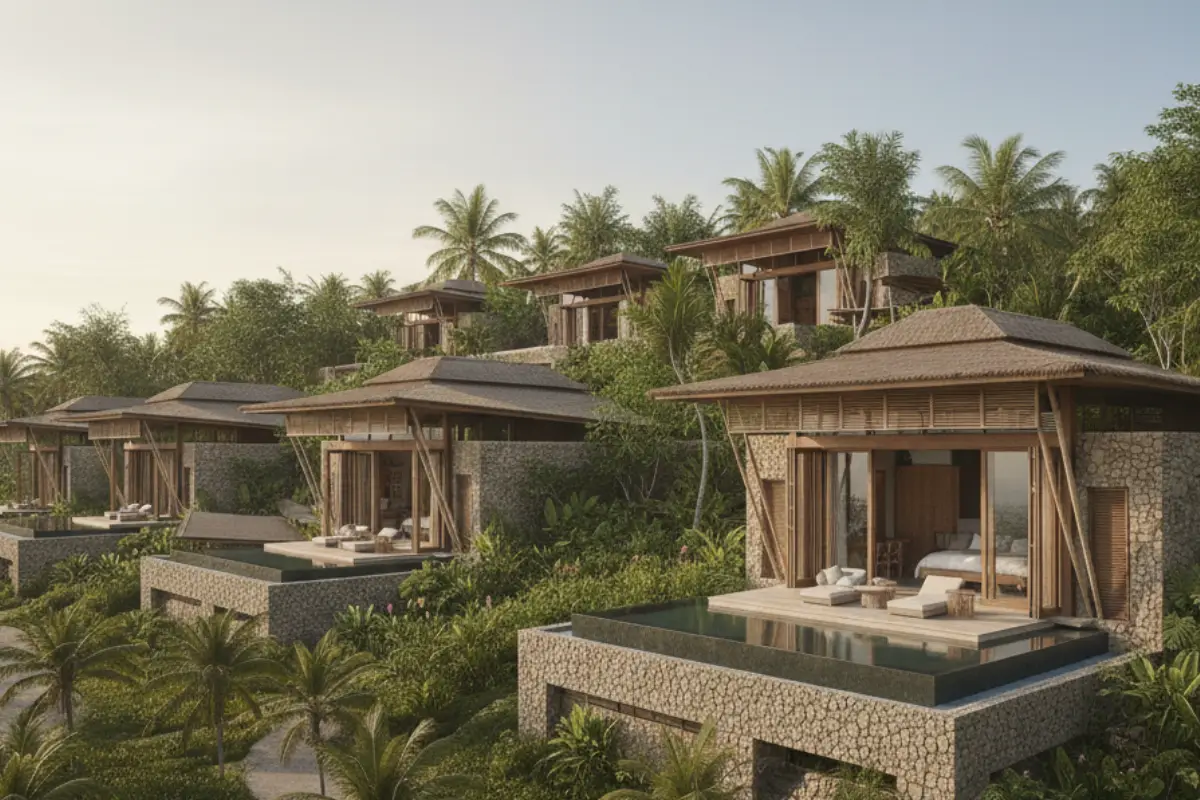
Design decisions made at the outset, such as infrastructure sizing, circulation hierarchies, and land-use distribution, determine whether a resort can evolve gracefully or become constrained by its own success. Hospitality design and value creation in Philippine resorts depend on this foresight. Architecture that anticipates change creates optionality, a critical form of value in uncertain markets.
Thoughtful spatial organization, such as aligning arrival sequences, circulation, and amenity placement, reduces friction for both staff and guests. Clear pathways and legible layouts minimize confusion, improve service delivery, and create a subconscious sense of comfort, directly impacting length of stay, repeat visitation, and overall asset performance.
Orientation, ventilation, shading, and landscape integration must inform the earliest planning stages. For example, cross-ventilation paths dictate building placement, while courtyards and overhangs influence circulation patterns. Retrofitting climate responsiveness later adds cost without achieving the same performance or guest comfort.
Back-of-house integration drives both functional and spatial decisions. Kitchens, laundries, staff housing, and logistics routes require adjacency planning that respects guest-facing areas while enabling efficient operations. Ignoring these spatial relationships forces future compromises, increases operational costs, and undermines the architecture’s value proposition.
Flexible layouts allow villas and suites to be combined or subdivided without structural changes. This enables the resort to respond to shifting demographics, from honeymooners to multi-generational families, without expensive renovations, ensuring the architecture continues to generate revenue throughout market cycles.
Materials must balance tactile quality, durability, and climate suitability. Choices like treated hardwoods, stone, or locally sourced finishes enhance the sensory experience while minimizing wear under tropical conditions. Superficial or novelty-driven materials may age poorly, eroding both guest perception and long-term asset resilience.