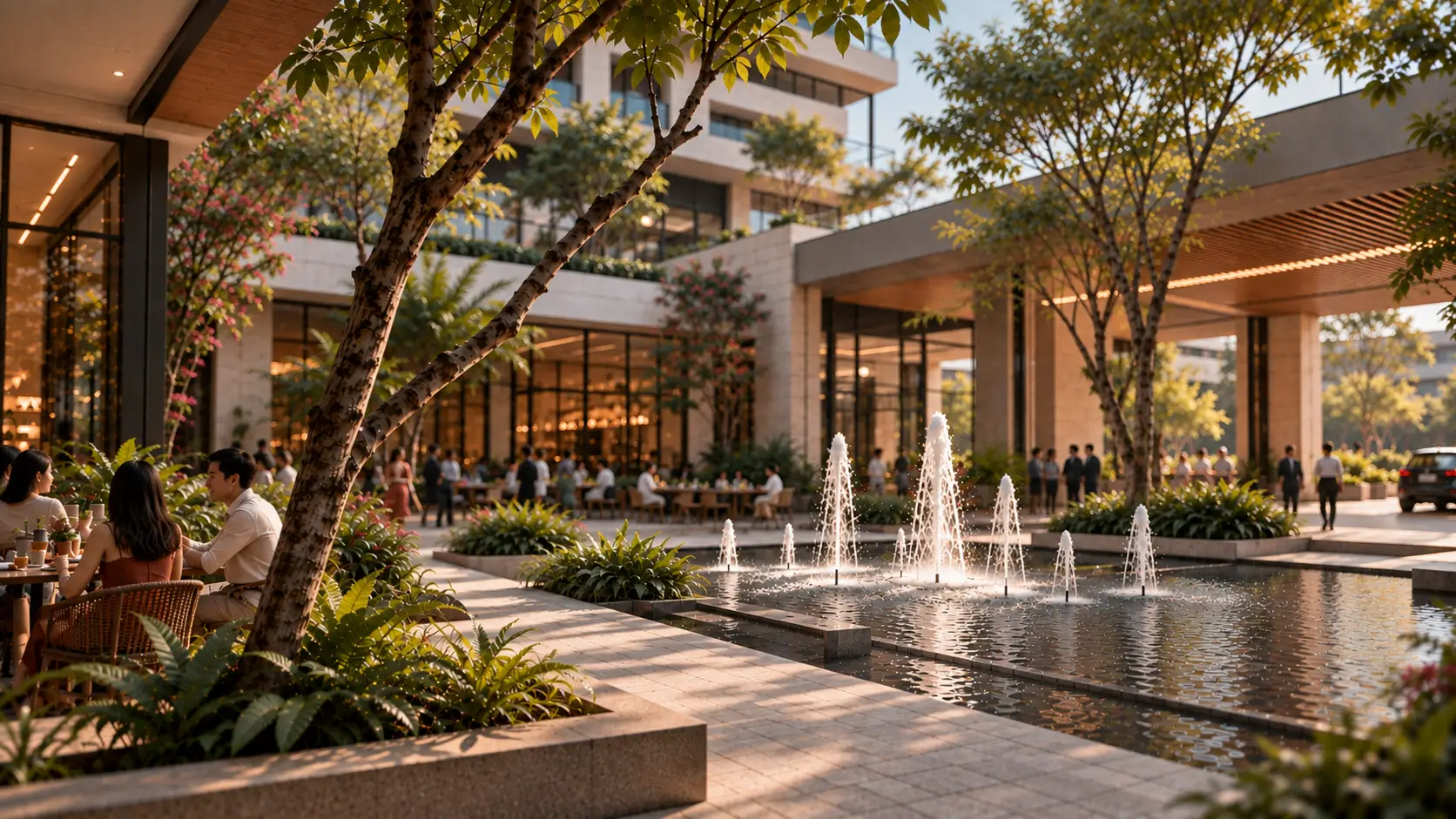














Today’s contemporary architecture refers to structures that defy traditional standards and their ability to transform and shape public space. With a growing population and the construction of various establishments in Fort Bonifacio, Makati, and other CBDs, the land is becoming more valuable as spatial congestion persists in many cities. Therefore, the challenge for architects is to design cost-effective and environmentally sustainable contemporary landmarks in the Philippines while maintaining their iconic appearance and ability to engage, excite, and inspire.
Here are 15 successful attempts.
Take a look at some of the contemporary landmarks in the Philippines:
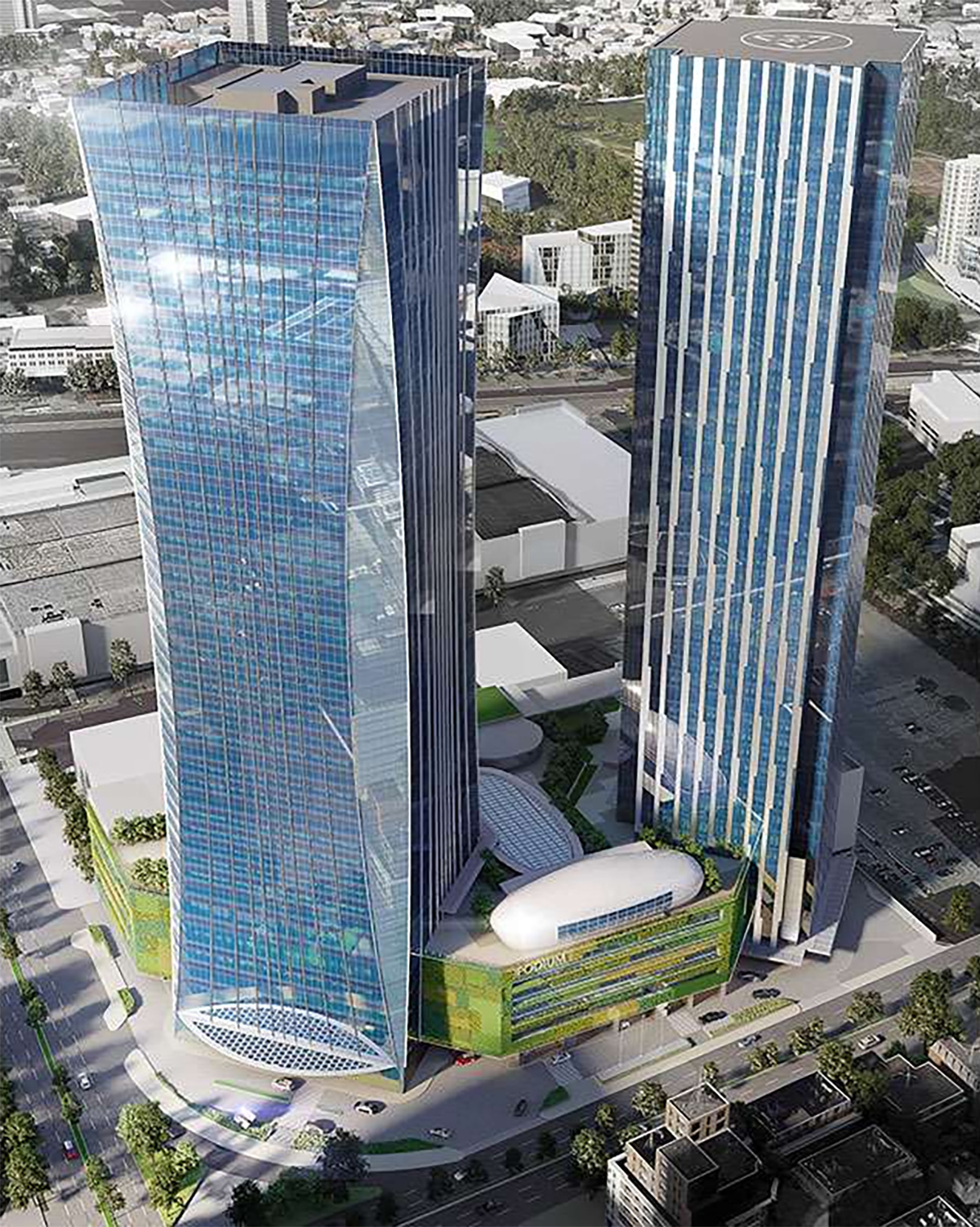
Starting the list of contemporary landmarks in the Philippines, Podium West Tower (2019)
The Mandaluyong Podium West Tower is a 48-story office skyscraper in Metro Manila, Philippines. Before completion, the building received LEED Gold Mark certification from the US Green Building Council. A provisional Green Mark Gold Award was also given to the building by the Singapore Building and Construction Authority.
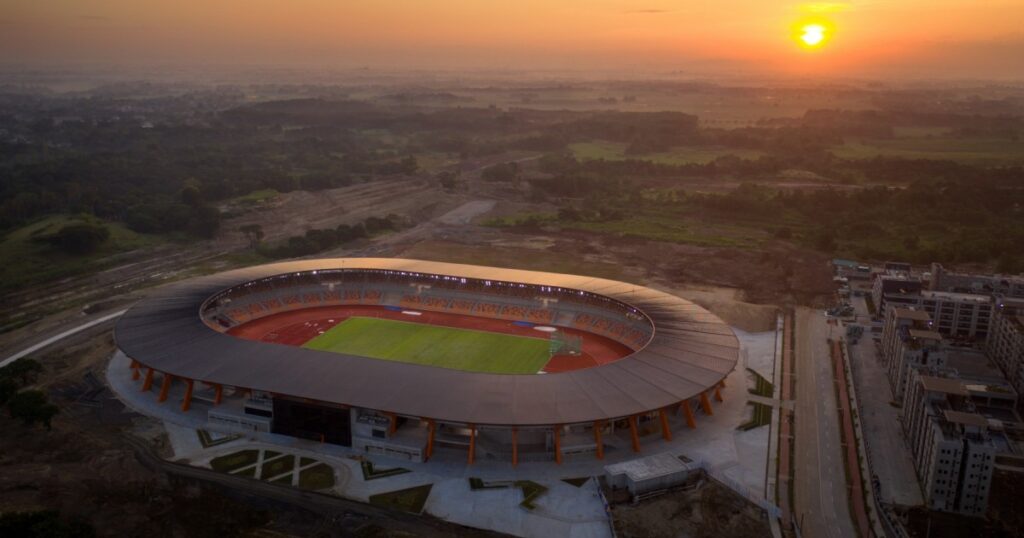
New Clark City Athletics Stadium (2019)
One of the latest contemporary landmarks in the Philippines is the New Clark City Athletics Stadium. It is a multi-purpose stadium in Capas, Tarlac, Philippines, well-known as the primary venue of the 2019 Southeast Asian Games closing ceremony.
The Athletics Stadium was inspired by Mount Pinatubo, with its posts and facade made of lahar, or volcanic debris from the volcano. The ringed roofline resembles a crater and a series of curving canopies. Glass frames adorned the main facade or the main entrance, with orange pillars inspired by the framework of the parol and the sunset.
Because the stadium is in a tropical and humid area, it has an open shed design and a raised roofline. Wind tunnels and an insulated oval roof further ventilate the structure. From the seats, you can see all the way to the middle of the stadium because there are no pillars in the way. Lights are strung along the catwalk of the canopy.
New Clark City Aquatic Stadium (2019)
The New Clark City Aquatic Center is a swimming and diving facility located in Capas, Tarlac, Philippines. It hosted the aquatics events of the 2019 Southeast Asian Games and will host the Asian Swimming Championships in 2023.
The Aquatics Center’s design resembles the baklad, a traditional Filipino fish trap, Filipino weaving, and woodwork, and it features a bamboo color scheme. The design consists of a large open shed with a colorful roof made of capiz coating, similar to a parol. Polytetrafluoroethylene (PTFE) will serve as roofing. The PTFE roofing is a lightweight, durable, and weather-resistant fiberglass material, resembling the capiz windows used in old Philippine houses during the day and an illuminated parol at night.
The Grand Hyatt Manila (2018)
Most commonly known as the Philippines’ tallest building to date, the Grand Hyatt Manila is a landmark 318 m (1,043 ft) building that offers many exciting experiences and dramatic restaurant concepts, making it a destination within a destination.
Grand Hyatt Manila sits alongside local and international companies and is just a 25-minute drive to the Ninoy Aquino International Airport (NAIA), the main gateway to the Philippines. Due to its strategic location, Grand Hyatt Manila is home to captivating and unobstructed views of the Manila skyline.
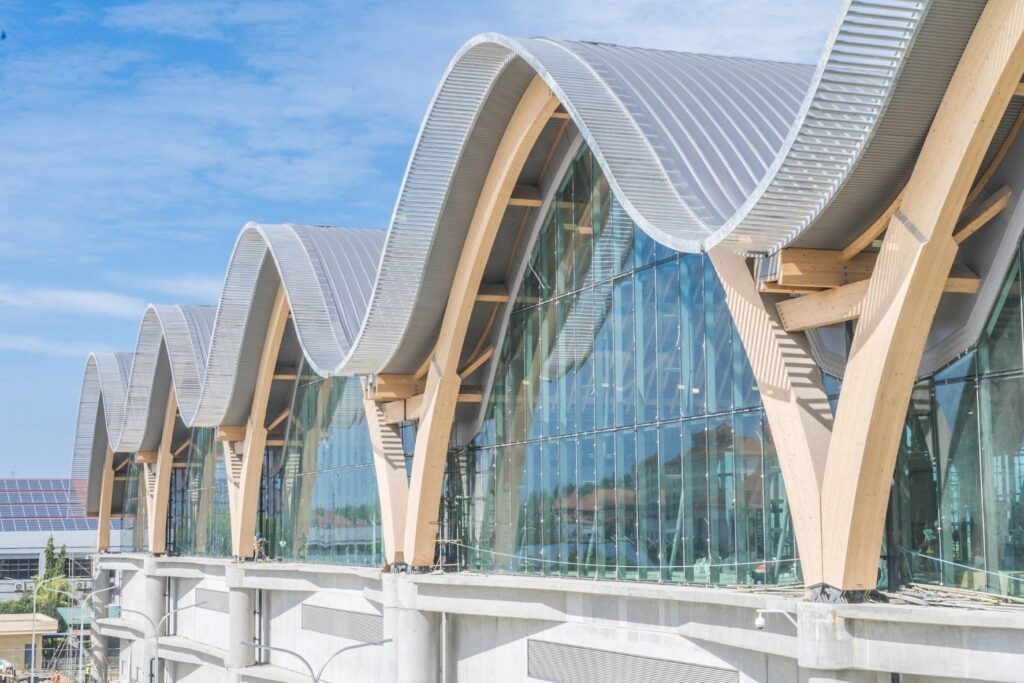
Mactan Cebu International Airport (2018)
Mactan-Cebu International Airport (MCIA) is the Philippines’ second-largest airport. There is an ongoing construction of the new international Terminal 2 to supplement the existing Terminal 1. Upon completion of Terminal 2, the existing Terminal 1 will be entirely for domestic use. The expanded facility of MCIA elevates itself from a city airport to a world-class international hub serving as the primary gateway to the central Philippine region.
Areté Ateneo (2018)
The Areté is a four-story structure with two wings: the Innovation and Arts Wing. The total gross floor area of the entire establishment, including the Utility Center Building and Sewage Treatment Plant, is 15,504.3 sqm.
Overall, its structure promotes modernization and sustainability. It comprises reinforced concrete walls and an Exterior Insulation and Finish System (EIFS) Half-Therm System Finish. Decorative aluminum fins surround the entire building envelope with anodized finishes.
Trump Tower (2017)
Trump Tower Manila is a residential tower located in Makati, Metro Manila, Philippines.
Internal balconies articulate the Trump Tower Manila’s “peeled” façade, with its upper and lower corners peeling away to accentuate its form. The facade’s function is environmentally responsive, with shading systems and light shelves designed to react to the building’s orientation relative to the sun’s path.
A Place, one of the sustainability-focused contemporary landmarks in the Philippines (2016)
Designed with sustainability in mind, A Place features regenerating elevators, solar shading, and ice-based thermal energy storage, all aimed at reducing energy consumption. A Place provides office space for lease or rent that is available for short-term to long-term use, depending on the client’s needs.
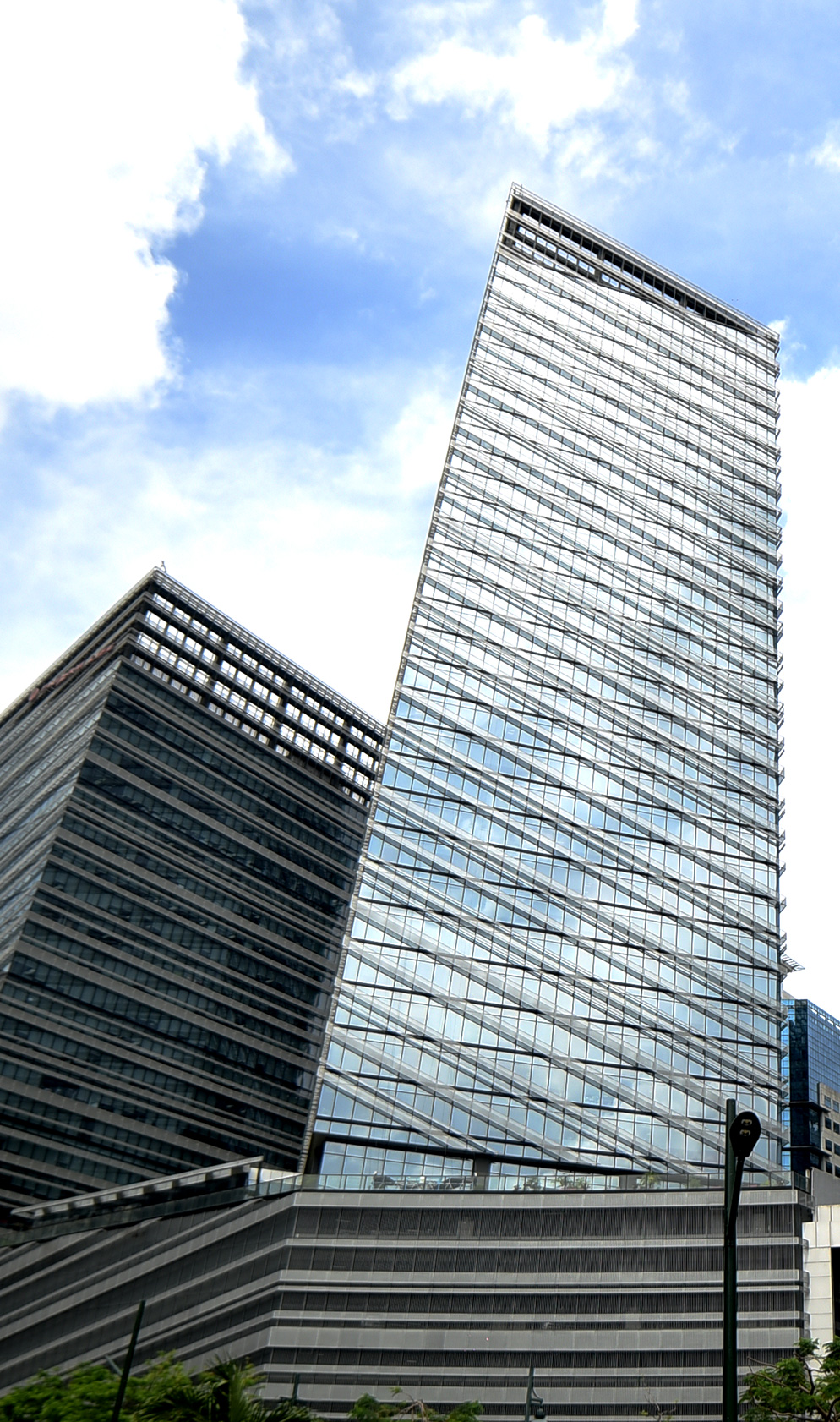
The Net Park (2016)
Net Park is a 38-story green and sustainable corporate tower in the Bonifacio Global City, with over 62,000 square meters of office space and 38 floors. The office’s floor plates are grade A, with a retail ground level, podium, and park. Net Park is also BERDE-certified. BERDE, or Building for Ecologically Responsive Design Excellence Program, is a green building rating system formed by the Philippine Green Building Council to measure, verify, and monitor building performance in the Philippines.
The skyscraper features passive external shading devices, vertical access wind turbines mounted on the roof, and a gray water reuse system to irrigate all on-site landscaping. The towers seemingly rotate around the other axis to allow natural light into the building and maximize sunlight penetration. There are also fewer interior columns to increase floor efficiency, and each floor plate is adaptable to meet the needs of different tenants.
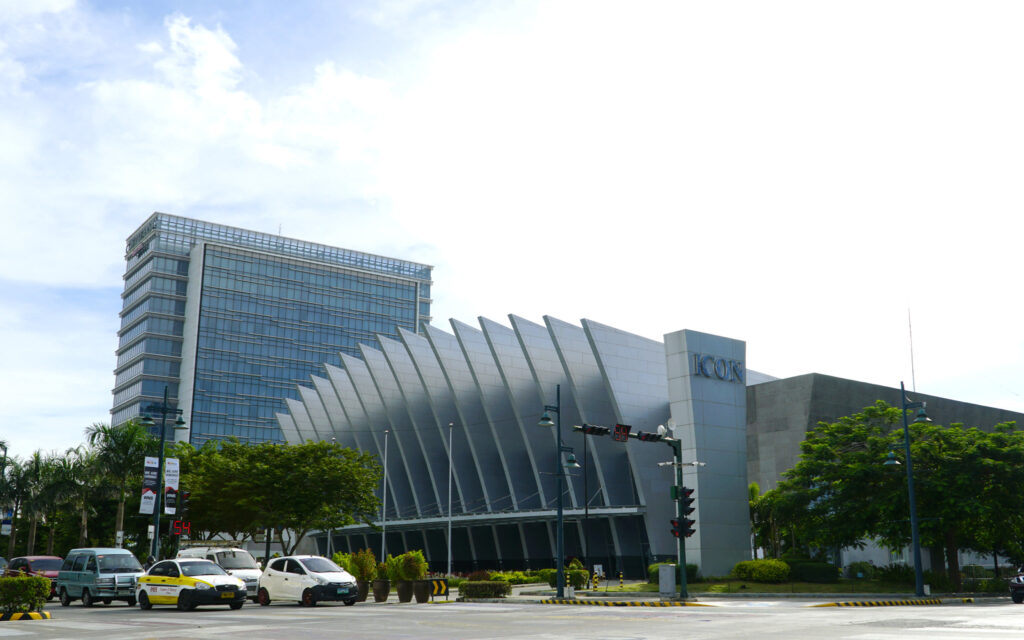
Iloilo Convention Center (2015)
Inspired by Iloilo’s Dinagyang and Paraw Festivals, the Iloilo Convention Center (ICC) is an iconic structure in Iloilo City’s Mandurriao District, within the Iloilo Business Park. It conveniently sits between Richmond and Marriott Hotels and other commercial establishments.
The gross floor area of the ICC is 11,694 square meters. The four first-floor halls have a total area of 2,900 square meters and can accommodate up to 2,400 people. The second floor’s seven function rooms cover 700 square meters and have seating capacities ranging from 50 to 115 people. These halls and rooms accommodate theater, classroom, banquet, and cocktail setups.
Philippine Arena, one of the record-breaking contemporary landmarks in the Philippines (2014)
Located in Bulacan, Philippines, the Philippine Arena is the largest indoor arena in the world. It is a multi-purpose indoor arena with a seating capacity of 55,000.
The Philippine arena’s initial design concept mimics the Narra tree, the mother tree of the Philippines, and the root of the banyan tree. On the other hand, the Nipa Hut serves as the design inspiration for the roof.
Gramercy Residences (2013)
The Gramercy Residences is a residential high-rise condominium in Makati, Philippines. It is the Philippines’ second tallest building as of 2016 and the first of several buildings at the new Century City complex along Kalayaan Avenue.
Gramercy Park, a fenced-in private park in one of Manhattan’s most prestigious neighborhoods, inspired the building’s name. Originally intended to be a 65-story structure, it now houses 73 floors above ground and a total height of 250 m (820 ft) from the base to its architectural peak.
Zuellig Building (2012)
The Zuellig Building, located between Makati Avenue and Paseo de Roxas, is known for its all-glass facade with a ceramic frit pattern on its curtain walls. Apart from its world-class design and convenient location, the building serves as a premier office space in Makati due to its efficient building systems and first-rate amenities.
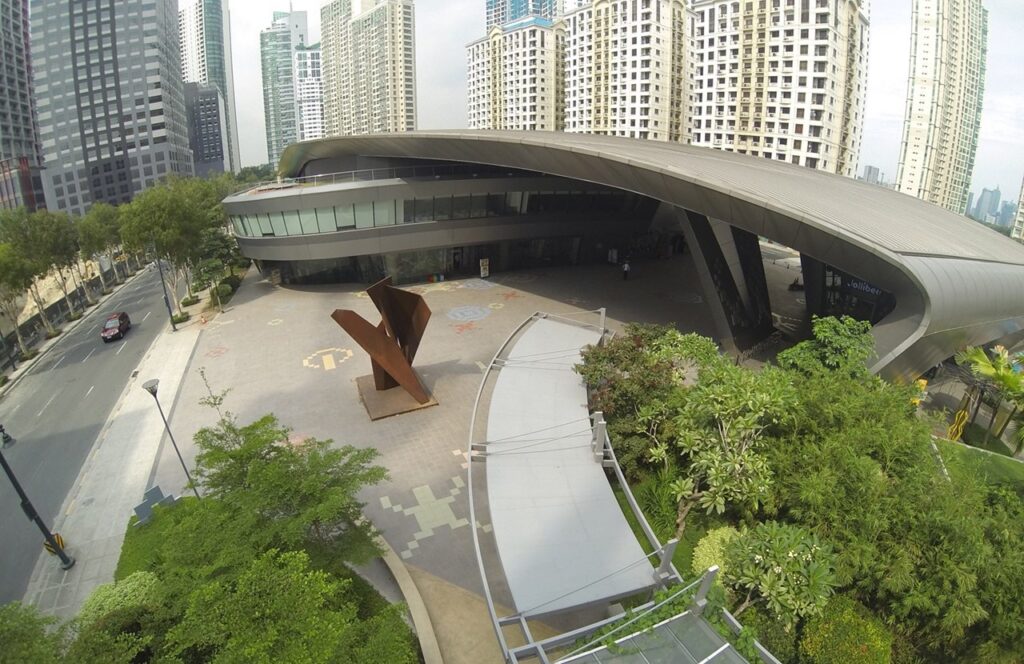
The Mind Museum (2012)
The Mind Museum is a science museum located in the bustling city of Taguig, Metro Manila, Philippines. It stands on a 1.2-hectare (3.0-acre) lot in J. Y. Campos Park in Bonifacio Global City, the city’s business district.
Cellular networks and growth inspired the structure’s design, featuring a solar reflective exterior, natural wind ventilation, and rainwater flow drainage.
Last but not least in the list of contemporary landmarks in the Philippines, Two E-Com Center (2012)
The dynamic structure of the Two E-Com Center in Pasay makes it easily identifiable. It was named the best office development in the Philippines because it uses green architectural principles, such as low emittance (Low-E) curtain walls that absorb solar energy to reduce power consumption. The structure includes a pair of 15-story twin towers linked by a bridge, a multi-purpose deck and sky garden, BPO office space, and nearby commercial and retail facilities.
Wrapping up the contemporary landmarks in the Philippines
For years, pioneering artists and designers influenced some of the country’s best landmarks. These contemporary landmarks in the Philippines stand tall as examples of Filipino mastery and as reminders that the country is also home to many visionary architects.