












- Tropical Asian architecture continues to influence how Philippine townships approach climate, landscape, and long-term livability.
- Modern township developments perform better when architecture responds to heat, rainfall, ventilation, and pedestrian experience rather than relying solely on imported urban models.
- Tropical planning principles support hospitality, walkability, outdoor living, and stronger relationships between buildings and landscape.
Tropical Asian architecture remains deeply relevant in Philippine township development because climate continues to shape how people experience space. Even as modern developments adopt global planning models, projects that respond carefully to heat, rainfall, ventilation, and landscape often create more comfortable and adaptable environments over time.
In many large-scale developments across the Philippines, architecture increasingly extends beyond individual buildings. Townships now operate as interconnected environments where roads, public spaces, retail areas, residential districts, hospitality components, and commercial zones all influence daily experience. In these projects, tropical design principles become operational rather than purely aesthetic.
Successful township developments do not simply place modern buildings within tropical settings. They shape circulation, orientation, shading, vegetation, and spatial hierarchy around how people actually move through humid and high-temperature environments.
Why Tropical Design Still Matters
The Philippines experiences intense sunlight, seasonal rainfall, humidity, and frequent transitions between indoor and outdoor environments. Developments that ignore these conditions often rely heavily on mechanical cooling and sealed interiors, creating spaces that feel disconnected from their surroundings.
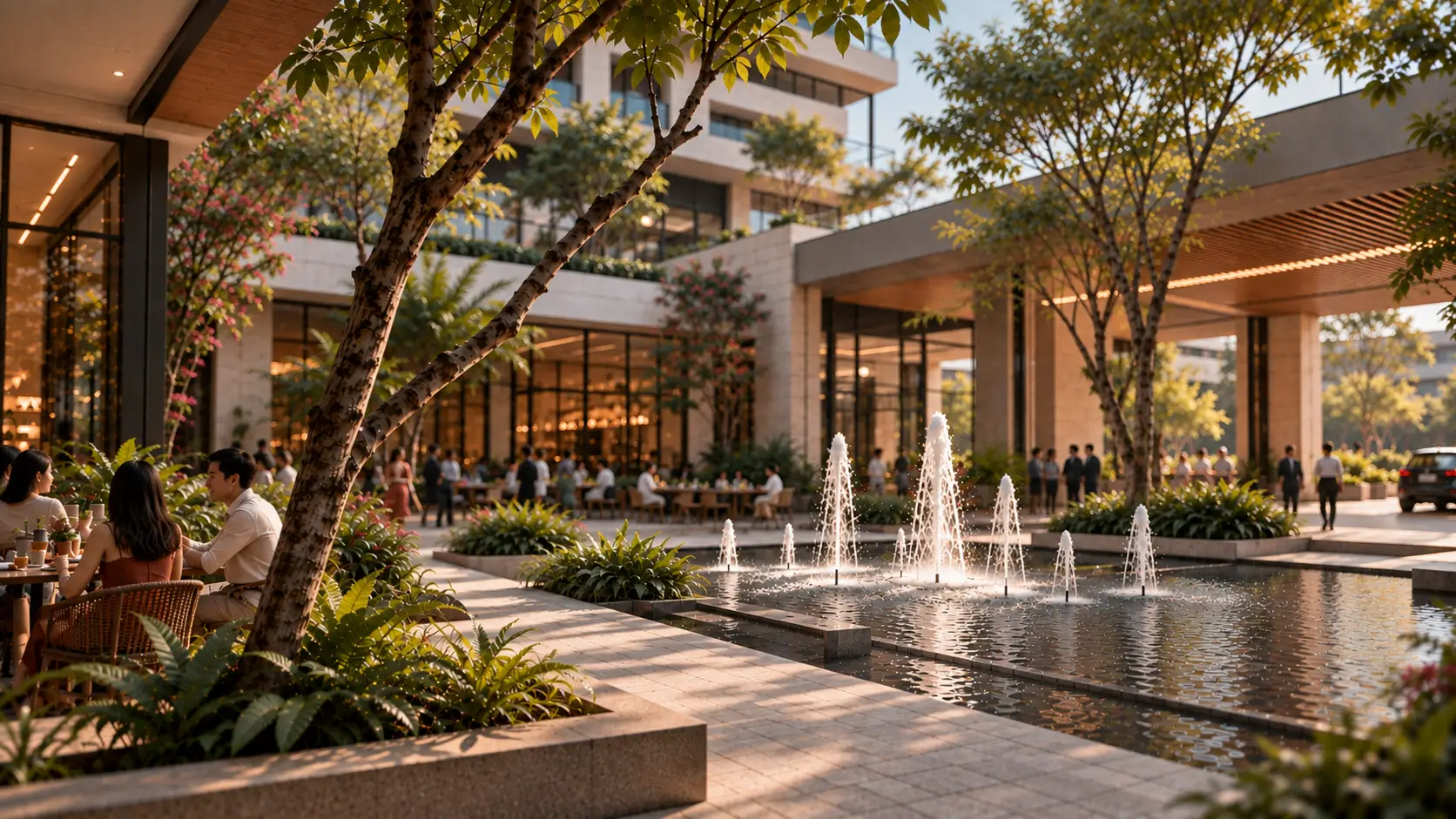
Tropical Asian architecture approaches climate differently. Deep overhangs, shaded walkways, transitional spaces, cross ventilation, water elements, and integrated landscaping help moderate environmental conditions while improving comfort and usability.
In township developments, these principles become especially important because people spend significant time moving between buildings rather than remaining inside a single structure. Pedestrian comfort, protection from weather, and outdoor usability directly influence whether public spaces remain active throughout the day.
Developments that respond well to climate usually feel more natural to navigate and occupy, even when densities increase.
Township Planning Beyond Buildings
Modern township developments function as urban systems rather than isolated projects. Residential districts connect with retail, hospitality, offices, schools, civic areas, and recreational spaces that operate together over long periods of growth.
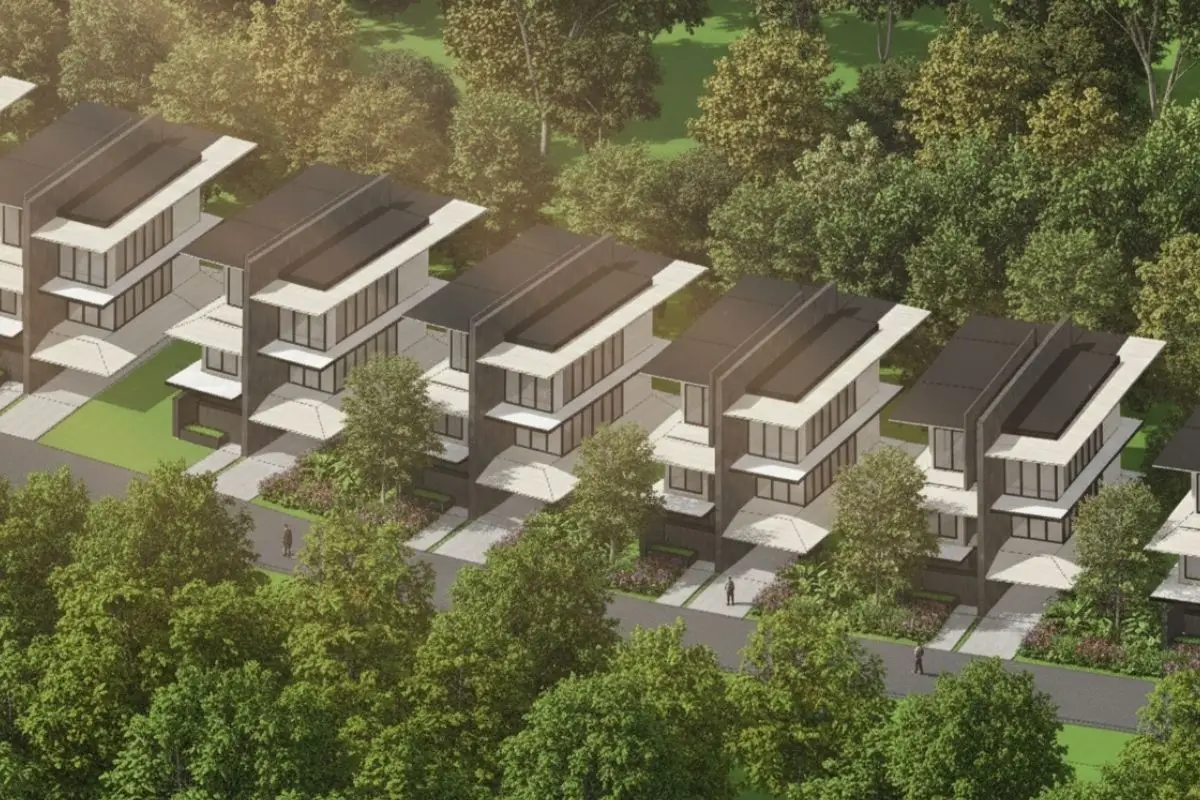
In this context, Tropical Asian architecture influences more than building appearance. It affects how streets are shaded, how open spaces are positioned, how air moves through districts, and how public areas remain usable despite weather conditions.
Large setbacks without shade often become uncomfortable pedestrian zones in tropical climates. Overly sealed commercial districts may struggle with outdoor activity during daytime conditions. Townships that integrate landscape, canopy coverage, water management, and transitional public spaces generally create stronger long-term usability.
This becomes increasingly important as Philippine developments continue expanding into mixed use estates, regional growth corridors, and large master planned communities.
The Role of Landscape and Transitional Space
One of the defining characteristics of Tropical Asian architecture is the importance of transitional space. Covered walkways, terraces, courtyards, arcades, breezeways, and semi-open gathering areas help buildings respond gradually to climate rather than separating interior and exterior conditions completely.
In township developments, these spaces improve both environmental performance and social experience. Landscaped buffers reduce heat buildup while creating visual softness within dense urban environments. Tree-lined circulation routes improve walkability and encourage outdoor movement between districts.
Hospitality developments throughout Southeast Asia have long used these principles successfully because they create environments that feel open, breathable, and connected to landscape. As Philippine township projects become more lifestyle-oriented, similar strategies increasingly influence residential, commercial, and mixed use planning.
Balancing Density and Climate Responsiveness
As township developments grow denser, maintaining climate responsiveness becomes more difficult. Taller buildings, larger paved areas, and increased vehicular circulation can intensify heat retention and reduce pedestrian comfort if not carefully managed.
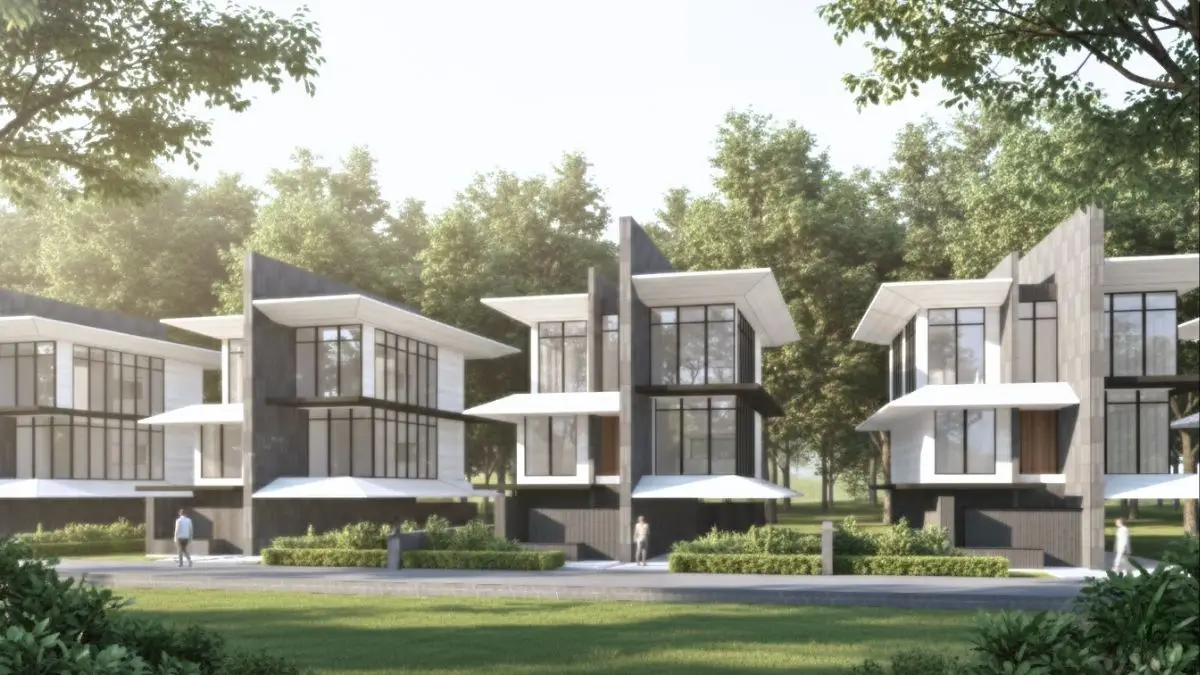
Tropical Asian planning approaches often counter these pressures through orientation strategies, shaded public zones, layered landscaping, natural ventilation opportunities, and careful massing relationships between buildings.
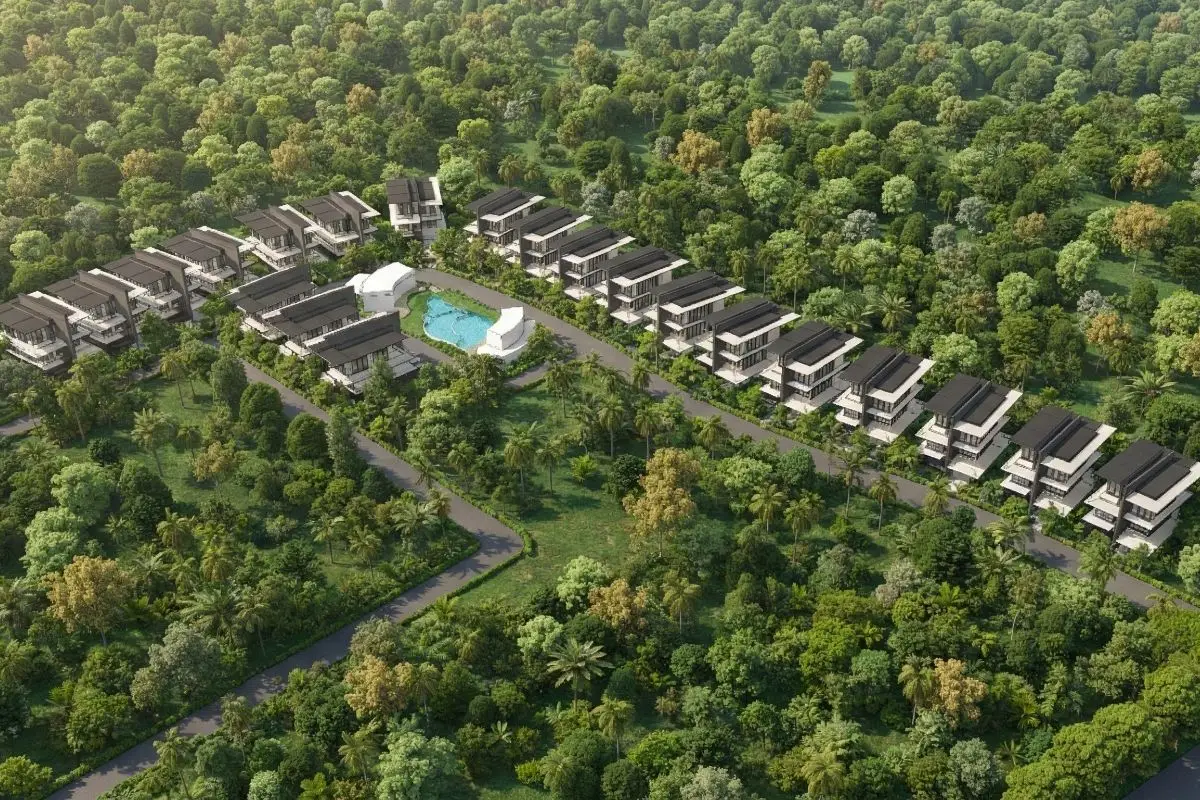
This does not mean rejecting modern density or urban growth. Instead, it means organizing development in ways that acknowledge environmental realities rather than working against them.
Projects that balance density with climate responsiveness generally remain more comfortable, more usable, and more adaptable over time.
Contemporary Interpretation Rather Than Imitation
Tropical Asian architecture should not be reduced to stylistic imitation or decorative regionalism. Successful contemporary interpretations focus on environmental logic rather than reproducing historical forms superficially.
Modern township developments increasingly reinterpret tropical principles through updated materials, engineering systems, structural technologies, and large-scale planning strategies. Glass, steel, concrete, and modern infrastructure can still support climate-responsive architecture when combined with disciplined planning and environmental awareness.
The strongest projects avoid treating tropical design as branding. Instead, they use climate responsiveness as a framework for improving comfort, circulation, landscape integration, and long-term urban experience.
Why Tropical Planning Supports Long-Term Value
Townships evolve over decades. Buildings change tenants, circulation patterns shift, public spaces mature, and operational demands increase over time. Developments designed around climate responsiveness often adapt more successfully because their planning logic remains grounded in environmental performance rather than short-term image making.
Shaded circulation systems, usable outdoor environments, integrated landscape networks, and adaptable public spaces continue supporting activity long after individual architectural trends change.
Tropical Asian architecture remains relevant because it addresses conditions that continue shaping everyday life across the region. In Philippine township developments, climate-responsive planning is not simply cultural expression. It is long-term urban strategy.
Tropical Asian architecture refers to climate-responsive design approaches commonly used across Southeast Asia that prioritize ventilation, shading, landscape integration, and environmental adaptability.
Township developments involve large-scale outdoor circulation and long-term urban growth. Tropical planning principles improve pedestrian comfort, usability, and environmental performance across these larger environments.
It improves comfort through shading, cross ventilation, transitional spaces, integrated landscape systems, and climate-responsive planning strategies.
Yes. Contemporary township developments can integrate tropical planning principles using modern materials, technologies, and infrastructure while remaining climate-responsive.
Well-planned township developments succeed when architecture responds to climate, landscape, movement, and long-term urban growth as a connected system. At Fulgar Architects, we approach Tropical Asian architecture as a strategic framework for creating walkable, climate-responsive, and adaptable environments across residential, hospitality, mixed use, and master planned developments. Explore our architectural and township planning services or connect with our team to discuss projects designed for long-term livability in tropical environments.