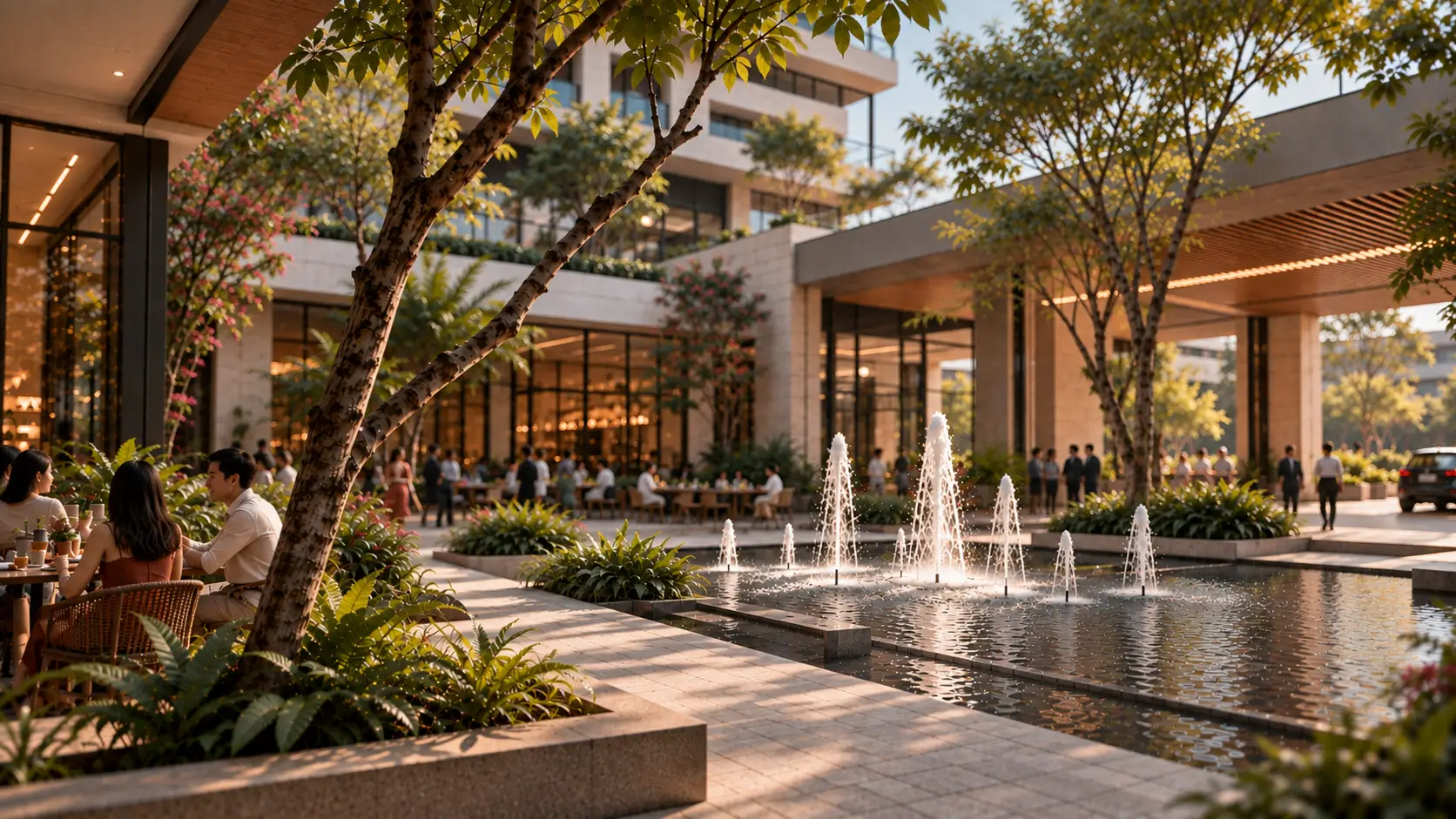













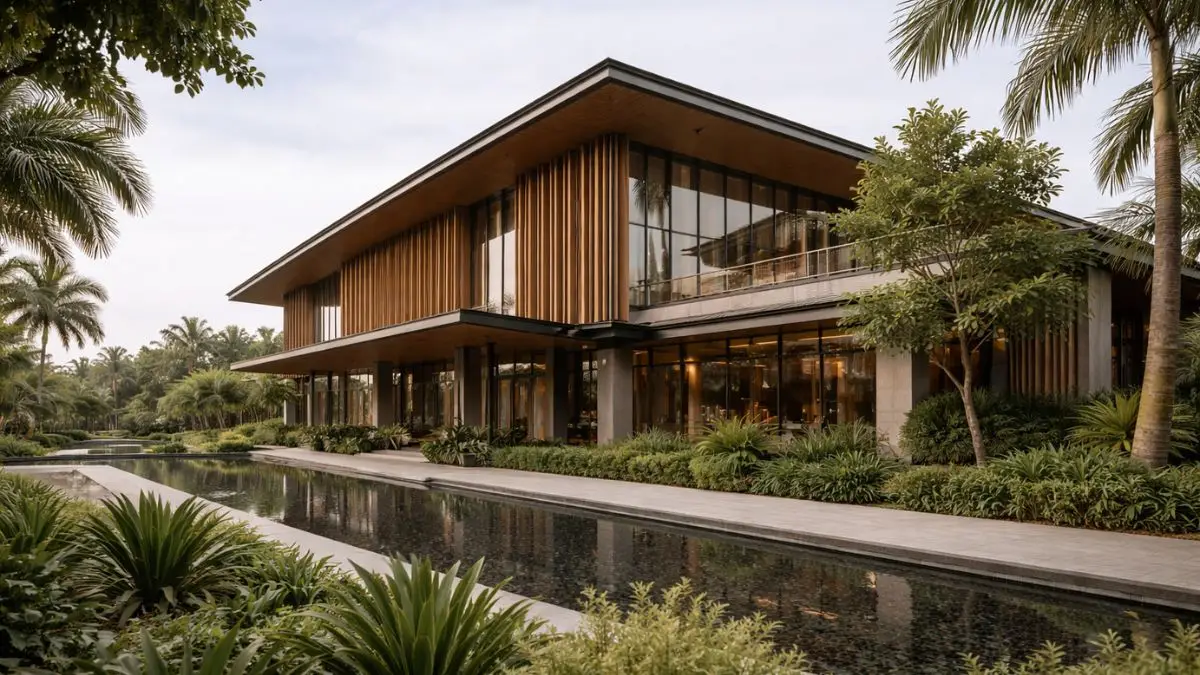
- Climate-responsive design improves comfort while reducing energy demand
- Building orientation and massing influence heat gain and airflow
- Passive cooling strategies reduce reliance on mechanical systems
- Material selection affects durability and thermal performance
- Long-term value is tied to environmental responsiveness
In tropical commercial architecture Philippines, climate is not a background condition. It is a primary factor that shapes how buildings perform, how they age, and how they are experienced daily. Heat, humidity, and seasonal rainfall require a level of design discipline that goes beyond standard solutions.
Commercial buildings that respond to these conditions tend to operate more efficiently and remain comfortable without excessive reliance on mechanical systems. This is not a matter of sustainability as an added feature. It is a matter of aligning architecture with the realities of the environment.
Orientation and Building Form
The position of a building on its site determines how it interacts with the sun and prevailing winds. Orientation affects solar exposure, heat gain, and natural ventilation potential.
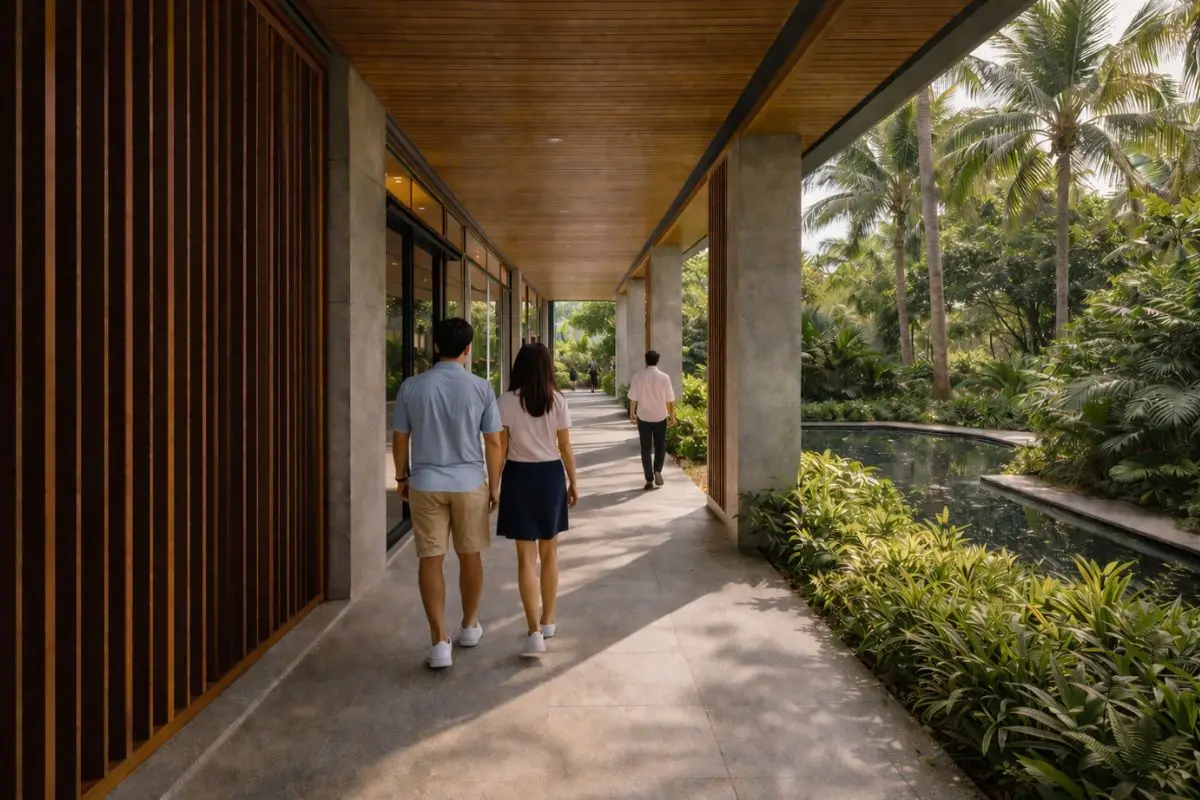
In tropical commercial architecture Philippines, reducing direct east and west exposure helps limit heat buildup throughout the day. Elongated building forms, proper shading, and strategic placement of openings support airflow and reduce internal temperature.
These decisions are made early in the design process. When resolved properly, they create a foundation for comfort that does not rely heavily on mechanical intervention.
Shading and Envelope Design
The building envelope acts as the first layer of defense against heat and rain. Façade design must respond to both solar exposure and weather conditions.
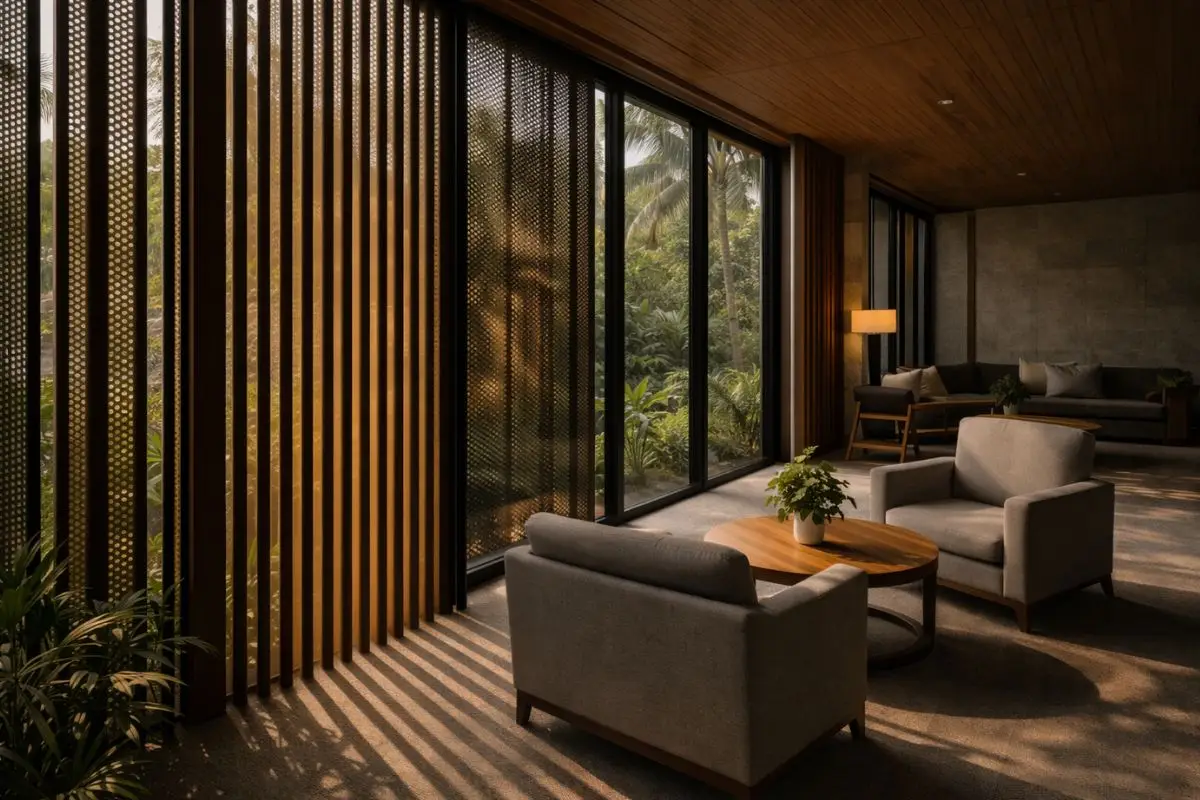
Deep overhangs, vertical fins, and recessed openings reduce direct sunlight while allowing daylight to enter. In commercial developments, these elements also contribute to the building’s identity without relying on superficial treatments.
Within tropical commercial architecture Philippines, the envelope is not purely aesthetic. It is a performance-driven component that directly affects energy use and occupant comfort.
Natural Ventilation and Air Movement
Airflow is one of the most effective tools for improving comfort in tropical environments. Cross-ventilation, stack effect, and open transitional spaces allow air to move naturally through a building.
Commercial spaces such as lobbies, corridors, and semi-open areas can be designed to support continuous air movement. This reduces reliance on air conditioning in non-critical zones and improves overall environmental quality.
In tropical commercial architecture Philippines, ventilation strategies are integrated into planning rather than applied as secondary solutions.
Material Selection and Thermal Performance
Materials influence how a building absorbs, stores, and releases heat. In tropical climates, this has a direct impact on interior comfort.
Light-colored surfaces reflect heat, while breathable materials allow moisture to dissipate. Proper insulation and layered wall systems reduce heat transfer into interior spaces.
Durability is also critical. Materials must withstand humidity, heavy rainfall, and long-term exposure without rapid deterioration.
These considerations ensure that buildings maintain performance over time, not just at completion.
Water Management and Rain Response
Rainfall in the Philippines is both intense and seasonal. Roof design, drainage systems, and site planning must accommodate large volumes of water efficiently.
Sloped roofs, properly sized gutters, and clear drainage paths prevent water accumulation and damage. Ground-level planning ensures that runoff is managed without affecting adjacent areas.
In commercial developments, these systems also influence maintenance requirements and long-term operational costs.
Balancing Performance and Experience
Climate-responsive design is often associated with technical performance. However, it also shapes how spaces are experienced.
Shaded walkways, breezeways, and covered outdoor areas create comfortable transitions between interior and exterior environments. These spaces support movement, interaction, and usability even in challenging weather conditions.
In tropical commercial architecture Philippines, this balance between performance and experience defines successful buildings. The environment is not resisted but used as a guiding framework for design decisions.
It improves comfort, reduces energy use, and ensures long-term durability in tropical conditions.
It influences heat gain, sunlight exposure, and the effectiveness of natural ventilation.
Shading devices, natural ventilation, and proper building form help reduce reliance on air conditioning.
Buildings that respond to environmental conditions require less maintenance and perform better over time.