












- Wellness-focused residential design increasingly shapes how contemporary homes support rest, privacy, and everyday restoration.
- More homeowners are creating resort-inspired environments that integrate relaxation into daily life rather than reserving it for travel.
- Architecture influences wellness through light, landscape integration, spatial flow, materiality, and environmental comfort.
- Hospitality-inspired residential spaces increasingly prioritize calmness, self-care, and slower living experiences.
- Contemporary luxury homes increasingly function as personal retreats within dense urban environments.
For many people, the idea of relaxation was once tied almost entirely to travel. Resorts, spas, retreats, and vacation environments existed separately from the routines of daily life.
That distinction has gradually started to shift. Contemporary residential design increasingly reflects the idea that restoration, calmness, and comfort should exist within the home itself rather than remaining occasional experiences reserved for weekends or holidays.
This shift has influenced how people think about space, privacy, wellness, and everyday living. Wellness-focused residential design now shapes many contemporary homes where architecture begins supporting slower routines, environmental comfort, and hospitality-inspired experiences integrated directly into daily life.
The Home as a Personal Retreat
After long days shaped by traffic, screens, deadlines, and constant urban noise, many people no longer want the home to feel like another hard-edged environment waiting for them at the end of the day.
Wellness-focused residential design reflects a growing desire for homes that support emotional recovery and slower daily routines. In many contemporary residences, bedrooms now open toward private gardens while filtered daylight moves softly through stone-lined bathrooms, shaded terraces, and breezeways designed for quieter mornings and calmer evenings.
Instead of separating indoor comfort from the outdoors completely, wellness-focused homes increasingly allow landscape, airflow, light, and movement to shape everyday living more naturally. Oversized sliding glass doors, covered terraces, skylit bathrooms, indoor-outdoor bathing spaces, pocket gardens, and layered tropical planting help create environments that feel closer to boutique resorts than conventional urban residences.
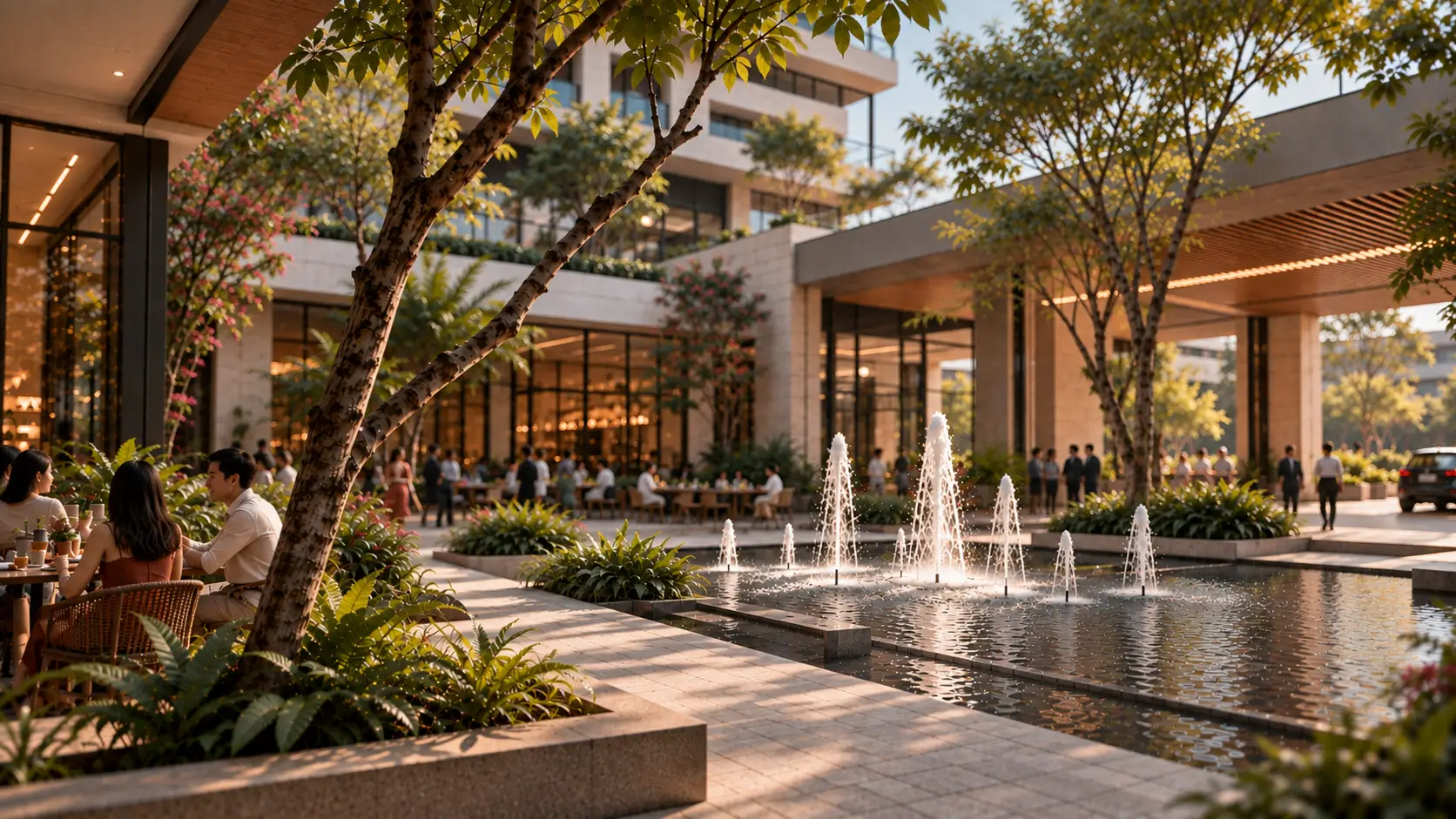
Across Metro Manila, condominiums and large residential developments increasingly offer wellness-oriented amenities such as gyms, lounges, landscaped decks, spas, yoga studios, pools, and wellness floors. Developments like Shang Residences at Wack Wack, The Rise Makati, and Parklinks reflect how strongly the market now values wellness and lifestyle integration within residential environments.
Still, there is a meaningful difference between visiting shared amenities occasionally and living inside a home that feels restorative on a daily basis. A quiet outdoor shower after a long day, a naturally ventilated bathroom overlooking greenery, or a shaded lounge that catches the late afternoon breeze can gradually transform how the home is experienced emotionally over time.
Designing for Calmness and Environmental Comfort
Wellness-oriented residential environments depend heavily on environmental comfort.
Architecture influences whether spaces feel stressful or calming through light quality, airflow, acoustics, material selection, spatial proportions, and landscape integration.
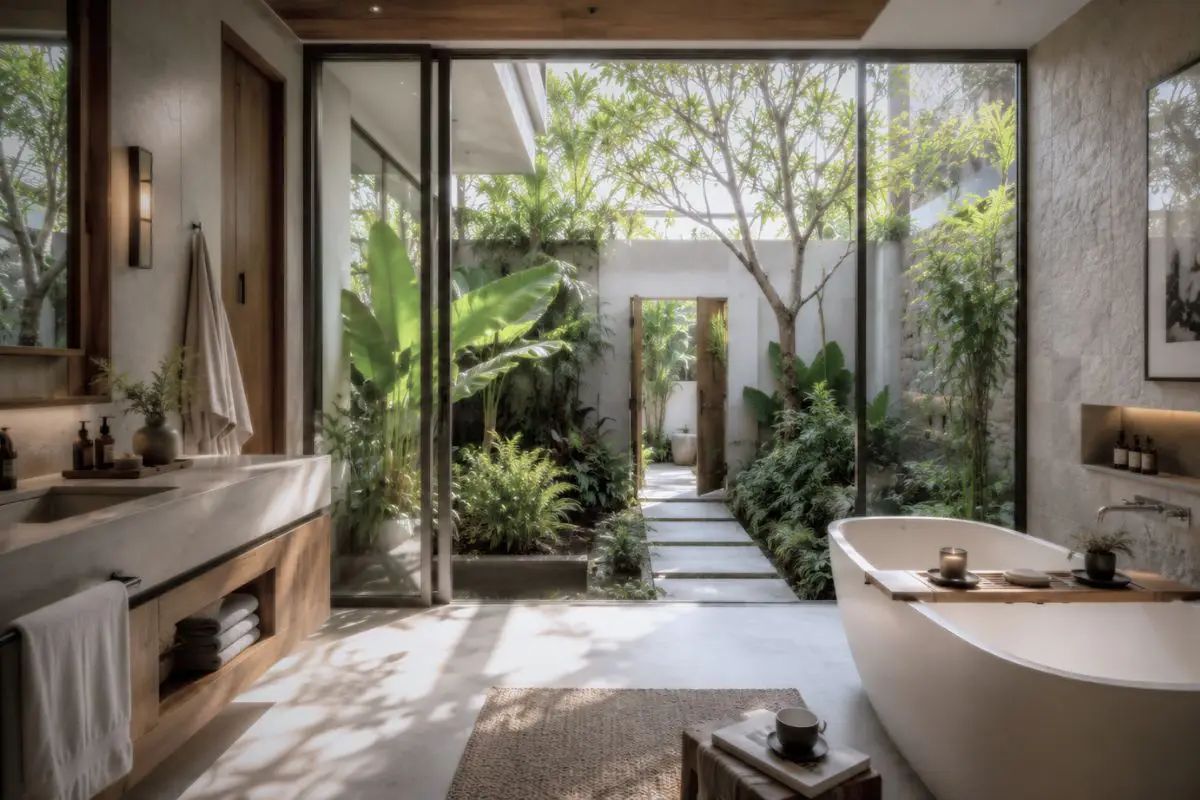
Wellness-focused homes increasingly rely on softer environmental transitions rather than rigidly enclosed living. Filtered daylight, layered landscaping, natural airflow, shaded outdoor spaces, and quieter spatial zoning all help create homes that feel calmer and more emotionally restorative throughout the day.
Instead of treating comfort as something mechanical or purely aesthetic, contemporary tropical homes increasingly shape wellness through the atmosphere itself. The way light enters a room, how air moves through open spaces, or how landscape softens the edge between indoors and outdoors often has a stronger emotional impact than oversized luxury features alone.
Tropical architecture naturally supports many of these priorities because climate-responsive design already emphasizes openness, airflow, shading, and stronger relationships between built environments and landscape.
In many contemporary homes, wellness increasingly comes from spatial atmosphere itself rather than simply adding luxury amenities.
Privacy, Slower Living, and Everyday Rituals
The growing appeal of wellness-focused homes also reflects changing attitudes toward privacy and everyday routine.
People increasingly value spaces that allow moments of quietness and separation from overstimulating urban environments. Architecture helps support this through zoning strategies, landscape buffering, layered transitions, and more intentional spatial organization.
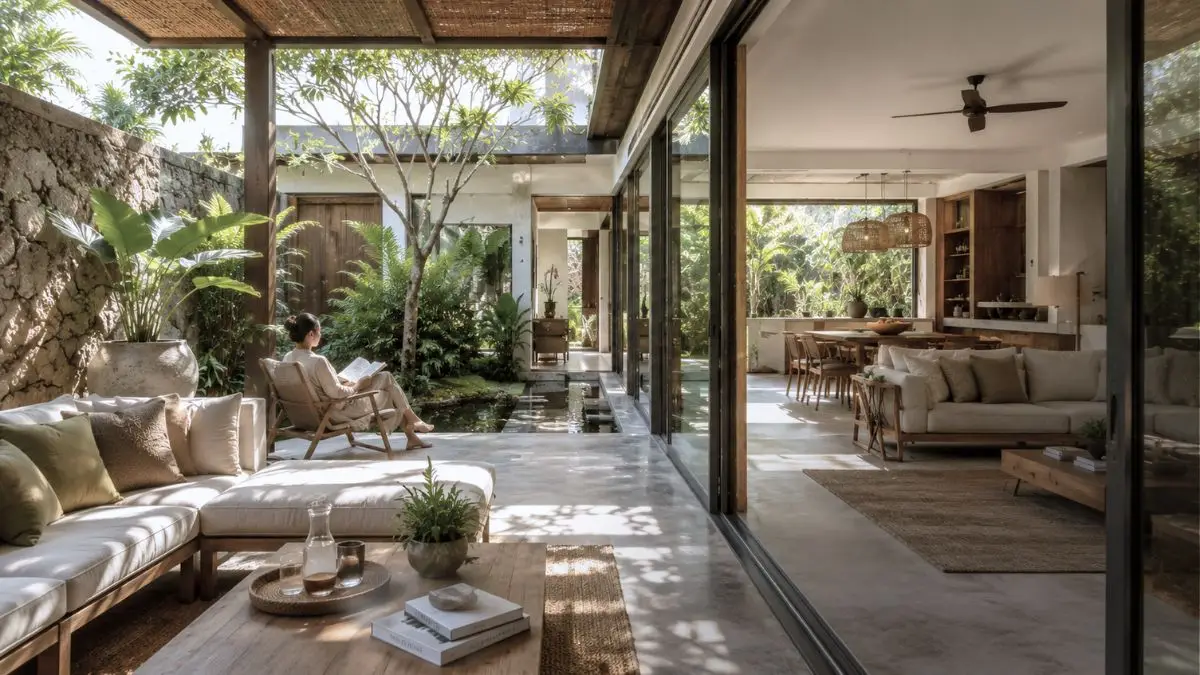
Homes designed around wellness often encourage slower daily rituals rather than purely efficient movement patterns. Morning light entering private courtyards, outdoor showers surrounded by landscape, shaded terraces, reading lounges, and quiet transitional spaces all contribute to how homes support emotional well-being over time.
This shift has become particularly visible in high-end residential architecture where luxury increasingly relates to environmental quality, spatial calmness, and lifestyle experience rather than scale alone.
In many cases, the most successful homes today are the ones that make people feel emotionally restored without needing to leave the property itself.
The Future of Wellness-Focused Residential Design
As cities continue becoming denser and daily life grows increasingly fast-paced, wellness will likely remain a major influence within residential architecture.
People increasingly respond to homes that feel restorative, breathable, connected to nature, and emotionally calming rather than purely monumental or visually excessive.
Wellness-focused residential design reflects a broader shift where architecture increasingly supports mental recovery, self-care, environmental comfort, and everyday quality of life within the home itself.
Over time, the strongest residential environments will likely be the ones that balance luxury, climate responsiveness, privacy, and emotional atmosphere in ways that feel both calming and deeply livable.
Wellness-focused residential design prioritizes environmental comfort, relaxation, self-care, and emotional well-being through architecture, landscape integration, and spatial planning.
Many homeowners increasingly want environments that support relaxation, privacy, and restoration without relying entirely on travel or external leisure spaces.
Architecture supports wellness through ventilation, daylight, landscape integration, circulation planning, material selection, and spatial atmosphee.
Common features include spa-inspired bathrooms, landscaped courtyards, open-air lounges, plunge pools, wellness suites, shaded terraces, and indoor-outdoor living spaces.
Fulgar Architects approaches residential architecture through long-term spatial thinking that balances tropical living, environmental comfort, hospitality-inspired experiences, and contemporary wellness-focused design.