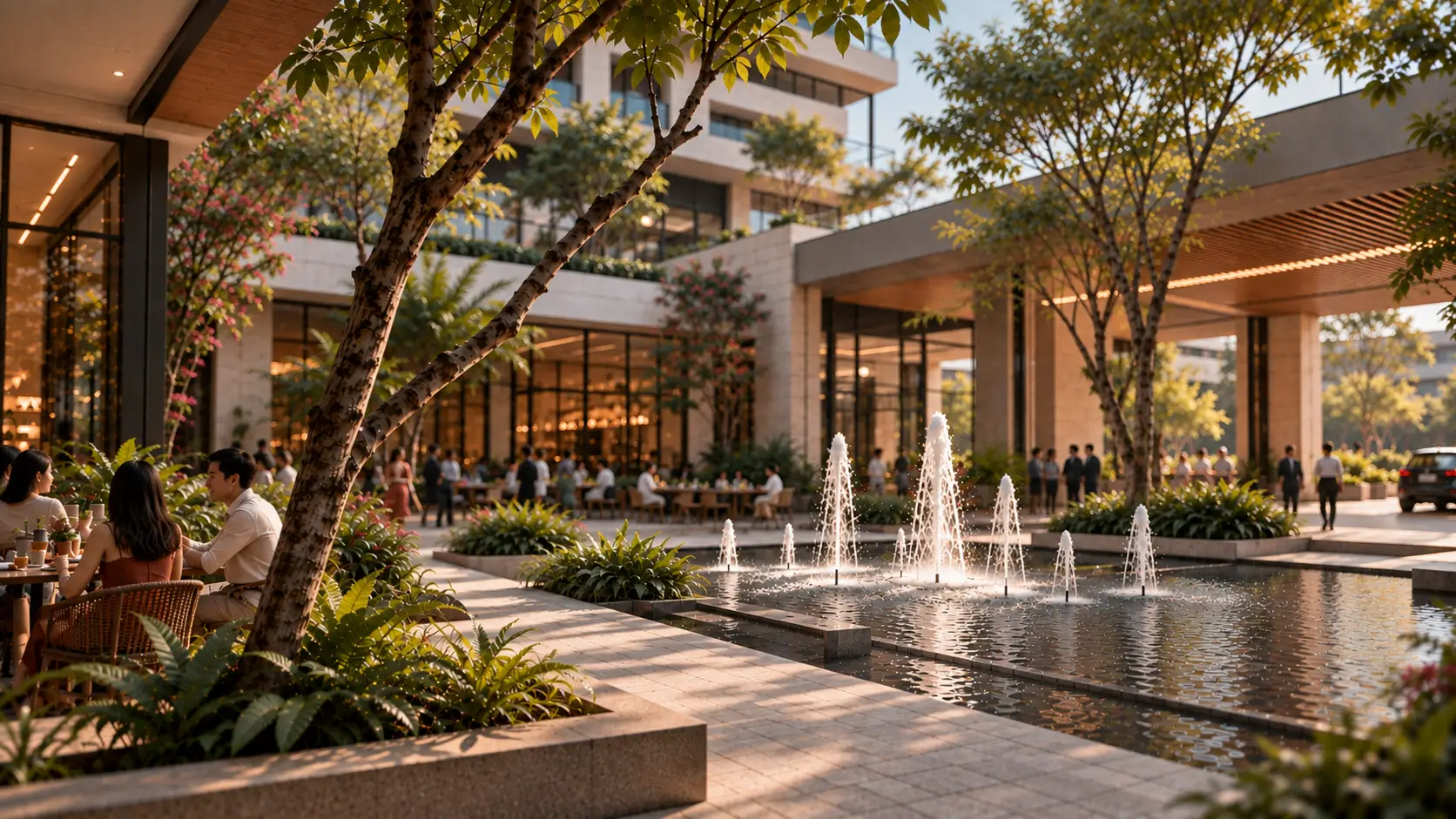













- High-end subdivisions increasingly differentiate themselves through planning quality, spatial hierarchy, and environmental experience.
- Buyers are placing greater value on walkability, landscape integration, privacy, and long-term community atmosphere.
- Architecture shapes how premium residential environments feel beyond individual homes alone.
- Density control and open space planning strongly influence comfort and perceived exclusivity within residential communities.
- Contemporary luxury communities increasingly prioritize lifestyle quality and neighborhood identity over visual spectacle.
The appeal of high-end residential communities in Metro Manila continues evolving alongside changing expectations around comfort, privacy, and long-term livability. While luxury homes remain important, many buyers increasingly evaluate entire neighborhoods rather than individual properties alone.
This shift places greater attention on planning quality, environmental comfort, walkability, landscape integration, and the overall atmosphere of residential environments. In many cases, what distinguishes premium communities today is not simply architectural scale, but how consistently the district itself supports everyday life.
As high-end subdivisions in Metro Manila continue expanding and adapting to changing urban conditions, architecture plays an increasingly important role in shaping how these communities feel and function over time.
Planning Beyond Individual Properties
Many luxury residential developments were traditionally defined through large houses, exclusivity, and controlled access. Contemporary residential planning increasingly focuses on how neighborhoods operate collectively rather than how individual homes appear in isolation.
Architecture influences whether communities feel cohesive, breathable, and comfortable through street proportions, setbacks, circulation systems, landscape continuity, and open space hierarchy.
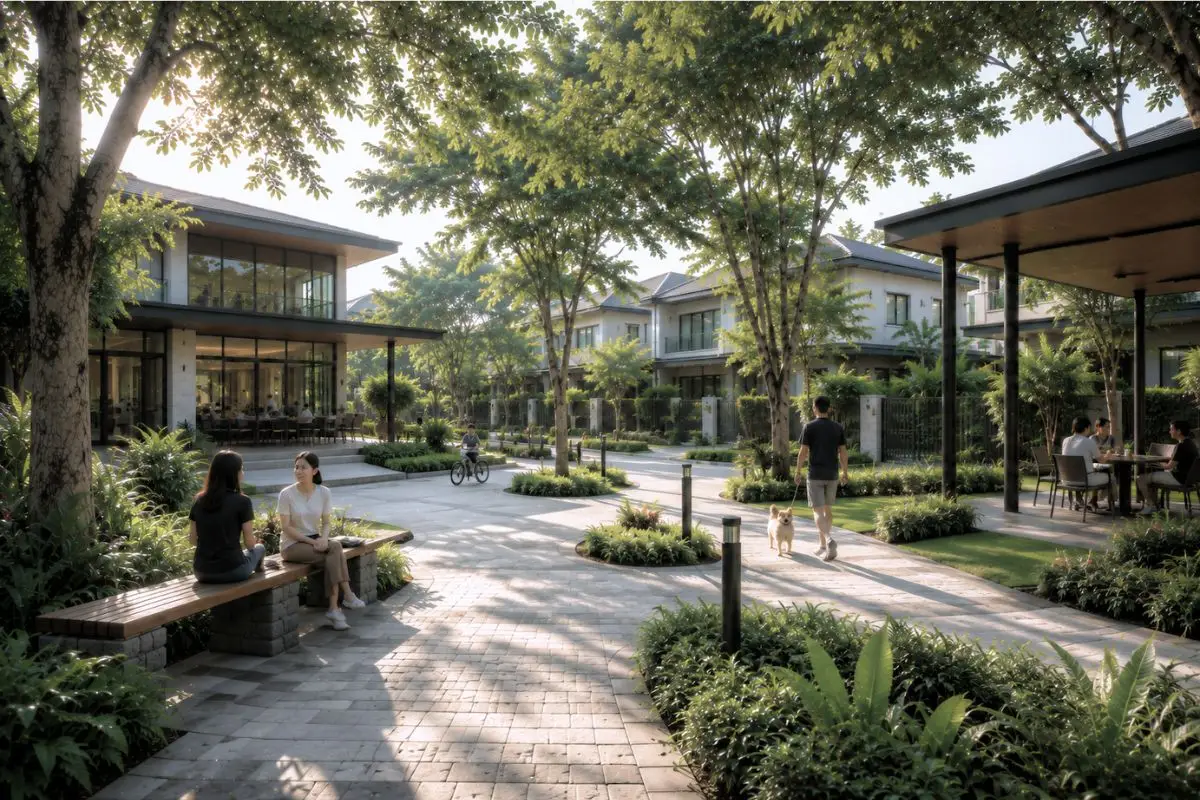
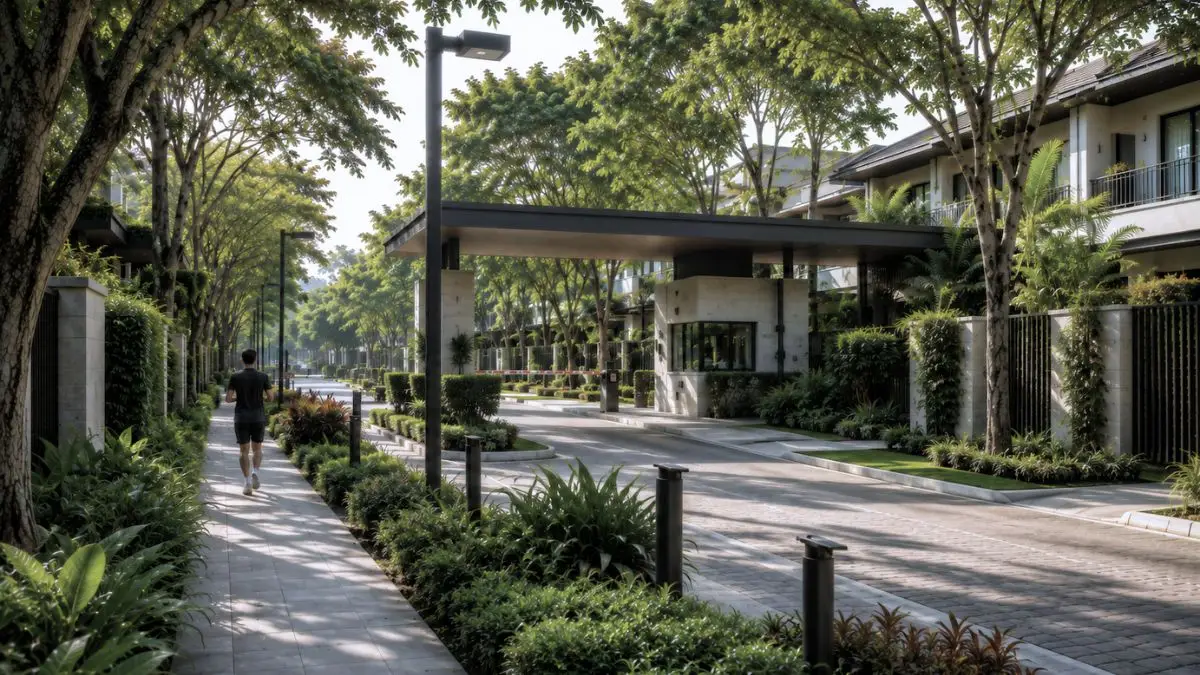
These planning decisions shape the rhythm of the neighborhood itself. Wide streets, shaded walkways, layered landscaping, and carefully positioned amenities help create environments that feel calmer and more organized despite increasing residential density.
Many high-end subdivisions in Metro Manila now place greater emphasis on preserving openness and environmental comfort even as urban land values continue rising. This balance becomes increasingly important as residents seek quieter environments without fully disconnecting from the city.
Spatial Hierarchy and Residential Atmosphere
One of the defining characteristics of successful residential communities is the quality of spatial hierarchy throughout the neighborhood.
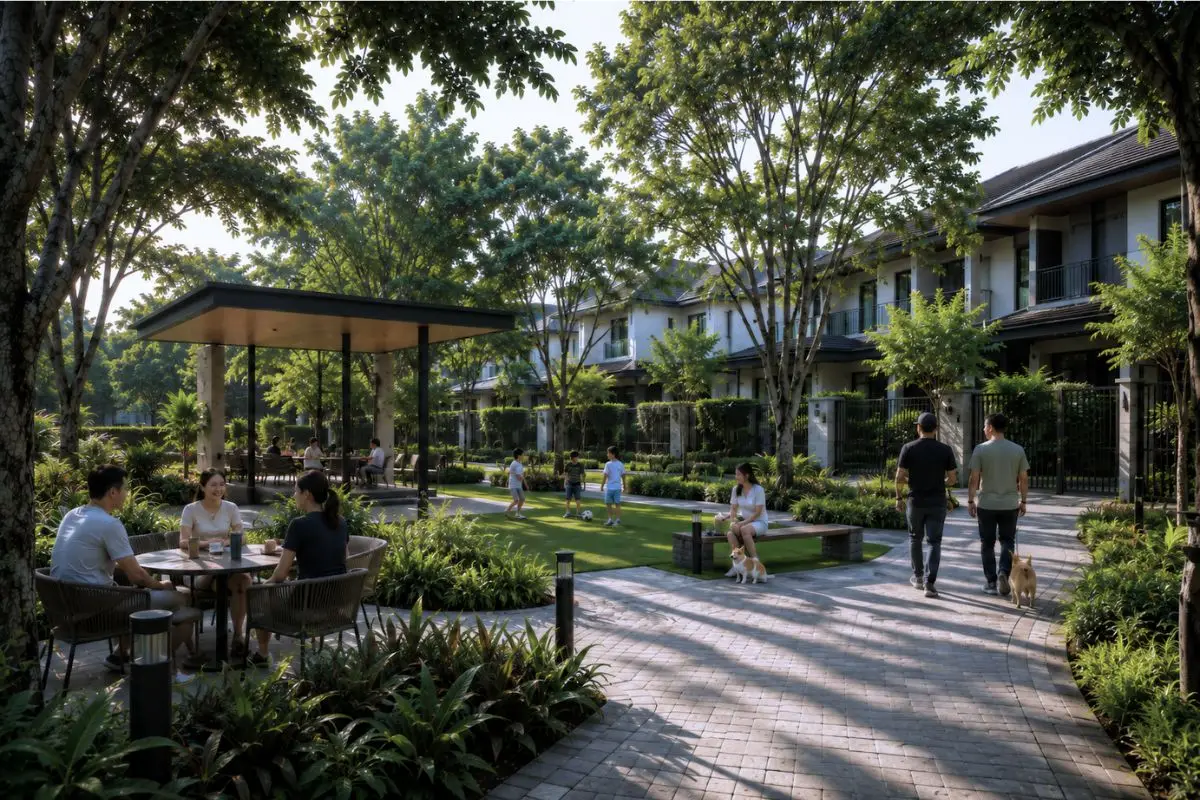
Architecture shapes how people transition between public roads, gated entrances, internal streets, shared amenities, and private homes. These layers influence how communities establish privacy, orientation, and emotional comfort.
In many premium subdivisions, landscaped buffers, gradual transitions, controlled sightlines, and amenity placement all contribute to a stronger sense of arrival and neighborhood identity.
This hierarchy also affects how communities age over time. Neighborhoods with stronger spatial organization often maintain a more cohesive atmosphere even as architectural styles evolve across different homes.
The experience of exclusivity increasingly comes from environmental quality and neighborhood coherence rather than visual extravagance alone.
Density, Openness, and Environmental Comfort
As Metro Manila continues growing denser, environmental comfort becomes increasingly valuable within residential developments.
Many buyers today prioritize communities that feel open, breathable, and environmentally responsive despite urban expansion surrounding them. Architecture helps shape this experience through lot spacing, tree canopy coverage, ventilation corridors, landscape planning, and pedestrian circulation.
High-end subdivisions in Metro Manila increasingly recognize that density itself is not necessarily the problem. The more important issue is how density is managed spatially.
Communities that maintain visual openness, shaded outdoor environments, and balanced circulation systems often feel significantly calmer and more livable even at larger scales.
Tropical landscaping also plays an important role in shaping environmental comfort. Tree-lined streets, pocket gardens, planted setbacks, and shaded gathering areas soften the intensity of dense urban environments while improving walkability and neighborhood atmosphere.
Community Identity and Everyday Experience
Many contemporary residential buyers increasingly respond to neighborhoods that feel socially and emotionally recognizable rather than simply prestigious.
Architecture influences this identity through public spaces, amenity integration, movement systems, and the relationship between homes and shared environments. Clubhouses, parks, pedestrian streets, outdoor gathering areas, and community-oriented spaces all contribute to how neighborhoods develop everyday activity.
Some of the most memorable residential communities feel active without becoming overcrowded. This balance often depends on how planning systems distribute movement, visibility, privacy, and shared activity across the district.
Hospitality-inspired planning has also influenced how premium residential environments are designed. Many communities increasingly borrow ideas from resorts and lifestyle developments where movement, atmosphere, landscaping, and environmental comfort are carefully coordinated to create more restorative environments.
This shift reflects broader lifestyle expectations where residential communities are increasingly evaluated through quality of experience rather than property value alone.
The Future of High-End Residential Communities
As urban conditions continue changing, high-end residential communities will likely place even greater emphasis on long-term livability, environmental responsiveness, and neighborhood quality.
People increasingly value environments that feel walkable, shaded, connected, and emotionally comfortable rather than purely monumental or visually excessive.
The strongest high-end subdivisions in Metro Manila often create distinction gradually through planning quality, spatial continuity, environmental comfort, and community atmosphere rather than relying solely on architectural spectacle.
Over time, these qualities influence how neighborhoods retain identity, desirability, and long-term relevance within a rapidly evolving urban environment.
High-end subdivisions are increasingly defined by planning quality, environmental comfort, walkability, landscape integration, and long-term community atmosphere rather than luxury branding alone.
Spatial hierarchy helps organize transitions between public and private spaces while improving privacy, orientation, and neighborhood identity.
Architecture shapes atmosphere through circulation, landscape planning, setbacks, density control, open spaces, and environmental responsiveness.
Environmental comfort improves walkability, livability, privacy, and everyday quality of life within increasingly dense urban environments.
Fulgar Architects approaches residential planning through long-term architectural thinking that balances environmental comfort, spatial hierarchy, community identity, and contemporary tropical living within evolving urban contexts.