












- Privacy has become one of the defining expectations of luxury hospitality.
- Successful villa resorts create seclusion without disconnecting guests from the broader resort experience.
- Site planning often plays a greater role in privacy than architecture alone.
- Landscape, topography, and circulation contribute significantly to guest comfort and exclusivity.
- The most successful villa resorts balance personal retreat with access to amenities, services, and experiences.
Luxury hospitality has evolved considerably over the past decade. While premium amenities, exceptional service, and desirable destinations remain important, guests increasingly seek something less tangible. Privacy has emerged as one of the most valued aspects of contemporary hospitality, influencing how resorts are planned, designed, and experienced.
This shift has contributed to the growing popularity of villa-based accommodations. Unlike traditional hotel environments, villa resorts offer guests greater control over their surroundings, stronger connections to outdoor spaces, and a heightened sense of exclusivity. These qualities appeal to a wide range of travelers, from couples seeking quiet retreats to families and groups prioritizing comfort and flexibility.
The growing emphasis on privacy in modern villa resorts reflects more than changing hospitality preferences. It represents a broader architectural challenge: creating environments that feel secluded without feeling isolated.
Why Privacy Has Become a Luxury Amenity
Luxury has traditionally been associated with size, materials, and service. Today, many travelers place equal value on personal space and freedom from interruption.
Guests increasingly seek environments where they can relax without feeling observed, crowded, or constrained by shared facilities. The ability to enjoy outdoor spaces, private pools, gardens, and terraces without constant interaction with other guests has become an important component of the luxury experience.
This shift has influenced how hospitality projects are conceived. Privacy is no longer treated as a secondary consideration. It often becomes a central planning objective that shapes site layout, circulation, landscaping, and architectural design from the earliest stages of development.
In many respects, privacy has become one of the defining amenities of contemporary hospitality.
Site Planning Before Architecture
Many successful villa resorts achieve privacy long before individual buildings are designed.
The arrangement of accommodations across a site often determines whether guests feel secluded or exposed. Villa placement, building orientation, topography, and circulation networks all influence the guest experience.
Projects that take advantage of natural terrain frequently create stronger privacy conditions. Changes in elevation, existing vegetation, ridgelines, and landscape features can establish separation between accommodations without relying on walls or barriers.
This approach is common in tropical destinations throughout Southeast Asia, where resort developments often use the landscape itself to define individual guest environments.
Effective site planning reduces visual conflicts, improves views, and creates a stronger sense of retreat across the entire property.
Landscape as a Privacy Layer
Landscape architecture plays a critical role in creating privacy within villa resorts.
Trees, planting zones, water features, berms, and garden walls help establish visual separation while preserving a sense of openness. Unlike solid barriers, landscape elements can soften transitions between private and shared spaces while maintaining connections to the surrounding environment.
In tropical climates, vegetation provides additional benefits beyond privacy. Shade, cooling, and environmental comfort contribute to the overall quality of outdoor spaces. Carefully designed landscapes can make terraces, gardens, and outdoor lounges feel more comfortable throughout the day.
Many guests may never consciously notice these interventions. Yet they strongly influence how private and relaxed a resort feels.
Successful privacy often emerges from what guests do not see rather than what they do.
Courtyards, Walls, and Outdoor Rooms
Architecture contributes to privacy by shaping space rather than simply enclosing it.
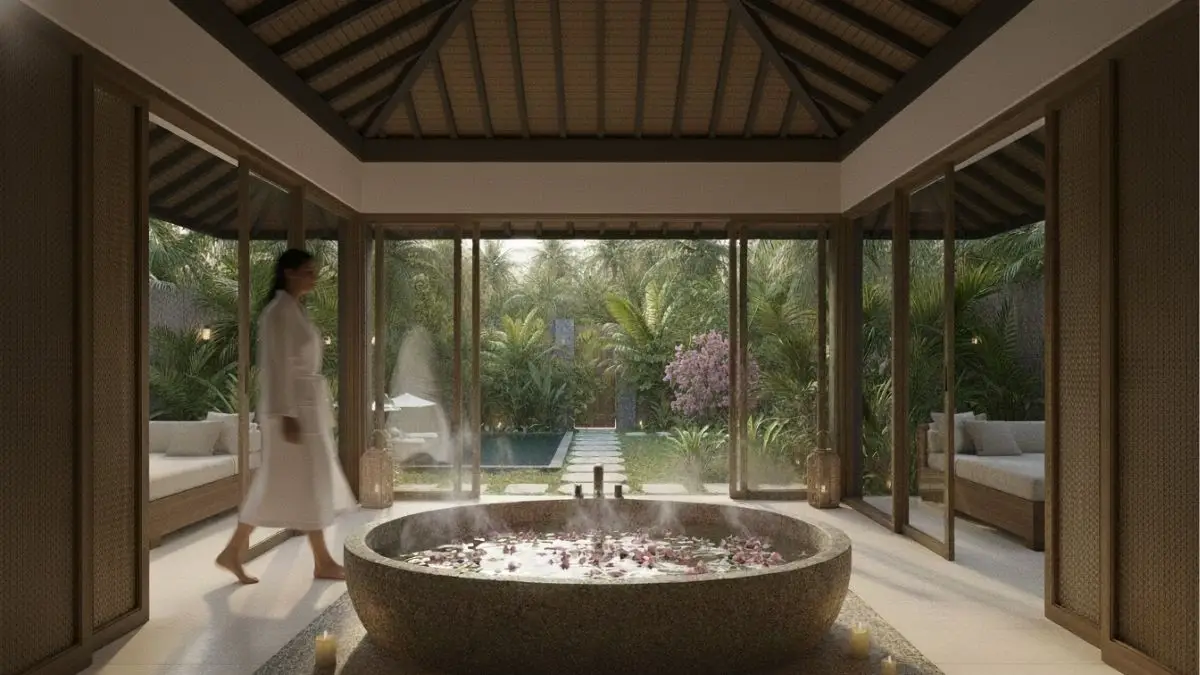
Courtyards remain one of the most effective strategies in villa design. They create protected outdoor environments while maintaining natural light and ventilation. Outdoor living areas, plunge pools, and garden spaces can be organized around these private zones, allowing guests to enjoy the landscape without sacrificing comfort or seclusion.
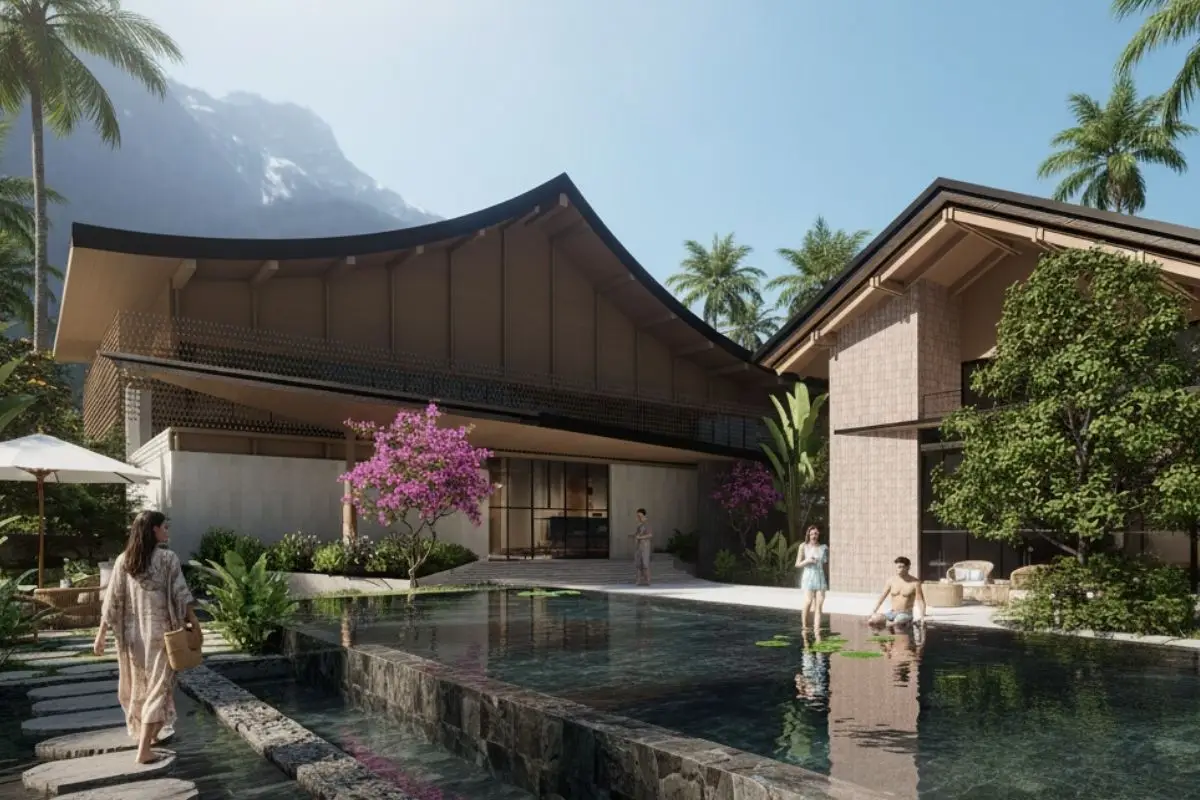
Walls and screening elements also play an important role. However, the most successful projects use them selectively. Rather than creating fortress-like environments, they frame views, guide movement, and establish layers of privacy throughout the property.
This approach allows villas to feel open and connected while still providing a sense of personal territory.
The goal is not isolation. It is controlled exposure.
Private Pools and the Evolution of Outdoor Living
Private pools have become one of the defining features of modern villa resorts.
Their popularity reflects broader changes in how travelers use hospitality environments. Outdoor living areas increasingly function as extensions of guest accommodations, providing spaces for relaxation, dining, wellness, and recreation.
When integrated thoughtfully, private pools become part of a larger architectural composition. They frame views, strengthen relationships between interior and exterior spaces, and encourage longer engagement with the landscape.
This trend has influenced villa design throughout the Philippines, particularly in destinations where climate supports year-round outdoor living. Architecture increasingly prioritizes seamless transitions between indoor and outdoor environments rather than treating them as separate experiences.
The result is a more flexible and personalized approach to hospitality.
Balancing Seclusion and Hospitality
Privacy alone does not guarantee a successful resort experience.
Guests still expect access to dining, wellness facilities, recreational amenities, and hospitality services. The challenge lies in creating opportunities for engagement without compromising the sense of retreat that attracts guests in the first place.
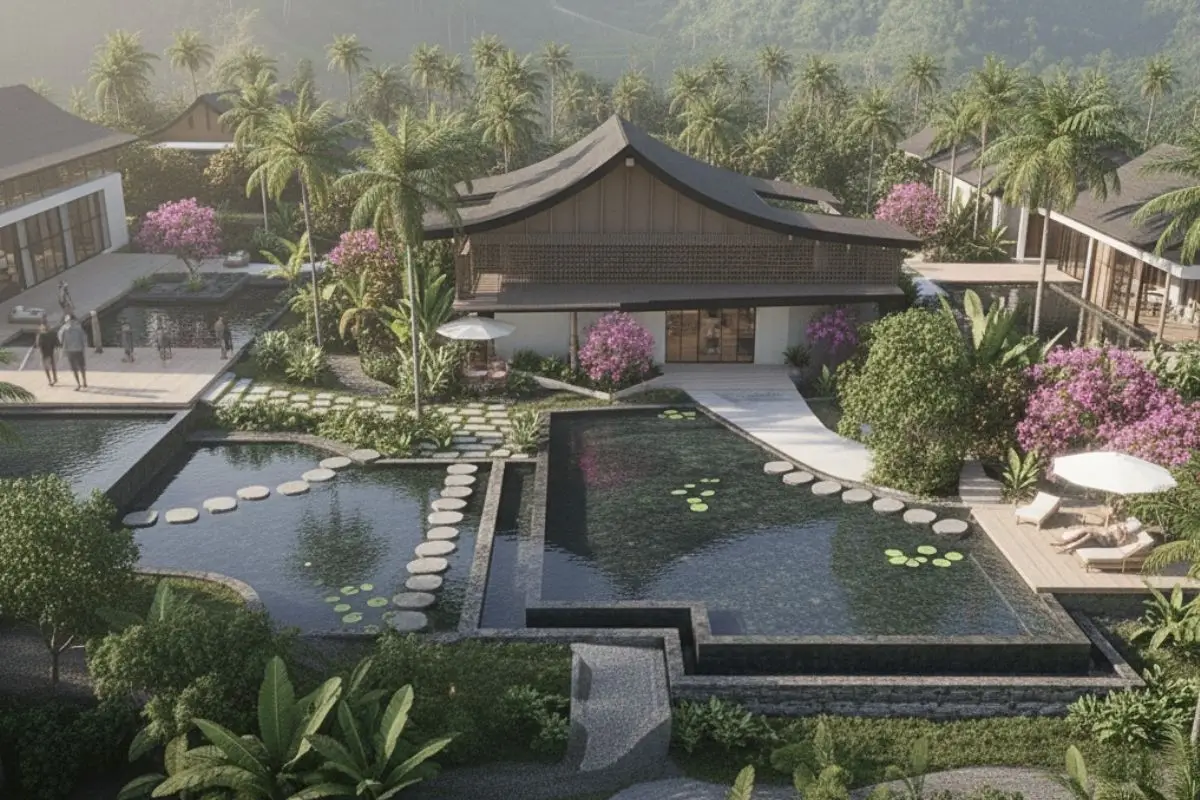
Circulation planning becomes critical in achieving this balance. Paths, buggy routes, arrival sequences, and shared facilities must be positioned carefully to minimize unnecessary encounters while maintaining convenience.
The most successful villa resorts create a spectrum of experiences. Guests can choose between solitude and social interaction depending on their preferences at any given moment.
Architecture supports this flexibility by offering multiple ways to experience the property.
The Future of Villa Resort Design
As hospitality expectations continue evolving, privacy is likely to remain a defining characteristic of luxury travel.
The growing popularity of villa accommodations reflects broader changes in how people view relaxation, wellness, and personal space. Guests increasingly seek environments that offer both comfort and control, allowing them to shape their own experiences rather than adapting to standardized hospitality models.
Understanding privacy in modern villa resorts requires looking beyond walls and room layouts. Privacy emerges through planning, landscape design, circulation, orientation, and the relationship between architecture and place. The most successful resorts recognize that exclusivity is not created through separation alone. It is achieved by carefully balancing openness, comfort, connection, and retreat.
As villa hospitality continues to grow, the architecture of privacy will remain one of the most important factors shaping the guest experience.
Many travelers increasingly value privacy, flexibility, outdoor living, and personalized experiences that traditional hotel accommodations may not provide.
Privacy is achieved through site planning, landscape design, building orientation, circulation strategies, courtyards, and architectural screening elements.
Not always, but they have become a popular feature because they support outdoor living and reinforce the sense of exclusivity many guests seek.
Yes. Successful villa resorts create a balance between secluded accommodations and convenient access to shared amenities and hospitality services.
Exceptional hospitality begins with understanding how people experience space. At Fulgar Architects, we design resorts, villa communities, and hospitality environments that integrate architecture, landscape, and guest experience into a cohesive vision. Connect with our team to discuss hospitality developments, private villa projects, and destination-focused design throughout the Philippines.