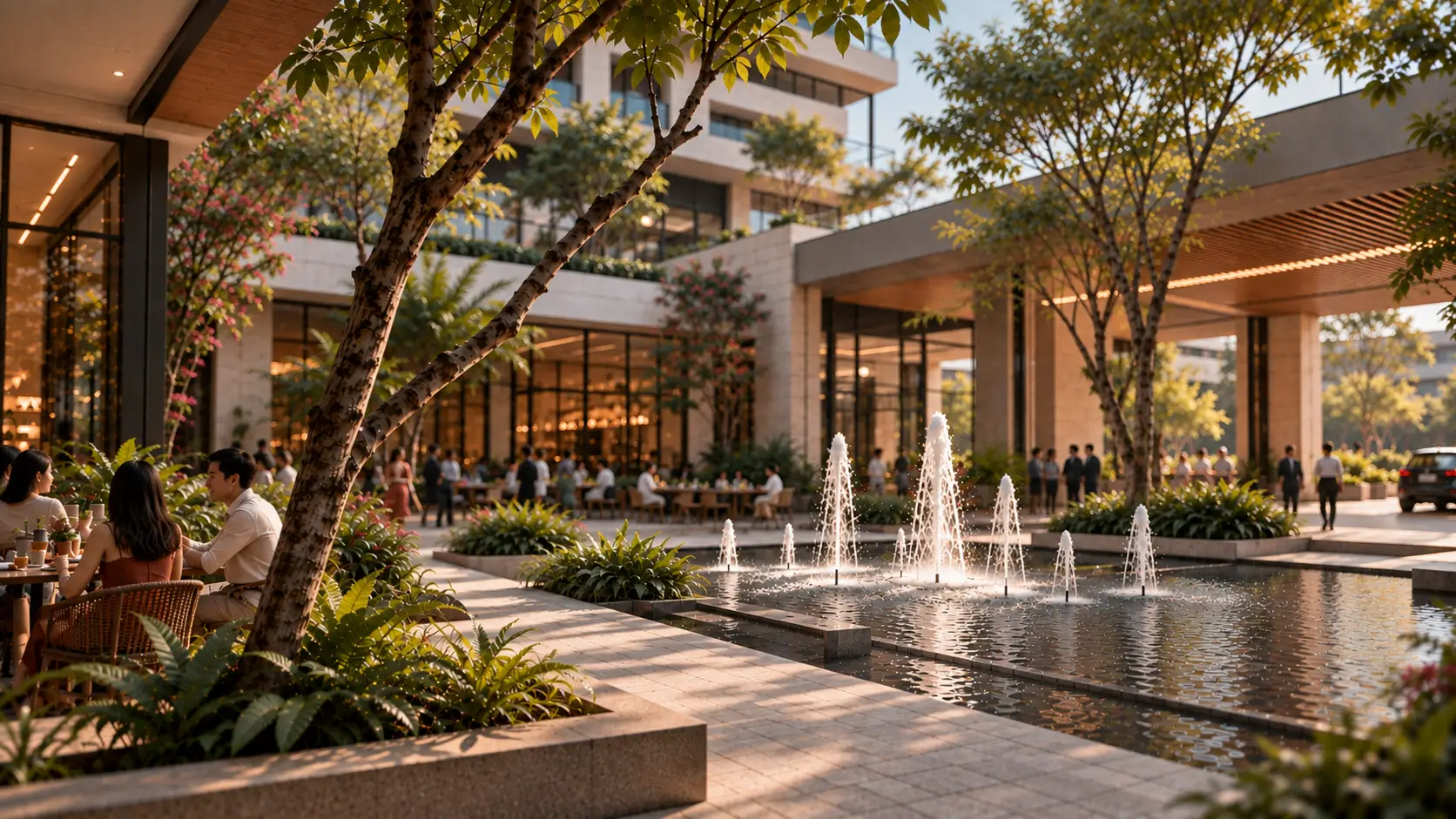














The Bonifacio Global City (BGC) in Taguig City is a prolific addition to the Philippine urban skyline. BGC is an exclusive business district that takes care of its residents, that is filled with luxury amenities, offices, and embassies. It is classified as a high-end place to work and people’s demand for space there is growing. The neighborhood has world-class office space, luxury residences, designer stores, hotels, parks, schools, and hospitals.
Bonifacio Global City is also known as the “Wall Street of Asia” and is one of the most well-known business districts in Manila. It is located near Makati, and Forbes Park in Metro Manila, Philippines. It was initially converted to a military base, named Fort McKinley but later renamed after Andres Bonifacio, a Filipino revolutionary leader, and national hero. The master planning of BGC started in 1995 with district attractions for many multinational corporations because of its proximity to Manila’s international airport and various golf courses.
The Making Of Bonifacio Global City Into A Leading Innovation Hub
The Bases Conversion and Development Authority (BCDA) was formed after the end of Martial Law. This agency intends to repurpose former military bases for civilian use. On February 7, 1995, Bonifacio Land Development Corporation (BLDC), a consortium headed by Metro Pacific, won the right to collaborate with BCDA in developing Bonifacio Global City. In 2003, Ayala Land Inc and Evergreen Holdings of the Campos Group acquired a share from BLDC in order to establish the Fort Bonifacio Development Corporation, which would manage and develop the master plan.
They envisioned a hub of modern and innovative business establishments that would create a cosmopolitan environment conducive to fostering international trade, tourism, and cultural exchange.
Why Bonifacio Global City Is The Future of Business
Bonifacio Global City is the Philippines’ newest city-within-a-city. In addition to being one of Asia’s most advanced and sought-after commercial districts, it is home to an increasing number of international corporations, including SM Investments Corporation, Jollibee Foods Corporation, HSBC, Citibank, and other financial services institutions.
1. Well-known for its quality of office space and commercial areas
Bonifacio Global City is a major landmark in Metro Manila today. It is home to a few of the country’s most premium and renowned offices and shopping malls, which use cutting-edge technology to manage all areas of their daily operations. It has developed into a sanctuary for affluent homeowners who appreciate the best in lifestyle and fashion from leading brands.
2. Bonifacio Global City is in the center of all of Metro Manila’s major business districts
The location of the city is strategic as it is in the center of all of Metro Manila’s major business districts. One can easily access Makati City from both Pasay and Taguig City by taking a short ride from either airport, with only about a 15 minute commute time from both destinations. Businesses located in these zones can readily interact with one another due to their proximity. Over the past few decades, this city has become one of the most popular destinations for multinational companies to set up their global headquarters. It now has an expansive list of companies with offices here that span all industries.
3. Numerous infrastructural projects are being planned for the area
The city is set for significant development, rising property prices, and limitless possibilities. These include the construction of The Icone Tower as an iconic structure, the progression of the Metro Manila Subway into an underground rapid transit line, the 33.1-hectare Bonifacio South Pointe medium to high-density residential with mixed-use complex, the relocation of the Senate Building to the former navy Village, and many more.
Starting A Property Development Project In BGC
BGC has a lot to offer to those who are starting a property development project. It has excellent amenities, a prime location, and infrastructure that is improving every day.
Starting a property development project may be intimidating, but it may be made somewhat simpler in Taguig Municipal, where administrative offices and city engineers are very friendly and helpful. Compared to other cities, their land-use plans are very well documented with clear studies on how to allow for efficient use of the valuable resources. Zoning ordinances are well-defined and describe how certain areas can be used. They could even provide a proper land matrix document that details all of the restrictions, types, and parcels of land in an urban area.
Taking Advantage Of A Property’s High Value
Considering the amount of risk involved with starting any new business, many would say that getting into property development is a pretty safe bet for a person or company who has the resources to take the challenge. There are many different factors that can influence strategies in property development from selecting the best possible location for your project to coming up with the best development model.
As a point of reference, the median list price for homes in BGC is between 98,000,000 and 100,000,000 in pesos. Residential apartments in BGC have a typical list price per square meter ranging from 200,000 to 400,000 pesos per square meter. The median rent in BGC is about 300,000 pesos.
How Architects and Developers Work Together in Property Development
Building development is a complicated process that requires a wide range of abilities and experience. That is why architects play a critical role in the team. They are in charge of planning, researching, creating models, drawings, renderings, and other forms of visualization. Their job is to assist proponents in determining the project’s requirements and then to develop the design based on these specifications.
Architectural services are divided into many distinct stages of design, with each step being more detailed than the last. The most often encountered stages include engineering design coordination, schematic design, production of construction documents, construction bidding, construction administration, and ultimately, project closeout.