












- World-class Golf Resorts balance landscape, architecture, and guest experience.
- Designing golf resorts in the Philippines responds to climate, terrain, and lifestyle.
- Spatial sequencing shapes how players and guests experience the property.
- Outdoor comfort and environmental design define usability throughout the day.
- Strong identity and atmosphere support long-term appeal and value.
A Landscape-Led Approach to Resort Design
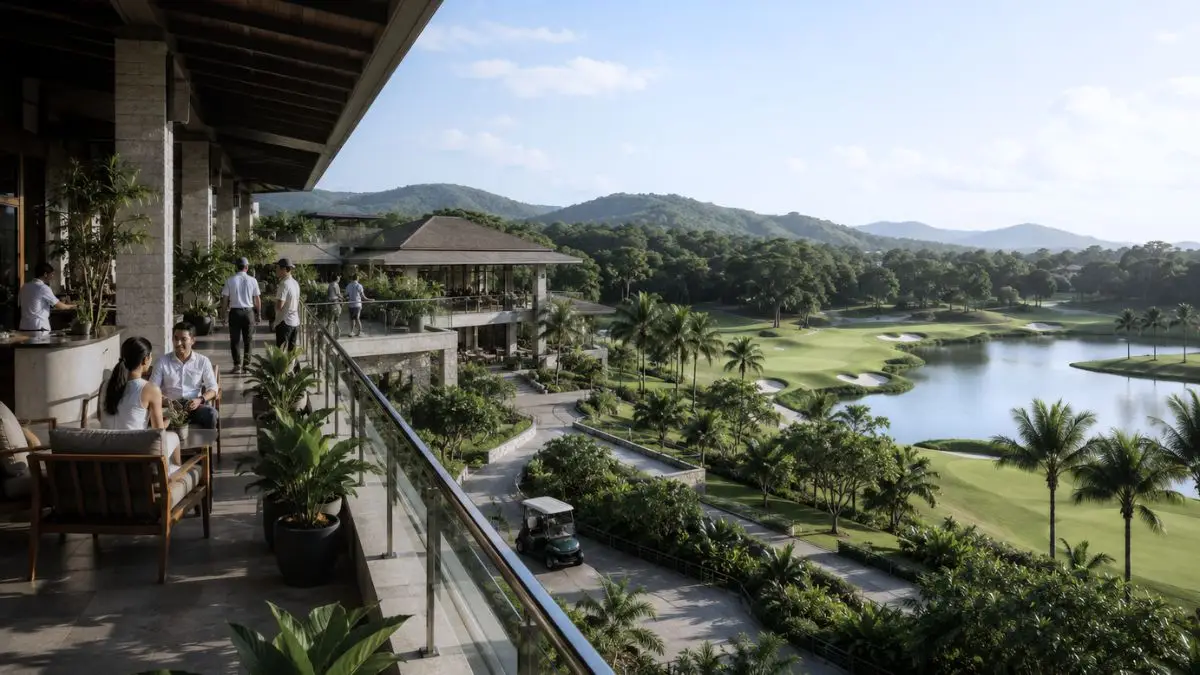
Golf resorts in the Philippines are defined as much by their setting as by their architecture. Rolling terrain, existing vegetation, and natural water systems create a framework that guides both course layout and building placement.
In designing golf resorts in the Philippines, the most compelling developments begin with the land itself. Instead of imposing a rigid plan, the architecture responds to the site, allowing the course and built elements to feel connected rather than separate.
This approach creates a sense of continuity, where movement through the resort feels natural and intuitive.
Arrival and First Impressions
The experience of a golf resort begins well before the first swing. Arrival sequences set expectations, guiding visitors from entry points to drop-off areas and into the clubhouse.
Clear sightlines, shaded approaches, and defined transitions create a welcoming environment. The clubhouse often serves as a central anchor, visually and functionally linking the course with guest amenities.
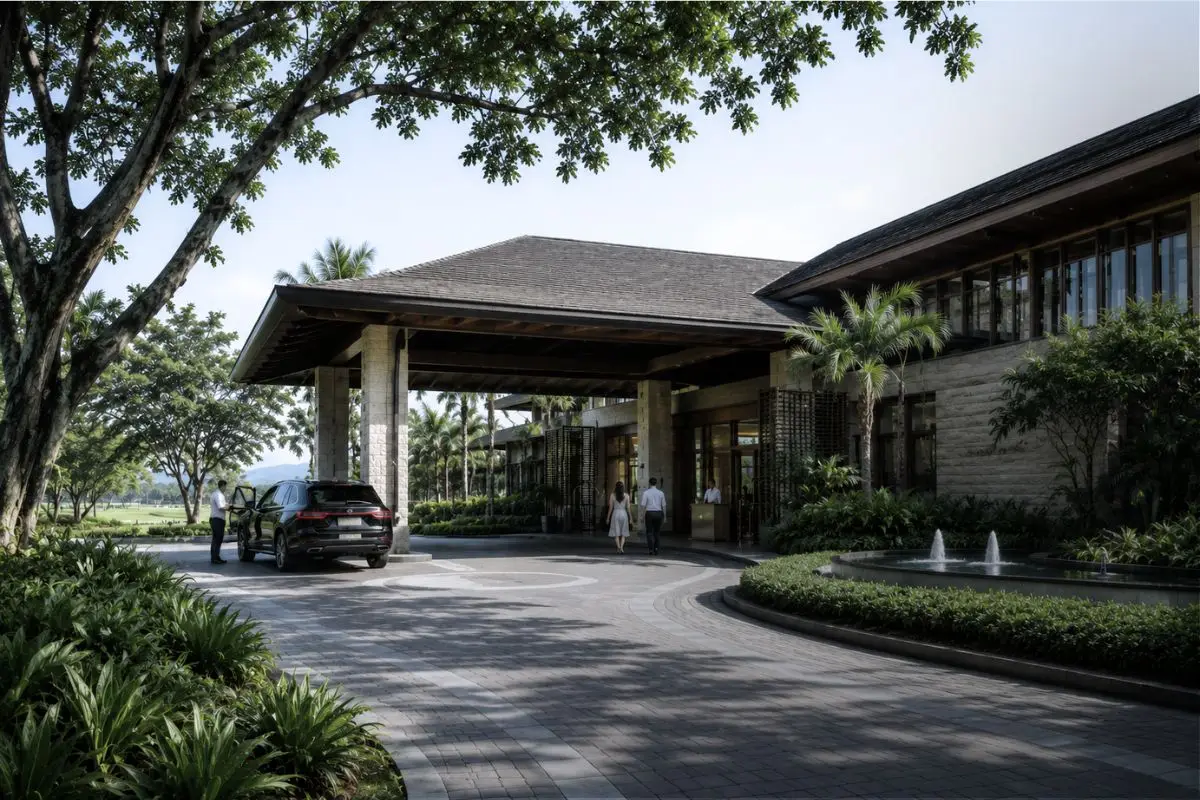
In designing golf resorts in the Philippines, these first moments shape how visitors understand the scale and character of the development.
Movement Across the Resort
Golf resorts operate as a network of interconnected spaces. Players move between tee boxes, greens, and rest areas, while guests navigate paths between amenities, accommodations, and shared spaces.
Designing golf resorts in the Philippines requires careful attention to how these paths overlap and diverge. Clear routes, subtle wayfinding cues, and consistent spatial hierarchy help maintain a sense of ease across the property.
The goal is not to control movement rigidly, but to make navigation feel effortless.
Climate as a Design Driver
The Philippine climate plays a central role in shaping resort environments. Heat, humidity, and seasonal rainfall influence how spaces are used and experienced.
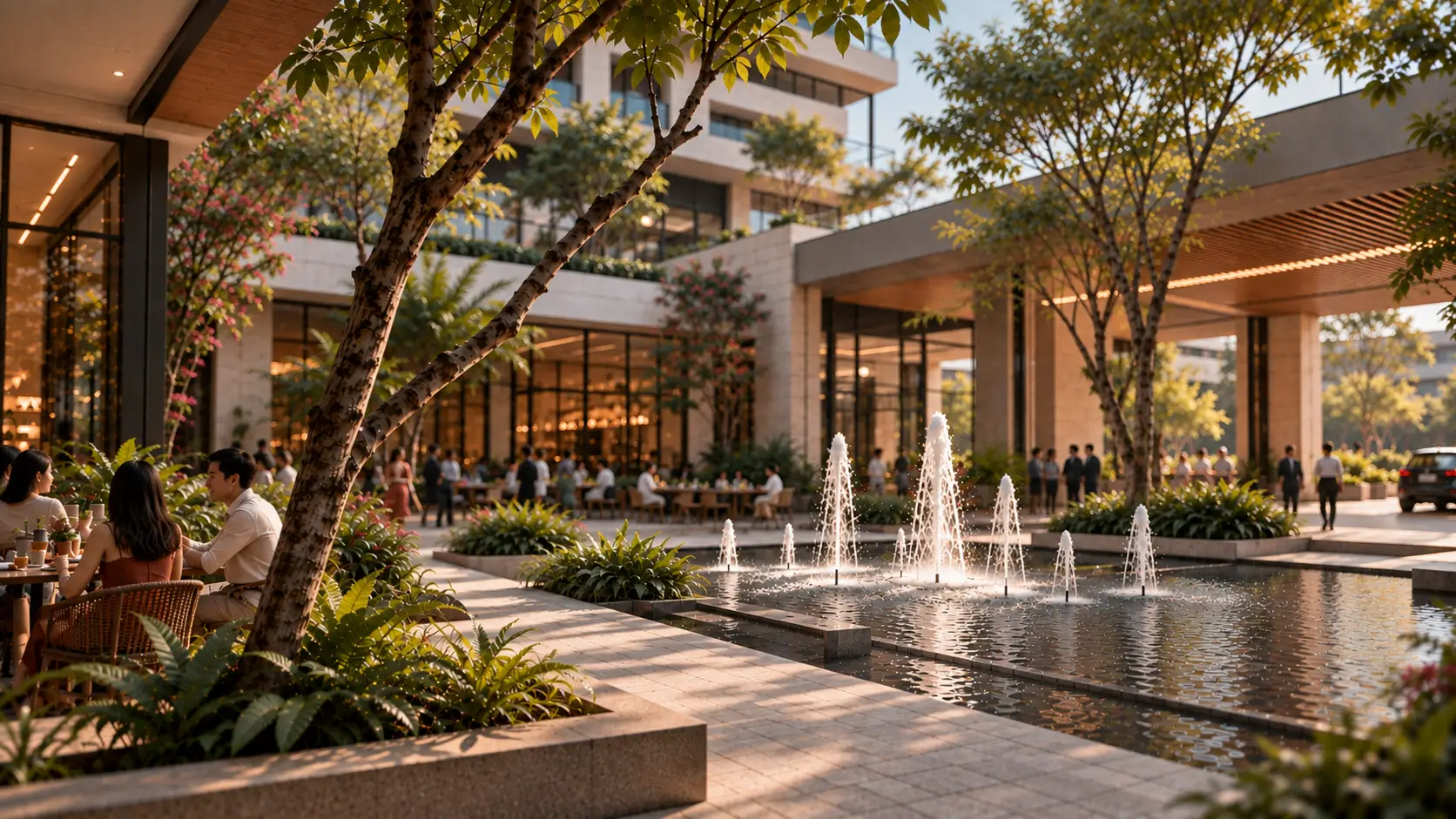
Shaded walkways, open pavilions, and well-ventilated structures allow guests to remain comfortable without relying entirely on enclosed spaces. Orientation and material selection further support thermal performance.
In designing golf resorts in the Philippines, climate-responsive design enhances both comfort and sustainability, allowing outdoor spaces to remain usable throughout the day.
Creating a Distinct Resort Identity
Beyond functionality, successful golf resorts establish a strong sense of identity. This is achieved through consistent architectural language, material choices, and spatial composition.
Rather than relying on excessive ornamentation, many developments use restraint to highlight proportion, texture, and landscape integration. This creates a cohesive environment that feels considered and intentional.
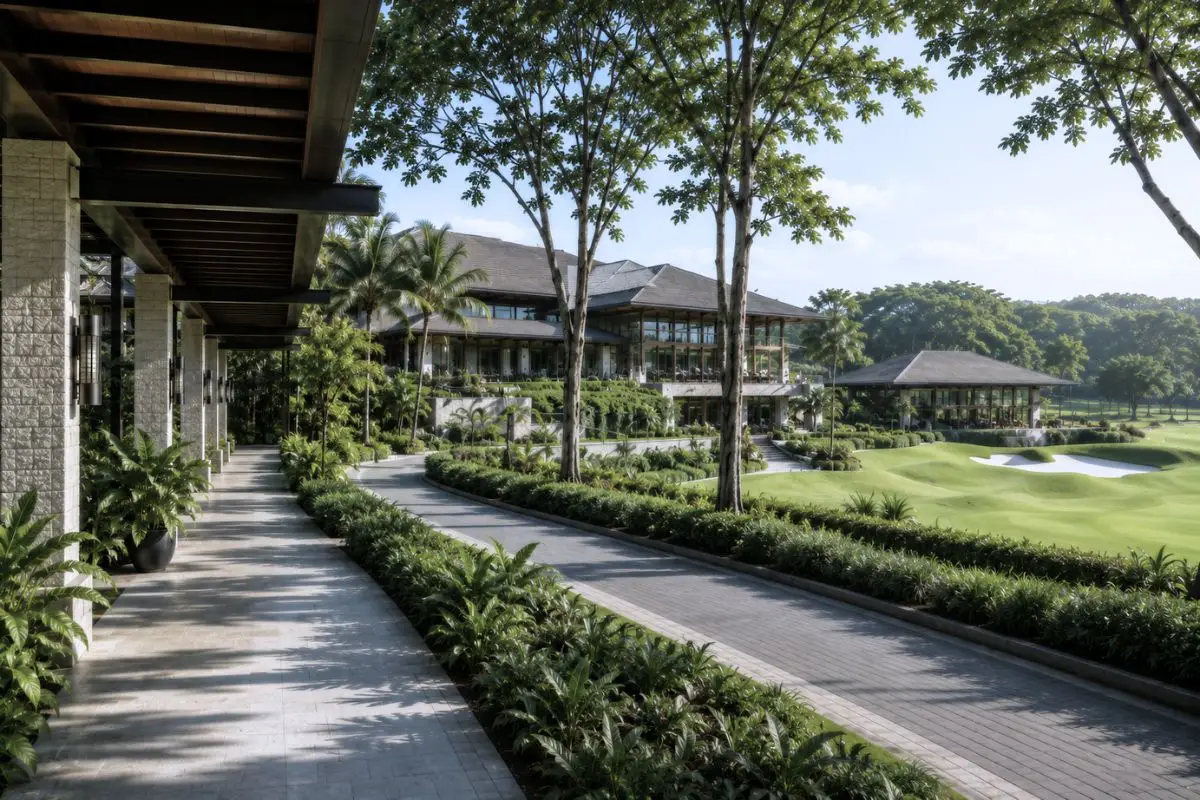
For golf resorts, identity extends beyond aesthetics. A well-defined architectural character can strengthen destination appeal, support premium positioning, and create a more memorable experience for guests. As leisure developments become increasingly competitive, the ability to establish a distinct sense of place often becomes a long-term strategic advantage.
A clear identity not only enhances guest experience but also supports long-term positioning in a competitive market.
Lasting Appeal Through Adaptability
Golf resorts evolve over time as guest expectations shift and new amenities are introduced. Flexible planning allows these developments to adapt without losing their character.
Many golf resorts today are expanding beyond the course itself through wellness facilities, hospitality programs, branded residences, and lifestyle-oriented amenities. Adaptable planning frameworks allow these additions to be integrated over time while preserving the overall experience and identity of the development.
In designing golf resorts in the Philippines, adaptability ensures that spaces remain relevant while maintaining the qualities that originally attracted guests. This balance between consistency and change contributes to the long-term appeal of the resort.
A balance of landscape integration, architecture, and a cohesive guest experience.
It shapes how visitors move through and understand the space from arrival to departure.
It influences shading, ventilation, and the usability of outdoor spaces.
Consistent design language, material selection, landscape integration, and memorable guest experiences.
As golf resorts continue expanding into broader hospitality and lifestyle destinations, thoughtful planning becomes increasingly important to the long-term success of the development. Through an integrated approach to planning, architecture, and experience design, Fulgar Architects helps shape environments that remain relevant over time.