












- First impressions influence how buyers perceive the quality and value of residential developments.
- Arrival experiences, landscaping, and circulation often shape perception before buyers see individual units.
- Architectural consistency helps create stronger identity and long-term market appeal.
- Shared spaces play a significant role in defining residential desirability.
- Thoughtful planning strengthens both buyer experience and development positioning.
First Impressions Begin Before the Showroom
When prospective buyers visit a residential development, their opinion often begins forming long before they enter a showroom or step inside a unit.
The drive toward the property, the arrival sequence, the quality of the landscape, and the overall atmosphere of the environment all contribute to an immediate perception of value. These early impressions may feel subtle, yet they often shape how buyers interpret everything that follows.
In many luxury residential developments in the Philippines, the strongest projects understand that architecture begins influencing perception from the moment a visitor approaches the site. Every transition, from the entrance gate to the drop-off area, contributes to the broader experience of the development.
As competition continues to grow within the residential market, these moments are becoming increasingly important.
Arrival Experiences Set Expectations
One of the most overlooked aspects of residential development design is the arrival experience.
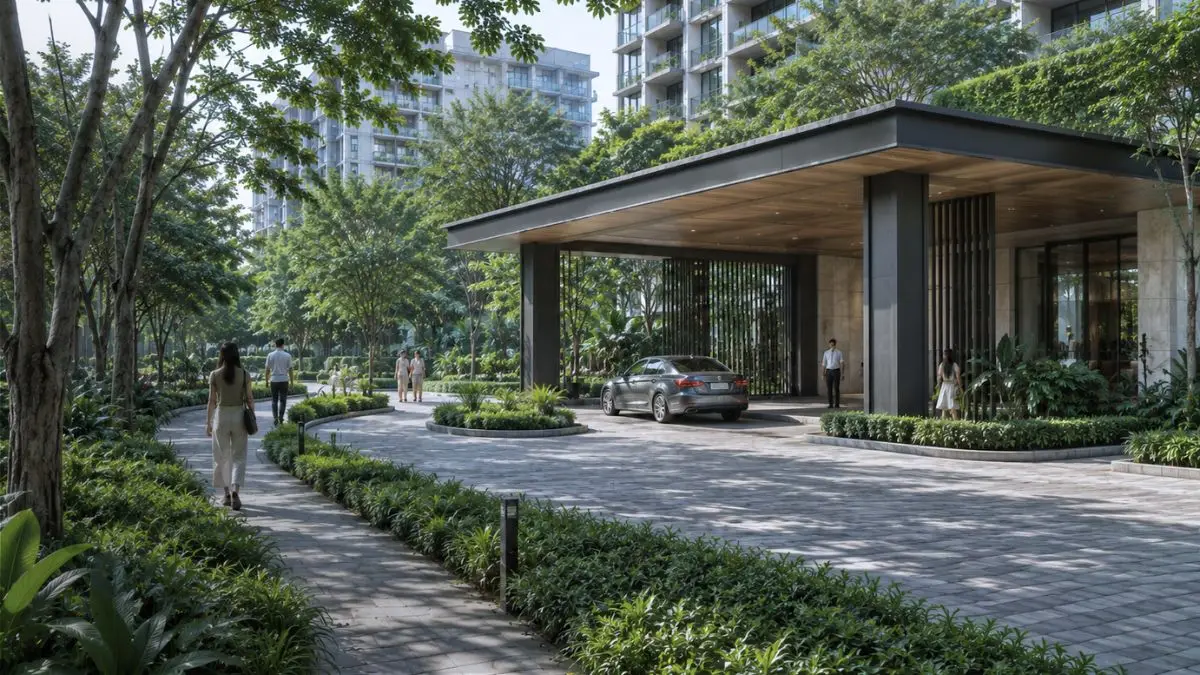
Before buyers evaluate amenities, floor plans, or finishes, they encounter the development itself. The quality of the entrance, the organization of vehicle movement, and the visual composition of arrival spaces immediately establish expectations.
Well-designed arrival areas create a sense of clarity and confidence. Landscaped approaches, generous drop-off zones, shaded walkways, and carefully framed views help communicate a level of care that extends throughout the project.
Many hospitality developments have long recognized the value of these experiences. Increasingly, residential developments are adopting similar principles to create stronger emotional connections with prospective buyers.
The goal is not to create spectacle. It is to create a sense of confidence that the development has been thoughtfully planned from the beginning.
Landscape Often Speaks Before Architecture
Landscape is frequently one of the first elements people notice within a residential environment.
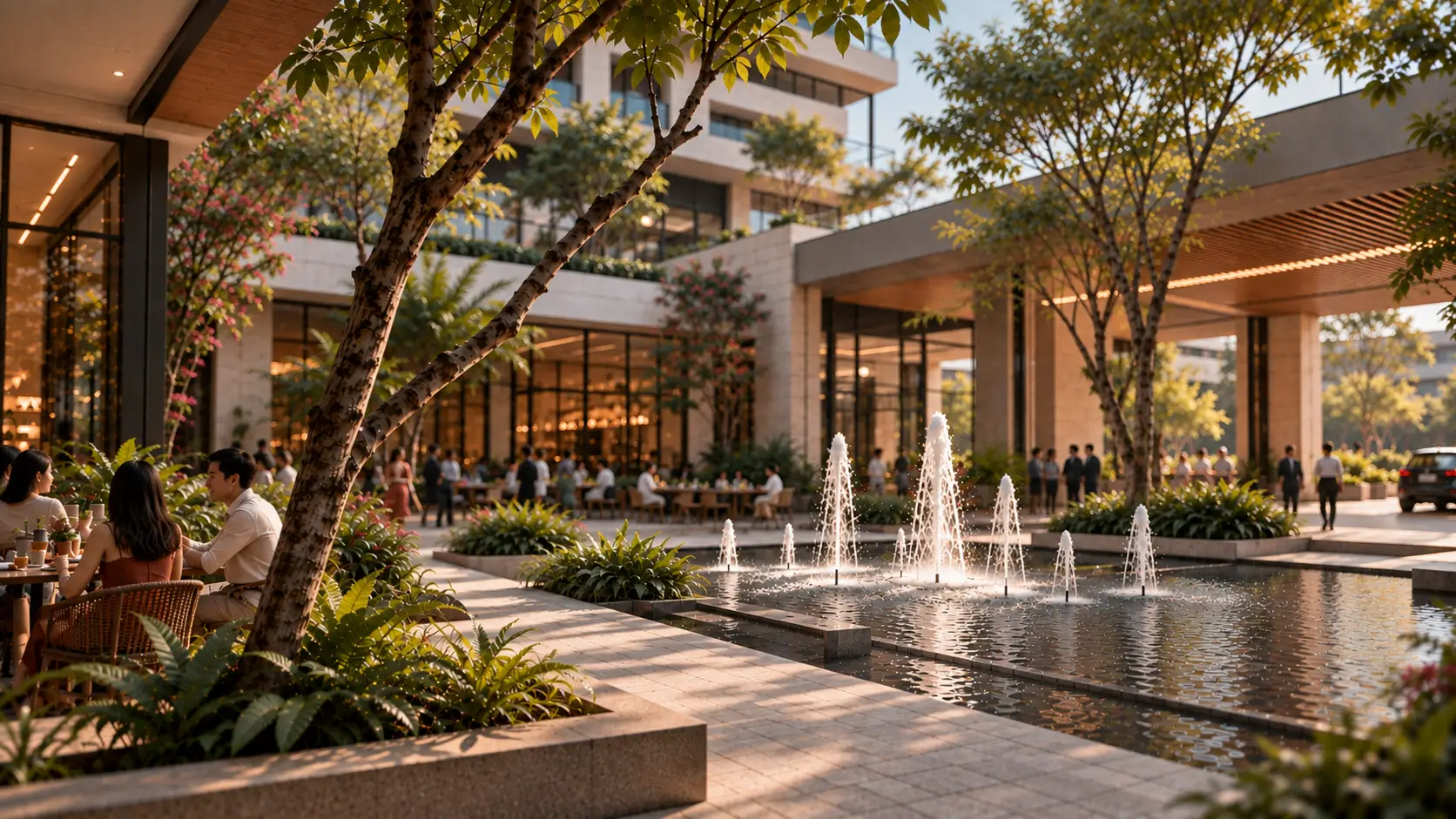
Mature trees, planting strategies, open spaces, and the relationship between buildings and greenery help shape the overall character of a development. Even before visitors consciously evaluate architectural details, they often respond to the atmosphere created by the landscape.
This is particularly important in the Philippine context where climate and outdoor comfort strongly influence how environments are experienced.
Developments that integrate landscape as a core planning element rather than an afterthought often feel more welcoming, more established, and more desirable. Landscape softens density, improves environmental comfort, and creates visual continuity across the site.
For many buyers, these qualities contribute significantly to their perception of quality and long-term value.
Movement Shapes Experience
Buyers rarely experience developments through static views alone.
They move through entrance roads, pathways, amenity areas, and shared spaces. The quality of these transitions influences how comfortable and intuitive a development feels.
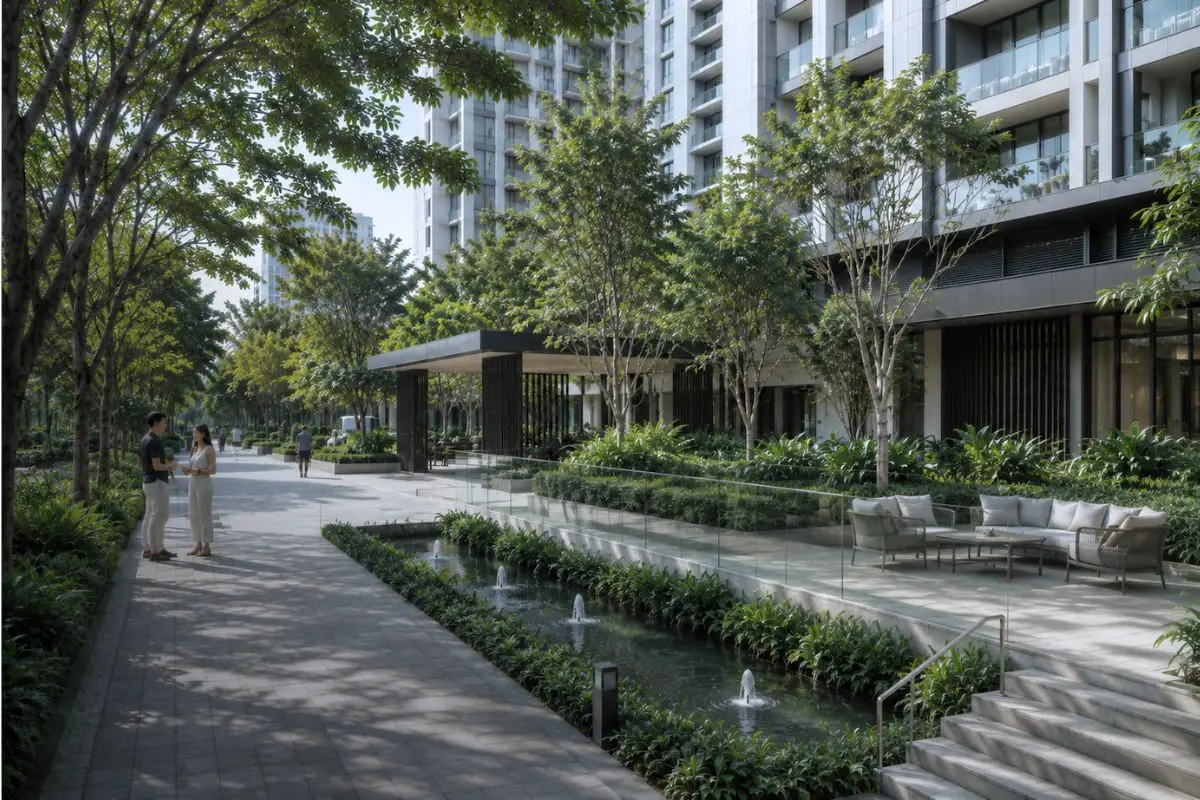
Clear circulation systems reduce confusion and improve usability. Pedestrian routes that feel safe, shaded, and well-connected encourage movement throughout the property. Thoughtful planning also creates opportunities for visual discovery, allowing key amenities, open spaces, and architectural features to reveal themselves gradually.
When movement feels natural, the development itself becomes easier to understand and appreciate.
This often has a greater impact on overall perception than individual architectural gestures or decorative features.
Architectural Consistency Builds Trust
Luxury residential developments rarely rely on a single iconic building to establish their identity.
Instead, they succeed through consistency.
Materials, proportions, landscape treatments, lighting strategies, and architectural details work together to create a cohesive environment. This consistency helps developments feel intentional rather than fragmented.
Buyers may not always identify specific design decisions, but they often recognize when a project feels coherent and well-considered.
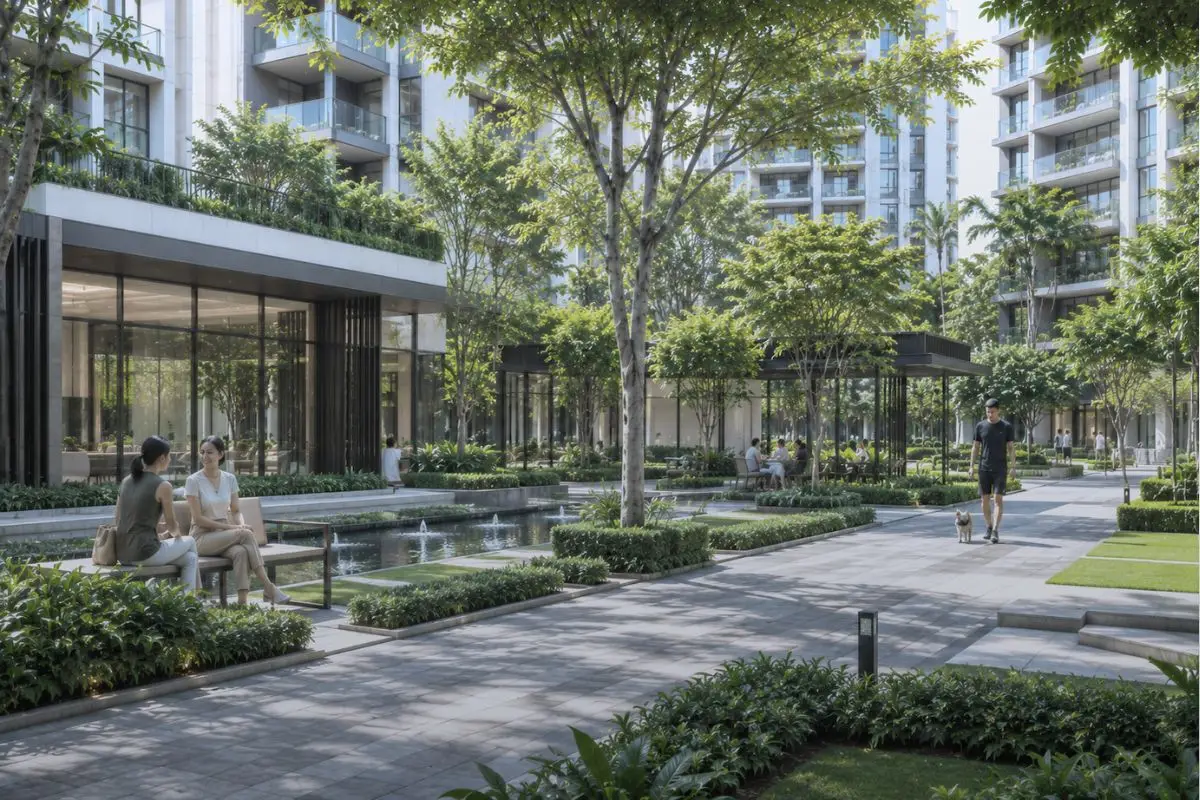
In competitive residential markets, architectural consistency can become a significant differentiator. It reinforces the perception of quality while helping developments establish a stronger and more memorable identity.
The result is an environment that feels complete rather than simply assembled.
Desirability Is Built Through Experience
While amenities remain important, many buyers ultimately respond to something less tangible.
They respond to how a place feels.
Comfort, atmosphere, landscape quality, walkability, visual order, and environmental experience all contribute to the desirability of a residential development. These factors work together to create an emotional connection that extends beyond specifications and marketing materials.
For developers, this highlights the growing importance of designing complete environments rather than isolated buildings.
The residential developments that leave the strongest impressions are often those that understand architecture, landscape, circulation, and lifestyle as parts of a single experience.
Arrival experiences, landscaping, circulation, and the overall atmosphere of the development often shape first impressions before buyers evaluate individual units.
They establish expectations and influence how buyers perceive the quality and character of the development.
Landscape improves environmental comfort, strengthens identity, and contributes to a more desirable residential environment.
Consistency helps developments feel intentional, cohesive, and higher in quality, strengthening long-term market appeal.
As luxury residential developments in the Philippines continue competing within increasingly sophisticated markets, the quality of the overall experience is becoming just as important as the quality of individual buildings. Through an integrated approach to planning, architecture, and place-making, Fulgar Architects helps shape residential environments that create lasting impressions and long-term value.